
I Thought White Rice Was the Worst Carb. Then I Saw What These 6 “Light” Staples Do to Blood Sugar
Liangpi, scallion pancakes, pumpkin porridge, and dough drop soup look harmless. They can hit harder than a bowl of rice, and the crash lasts longer.
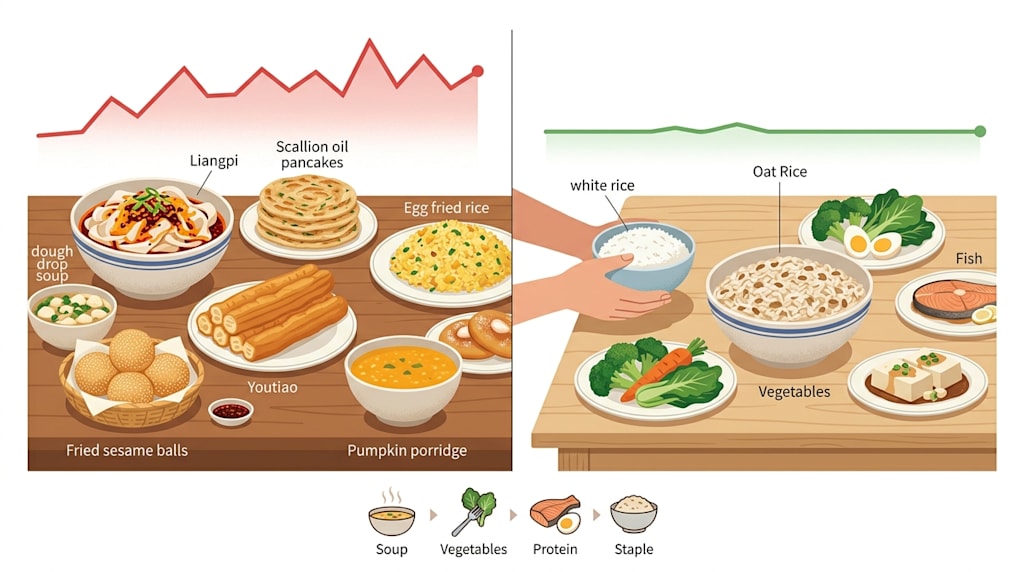
At noon, a bowl of liangpi with sesame paste, chili oil, and vinegar hits the spot. By 3 p.m., your eyelids are heavy, your head feels foggy, and your mouth is dry. You think you did not sleep well. Your blood sugar may already have spiked and then stayed high.
Many people trying to control blood sugar first cut out white rice, steamed buns, and noodles. That direction is not wrong. Some staples look light, homey, and easy to digest. They hit blood sugar harder. CCTV Life Circle listed six categories: liangpi, scallion oil pancake, sugar-and-oil combo foods (egg fried rice, youtiao, fried sesame balls), pumpkin porridge, dough drop soup, and sugar fried pancake. Their common traits: refined starch, high oil, high sugar, heavy gelatinization, and deep-frying. They do not taste sweet. After a meal, blood sugar may spike higher and stay high longer.
1. Liangpi: not a vegetable dish, but refined wheat starch
Liangpi is made mainly from refined wheat starch. During processing, the starch is already highly gelatinized. After it enters the body, it breaks down and absorbs quickly. Then sesame paste, seasoning sauce, and chili oil are added. Fat and added sugar come in. Calories go up. The duration of high blood sugar may also be prolonged.
After a bowl of liangpi, postprandial blood sugar may stay high for a long time. It is not a light side dish. It is a high-glycemic, high-calorie staple.
If you want liangpi, cut the portion in half. Add double cucumber shreds, bean sprouts, egg, or chicken breast. Use less sesame paste and sugar in the dressing. Vinegar and garlic can be used a bit more. Switch to buckwheat noodles, whole-wheat noodles, or eat multigrain rice with vegetables.
2. Scallion oil pancake: refined flour soaked in oil
Scallion oil pancake is based on refined flour. A large amount of oil is added during making. That makes it a high-oil refined carbohydrate. Refined flour raises blood sugar quickly. A large amount of fat increases calories, makes weight gain easier, and may affect insulin sensitivity. Postprandial blood sugar rises faster, peaks higher, and comes down more slowly.
One scallion oil pancake does not look like much. It is a double burden of carbs plus fat.
Switch to whole-wheat steamed buns or multigrain pancakes, with less oil and salt. If you eat scallion oil pancake, cut it into quarters. Pair it with a plate of greens and an egg. Do not make it the entire meal.
3. Sugar-and-oil combo foods: egg fried rice, youtiao, fried sesame balls
This category is the easiest to overlook. Many people do not think of these foods as sweet.
Egg fried rice uses leftover rice. The starch retrogrades and then gelatinizes again. Its blood-sugar impact is not low. Adding cooking oil and soy sauce sends calories soaring. A bowl of egg fried rice contains carbs, oil, and salt.
Youtiao is deep-fried at high temperature. It absorbs a large amount of oil. After the carbs absorb oil, gastric emptying slows. The blood sugar curve may become high later and long. It does not spike immediately. It stays high for a long time.
Fried sesame balls are glutinous rice flour plus sugar plus sesame, then deep-fried. Glutinous rice has a high glycemic index. There is also a sugar shell outside. They raise blood sugar twice over. They taste soft, sweet, and fragrant. Blood sugar may explode.
Replace egg fried rice with multigrain rice, stir-fried greens, and eggs. Replace youtiao with whole-wheat steamed buns or oatmeal. Try to avoid fried sesame balls. If you want something sweet, use unsweetened yogurt with a small amount of fruit.
4. Pumpkin porridge: pumpkin is fine until you make it into porridge
Pumpkin is a medium-glycemic-index food. Steamed directly, its effect on blood sugar is relatively gentle. Once it is made into pumpkin porridge, the situation changes.
Under high-temperature boiling, the starch in pumpkin becomes fully gelatinized. The particles are small and easy to digest. The blood-sugar rise speeds up greatly. A bowl of thick pumpkin porridge may have a glycemic load close to that of the same amount of sugar water. This makes blood sugar control harder.
Steamed pumpkin chunks or roasted pumpkin are friendlier than pumpkin porridge. If you drink porridge, cook it with oat rice, brown rice, and mung beans. Do not cook it too mushy. Eat vegetables and protein first, then drink the porridge.
5. Dough drop soup: liquid flour food, fast blood-sugar rise
Dough drop soup is mainly made from refined flour. The dough drops are small. After boiling, the starch is fully gelatinized. It can be quickly broken down and absorbed in the gastrointestinal tract. It is also a liquid food, so gastric emptying is fast. Postprandial blood sugar rises quickly and is hard to keep stable.
Many people think dough drop soup is gentle on the stomach and easy to digest. For people controlling blood sugar, easy to digest means fast to raise blood sugar.
Use whole-wheat flour for the dough drops. Or use oats and quinoa as the soup base. Add more greens, tomatoes, eggs, and tofu. Eat the vegetables and eggs first, then the dough drops.
6. Sugar fried pancake: three layers stacked, the strongest spike
Sugar fried pancake is similar to scallion oil pancake: refined flour plus a large amount of oil. On top of that, sugar is added. It is refined carbs, fat, and added sugar stacked together. This combination raises blood sugar the fastest. It produces a higher peak and has a stronger impact on blood sugar.
If your blood sugar is already poorly controlled, eat sugar fried pancake as little as possible. Best not at all.
If you want a pancake, choose a whole-wheat wrap with egg, lettuce, and chicken breast. If you want something sweet, choose a small piece of dark chocolate or a few bites of unsweetened yogurt. Do not pair sugar fried pancake with sweet soy milk. That stacks one spike on another.
If your body shows these signals, check your blood sugar
If the following signs appear after a meal, see a doctor promptly and check your blood sugar:
Postprandial drowsiness, with no energy no matter what you do.
Extreme thirst, and drinking water does not help.
Hunger and palpitations, feeling hungry again right after eating.
Blurred vision, with things looking fuzzy.
These are not necessarily diabetes. They may be signals of blood sugar fluctuation. People with a family history of diabetes, obesity, high blood pressure, or high blood lipids should pay even more attention.
How to eat: order, portion, coarse and fine
Change the order
First drink clear soup, such as green vegetable soup. Then eat cold dressed vegetables or cooked vegetables. Next eat meat, fish, eggs, and soy products. Finally eat the staple food. This order helps delay gastric emptying, allows carbohydrates to be absorbed more slowly, and makes postprandial blood sugar more stable.
Control the portion
For the general population, eat to about 70 to 80 percent full. Control each meal's staple portion to about the size of one fist. Eating too little staple food is also not good for blood sugar control. People with diabetes should ensure carbohydrates account for 50 to 60 percent of total daily calories, with individualized adjustment.
Mix coarse and fine grains
Refined carbohydrates such as rice, steamed buns, and noodles are easily absorbed after eating. They may cause blood sugar to rise quickly. Replace part of the refined carbs with coarse grains: oats, corn, brown rice, whole-wheat flour, buckwheat, and quinoa. Steam rather than pan-fry. Boil rather than deep-fry. Choose coarse over refined. Keep grains whole rather than mushy.
Add oats to everyday staples: benefits for blood sugar and blood lipids
Oats are rich in dietary fiber, beta-glucan, and protein peptides. Beta-glucan can form a viscous gel that delays gastric emptying and glucose absorption. It helps stabilize blood sugar, improve blood lipids, promote bowel movements, control weight, reduce systemic inflammation, and improve immunity.
How to eat oats
Whole oats or oat rice retain the complete bran and germ. They are more nutritious, digest slowly, and produce a lower postprandial blood sugar response. Soak them in advance. Cook them with rice at a ratio of 1 to 3 to make oat rice.
For the general population or people with the three highs, incorporate oats (80 to 100 g raw weight) into the daily diet. Replace one-third of refined rice and flour. Pay attention to protein, fresh vegetables and fruits, dairy, and soy products. Sticking with it long term makes nutrition more balanced.
Choosing oats
Check the ingredient list. Prioritize simple ingredient lists, with oats or oat flakes as the only or main ingredient. Check the nutrition facts. At equal weight, prioritize relatively higher protein, relatively higher dietary fiber, and relatively lower added sugar and sodium.
Be careful with fruit oats, crunchy cereal, and nutritional oatmeal. They may have added a lot of sugar and oil. That is not good for blood sugar control.
Blood sugar control action checklist
Avoid liangpi, scallion oil pancake, egg fried rice, youtiao, fried sesame balls, pumpkin porridge, dough drop soup, and sugar fried pancake.
Swap in multigrain rice, buckwheat noodles, oats, quinoa, and whole wheat.
Eat in this order: clear soup, vegetables, meat and eggs and beans, then staple.
Keep portions to one fist of staple per meal. Stop at 70 to 80 percent full.
Cook with less oil and sugar. Do not deep-fry. Do not make thick porridge.
Add oats. Soak oat rice, then cook with rice at 1 to 3.
Watch for signals: postprandial drowsiness, extreme thirst, hunger and palpitations, blurred vision. Check your blood sugar.
At your next meal, first swap white rice for oat rice. Take two bites of vegetables before you pick up your chopsticks.
About the Creator
Jin
Writer of reamstories
https://reamstories.com/jin
Enjoyed the story? Support the Creator.
Subscribe for free to receive all their stories in your feed. You could also become a paid subscriber, letting them know you appreciate their work.
Comments
There are no comments for this story
Be the first to respond and start the conversation.