
Why You Feel Tired All the Time in 2026 (And How to Fix It)
Why eight hours of sleep isn’t saving you anymore — and three small shifts that will.

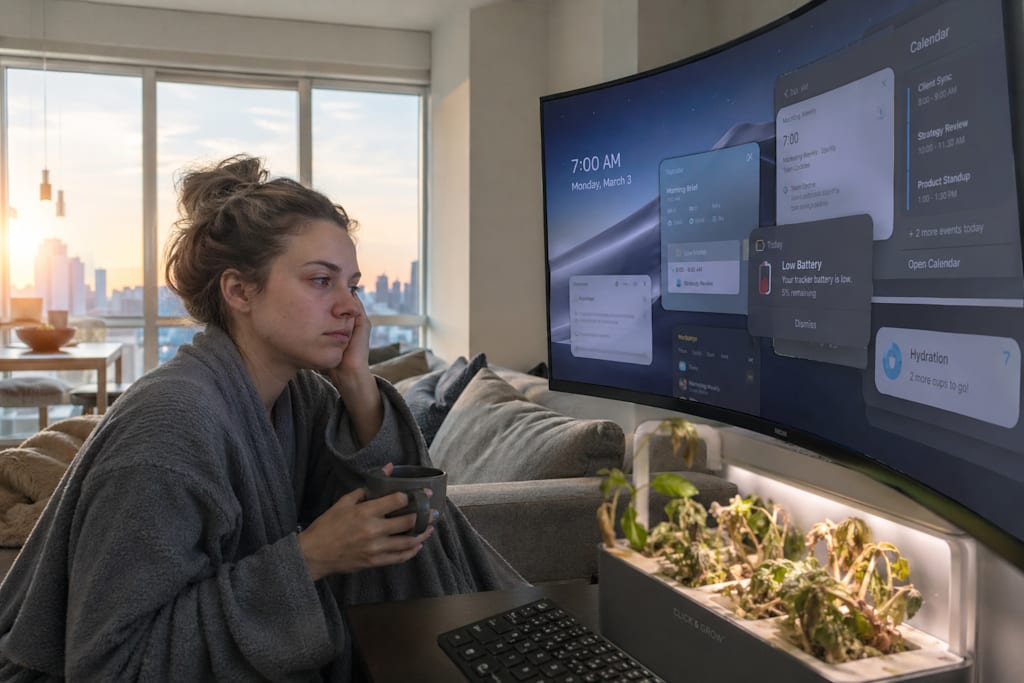
You woke up this morning after a solid seven and a half hours. Maybe eight. And still—that familiar heaviness. Like your limbs are filled with wet sand. Coffee helps for about an hour, then the fog rolls back in. By 2 PM, you’re staring at your screen, reading the same sentence four times. By 9 PM, you’re too exhausted to watch a movie but somehow too wired to fall asleep.
Sound familiar?
It’s 2026, and feeling tired has basically become the human default. Which is weird, because you’re not running marathons or working in a coal mine. You’re just… living. Yet fatigue is your emotional baseline.
Here’s the thing I’ve learned after years of studying how people actually burn out: this isn’t a sleep problem. Not really. Your biology hasn’t changed much in the last 50,000 years. But your environment? It’s exploded with invisible energy vampires. The good part? Once you see them, fixing your energy gets way easier than you think.
Let’s walk through it.
1. The productivity paradox of 2026
Remember when everyone promised technology would save us time? AI will handle the boring stuff. Automation will give you your life back. Yeah, didn’t quite work out that way.
Take a client of mine, Sarah. She’s 34, works in marketing. She has seven different AI agents summarizing her emails, scheduling her meetings, drafting her reports. Logically, she should have more energy than ever. But when she showed up to our session, she looked like she hadn’t slept in days.
Why? Because we didn’t actually remove the work. We just raised the bar.
Think about it. You don’t just write an email anymore. You write it, then check the AI rewrite, then adjust the tone slider from “professional” to “friendly,” then review the calendar invite the AI generated, then manually fix the time zone because the AI got it wrong again. You’re doing meta-work. And meta-work is brutally expensive for your brain.
Every tiny decision—keep the suggestion? change it? ignore it?—drains a little battery cell. By noon, you’ve made hundreds of micro-choices that didn’t even exist five years ago.
The fix: Block out a couple of “human hours” each morning. No AI autocomplete. No smart replies. Just you typing the email yourself, writing your to-do list on paper. Your brain will scream at first—it feels slow, inefficient. But within a week, the fog starts lifting. Think of it like intermittent fasting for your attention span.
2. The dopamine leak (or why “resting” makes you more tired)
Let me ask you something uncomfortable. When you finally sit down to rest, what are you actually doing?
If you said “scrolling,” we need to talk.
Most people in 2026 have confused low effort with actual rest. Lying on the couch watching 15-second videos is low effort, sure. But it’s not rest. It’s a dopamine casino. Every swipe gives you a tiny unpredictable reward. Your brain stays active—not asleep, not recovering, but running a high-alert gambling operation.
Do that for two hours, and you’ll feel more drained than if you’d gone for a brisk walk.
I call this zombie recovery. You’re physically still, but neurologically, you’re sprinting.
The real fix: Switch your default recovery to something with a low dopamine floor. Read a physical book for twenty minutes. Stare out a window. Fold laundry. Wash dishes.
These things sound boring because they are boring. Exactly. Boredom is the off switch for your brain’s exhaust system. In 2026, boredom has become a luxury good. Give yourself permission to be under stimulated.
Try it this Sunday. No phone. No podcast. Just you and a repetitive task. The first time, it’ll feel almost uncomfortable. That’s fine. That’s what rest actually feels like.
3. Your social rhythm is completely broken
We’re social animals. But our schedules are a mess.
Back in the 80s, your family ate dinner together at a set time. Your coworkers were in the same building. Your friends lived nearby. Your nervous system got constant cues: everyone is resting now, so I can rest now.
Now? Here’s your average day. Your partner texts at 2 PM about dinner plans for 7 PM. Your coworker Slacks you at 9 PM because “they work better at night.” A friend sends a voice note at 11 AM that you forget to reply to until 4 PM. Your mom comments on your Instagram story at 7 AM.
No shared rhythm. You’re always half-waiting for the next ping. Always slightly on call. That low-grade anticipation is exhausting. It’s like living in an airport where flights never stop boarding.
The fix: Pick three people you talk to daily. Agree on a two-hour window—say, 8 to 10 PM—where no one expects a reply. No texts. No shared memes. No work messages. Absolute social silence.
First night feels weird. Second night feels lonely. Third night, your shoulders drop about six inches. Your body needs permission to stop being available. Give it that.
4. Decision debt (the silent energy killer)
Let me paint you a normal 2026 morning.
You wake up. Your phone shows fourteen notifications from six apps. You decide: reply now or later? You check the weather—rain at 11 AM. You decide: umbrella or no umbrella? You open the fridge; your smart fridge suggests a low-carb breakfast based on your blood sugar data. You decide: trust the algorithm or just eat toast?
By 8:15 AM, you’ve made almost fifty decisions. Most of them pointless. But each one took a tiny loan from your willpower bank.
Psychologists call this decision fatigue. I call it decision debt, because the cost compounds. By 3 PM, you’re bankrupt. That’s why you order takeout instead of cooking. That’s why you skip the gym. Not because you’re lazy. Because your decision account is empty.
The fix: Automate the boring stuff. Ruthlessly.
Wear a uniform. Steve Jobs did it. Pick three identical outfits. Stop deciding what to wear.
Delete the grocery apps. Autoship the same fifteen staples every week.
Set default “no” for every notification. If an app asks to send you alerts, the answer is no. Always.
You’re not becoming a robot. You’re saving your energy for things that actually matter—like whether to take that job, or how to handle a fight with your partner.
5. Open loops are eating your brain alive
Here’s a personal question. How many unfinished conversations are you carrying right now?
Not fights. Just… open threads. A text you meant to reply to three days ago. An email you flagged but never handled. A project that’s 80% done. A friend you keep meaning to check in on.
Your brain hates open loops. There’s a thing called the Zeigarnik effect—your memory holds onto incomplete tasks way tighter than completed ones. Every open loop sits in the background, consuming mental RAM like a forgotten Chrome tab.
In 2026, the average person has hundreds of these. Because communication is infinite. You can never “finish” your inbox. You can never “complete” a group chat.
That constant hum of “I should probably…” is a slow energy leak.
The fix: Do a weekly loop-closing ritual. Sunday evening works best. Thirty minutes, nothing else.
- Reply to that three-day-old text with one sentence. Done.
- Delete that flagged email if it’s been sitting for two weeks. It’s not important.
- Write the 80% project on a sticky note and put it on the wall. Now it’s “acknowledged” instead of “haunting.”
- Send the “thinking of you” message to your friend.
You won’t believe how much lighter you feel. It’s like defragging a hard drive. Your brain releases that cognitive tension almost immediately.
6. A real example: how one person fixed their fatigue
Let me tell you about Marcus. He’s 29, a software developer. Came to me early this year saying, “I sleep eight hours, I eat okay, but I’m wrecked by 2 PM every single day.”
We tracked his week. Here’s what we found.
Morning: news, Slack, personal email, Instagram—all within the first ten minutes of waking. Coffee immediately. Workday: jumping between coding, AI chat tools, and team DMs. Average focus block: four minutes. Lunch: eating while watching YouTube, no break from screens. Evening: “relaxing” with competitive online games until midnight.
Marcus wasn’t tired because of poor sleep. He was tired because his nervous system never left fight-or-flight mode.
What we changed (slowly, over six weeks):
- No screens first thirty minutes of the day. Just coffee, window, silence.
- One app at a time. Close everything else.
- Twenty-one minutes of deep work, then seven minutes of staring at a wall—literally no phone.
- No competitive gaming after 8 PM. Switched to turn-based strategy or reading.
After eight weeks: His afternoon crash disappeared. Didn’t need more sleep. Needed less neurological switching. He started waking up naturally at 6 AM without an alarm.
His exact words: “I didn’t realize how loud my brain was until it went quiet.”
7. A three-day reset (for when you’re desperate)
Look, if you’re reading this on a Thursday night and you feel like a zombie, don’t try to fix everything. That never works. Just do this.
Day 1 (Friday): Go to bed one hour earlier. No phone in the bedroom. Put it in the kitchen. Don’t tell me you need it as an alarm—buy a ten-dollar alarm clock.
Day 2 (Saturday): Light dopamine fast. No social media before 4 PM. No streaming video before 4 PM. Replace with walking, cooking, cleaning, napping, or talking to a real human out loud. Eat one meal with zero screens. Just you and the food. Notice how it tastes.
Day 3 (Sunday): Decision diet. Plan Monday’s breakfast, lunch, and outfit tonight—zero decisions tomorrow morning. Write a “stop doing” list. What three things are you committing to ignore this week? (Group chat drama? News alerts? That one YouTube channel?)
By Monday morning, you won’t be cured. But you’ll feel different. And different is the first step toward better.
You’re not broken. You’re just over-wired.
Seriously. You feel tired all the time in 2026 not because something’s wrong with your thyroid or because you’re getting older or because you lack discipline. You’re exhausted because your environment has been optimized for engagement, not energy. Every app, every notification, every AI suggestion is designed to pull you back into the casino.
The fix isn’t a fancy supplement or a thousand-dollar mattress. It’s cognitive boundaries. You have to become aggressively boring in a world that rewards constant stimulation.
Pick one thing from this article. Just one. Maybe it’s the morning screen break. Maybe it’s closing three open loops tonight. Maybe it’s eating lunch without a video playing.
Do that one thing for five days. Then check in with yourself.
I think you’ll notice something you haven’t felt in a long time. A quiet moment. A breath that actually lands. An evening where you’re not counting the hours until bed, but just feeling… okay.
That’s not a luxury. You just forgot what it felt like.
FAQ
Q: I tried the no-screens-before-bed thing and just lay there awake. What gives?
That’s normal for the first three to five nights. Your brain has learned that dark room = scroll time. Take away the scroll, and it panics. Stick with it. Read a really boring physical book—tax code, old poetry, anything dry. Boredom will knock you out faster than melatonin.
Q: Could this actually be a medical thing, like sleep apnea?
Yes, absolutely. If you snore loudly, wake up gasping, or your partner says you stop breathing—go see a doctor. This article is for environmental fatigue. Medical fatigue needs medical treatment. Don’t ignore that.
Q: Do I have to quit caffeine completely?
No, and honestly don’t. The problem isn’t caffeine, it’s timing. Stop all caffeine after 2 PM. Even a 4 PM green tea can fragment your deep sleep enough to make you tired the next day. Keep your morning coffee. Just don’t turn it into an all-day IV drip.
Q: How long until I feel normal again?
Most people notice a shift in about a week. Full recovery of your natural energy baseline usually takes four to six weeks. Be patient. You didn’t get tired overnight, and you won’t uncrash overnight either.
About the Creator
Kamel Saidani
Psychology graduate passionate about understanding human behavior, mindset, and personal growth. I share simple, practical insights to help people think deeper, grow stronger, and live more intentionally.
Enjoyed the story? Support the Creator.
Subscribe for free to receive all their stories in your feed.
Comments
There are no comments for this story
Be the first to respond and start the conversation.