
Self-Expression
and the Life You Keep Postponing Until You Feel Ready

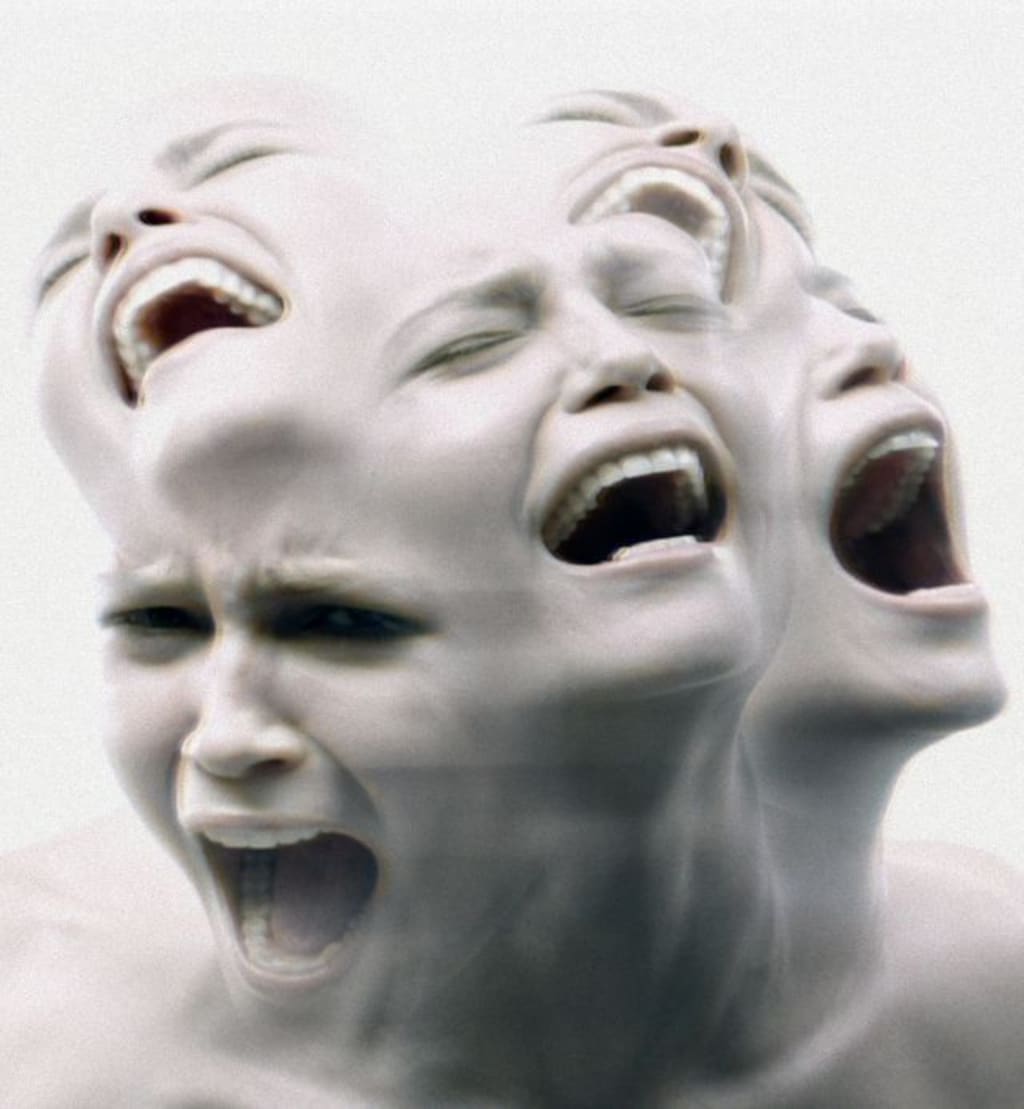
You are not waiting for the right moment. You are waiting to stop being afraid of yourself.
That is the real confession. The one underneath all the plans, all the drafts that never got sent, all the thoughts you filed away under not yet — as if readiness were a destination and not a decision.
Self-expression is not the thing you do when you are finally confident. It is the thing that creates confidence. The sequence most people have reversed is the reason most people feel stuck.
You have been waiting for permission from the wrong source.
The Version of You That Got Suppressed Before It Got Started
There is a version of you that existed before the editing began. Before you learned which parts of yourself made rooms comfortable and which parts made them tense. Before you developed the instinct — sharp, fast, almost unconscious — to compress your thoughts into something more digestible.
That version was not naive. It was not undeveloped. It was complete, in the way that something raw and unmediated is complete. It knew what it wanted to say.
Somewhere between that version and the one reading this, the noise got louder than the signal.
Developmental research on self-concept clarity shows that when a person's expressed identity is consistently met with correction or disapproval in early life, they begin to experience their authentic expression as a threat — not to the relationship, but to their own safety. The suppression becomes a reflex. Automatic. Below the level of choice.
This is not a wound you carried consciously. It is a wound that operated as a setting.
The Weight of the Unspoken
Here is what no one tells you about unexpressed things: they do not disappear.
They compress. They find another form. They become the low-grade dissatisfaction that follows you into rooms that should feel like yours. The creative restlessness that surfaces at 2am. The strange grief at other people's courage — not jealousy, exactly, but the ache of recognition.
You have seen someone say something true and felt something move in you. Not because they said something new. Because they said something yours. Something you had held too long in silence.
That movement is not admiration. It is the self, registering its own suppression.
Pennebaker's research at UT Austin found that the act of expressing previously withheld internal experience — in writing, in speech, in any committed external form — produced measurable reductions in psychological distress and improvements in immune function. The body knows the difference between what is held and what is released. It has been keeping the score all along.
The unexpressed self is not neutral storage. It is active weight.
The Myth That Self-Expression Requires Something You Do Not Yet Have
The lie is this: that expression is downstream of preparation.
That you need more clarity, more skill, more certainty before what you carry inside is fit for the outside world. That the right version of you — the one who has earned the right to speak — is still being assembled.
I lived inside this myth for years. The belief that the expression was the reward for getting everything else right, rather than the process by which everything else gets clarified.
Friedrich Nietzsche wrote that the human being who cannot express what they are becomes a slave to the opinions of those who can. Not because silence is passive. Because silence, sustained long enough, begins to feel like identity. You stop experiencing the suppression as a temporary condition. You start experiencing it as a permanent truth about what you deserve.
That is the moment the myth becomes a cage.
Self-expression is not the trophy. It is the territory. And you claim it by entering it — imperfectly, incompletely, without waiting for the version of yourself that never arrives.
The Art of It Is Not Technique
When I say the art of self-expression, I do not mean aesthetics. I do not mean style, or voice, or the particular arrangement of words.
I mean the discipline of bringing what is real inside you into contact with the world — and not flinching at the moment of contact.
That is an art. Because it requires everything craft requires: attention, courage, revision, tolerance for failure, the willingness to be misunderstood and continue anyway. Csikszentmihalyi's work on creative expression and optimal experience frames it precisely: the state of full creative engagement is not the absence of difficulty but the alignment between challenge and capability — and it requires that you bring yourself, fully, to the encounter.
You cannot express what you are unwilling to inhabit.
The art begins when you stop managing your self-image long enough to produce something honest. When you choose the true sentence over the safe one. When you create something that reveals you, rather than something that protects you.
The Fracture Point Where the Real Work Begins
There is a particular moment in the life of anyone who has begun to reclaim their expression. I have felt it. You may already know it.
It is the moment when you produce something real — a thought, a piece of work, a conversation — and instead of immediately checking how it was received, you sit with what it cost you to make it. And you notice: it cost you less than you expected. The thing you feared most — the nakedness, the visibility, the chance of being wrong — was survivable.
More than survivable. It was clarifying.
Brené Brown's research on vulnerability and creative courage identifies this moment as the pivot point in identity development: the person who discovers that authentic expression does not destroy them begins to build a relationship with their own truth that no external approval system can replicate.
You stop performing. You start participating.
The difference between those two states is the difference between a life that looks right and a life that feels real.
The Art of Self-Expression was written inside that fracture — not from the other side of it, but from within it. It is not a collection of techniques for becoming expressive. It is a reckoning with what has been suppressed, and a map back to the self that was always there, waiting. The PDF is here. The paperback is here. It is the kind of book you read with the feeling that you are being returned to something, not introduced to something new.
What Becomes Available When You Stop Editing Yourself
The thing that surprises people who begin expressing themselves honestly — truly honestly, without the subtle management — is not that the world becomes easier. It is that they become more distinct.
More recognizable. To themselves and to others.
The philosopher Charles Taylor identified authenticity not as self-absorption but as a moral ideal — the commitment to being true to an original something inside oneself rather than simply conforming to external demands. When that commitment is made operational — when it moves from philosophy to practice — it produces a particular kind of clarity that no productivity system manufactures.
You begin to know what you actually think. Not the approved version. Not the safe version. The actual version, unmediated.
And from that clarity, everything becomes easier to decide. Because you are deciding as yourself.
At Real Success Ecosystem, this is the quiet premise underneath all the work: that self-knowledge expressed is self-knowledge compounded. Each honest expression makes the next one easier. Each piece of work that carries your actual signature strengthens the signal until the noise can no longer drown it out. It is not a programme. It is an environment where the return to self becomes structurally inevitable.
The One Thing You Can Begin Tonight
You do not need a platform. You do not need an audience. You do not need the moment to feel right.
You need one sentence. The true one. The one you have been rewording into something more palatable.
Write it down. Say it to someone. Let it exist outside the place where only you can see it.
Not because the world is waiting for it — though some part of it is. But because *you* are waiting for it. The version of you that has been carrying the unexpressed weight of everything real. That version deserves to speak.
Self-expression is not the luxury you earn after you have built the life. It is the architecture the life is built from.
The art of it is simply this: begin.
Do you understand?
– Randolphe
About the Creator
Enjoyed the story? Support the Creator.
Subscribe for free to receive all their stories in your feed.
Comments
There are no comments for this story
Be the first to respond and start the conversation.