politicians
Reviews of the politicians kissing babies and running governments around the world; applaud and criticize the decisions they make and their implications.
This Is The Truth About The War In Iran Will Make You Think
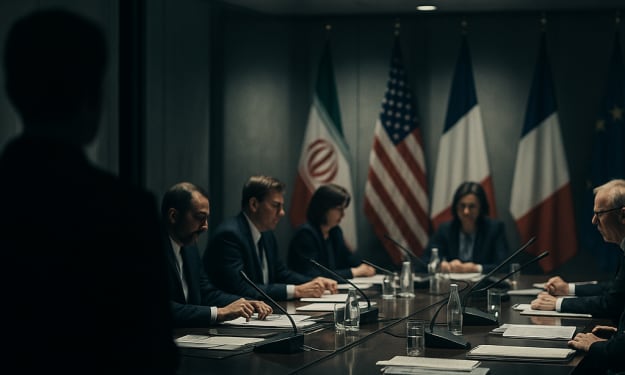
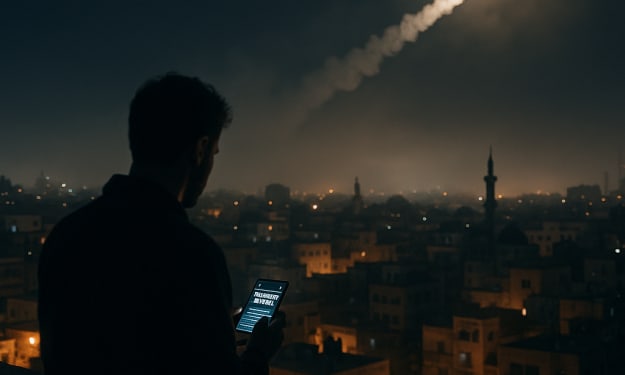
As the world sits burning in the early fires of war in Iran and the Middle East is rocked by missle barrages and battle, what happened that took America from an America first approach to things to being involved in another middle eastern war?
By Jason Morton7 months ago in The Swamp
The Most Shocking Revelation of the Clinton Epstein Testimony
In 2019, Jeffrey Epstein, a man who made multiple trips to visit the Whitehouse during the Clinton years, and was tied to at least one other president, Donald J. Trump, was indicted and taken into custody on human trafficking charges as a result of a long standing investigation into illicit sexual encounters, sex with and the trafficking of minors, and other varied accusations.
By Jason Morton7 months ago in The Swamp
Minnesota Sues Federal Government Over Withheld Medicaid Funds State claims unprecedented federal action threatens health care for more than a million residents. AI-Generated.
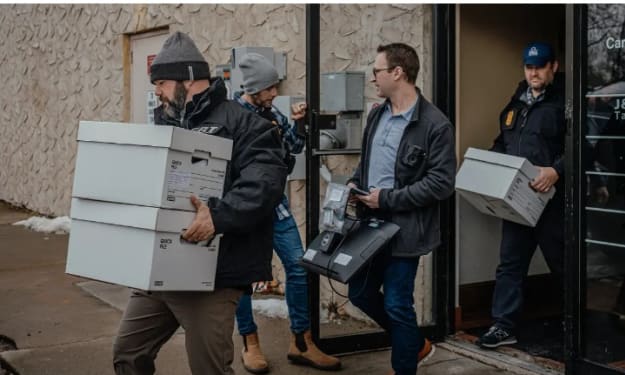
In a dramatic escalation of a long-running dispute over federal oversight and state health care funding, the State of Minnesota has filed a federal lawsuit against the U.S. Department of Health and Human Services (HHS) and the Centers for Medicare and Medicaid Services (CMS), accusing the Trump administration of unlawfully withholding hundreds of millions in Medicaid funds. The lawsuit, filed on March 2, 2026, comes as Minnesota officials argue that the federal action — driven partly by alleged fraud concerns — threatens vital health services for low-income residents and violates the state’s constitutional rights. Minnesota Attorney General Keith Ellison and the Minnesota Department of Human Services (DHS) are leading the legal challenge in U.S. District Court in Minneapolis, seeking a temporary restraining order to halt the withholding of about $243 million in federal Medicaid reimbursements. The funds in question represent roughly 7 percent of the state’s quarterly Medicaid funding and are critical for Minnesota’s Medical Assistance program — its version of Medicaid, which covers more than 1.2 million residents including children, seniors, people with disabilities and low-income families. A Contentious Federal Action The dispute dates back to January 6, 2026, when the Trump administration issued a notice stating it would withhold more than $2 billion annually from Minnesota’s Medicaid funds, alleging “noncompliance” with federal Medicaid rules. Minnesota officials requested specific details and documentation from CMS about these compliance concerns, as required under federal administrative procedures, but the state says it never received the necessary evidence or clear direction about how to remedy any alleged deficiencies. Despite the ongoing administrative appeal process, federal officials took the unusual step on February 25 of using a tool known as “deferral” to halt around $259 million in Medicaid payments, including $243 million tied to the original state challenge. Minnesota’s lawsuit argues that using deferral in this broad way has never been done before against a state and effectively allows the federal government to deny funds without due process. According to Minnesota’s complaint, this action violates the Fifth Amendment’s due process protections, the Administrative Procedure Act, and constitutional limits on how federal conditions can be imposed on state spending. Federal law requires that any conditions attached to federal funds be set out clearly and be lawful, something the state says did not happen here. Federal Government’s Position and Broader Context The federal government has justified the withholding as part of a broader effort to address fraud and improper payments within Medicaid and other social programs. Nationally, officials including Vice President J.D. Vance and CMS Administrator Dr. Mehmet Oz have pointed to examples of questionable billing and program misuse in some parts of Minnesota’s Medicaid system — especially in treatments for autism and other services — and have demanded corrective action plans before federal reimbursements are released. The federal authorities also implemented a six-month moratorium on new federal payments for certain medical equipment suppliers nationwide as part of this anti-fraud initiative. In Minnesota’s case, federal officials have given the state 60 days to produce a comprehensive plan detailing how it will strengthen oversight and compliance to resume payments. Despite these federal assertions, Minnesota’s leadership has maintained that the state already has robust controls in place and has prosecuted more than 300 Medicaid fraud cases resulting in $80 million in judgments and restitutions — evidence, they say, of their commitment to combating fraud. Attorney General Ellison has denounced the federal action as politically motivated and an unfair “weaponization” of Medicaid against a state with a different political agenda from the current administration. Potential Consequences for Health Care Access The lawsuit highlights serious concerns about the impact on Minnesotans who rely on consistent Medicaid funding. If the deferral remains in effect, the state could be forced to cut essential health services, delay payments to providers, or reallocate state funds to fill the gap. This is particularly troubling for vulnerable populations who already struggle with access to affordable care. Medicaid, which is a joint federal-state program, provides a safety net for families living at or below certain income thresholds — in Minnesota a family of four may qualify for Medical Assistance earning as much as $42,759 a year. Disrupting this funding could significantly affect care for children, individuals with disabilities, seniors and others with limited financial means. Reactions and Next Steps in the Legal Fight Governor Tim Walz and state officials have strongly criticized the federal move as “illegal and unprecedented,” arguing that cooperative efforts to prevent fraud should be supported, not weaponized. They emphasize that Minnesota has taken steps to tighten up program controls and is willing to work with federal partners — but not under conditions that strip the state of due process or essential funding. As the lawsuit proceeds, Minnesota will seek both to block the withholdings and to clarify the federal government’s obligations regarding Medicaid compliance and funding conditions. A federal judge’s ruling on the temporary restraining order will be an early milestone in what could be a lengthy and highly consequential legal battle. A Broader National Discussion The case also raises broader questions about how the federal government exerts oversight over state-administered programs and how disputes over fraud, compliance and funding should be managed without jeopardizing access to health care. As other states watch carefully, Minnesota’s fight could well shape future interactions between states and the federal government in Medicaid and beyond
By Jameel Jamali7 months ago in The Swamp
How Trump Assassination Attempts Played Into His Decision to Attack Iran. AI-Generated.
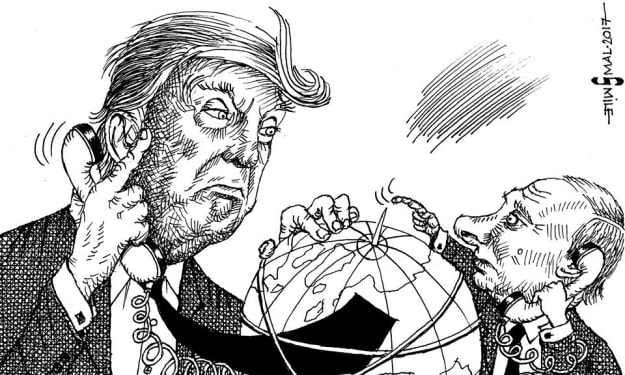
In early 2026, the United States found itself on the brink of one of the most consequential military confrontations in decades when President Donald Trump ordered a coordinated U.S.-Israeli strike that killed Iran’s supreme leader, Ayatollah Ali Khamenei. For many observers, the timing, justification, and strategic logic behind the attack were striking. Yet, according to Trump himself, one factor loomed especially large in his calculus: personal survival. In recent public remarks, he explicitly linked alleged assassination attempts against him to his decision to authorize strikes on Iran — a claim that has become a central talking point in an intense political and geopolitical debate.� The Washington Post The Catalyst: Claims of Iranian Assassination Threats Former President Trump — now back in office — has repeatedly said that Iran’s hostility toward him, particularly alleged attempts on his life, influenced his aggressive stance toward Tehran. In an interview following the Iranian strike that killed Khamenei, Trump stated bluntly, “I got him before he got me,” directly invoking supposed assassination attempts during his election campaign.� The Washington Post These comments built on earlier claims made by Trump during the 2024 campaign. As he campaigned for a return to the White House, he warned that Iran posed a threat to his life, suggesting that Tehran might be behind violent incidents including a rally shooting in Pennsylvania and an armed confrontation at his Florida golf course. Intelligence briefings shared with his campaign purportedly alerted him to “real and specific threats” from Iran, although officials acknowledged at the time that there was no direct evidence linking Iran to those particular assassination attempts.� The Washington Post +1 Trump’s rhetoric was stark. In 2025, he openly said Iran would be “obliterated” if it tried to assassinate him — a statement that sent shockwaves through international diplomatic circles even before he returned to the presidency.� Fox News From Campaign Claims to Executive Action By the time Trump assumed office again, the national security environment had shifted. Tehran’s relations with Washington were already frayed after years of sanctions, nuclear disputes, and proxy conflicts across the Middle East. Still, the linkage Trump drew between personal threats and national policy was unusual. Most modern presidents endeavor to separate personal grievances from foreign policy decisions, but Trump made that separation blur. When U.S. and Israeli forces struck Iranian leadership targets in February 2026, killing Khamenei and other senior commanders, Trump framed the action in strategic terms — neutralizing a nuclear threat and dismantling Iran’s regional influence. Yet his personal justification — that he was preventing a future strike against himself — reverberated just as loudly.� The Washington Post Critics immediately seized on this linkage, arguing that no credible intelligence publicly confirmed a direct Iranian attempt on Trump’s life and that suggesting otherwise risked inflaming an already volatile situation. Many experts cautioned that conflating campaign violence or isolated individual attacks with state-sponsored plots could distort U.S. threat assessments and mislead the public.� The Washington Post Iran’s Denials and the Public Record From Iran’s perspective, these assertions are flatly denied. Iranian officials have repeatedly rejected claims of plotting against Trump, labeling them politically motivated and unfounded. In interviews, Iranian leaders have described such allegations as attempts to fabricate a pretext for militaristic foreign policy moves.� Al Jazeera Even U.S. intelligence assessments have not publicly confirmed Iran’s direct involvement in the assassination attempts Trump referenced. In the case of the Pennsylvania rally shooting, for example, authorities found no evidence of a foreign connection, despite initial speculation.� The Washington Post This discrepancy between what has been aired publicly and what Trump asserts privately and publicly has fueled debate about how much personal grievance overtook objective analysis in U.S. policy making. The Broader Strategic Implications Beyond personal safety and rhetoric, Trump’s decision to attack Iran cannot be divorced from broader strategic calculations. Regional dynamics were already tense, with Iran’s nuclear ambitions, missile developments, and support for proxy militias in Iraq, Syria, Lebanon, and Yemen contributing to a complex security environment. In many policy circles, hardliners saw an opportunity to weaken Iran’s military infrastructure and curtail its influence. Trump’s public statements framed the operation as a win for U.S. security, echoing long-standing criticisms of the 2015 Iran nuclear deal and previous negotiations that he deemed too lenient.� The Guardian Yet analysts argue that linking personal threats to national military strategy is problematic. When personal animosities or fears drive policy, there’s a danger of overreaction, misinterpretation of intelligence, and escalation that outstrips strategic benefit. Critics say that Trump’s framing contributed to perceptions that the attack was about revenge rather than a carefully calibrated shift in U.S. military doctrine — a characterization both he and his defenders reject.� Le Monde.fr Conclusion: A Personal Narrative in a Global Crisis The narrative emerging from Trump’s own comments is unmistakable: assassination attempts allegedly tied to Iran weighed heavily in his decision-making process. Whether those attempts were directly orchestrated by Tehran remains unresolved in the public record, but Trump’s insistence on the connection has shaped how the world now views one of the most significant presidential decisions in recent memory. In the end, this episode underscores a perennial challenge in democratic leadership: balancing personal experience with national interest. Trump’s choice to foreground alleged threats against himself raises fundamental questions about how leaders interpret intelligence, justify military action, and communicate with the public at moments of profound consequence. As tensions with Iran continue and the world watches closely, history will assess whether this blending of personal narrative and policy was visionary or perilous.
By Jameel Jamali7 months ago in The Swamp
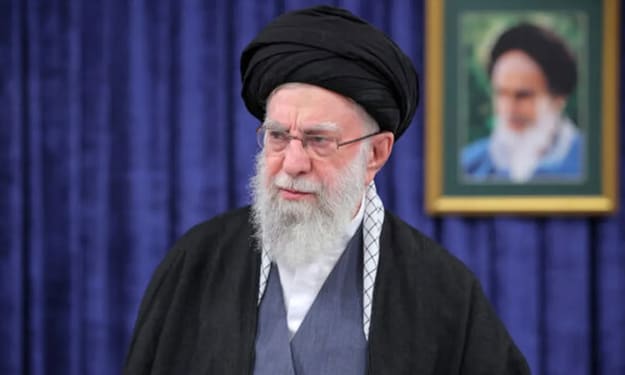
Iran Plunges Into Chaos After Khamenei’s Death
Iran erupted into unprecedented chaos after Supreme Leader Ayatollah Ali Khamenei was killed during targeted strikes on Feb. 28. Streets in Tehran filled with protesters, while retaliatory attacks hit U.S. bases in the Persian Gulf and the U.S. Embassy in Kuwait. Analysts warn that the violence could escalate into a wider regional crisis.
By Jacqueline Bowser7 months ago in The Swamp
Hassan Khomeini: The Reluctant Heir and Iran’s Symbol of Reformist Possibility. AI-Generated.
In Iran, names carry power. Few names carry as much weight as Khomeini. More than four decades after the Islamic Revolution reshaped the country, the legacy of its founding figure still shapes politics, identity, and legitimacy. Now, attention has increasingly turned to Hassan Khomeini, the founder’s grandson—a cleric who holds symbolic authority but remains formally outside the machinery of government. Despite his famous lineage, Hassan Khomeini has never held elected office or served in an official government position. Yet his influence persists, not through institutional power, but through symbolism, credibility, and his consistent calls for reform and national unity. His role reflects a paradox at the heart of Iranian politics: sometimes the most influential figures are those who operate outside formal power. A Powerful Name Without Official Authority Hassan Khomeini occupies a unique position in Iran’s political landscape. As the grandson of Ayatollah Ruhollah Khomeini, the architect of the Islamic Republic, he inherits unmatched symbolic legitimacy. For millions of Iranians, the Khomeini name remains intertwined with the revolution’s ideals of independence, justice, and resistance. Yet unlike many political figures who leverage family legacy into formal office, Hassan Khomeini has taken a different path. He has never served in parliament, never held a cabinet position, and never been part of the executive branch. Instead, his role has remained primarily religious and ceremonial. He is considered a mid-ranking cleric, responsible for preserving and promoting his grandfather’s intellectual and spiritual legacy. He oversees religious institutions connected to the Khomeini family and participates in commemorations and public discussions. This distance from formal political structures has preserved his image as a figure above factional politics. A Consistent Voice for Reform Despite his ceremonial role, Hassan Khomeini has developed a clear reputation as someone sympathetic to reformist ideas. Over the years, he has emphasized the importance of public participation, national unity, and responsiveness to the people. His statements often focus on the need for political legitimacy rooted in public trust. He has argued that the strength of the Islamic Republic depends on maintaining the support and confidence of its citizens. This message resonates strongly with reform-minded Iranians, who seek gradual political and social evolution rather than abrupt confrontation or instability. Unlike more confrontational reformists, Hassan Khomeini’s tone is cautious and measured. He rarely challenges the system directly. Instead, he frames reform as a continuation of the revolution’s original principles, rather than a rejection of them. This distinction is crucial. By grounding reform within the revolutionary tradition, he avoids appearing disloyal while still signaling openness to change. The Advantage of Remaining Outside Government Hassan Khomeini’s lack of formal government experience may appear to be a weakness, but it has also become a strength. Because he has never held executive power, he cannot be blamed for economic hardships, political repression, or policy failures. He remains largely insulated from the controversies that surround Iran’s political establishment. This distance allows him to maintain credibility across different segments of society. For reformists, he represents hope for gradual change without risking instability. For conservatives, he remains part of the revolutionary family and religious establishment, making him less threatening than more openly oppositional figures. For ordinary citizens, he appears as someone who understands both the system and its limitations. This unique positioning makes him politically significant even without holding office. Seen as a Potential Rival Hassan Khomeini’s symbolic influence has not gone unnoticed by Iran’s political elite. Some politicians, particularly those aligned with hardline factions, view him as a potential rival to more conservative candidates. His family name alone carries enormous legitimacy. In a political system where revolutionary credentials matter deeply, his lineage provides instant recognition and credibility. If he were ever to run for office, he could potentially attract broad support from reformists, moderates, and citizens nostalgic for the revolution’s original promises. This possibility creates quiet tension within Iran’s political landscape. Even without formally declaring political ambitions, Hassan Khomeini’s presence introduces an element of uncertainty. He represents an alternative vision—one that blends revolutionary legitimacy with openness to reform. Balancing Legacy and Modern Reality Hassan Khomeini’s position reflects the broader struggle within Iran between continuity and change. Iranian society has evolved dramatically since 1979. It is younger, more connected, and more aware of the outside world. Many citizens seek economic opportunity, social freedoms, and political accountability. At the same time, the revolutionary system remains deeply entrenched. Hassan Khomeini embodies the intersection of these forces. He is both a product of the revolution and a voice acknowledging the need for adaptation. His careful language reflects an understanding of Iran’s political realities. Direct confrontation with the system carries risks, both personally and nationally. Gradual evolution, rather than sudden disruption, offers a safer path. Symbolism as a Form of Influence In many political systems, power is measured by official titles. In Iran, symbolism can be equally important. Hassan Khomeini’s influence comes from what he represents rather than what he controls. He represents continuity with the revolution’s founding ideals. He represents the possibility of reform without collapse. He represents a bridge between past and future. This symbolic power gives him relevance even without formal authority. An Uncertain Political Future Whether Hassan Khomeini will ever seek political office remains unclear. His past reluctance suggests caution. Entering formal politics would expose him to criticism, controversy, and institutional constraints. Remaining outside government allows him to preserve his independence and symbolic influence. Yet Iran’s political future remains uncertain. Economic pressures, generational change, and shifting public expectations continue to reshape the country’s internal dynamics. In such an environment, figures with legitimacy, credibility, and reformist appeal may play increasingly important roles. Hassan Khomeini fits that description. The Reluctant Heir Hassan Khomeini’s significance lies not in what he has done, but in what he represents. He is the heir to Iran’s most powerful political legacy, yet he has chosen restraint over ambition. He is a cleric without executive authority, yet his voice carries weight. He is a symbol of reform within a system defined by continuity. For now, he remains on the margins of formal power. But in Iranian politics, margins can matter. Sometimes, the most important figures are not those who govern—but those who remind a nation of what it could become.
By Jameel Jamali7 months ago in The Swamp
Khamenei: Power, Faith, and Iran’s Defining Voice
In Iran, one name carries unusual weight across politics, religion, and daily life: Khamenei. For decades, his words have shaped national policy, foreign relations, and the tone of public debate. To some, he represents resistance and religious authority. To others, he symbolizes strict control and limited freedom. Outside Iran, his image often appears in headlines tied to sanctions, protests, or regional conflict. Inside the country, his influence reaches into classrooms, courts, and state media. Understanding Khamenei means understanding modern Iran itself. His life story connects revolution, war, ideology, and power. Whether admired or criticized, Khamenei remains one of the most influential figures in the Middle East, and his leadership continues to define Iran’s direction in a changing world.
By Muqadas khan7 months ago in The Swamp
Top 50 English-Language News Sites in the World: Substack Leads YoY Growth for Seventh Month as Most Down in January. AI-Generated.
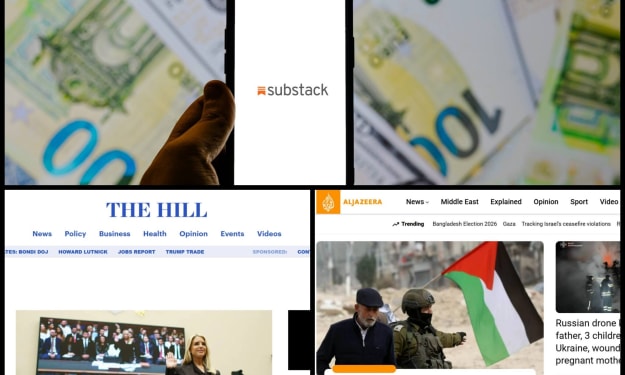
Subtitle: As traditional news platforms face declining traffic, independent publishing and newsletter-driven journalism are reshaping the global media landscape. The global digital news landscape is undergoing a dramatic transformation. According to the latest traffic analysis of the top 50 English-language news websites in the world, most platforms experienced declines in visits in January, while Substack stood out as a powerful exception. The newsletter-driven publishing platform recorded the highest year-over-year growth for the seventh consecutive month, signaling a significant shift in how audiences consume news and information. This development highlights an important turning point in the evolution of journalism. While traditional news websites continue to struggle with declining engagement, newer digital platforms built around independent creators, personalization, and direct audience relationships are rapidly gaining momentum. Widespread Declines Across Major News Websites The January rankings revealed a concerning trend for established news organizations. Out of the top 50 English-language news websites globally, only seven experienced year-over-year traffic growth, while 43 sites saw declines in visits compared to the same period the previous year. Some of the steepest declines affected prominent news brands. Indian news platforms India.com and Hindustan Times recorded dramatic drops of 72% and 63% respectively. Forbes also experienced a significant decline of 48%, reflecting broader challenges facing traditional media outlets. These declines reflect a growing shift in audience behavior. Readers are no longer relying exclusively on major media websites. Instead, they are consuming news through alternative channels such as social media platforms, newsletters, mobile apps, and independent journalism platforms. This fragmentation of audience attention has made it increasingly difficult for traditional news organizations to maintain consistent traffic levels. Substack Emerges as a Major Digital News Force In contrast to the widespread declines across the industry, Substack has demonstrated remarkable growth. The platform recorded a 44% increase in visits year over year, reaching approximately 166.9 million visits in January alone. This marks the seventh consecutive month that Substack has led growth among the world’s top 50 English-language news sites. Substack’s success reflects a broader shift toward creator-driven journalism. Unlike traditional news websites that rely on editorial hierarchies and advertising revenue, Substack allows individual writers to publish newsletters directly to subscribers. This model creates a more personal relationship between journalists and readers. Readers are increasingly drawn to content that feels authentic, specialized, and independent. Instead of consuming generalized news from large institutions, many audiences prefer to follow individual journalists who focus on specific topics or perspectives. Substack’s growth demonstrates how independent publishing is reshaping the news ecosystem. Digital Media Consumption Is Rapidly Evolving The growth of Substack and similar platforms reflects deeper changes in digital media consumption habits. Audiences now expect more personalized and convenient access to information. Newsletters delivered directly to inboxes provide readers with curated content that fits their interests and schedules. Traditional news websites, by contrast, often rely heavily on search engines and social media platforms to generate traffic. Changes in search algorithms, shifting social media priorities, and increased competition have reduced their ability to attract large audiences consistently. Research shows that web traffic is increasingly concentrated among fewer dominant platforms, while audiences distribute their attention across multiple channels and formats. This shift has created both challenges and opportunities for news organizations. Some News Organizations Still Show Strong Performance Despite the overall decline in traffic, several major news organizations experienced positive growth. Al Jazeera recorded a 39% year-over-year increase in visits, while The Hill saw traffic rise by 38%. Additionally, many news websites experienced month-to-month increases in traffic during January. Thirty-six of the top 50 sites saw month-over-month growth compared to December, suggesting that audience engagement can fluctuate based on news cycles and global events. For example, AP News and NBC News both recorded substantial monthly increases in traffic, highlighting how breaking news and major global developments can temporarily boost readership. These fluctuations illustrate the unpredictable nature of digital news consumption. The Rise of Direct-to-Reader Journalism One of the most important lessons from Substack’s growth is the increasing importance of direct relationships between journalists and readers. Traditional media business models rely heavily on advertising revenue, which depends on attracting large volumes of traffic. However, Substack’s subscription-based model allows writers to earn income directly from readers. This model reduces reliance on advertising and provides greater financial stability for journalists. It also allows writers to focus on niche topics and specialized audiences. The success of this model reflects growing reader demand for trustworthy, expert-driven content. Traditional Media Faces Increasing Competition The decline in traffic across many major news websites highlights the challenges facing traditional journalism in the digital age. Competition for audience attention has intensified dramatically. Readers now have access to information from a wide range of sources, including social media influencers, independent journalists, podcasts, and video platforms. This increased competition has fragmented the news audience and reduced the dominance of traditional media institutions. Even the world’s most visited news websites, such as The New York Times and BBC News, must continuously adapt to changing audience expectations and technological trends. The Future of Digital Journalism The latest rankings of the top 50 English-language news websites provide valuable insight into the future of journalism. The growth of Substack and similar platforms suggests that independent journalism and personalized content will play an increasingly important role. At the same time, traditional news organizations must adapt by embracing digital innovation, diversifying revenue sources, and strengthening relationships with their audiences. The digital news industry is not disappearing—it is evolving. As readers continue to seek trustworthy, relevant, and engaging content, platforms that prioritize authenticity, accessibility, and reader connection will be best positioned for long-term success. Substack’s continued growth demonstrates that the future of journalism may belong not only to large media institutions, but also to individual voices empowered by technology.
By Jameel Jamali7 months ago in The Swamp
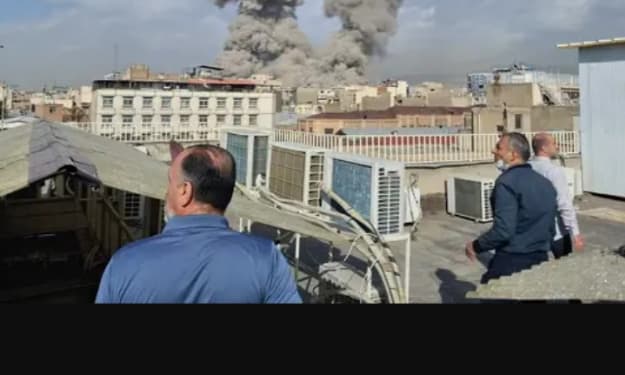
Death Toll in Strike on Girls' School in Southern Iran Rises to 40, State Media Say . AI-Generated.
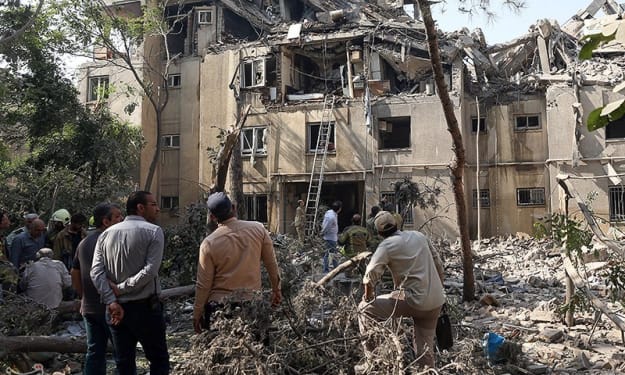
The devastating strike on a girls’ school in southern Iran has become one of the most tragic and controversial moments in the country’s recent history of conflict. What began as reports of several casualties quickly evolved into a grim national tragedy, with Iranian state media reporting that the death toll had risen to 40. The victims were mostly young schoolgirls whose lives were abruptly cut short in what should have been a safe place of learning. The incident has sent shockwaves across Iran and beyond, raising urgent questions about civilian safety, the ethics of modern warfare, and the human cost of geopolitical conflict. The attack reportedly struck a girls’ elementary school in Minab, a city located in Iran’s southern Hormozgan province. Initial reports indicated that five students were killed and several others injured. However, as rescue teams combed through the debris and hospitals struggled to treat the wounded, the scale of the tragedy became clearer. Iranian authorities stated that many students had been inside classrooms at the time of the strike, leaving them with little chance to escape the blast. Eyewitnesses described scenes of chaos and heartbreak. Parents rushed to the school in desperation, searching for their daughters among the injured and the dead. Emergency workers carried victims from the rubble, while medical teams worked tirelessly to stabilize survivors. The emotional toll was overwhelming, not just for families but for entire communities. Schools are meant to symbolize hope, growth, and safety, yet in this moment, they became a symbol of vulnerability. The strike occurred during a period of escalating military tensions involving Iran and foreign adversaries. According to reports, the attacks were part of broader military operations targeting various locations across Iran. Although military officials often claim to target strategic or military assets, the strike on the girls’ school has sparked widespread outrage due to its civilian toll, particularly among children. Children are among the most vulnerable victims of armed conflict. International law, including the Geneva Conventions, emphasizes the protection of civilians and explicitly condemns attacks on schools. Schools are recognized as protected spaces because they represent the future of societies. When schools are targeted or damaged, the consequences extend far beyond immediate casualties. The long-term effects include psychological trauma, disrupted education, and lasting damage to communities. The psychological impact on survivors and families cannot be overstated. Children who survived the attack may carry emotional scars for years, struggling with fear, grief, and trauma. Parents who lost their daughters face unimaginable pain that will remain with them for the rest of their lives. Even students who were not present during the strike may experience anxiety and fear about returning to school. This tragedy also highlights the broader humanitarian consequences of modern warfare. Advances in military technology have increased the precision of weapons, but civilian casualties remain a devastating reality. Mistakes, miscalculations, or intelligence failures can result in catastrophic outcomes, particularly in populated areas. The strike on the girls’ school demonstrates how quickly lives can be lost and communities shattered. Beyond the immediate tragedy, the incident has fueled anger and intensified political tensions. Iranian officials condemned the attack and vowed to respond, while global leaders expressed concern about the escalating violence. The situation raises fears of further escalation, potentially leading to broader regional instability. For many Iranians, the attack represents more than just a military incident. It symbolizes the vulnerability of ordinary people caught in geopolitical struggles beyond their control. Families who sent their daughters to school that day never imagined they would not return home. The loss has created a collective sense of mourning across the nation. The tragedy also raises important ethical questions about warfare in the modern age. Military strategies often focus on weakening an opponent’s capabilities, but when civilian lives are lost, especially those of children, the moral consequences are profound. Every civilian casualty represents not just a statistic, but a human life filled with dreams, relationships, and potential. Education is a fundamental right and a cornerstone of progress. When schools are destroyed or attacked, the impact extends beyond physical damage. It disrupts learning, destroys opportunities, and creates fear that prevents children from pursuing education. In regions affected by conflict, education often becomes one of the first casualties. The strike on the girls’ school serves as a painful reminder of the human cost of war. It demonstrates that behind every military operation are real people whose lives can be changed forever in an instant. The loss of 40 young lives is not just a national tragedy but a global one. As investigations continue and the world watches closely, the focus must remain on the victims and their families. Their stories deserve to be remembered, and their loss must not be reduced to numbers. This tragedy underscores the urgent need for greater efforts to protect civilians, especially children, during times of conflict. In the end, the strike on the girls’ school in southern Iran is more than a news headline. It is a heartbreaking reminder of how fragile human life can be in times of war. It calls for reflection, accountability, and renewed commitment to protecting the innocent. The lives lost can never be replaced, but their memory can serve as a powerful call for peace and humanity in an increasingly uncertain world.If you want, I can also rewrite this in Vocal Media’s exact tone and formatting style (more emotional storytelling, stronger hook, and SEO optimization) to increase approval chances.
By Jameel Jamali7 months ago in The Swamp