politicians
Reviews of the politicians kissing babies and running governments around the world; applaud and criticize the decisions they make and their implications.
Let's Play A Game
Playing Politics The other day, while bored, I started playing around with ChatGPT. It’s fun, and there are things that people can use it to have a little fun with, and to help with projects. I wanted to see what I’d look like sitting at the resolute desk in the Oval Office.
By Jason Morton6 months ago in The Swamp
Former President Obama will welcome former President Bush, not Trump to Obama Presidential Center ceremonies, per report
The shade is real. In what looks like a master troll operation, former president Barack Obama has shunned President Trump from taking part in the unveiling of the Obama Presidential Center in Washington, DC.
By Skyler Saunders6 months ago in The Swamp
Judge Rules Kari Lake Unlawfully Ran U.S. Media Agency, Voiding Layoffs. AI-Generated.
A federal judge has ruled that former Arizona political candidate Kari Lake unlawfully exercised authority over a U.S. government-funded media agency, a decision that has nullified a series of layoffs and triggered renewed debate about leadership and governance in publicly funded international broadcasting. The ruling centers on Lake’s role at the U.S. Agency for Global Media (USAGM), the federal body that oversees several international broadcasting networks, including Voice of America. The agency is responsible for delivering news and information to audiences worldwide, particularly in regions where press freedom is restricted. In the court’s decision, the judge concluded that Lake did not have the legal authority to direct certain actions within the agency, including approving or enforcing layoffs that affected numerous employees. As a result, those layoffs were declared invalid, opening the door for affected workers to seek reinstatement or other remedies. The case has drawn national attention, not only because of the legal implications but also because of the political profile of the individuals involved. Lake, a former television news anchor who rose to prominence in Republican politics, has remained a controversial figure since her campaigns for public office. According to court filings, the dispute began when staff members and agency employees challenged decisions made during Lake’s tenure in a leadership role associated with the media organization. Critics argued that the authority she exercised went beyond the limits allowed under federal law and the agency’s governing structure. The judge’s ruling emphasized the importance of proper appointment procedures and clear legal authority in federal agencies. Public institutions, the decision stated, must follow established laws governing who can direct personnel decisions, particularly when those decisions affect employment and organizational structure. By invalidating the layoffs, the court effectively reversed actions that had already disrupted the careers of many employees. Several journalists, editors, and support staff had lost their positions as part of the restructuring plan. Employee representatives welcomed the ruling, describing it as a victory for both workers and the independence of international journalism. Many staff members argued that the layoffs threatened the mission of U.S.-funded international broadcasting, which aims to provide credible news coverage in countries where independent media outlets face censorship or repression. Supporters of the agency’s workforce stressed that institutions like Voice of America play a critical role in promoting democratic values and transparency. By broadcasting in dozens of languages and reaching audiences across multiple continents, these networks serve as an important source of information in regions with limited press freedom. However, Lake’s supporters have pushed back against the criticism, arguing that the leadership changes and restructuring efforts were intended to improve efficiency within the agency. They claim that reforming government-funded organizations is often necessary to ensure accountability and responsible use of taxpayer resources. The legal ruling does not necessarily end the dispute. Appeals or additional legal proceedings could follow as both sides assess the implications of the court’s decision. Nevertheless, the judgment has already had immediate consequences for the agency’s internal operations. Legal experts say the case underscores a broader issue about governance within federal agencies. The U.S. government operates through a complex framework of appointments, confirmations, and delegated authorities designed to ensure accountability and prevent overreach. When those rules are challenged or interpreted differently by various actors, disputes can quickly move into the courts. In this instance, the judiciary ultimately determined that the authority used to carry out the layoffs was not properly established. The controversy also arrives during a time of heightened scrutiny surrounding media organizations and government involvement in broadcasting. International state-funded media outlets often operate under unique mandates that combine journalistic independence with public funding. Maintaining that balance can be challenging. On one hand, these organizations must remain free from political interference to maintain credibility with global audiences. On the other hand, they are funded and overseen by government institutions that require accountability and oversight. For employees affected by the layoffs, the ruling represents a potential turning point. Some may be eligible to return to their previous roles, while others could receive compensation or other remedies depending on future legal developments. For the agency itself, the decision may prompt internal reviews of leadership structures and decision-making processes. Ensuring that all personnel actions comply with federal law will likely become a priority moving forward. Political reactions to the ruling have been sharply divided. Critics of Lake view the decision as confirmation that the agency’s governance rules were not properly followed. Supporters, meanwhile, argue that the legal dispute reflects broader disagreements about how government media organizations should operate. Regardless of political perspective, the case highlights the complexities involved in managing institutions that sit at the intersection of journalism, government oversight, and international diplomacy. As the situation develops, attention will likely remain focused on how the agency addresses the aftermath of the ruling and how it protects both its workforce and its mission. The outcome also serves as a reminder that even within government-funded organizations dedicated to free expression, adherence to legal procedures remains essential. Without clear authority and transparent decision-making, the stability and credibility of such institutions can quickly come into question.
By Jameel Jamali6 months ago in The Swamp
Trump Assembles a New Coalition to ‘Eradicate’ Cartels. AI-Generated.
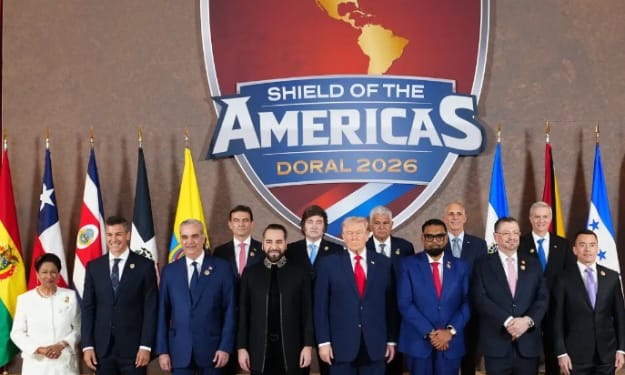
In the evolving landscape of American politics and national security, former U.S. President Donald Trump has once again ignited debate with a bold proposal: forming a new coalition aimed at “eradicating” powerful drug cartels operating across the Americas. The initiative, framed as a comprehensive strategy to combat organized crime and drug trafficking, has stirred support among allies and raised significant questions among critics about its feasibility, legality, and long-term implications. Drug cartels have long posed a complex challenge for the United States and its neighbors. Organizations such as the Sinaloa Cartel and the Jalisco New Generation Cartel have developed sophisticated networks that extend far beyond national borders. These groups control lucrative drug routes, traffic weapons, launder money through international financial systems, and exert influence in multiple countries. Trump’s proposed coalition reportedly focuses on building stronger security partnerships between the United States and several Latin American nations. According to statements from his political allies, the plan would emphasize intelligence sharing, coordinated law enforcement operations, and expanded resources to dismantle cartel leadership structures. The ultimate goal, Trump says, is not merely to disrupt these criminal networks but to eliminate their ability to operate altogether. Supporters of the initiative argue that cartels have grown too powerful for any single nation to confront alone. Cross-border crime, they say, requires cross-border solutions. A multinational coalition could combine intelligence, law enforcement capabilities, and financial tracking systems to attack cartel operations from multiple angles simultaneously. The former president’s rhetoric has also focused heavily on the human cost of cartel activity. Drug trafficking, particularly the spread of synthetic opioids such as fentanyl, has contributed to a severe public health crisis in the United States. Thousands of overdose deaths occur every year, and policymakers across the political spectrum have struggled to find effective strategies to curb the flow of dangerous substances. Trump’s proposal suggests that stronger action against cartel infrastructure—including laboratories, smuggling routes, and financial networks—could significantly reduce the supply of drugs entering the United States. Supporters believe that weakening these organizations at their source could have ripple effects throughout the global narcotics trade. However, critics argue that the concept of “eradicating” cartels may oversimplify a deeply entrenched problem. Organized crime groups have historically adapted quickly when pressured by law enforcement or military operations. When one cartel weakens, others often emerge to fill the void, sometimes creating even more fragmentation and violence. Some analysts also warn that aggressive cross-border operations could strain diplomatic relations with countries such as Mexico, where sovereignty and national security concerns remain highly sensitive. Past cooperation between U.S. and Mexican authorities has relied heavily on joint law enforcement efforts rather than direct foreign military intervention. During his presidency, Trump repeatedly emphasized tough border policies and strong measures against drug trafficking organizations. His administration pushed for stricter border enforcement and expanded pressure on criminal networks involved in drug production and distribution. The new coalition proposal appears to build upon those earlier priorities while framing the issue as a multinational security challenge. Political observers note that the plan also fits into a broader narrative about law and order that has remained central to Trump’s political messaging. By portraying cartels as a direct threat to American communities, the proposal seeks to mobilize public concern about crime, drugs, and border security. At the same time, experts in international relations caution that successful cooperation against transnational crime requires careful diplomacy. Countries affected by cartel violence often face their own internal challenges, including corruption, weak institutions, and economic instability. Addressing these underlying issues may be just as important as targeting cartel leaders. Human rights organizations have also expressed concern that large-scale security operations could risk civilian harm if not conducted carefully. Past anti-cartel campaigns in parts of Latin America have sometimes led to unintended consequences, including displacement of communities and increased violence between rival groups. Nevertheless, the urgency of the drug crisis continues to drive calls for stronger action. In many parts of the United States, local governments and law enforcement agencies report that fentanyl trafficking has transformed the landscape of narcotics enforcement. Synthetic drugs can be produced cheaply, transported easily, and distributed through complex networks that span continents. For Trump and his supporters, these developments reinforce the argument that traditional approaches have failed to keep pace with evolving criminal organizations. A coordinated coalition, they argue, could apply sustained pressure across borders and disrupt cartel operations more effectively than isolated national strategies. Whether the proposed coalition will gain widespread support remains uncertain. International partnerships require agreement among governments with different priorities, legal systems, and political pressures. Even within the United States, policymakers continue to debate the most effective ways to address drug trafficking and organized crime. Still, the announcement has already sparked renewed discussion about the scale of the cartel challenge and the need for innovative solutions. The intersection of crime, public health, and international security makes the issue one of the most complex facing policymakers today. As debates continue, the concept of a multinational coalition against drug cartels highlights a broader reality: transnational crime cannot be easily contained by borders alone. Whether through diplomacy, law enforcement cooperation, or new policy approaches, the search for effective strategies remains ongoing. For now, Trump’s proposal has placed the fight against cartels back at the center of political conversation, raising both hopes for stronger action and concerns about the risks of escalating conflict in an already volatile struggle against organized crime.
By Jameel Jamali6 months ago in The Swamp
The First Casualty Of War Is The Truth
It is often said that in times of war, the first casualty is the truth. When Donald Trump launched Operation Epic Fury, he said that the goal was to stop Iran from developing nuclear weapons. At the same time, when the head of the International Atomic Energy Agency (IAEA), Rafael Grossi, was asked about it, he said that they do not even have access to the sites. Therefore, they have no clear idea about what is happening there, and he appeared somewhat confused.
By Ibrahim Shah 7 months ago in The Swamp
U.S. strategic competition with China.
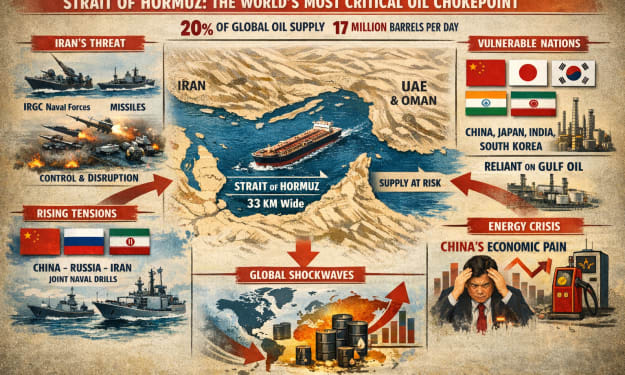
This war Stop being a medley story the moment the first oil tanker changed course in the Persian Gulf. What I mean is, Strait of Hormuz is the most important energy bottleneck on earth. Everybody knows it is the most important energy bottleneck on earth. And if it was the threat from Iran last time, this time Iran has partially done it. It is so narrow, IRGC has a lot of control over it. Just like in the Strait of Malacca, army/navy has control over it. Similarly, here the Iranians have control over it. And recently, China, Russia, and Iran have already conducted war games. So it is this narrow, 33 kilometers wide, you are hearing about it everywhere, everybody is talking about it. It is the width of a large city. So in this narrow passage, which holds 20% of the world's oil, one fifth of the world's oil and gas goes through, it is around 17 million barrels per day. There is no realistic alternative route except the Strait of Hormuz. If we close this passage, its consequences will not stop at any one border. Europe will pay, Japan will pay, India, South Korea, China, everybody pays the price. So a theory is floating around, which backs my argument that China is the target. It is that in Washington circles, there is a discussion going on, let's be honest, if this happens, what do we have to do? The hawkish people there say that this disruption should be allowed because it does not impact them as much as it impacts those countries, which I have just mentioned. So let's take this opportunity that the slowdown of China's energy supply can be slowed down. Trap Beijing in such an expensive moment as long as this congestion remains in the Strait of Hormuz, it remains closed, partially or completely. Iran keeps Beijing hit very badly from an energy security point of view. So the containment policy of China that is already going on is an added bonus. So imagine, on one hand, you are doing everything with technology and trade, imposing tariffs, treating them in the South China Sea, imagine all this. And from the other side, almost 90% of the oil and gas supplies go to China. If it is blocked for a few days, how badly it will hit China. So imagine, while the world is suffering, they are only having strategic designs in their minds.
By Ibrahim Shah 7 months ago in The Swamp
Russia Is Providing Iran Intelligence to Target U.S. Forces, Officials Say. AI-Generated.
Growing military cooperation between Moscow and Tehran raises fears of a wider global confrontation The geopolitical tensions surrounding the Middle East conflict have intensified after reports emerged that Russia may be providing Iran with intelligence that could help target American military forces. According to several U.S. officials familiar with classified assessments, Moscow has allegedly shared sensitive information about the locations of American military assets across the region, including warships, aircraft, and bases. � Reuters +1 If confirmed, the revelation represents a significant escalation in the evolving relationship between Russia and Iran. It also raises concerns that the conflict could expand beyond the Middle East and become entangled in the broader power struggle between major global powers. What the Intelligence Reports Claim According to officials who spoke to journalists on condition of anonymity, Russia has provided Iran with information that could help identify U.S. military positions in the Middle East. This reportedly includes data about American warships and aircraft operating in strategic locations. � Reuters Such intelligence could dramatically improve Iran’s ability to launch targeted missile or drone attacks against American forces. Analysts note that real-time or near-real-time intelligence can significantly increase the accuracy of military operations. Reports suggest that the intelligence sharing began after the latest round of hostilities between the United States and Iran intensified. In recent weeks, U.S. and allied forces have conducted large-scale strikes against Iranian military infrastructure, prompting retaliatory missile and drone attacks from Tehran. � The Economic Times While officials say the full extent of Russia’s involvement remains unclear, the intelligence exchange is seen as a sign of growing strategic alignment between the two countries. Why Russia Might Be Helping Iran Russia and Iran have developed closer military and political ties in recent years. Their partnership expanded significantly during the war in Ukraine, where Iran supplied drones and other military equipment to support Russian forces. In return, analysts believe Russia may now be offering intelligence or technical support to Tehran. Some experts view the alleged cooperation as a form of geopolitical retaliation. The United States and its allies have provided Ukraine with intelligence, weapons, and financial support to counter Russia’s invasion. From Moscow’s perspective, helping Iran challenge U.S. military operations could serve several strategic goals: Distracting Washington with another major conflict Weakening American influence in the Middle East Strengthening Russia’s alliance with Iran Additionally, Russia has long maintained diplomatic and economic ties with Iran despite Western sanctions. The two countries also signed agreements in recent years aimed at expanding defense and economic cooperation. The Potential Impact on the Conflict If Russia is indeed providing targeting intelligence, the implications could be serious. Intelligence sharing can make military strikes more precise and potentially more deadly. According to reports, the data allegedly includes coordinates or positional information about American military assets. � Wall Street Journal For U.S. forces operating in the region, this could increase the risk of attacks on ships, aircraft, and military bases. American troops are stationed in multiple Middle Eastern countries, including Iraq, Syria, and several Gulf states. Military analysts warn that such intelligence support could prolong the conflict and make it more unpredictable. It could also complicate U.S. military planning, as commanders may need to assume that Iran has access to outside intelligence sources. U.S. Response to the Allegations American officials have acknowledged the reports but emphasized that the U.S. military is aware of the situation and adjusting its strategies accordingly. Defense leaders say they are closely monitoring communications and movements involving Russia and Iran. According to U.S. officials, military planners are factoring the possibility of foreign intelligence assistance into operational decisions. At the same time, the White House has attempted to reassure the public that American forces remain capable of defending themselves and maintaining strategic dominance in the region. Still, lawmakers and analysts in Washington have raised concerns that the situation could represent a dangerous expansion of the conflict. Russia’s Position Russia has not publicly confirmed that it is sharing intelligence with Iran. Kremlin officials have largely avoided direct responses to the allegations, though they have acknowledged maintaining dialogue with Iranian leadership. Moscow has also criticized the U.S. military campaign against Iran, describing it as an act that could destabilize the region. Russian leaders have repeatedly argued that Western military interventions in the Middle East often worsen conflicts rather than resolve them. Because intelligence operations are typically classified, it may be difficult to independently verify the extent of Russia’s involvement. A Wider Geopolitical Struggle The reported intelligence sharing highlights a broader trend in global politics: the emergence of increasingly interconnected conflicts. What begins as a regional war can quickly draw in outside powers pursuing their own strategic interests. For years, Russia and the United States have competed for influence across multiple regions, from Eastern Europe to the Middle East. If Moscow is actively assisting Iran against U.S. forces, it would mark one of the most direct confrontations between the two powers in recent decades. Experts warn that the situation could escalate further if additional countries become involved. The Middle East already hosts a complex network of alliances and rivalries, making it particularly vulnerable to wider geopolitical tensions. What Happens Next? For now, many questions remain unanswered. The precise scale of Russia’s intelligence support, the methods used to share information, and the impact on Iranian military operations are still unclear. However, the reports alone have already intensified concerns about the trajectory of the conflict. If major powers continue to intervene—directly or indirectly—the risk of a broader international crisis could grow. As the situation evolves, the world will be watching closely. The decisions made in Washington, Moscow, and Tehran in the coming weeks may determine whether the conflict remains regional—or becomes something far larger.
By Jameel Jamali7 months ago in The Swamp
A Humanitarian Response Amid Rising Global Tensions. AI-Generated.
The Indian Ocean became the center of international attention when Sri Lanka took custody of an Iranian naval vessel after the United States sank another Iranian warship nearby. The dramatic sequence of events unfolded during a period of escalating conflict between Iran and a U.S.–Israel alliance, raising concerns about maritime security, international law, and the role of neutral states in times of war. As global tensions intensify, Sri Lanka has found itself unexpectedly drawn into the geopolitical spotlight. By responding to a distress call and providing assistance to Iranian sailors, the island nation attempted to balance humanitarian responsibility with diplomatic neutrality in a rapidly evolving crisis. The Sinking of an Iranian Warship The incident began when a U.S. Navy submarine torpedoed the Iranian frigate IRIS Dena in the Indian Ocean, roughly 40 nautical miles south of the Sri Lankan city of Galle. The strike marked one of the rare modern instances of a submarine sinking a surface warship, a type of naval combat not widely seen since World War II. � Wikipedia +1 At the time of the attack, the Iranian vessel was reportedly returning home after participating in international naval events hosted in India. The warship carried around 180 personnel when it was struck by a Mark-48 torpedo launched from the U.S. submarine. � Wikipedia The explosion caused catastrophic damage, sending the ship beneath the waves before rescue forces could reach it. Sri Lankan authorities later recovered dozens of bodies from the ocean and rescued several survivors suffering from injuries and exhaustion. At least 87 sailors were confirmed dead, making the sinking one of the most lethal naval incidents in the region in recent years. � AP News The attack occurred amid a wider military campaign involving the United States, Israel, and Iran, expanding the scope of conflict beyond the Middle East into the Indian Ocean. Another Iranian Vessel Requests Help Only days after the sinking, a second Iranian naval vessel — the IRIS Bushehr, a logistics ship equipped with a helicopter landing platform — experienced mechanical problems near Sri Lanka’s maritime zone. The ship requested assistance after reporting engine failure while operating in nearby waters. � AP News Sri Lanka’s navy responded to the distress signal and escorted the ship toward safety. More than 200 Iranian sailors were transferred ashore for medical checks and immigration procedures, while a small number of crew members remained on board with Sri Lankan personnel to help manage the vessel. � AP News The sailors were taken to a naval base near Colombo, where authorities conducted routine health examinations and security procedures. According to officials, none of the sailors were found to have serious medical issues. Sri Lanka later confirmed that the vessel would remain under its custody until the situation is resolved. A Neutral Nation in a Complicated Situation Sri Lanka’s decision to take control of the Iranian ship highlights the difficult position neutral countries often face during international conflicts. The government emphasized that its response was guided by international maritime law and humanitarian principles rather than political alignment. President Anura Kumara Dissanayake explained that the country had carefully evaluated the request for assistance before allowing the ship to enter Sri Lankan waters. According to officials, international conventions require ships in distress to receive aid regardless of political circumstances. In situations involving naval conflict, neutral states are obligated to assist shipwrecked sailors and vessels facing emergencies. Ignoring such a request could violate widely accepted maritime norms. Experts note that Sri Lanka’s decision to intern the vessel and crew is consistent with global conventions governing neutrality during wartime. The move ensures that the ship cannot immediately rejoin military operations while also protecting the lives of those on board. Regional and Global Implications The events near Sri Lanka demonstrate how conflicts in one region can quickly expand into global waters. The sinking of the Iranian frigate and the rescue operation that followed have drawn attention from several countries, including India and Australia, whose naval forces operate in the Indian Ocean. The incident also highlights the strategic importance of the region. Major shipping routes pass near Sri Lanka, connecting the Middle East, Asia, and Europe. Any disruption to security in these waters could affect global trade, energy transportation, and maritime stability. Iran strongly condemned the U.S. attack, describing it as an “atrocity at sea” and warning that the United States would face consequences for the strike. Meanwhile, Washington has defended its actions as part of a broader military effort against Iranian forces. For Sri Lanka, the situation presents a delicate diplomatic challenge. The country maintains economic and political relationships with both Western nations and Iran, making neutrality essential to protecting its interests. Humanitarian Concerns and the Path Forward Beyond the geopolitical implications, the incident has also highlighted the human cost of naval warfare. Rescue teams described scenes of floating debris, damaged life rafts, and exhausted survivors struggling to stay afloat after the explosion. Sri Lankan naval personnel played a crucial role in rescuing survivors and recovering the bodies of those lost at sea. Their efforts have been widely recognized as an example of humanitarian action during a moment of intense international tension. As the rescued sailors await repatriation and diplomatic negotiations continue, the episode serves as a reminder of how quickly regional conflicts can escalate into global incidents. For now, Sri Lanka remains committed to maintaining neutrality while fulfilling its humanitarian obligations. Yet the situation also underscores a broader reality: in today’s interconnected world, even countries far from the front lines can find themselves at the center of geopolitical storms.
By Jameel Jamali7 months ago in The Swamp
How U.S. Strikes in Iran and Venezuela Are Reshaping China’s Future. AI-Generated.
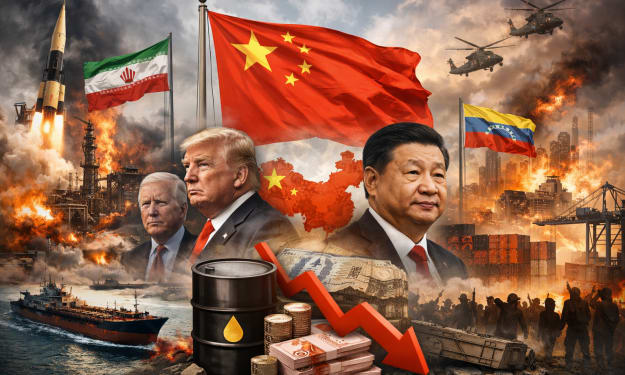
In early 2026, a series of dramatic foreign policy moves by the United States — including military strikes in Iran and actions against the government of Venezuela — have sent shockwaves through global markets and geopolitics. For China, the world’s largest energy importer and a strategic competitor to the United States, these events are not distant headlines but direct challenges to its long‑held economic and diplomatic strategies.
By sehzeen fatima7 months ago in The Swamp
Indian Fighter Jet Goes Missing in Assam: What We Know So Far. AI-Generated.
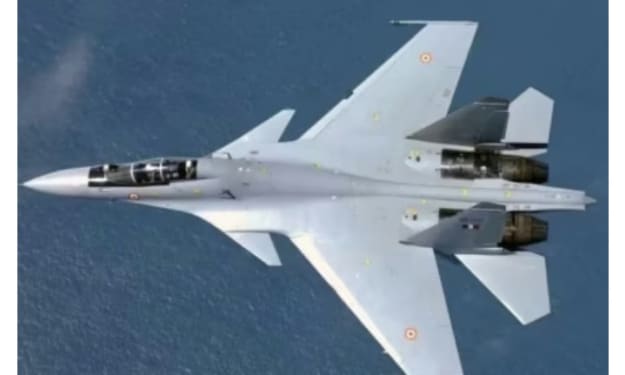
A sudden aviation incident in northeastern India has drawn national and international attention after reports emerged that an Indian fighter jet went missing during a routine mission over the state of Assam. The news, widely reported by Indian media outlets, has raised concerns about the safety of military operations, the well-being of the pilot involved, and the broader implications for India’s defense readiness. The Incident According to early reports from Indian media, the fighter aircraft lost contact with ground control during a scheduled sortie in the northeastern region of the country. The aircraft was operating in or near Assam, a strategically significant state that borders several countries and lies close to sensitive military zones. Military sources indicated that communication with the jet was suddenly interrupted while it was mid-flight. Air traffic control reportedly attempted to re-establish contact multiple times but received no response. Shortly afterward, the aircraft was officially declared missing, prompting immediate search and rescue operations. At the time of writing, the Indian Air Force had not released complete details about the aircraft’s last known position or the exact circumstances surrounding the disappearance. However, officials confirmed that emergency protocols were activated as soon as the loss of communication was confirmed. Search and Rescue Operations Following the disappearance, the Indian Air Force launched a large-scale search and rescue operation. Military helicopters, ground units, and surveillance systems were reportedly deployed to locate the missing aircraft and its pilot. The terrain in Assam and the surrounding northeastern region presents significant challenges for search teams. Dense forests, hilly landscapes, and remote areas make aerial and ground searches complex and time-consuming. Weather conditions can also complicate operations in the region, particularly during certain seasons when fog and heavy rainfall reduce visibility. Local authorities and disaster response teams have been placed on alert, and residents in nearby districts were asked to report any unusual sightings such as debris, smoke, or low-flying aircraft. Strategic Importance of the Region Assam and the broader northeastern region hold strategic military importance for India. The area borders countries such as China, Bhutan, Bangladesh, and Myanmar, making it a critical zone for defense monitoring and aerial surveillance. Because of this strategic positioning, the Indian Air Force regularly conducts training flights, reconnaissance missions, and operational exercises in the region. Fighter jets often patrol the skies to maintain preparedness and ensure rapid response capability in case of emergencies. An incident involving a missing fighter jet in such an area inevitably raises concerns about operational safety and situational awareness. Possible Causes Being Considered While no official conclusion has been announced, aviation experts say several factors could potentially explain the disappearance of a military aircraft. One possibility is a technical malfunction. Fighter jets are complex machines that rely on numerous advanced systems, and mechanical failures can sometimes occur unexpectedly. Another possible factor is adverse weather conditions. Sudden changes in weather, including storms or poor visibility, can disrupt navigation and communication systems. Human factors could also play a role in aviation incidents, though experts emphasize that modern fighter pilots undergo extensive training to handle emergency situations. Finally, investigators may also examine the possibility of communication system failures that caused the aircraft to temporarily disappear from radar without necessarily resulting in a crash. At this stage, however, all explanations remain speculative until authorities release verified information. Safety Protocols in Military Aviation Military aviation typically operates under strict safety protocols designed to minimize risk during training and operational flights. Aircraft are monitored by ground radar, communication systems, and mission tracking platforms that allow commanders to follow their movements in real time. Pilots are also trained to handle emergency situations such as engine failure, loss of navigation systems, or sudden weather changes. In many cases, modern fighter jets are equipped with ejection seats that allow pilots to safely exit the aircraft if a catastrophic failure occurs. If the pilot managed to eject before the aircraft was lost, search teams may be focusing on locating the individual rather than the aircraft itself. Public and Media Reaction News of the missing fighter jet quickly spread across Indian media and social media platforms. Many citizens expressed concern for the safety of the pilot and praised the rapid response of search teams working in difficult terrain. Defense analysts have also highlighted the importance of transparency and timely updates during such incidents. Accurate information helps prevent rumors while maintaining public confidence in military operations. At the same time, experts caution that early reports in aviation incidents can sometimes be incomplete or inaccurate. Details often evolve as investigations progress. Awaiting Official Updates As search operations continue, authorities are expected to release more information once verified facts become available. The Indian Air Force typically conducts detailed investigations after any aviation incident to determine the exact cause and prevent similar events in the future. These investigations often involve analyzing radar data, flight records, maintenance logs, and communication transcripts. For now, the priority remains locating the aircraft and ensuring the safety of the pilot. Conclusion The disappearance of an Indian fighter jet over Assam has sparked urgent search efforts and widespread attention. While many questions remain unanswered, the incident underscores both the risks faced by military aviators and the challenges of operating aircraft in difficult terrain. Until official findings are released, the focus remains on search and rescue operations and gathering accurate information about what happened during the flight. As updates emerge from defense authorities and investigators, a clearer picture of the incident will eventually come to light.
By Jameel Jamali7 months ago in The Swamp