politicians
Reviews of the politicians kissing babies and running governments around the world; applaud and criticize the decisions they make and their implications.
In Defense Of Liars, Thieves, And Scumbags
We live in a world filled with those who are dishonest, untrustworthy, or act unethically. Just because you don't think so doesn't make it any less true. And in that world filled with those types of individuals, there are people who would still defend them to their last breath. It's a strange anomaly we are all witnessing more and more. But what can we do about it?
By Jason Morton6 months ago in The Swamp
China Approves ‘Ethnic Unity’ Law Requiring Minorities to Learn Mandarin. AI-Generated.
China has recently approved a new law aimed at promoting what officials describe as “ethnic unity” across the country. The legislation, which requires ethnic minorities to learn and use Mandarin Chinese more widely, has sparked debate both within China and internationally. Supporters say the law will strengthen national cohesion and improve economic opportunities, while critics argue it may further pressure minority cultures and languages. The new regulation was passed by regional authorities and has been linked to China’s broader strategy of integrating its diverse population under a shared national identity. China officially recognizes 56 ethnic groups, with the Han Chinese making up the majority of the population. The remaining groups, including Tibetans, Uyghurs, Mongolians, and others, have historically maintained their own languages, traditions, and cultural identities. Under the new law, the use of Mandarin—known in China as Putonghua—will be expanded in schools, government offices, public services, and media platforms within regions where ethnic minorities live. Authorities argue that improving Mandarin proficiency will help minority communities gain better access to education, employment opportunities, and communication with the rest of the country. Chinese officials describe the law as a step toward building stronger unity among the country’s many ethnic groups. According to government statements, language barriers have long limited social mobility for some minority populations. By encouraging Mandarin as a common language, policymakers believe individuals from different backgrounds will be able to participate more fully in China’s national development. In many minority regions, local languages are already taught alongside Mandarin in schools. However, the new legislation places greater emphasis on Mandarin as the primary language in public life. Government representatives say this policy is meant to reduce regional disparities and ensure equal opportunities across China’s vast and diverse population. Supporters of the law argue that a common language can strengthen social integration and economic development. Mandarin is the most widely spoken language in China and is essential for higher education, government work, and national business networks. Advocates say that ensuring all citizens have strong Mandarin skills will help minority youth compete in the job market and pursue careers across the country. However, the law has also raised concerns among human rights organizations and cultural advocates. Critics fear that emphasizing Mandarin too heavily could lead to the gradual decline of minority languages. Many communities view their languages as a vital part of their cultural heritage and identity. Language preservation has long been a sensitive issue in regions with large ethnic minority populations. In areas such as Xinjiang, Tibet, and Inner Mongolia, debates about language education have occasionally sparked public concern. Some activists argue that minority languages should remain central to local education systems rather than being replaced by a national language. International observers have also been closely watching developments related to ethnic policies in China. Some organizations believe that policies promoting linguistic assimilation could weaken cultural diversity over time. They stress that protecting minority languages is an important part of safeguarding global cultural heritage. Chinese authorities, however, insist that the law does not ban minority languages. Officials say local languages will still be respected and used in cultural contexts, community life, and regional education. According to government statements, the goal is not to erase ethnic identities but to ensure that all citizens share a common linguistic foundation for communication and cooperation. Experts note that language policies are often deeply tied to questions of identity, governance, and national unity. Around the world, many countries promote an official language while also attempting to protect minority linguistic traditions. Balancing these goals can be challenging, especially in countries with large populations and diverse cultural backgrounds. China’s leadership has increasingly emphasized the idea of national unity in recent years. Policies encouraging cultural integration, economic development, and social stability have been introduced in various regions as part of this approach. The new ethnic unity law appears to align with these broader national strategies. For minority communities, the impact of the law will likely depend on how it is implemented at the local level. In some areas, Mandarin education may bring new opportunities for students who wish to study at universities or work in other parts of China. In other areas, residents may worry about preserving traditional languages that have been spoken for generations. Education will play a key role in shaping the outcome of the policy. Schools in minority regions will likely expand Mandarin-language instruction while continuing to include cultural studies related to local traditions. Teachers and administrators will face the challenge of balancing language learning with cultural preservation. The global discussion surrounding the law reflects broader questions about how nations manage diversity. While some governments promote cultural assimilation to build national identity, others emphasize multiculturalism and the protection of minority traditions. China’s new ethnic unity law is therefore more than just a language policy. It represents a broader effort to shape how identity, communication, and national belonging are defined in one of the world’s most populous countries. As the policy begins to take effect, observers inside and outside China will be watching closely to see how it influences education, cultural preservation, and social integration. The outcome may provide insight into how modern states attempt to balance unity with diversity in an increasingly interconnected world.
By Jameel Jamali6 months ago in The Swamp
Eight Arab and Islamic Countries Condemn Israeli Closure of Al-Aqsa Mosque. AI-Generated.
The recent closure of the Al-Aqsa Mosque compound by Israeli authorities has triggered widespread condemnation across the Arab and Islamic world. Eight prominent Arab and Muslim-majority countries issued strong statements criticizing the move, describing it as a violation of religious freedom and a dangerous escalation in an already tense region. The incident has once again brought global attention to the sensitive status of Jerusalem’s holy sites and the longstanding tensions surrounding them. Al-Aqsa Mosque, located in the Old City of Jerusalem, is one of the holiest sites in Islam. It is the third most sacred mosque after Mecca’s Masjid al-Haram and Medina’s Prophet’s Mosque. For centuries, Muslims from across the world have considered Al-Aqsa a symbol of faith, history, and cultural identity. The compound, known to Muslims as Al-Haram Al-Sharif, has been a focal point of political, religious, and social tensions between Palestinians and Israeli authorities. The closure occurred following heightened security concerns and clashes in the area surrounding the mosque compound. Israeli officials stated that the restrictions were necessary to maintain security and prevent further violence. However, critics argue that shutting down access to such a sacred place of worship collectively punishes Muslim worshippers and restricts their fundamental right to practice their religion. In response to the closure, eight Arab and Islamic countries—among them Jordan, Saudi Arabia, Qatar, Egypt, Turkey, Kuwait, the United Arab Emirates, and Morocco—issued coordinated statements condemning the action. These countries emphasized that Al-Aqsa Mosque holds immense spiritual significance for more than a billion Muslims worldwide and should remain open to worshippers without interference. Jordan, which holds a special custodial role over Islamic holy sites in Jerusalem, expressed particularly strong concern. Jordanian officials warned that actions restricting access to Al-Aqsa could further inflame tensions in the region. The Jordanian government reiterated that the historical and legal status of the mosque must be respected, calling on the international community to intervene and ensure the protection of religious sites. Saudi Arabia also released a statement condemning the closure, describing it as a serious provocation against Muslims. Saudi authorities urged Israel to respect international laws and agreements related to the protection of religious heritage sites. Similarly, Qatar and Kuwait called the move unacceptable, emphasizing that freedom of worship must be protected under international human rights principles. Turkey, which has often taken a vocal stance regarding Jerusalem, also criticized the decision. Turkish officials described the closure as a violation of the status quo arrangements governing religious sites in the city. They urged Israeli authorities to reconsider the measure and avoid steps that could worsen the fragile political environment in the region. Egypt and Morocco also voiced their concerns through diplomatic channels, stressing that Jerusalem’s religious sites must remain accessible to all believers. Both countries highlighted the need to maintain calm and prevent actions that might escalate tensions between communities. The closure of Al-Aqsa Mosque is not just a local issue; it resonates deeply throughout the Muslim world. For many believers, restrictions on access to the mosque are seen as an attack on religious rights and cultural heritage. Each time such incidents occur, they spark protests, diplomatic disputes, and renewed debate about the future of Jerusalem and the broader Israeli-Palestinian conflict. International organizations and human rights groups have also expressed concern about the situation. Many argue that protecting religious freedom and ensuring equal access to holy sites should be a priority for all authorities governing contested areas. Experts note that the city of Jerusalem holds sacred importance for Muslims, Jews, and Christians alike, making it essential that its holy places remain protected and accessible. The controversy surrounding the Al-Aqsa Mosque highlights the fragile balance that exists in Jerusalem. Small developments can quickly escalate into larger diplomatic and political crises because of the city’s deep religious and historical significance. Maintaining calm in such a sensitive environment requires careful dialogue, respect for existing agreements, and commitment to religious tolerance. For Palestinians living in East Jerusalem and the surrounding areas, access to Al-Aqsa Mosque is not only a religious matter but also a symbol of identity and resilience. Many see the mosque as a central part of their cultural heritage and daily life. Restrictions on entry often intensify feelings of frustration and injustice among local communities. Diplomats and analysts warn that actions affecting religious sites must be handled with extreme caution. When religious freedoms are perceived to be threatened, reactions can spread far beyond national borders, influencing public opinion and political relations across the Muslim world. As the situation continues to develop, many countries and international organizations are calling for restraint and dialogue. They stress that preserving the sanctity of religious sites like Al-Aqsa Mosque is essential for maintaining peace and stability in the region. Ultimately, the controversy serves as another reminder of how deeply interconnected religion, politics, and history are in Jerusalem. The responses from the eight Arab and Islamic countries demonstrate the widespread concern that exists across the Muslim world whenever the status of Al-Aqsa Mosque is challenged. Whether through diplomatic negotiations, international mediation, or renewed commitments to existing agreements, many observers believe that protecting access to sacred places will remain a critical step toward reducing tensions and fostering mutual respect in one of the world’s most historically sensitive cities.
By Jameel Jamali6 months ago in The Swamp
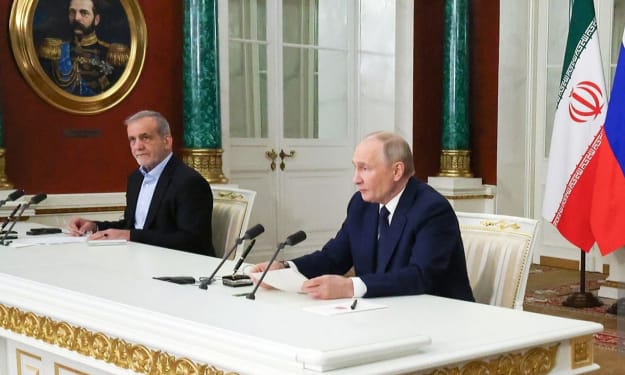
President Pezeshkian Demands 3 Things to Stop War.
The Iranian President Pezeshkian has been speaking about the three things that the country wants to stop the war. Firstly, Iran's legitimate rights, payment of reparations, and a firm international guarantee that the country won't be attacked in the future. Mr. Pezeshkian said he had been speaking to President Putin and Shabaz Sharif, the Prime Minister of Pakistan. Underlining Iran's commitment to peace. Mr. Pezeshkian personally thanked Russia for standing by his nation in the war. Russia has called for a "de-escalation" of the conflict. Russia has supplied Iran with humanitarian aid as the war has unfolded.
By Nicholas Bishop6 months ago in The Swamp
FBI Alerts California Law Enforcement to Potential Iranian Drone Threat
Federal authorities alerted California law enforcement that Iran may have explored launching drone attacks against the U.S. West Coast from offshore vessels. The warning came through an FBI intelligence bulletin distributed to law enforcement agencies and highlights concerns that escalating tensions in the Middle East could have broader security implications for the United States.
By Jacqueline Bowser6 months ago in The Swamp
Shadow Home Secretary Chris Philp Leads Charge on Starmer's Iran War Stance.
The Iran War has to be one of the most dangerous and unnecessary wars this century so far. Trump has changed the narrative of why he and his partner in crime, Netanyahu, attacked Iran. First, it was to liberate the Iranian people. Then Iran's support for Hezbollah, Hamas, the Houthis, etc. Then it's Iran enriching uranium and its ballistic missile programme. Since the war began, the Ayatollah Khamenei has been assassinated along with top military commanders. His son is now the new Ayatollah. A girl's school has been bombed, with 100 or so schoolgirls sent to Allah. Iran's infrastructure has been hit hard, as has its military and government. If they bombed the Founder of the Islamic Republic's mausoleum, Ayatollah Khomeini, it wouldn't surprise me. It seems the Americans and Israelis are hitting anything and everything across Iran. Similar to the levelling of Gaza by the IDF. Hundreds of Iranians have been killed and injured, civilian and military alike.
By Nicholas Bishop6 months ago in The Swamp
Analysis Of US-ISR- IRAN WAR
The situation is ongoing, and if I were to summarize the details—because data is coming very late—it's totally difficult to confirm the casualties and how much damage has been done so far. Many reporters, particularly those on Al Jazeera, are stating that footage from both Hezbollah and Israel is not being released. Similarly, in the UAE, there is an effort to prevent influencers and various reporters from sharing information. People are afraid because their business capital is at risk. Additionally, two important things that I discussed in my last blog about the "magazine depth problem" are now being acknowledged by Western media. They also agree that this war won't last for many days and will have to rely on limited strikes. Trump, however, has also stated that there is no end game for this operation, Epic Fury.
By Ibrahim Shah 6 months ago in The Swamp
THE FREE PRESS. Content Warning.
The $35 Sentence: How Predatory Hospice Schemes Silence Seniors By Vicki Lawana Trusselli For years, I worked in the film and music industries in LA and Austin—I know a script when I see one. But the script being handed to seniors in Riverside and other cities today is not just fiction; it is federal fraud.
By Vicki Lawana Trusselli 6 months ago in The Swamp
Mamdani Chooses His Words Carefully After Alleged Terror Attack. AI-Generated.
In the tense hours following an alleged terror attack, public figures often find themselves under intense scrutiny. Every word spoken carries weight, and even a small misstatement can fuel controversy or misunderstanding. In the wake of the recent incident, political figure Mamdani has taken a notably cautious approach, choosing his words carefully while addressing the public, the media, and concerned communities. The attack, which authorities are still investigating, has left many people searching for answers. Early reports suggest that the incident may have been motivated by extremist ideology, though officials have urged patience while evidence is gathered. As the situation continues to unfold, leaders across the political spectrum have been responding with messages of sympathy, condemnation of violence, and calls for unity. Mamdani’s response, however, has drawn particular attention because of the careful balance he has attempted to maintain. Rather than immediately adopting strong or emotionally charged rhetoric, he has emphasized the importance of verified information, responsible dialogue, and respect for affected communities. A Deliberate and Measured Response Shortly after news of the alleged terror attack began circulating, Mamdani released a brief statement expressing concern for the victims and their families. The statement avoided speculation about the motive or identity of the perpetrator, focusing instead on solidarity with those impacted by the incident. Observers quickly noted that the language was deliberate and restrained. In a political climate where leaders sometimes rush to judgment, Mamdani’s approach stood out as cautious and controlled. He urged the public to wait for official findings from investigators before drawing conclusions about what happened. This careful messaging reflects a broader strategy often used by public officials during crises. When facts are still emerging, making definitive statements can lead to misinformation or accusations of bias. By emphasizing patience and factual accuracy, Mamdani appears to be attempting to maintain credibility while avoiding unnecessary political escalation. The Challenge of Crisis Communication Responding to an alleged terror attack is never simple. Leaders must balance multiple priorities at once: comforting victims, reassuring the public, supporting law enforcement, and avoiding language that could inflame tensions. For Mamdani, the challenge is even greater because of the highly polarized environment in which political communication now takes place. Social media platforms amplify every statement, and comments can quickly be interpreted in ways that were never intended. In this environment, the choice of words becomes extremely important. Terms like “terrorism,” “extremism,” and “security threat” carry significant political and emotional weight. Using them too early in an investigation can lead to backlash if the facts later prove different. Mamdani’s decision to avoid definitive labels in his initial remarks appears to be an effort to navigate this complex landscape. By focusing on empathy and the rule of law, he has attempted to shift attention away from speculation and toward the investigative process. Public Reaction and Debate Despite the measured tone, Mamdani’s response has not been without criticism. Some commentators argue that leaders should respond to alleged acts of terrorism with immediate and unequivocal condemnation. From their perspective, cautious language may appear hesitant or overly diplomatic during a moment that demands moral clarity. Others, however, see Mamdani’s approach as responsible and thoughtful. They argue that rushing to conclusions can deepen divisions and spread misinformation, especially when the details of an incident remain unclear. This divide reflects a broader debate about how leaders should communicate during crises. Some prefer strong, emotionally resonant statements that signal determination and resolve. Others believe that restraint and accuracy are more important, particularly when investigations are ongoing. In Mamdani’s case, the decision to speak carefully may be influenced by previous experiences in which premature statements led to political controversies. Learning from those moments, he appears to be prioritizing caution and clarity over speed. Waiting for the Facts Authorities investigating the alleged terror attack have repeatedly emphasized that many details remain uncertain. Law enforcement agencies are gathering evidence, interviewing witnesses, and analyzing digital information that could reveal the motivations behind the incident. Until those findings are released, public officials face a delicate task: acknowledging the seriousness of the situation without spreading unverified claims. Mamdani’s response reflects that tension. His statements have consistently included reminders that the investigation must run its course before firm conclusions can be drawn. This emphasis on due process is an important element of democratic governance. In moments of crisis, emotions can run high, and public pressure for quick answers can be intense. Yet careful investigations are necessary to ensure that justice is based on facts rather than assumptions. The Broader Impact of Political Language The way leaders speak after violent incidents can shape public perception for months or even years. Language influences how communities interpret events, how media coverage develops, and how political debates unfold. Because of this, many public figures now approach crisis communication with increasing caution. They consult advisors, review statements carefully, and attempt to anticipate how their words might be interpreted by different audiences. Mamdani’s careful choice of words illustrates this modern reality of political leadership. Rather than delivering dramatic statements, he has opted for a quieter message centered on empathy, patience, and respect for the investigative process. Moving Forward As investigators continue their work, the focus will gradually shift from speculation to confirmed information. When official findings are released, political leaders—including Mamdani—will likely expand on their responses and address the broader implications of the incident. For now, however, the priority remains supporting those affected and ensuring that the investigation proceeds without interference. Mamdani’s cautious approach reflects a belief that responsible leadership sometimes means speaking less, not more. In a time when public discourse often moves faster than the facts, his carefully chosen words highlight the importance of measured communication during moments of uncertainty and crisis.
By Jameel Jamali6 months ago in The Swamp
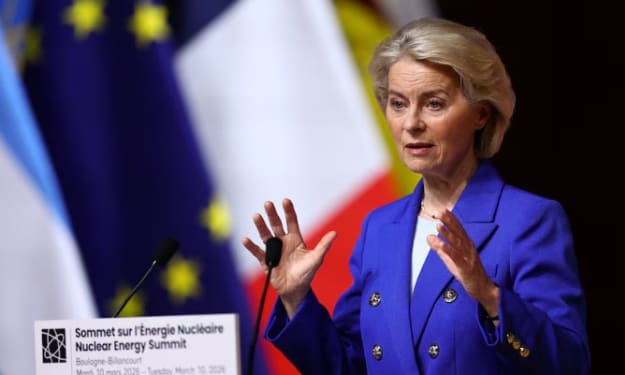
Reducing Europe’s Nuclear Energy Sector Was a “Strategic Mistake,” EU Chief Says. AI-Generated.
Europe’s energy policy has long been shaped by debates over sustainability, safety, and energy independence. In recent years, those debates have intensified as global energy demands rise and geopolitical tensions disrupt traditional energy supplies. Now, a major voice within the European leadership has publicly acknowledged what many analysts have argued for years: reducing the continent’s nuclear energy sector may have been a strategic mistake. According to comments from the head of the European Commission, Europe’s decision to scale back nuclear power over the past decade left the region more vulnerable to energy shortages and rising costs. The remarks have reignited discussion across Europe about the future of nuclear power and its role in achieving energy security and climate goals. A Turning Point in Europe’s Energy Debate For decades, nuclear energy has been a contentious topic across European nations. Supporters view it as a reliable, low-carbon source of electricity capable of meeting large-scale energy demands. Critics, however, point to concerns about radioactive waste, plant safety, and the long-term environmental consequences of nuclear accidents. Following the Fukushima nuclear disaster in 2011, several European countries began reducing or phasing out their nuclear power programs. Governments shifted their focus toward renewable energy sources such as wind and solar power, believing these technologies would provide a safer and more sustainable future. While the expansion of renewables brought significant environmental benefits, it also exposed weaknesses in Europe’s energy infrastructure. Renewable sources can be intermittent, meaning they do not always produce electricity when demand is highest. Without sufficient backup systems, countries sometimes struggled to maintain stable energy supplies. The Consequences of Nuclear Phase-Out In recent years, Europe has faced rising energy prices and supply disruptions that have highlighted the importance of stable energy production. Some experts argue that maintaining a stronger nuclear energy sector could have helped cushion the region from these shocks. Nuclear power plants provide continuous electricity generation, unlike solar panels or wind turbines that depend on weather conditions. This stability is one of the main reasons energy experts consider nuclear power a valuable component of a balanced energy strategy. The issue became particularly significant after the 2022 Russian invasion of Ukraine triggered a major energy crisis across Europe. Many European countries relied heavily on imported fossil fuels, especially natural gas. When supply chains were disrupted and prices soared, governments were forced to reconsider their long-term energy strategies. For some policymakers, the crisis revealed the risks of reducing nuclear capacity without having fully reliable alternatives in place. The EU’s Changing Perspective The leadership of the European Union is now encouraging member states to adopt a more pragmatic approach to energy planning. Rather than viewing nuclear energy and renewable energy as competing solutions, officials are increasingly discussing how the two can work together. Nuclear power produces extremely low greenhouse gas emissions compared to fossil fuels, making it a potential ally in Europe’s climate goals. As the continent continues its transition toward carbon neutrality, some policymakers believe nuclear power could help bridge the gap between current energy demands and future renewable capacity. At the same time, Europe continues investing heavily in renewable infrastructure. Massive wind farms, solar projects, and energy storage systems are expanding across the continent. The goal is to build an energy network that is both sustainable and resilient. Countries Taking Different Paths Europe’s nuclear policy is far from uniform. Some countries remain firmly committed to nuclear power, while others continue to phase it out. France, for example, has long relied on nuclear power for the majority of its electricity production. The country operates one of the largest nuclear energy fleets in the world and plans to expand it further with next-generation reactors. Meanwhile, Germany made the controversial decision to shut down its remaining nuclear plants as part of its long-term energy transition strategy. That move sparked debate among economists and energy experts who warned that the country might become more dependent on fossil fuels or imported energy. Other nations, including Finland and Poland, are exploring new nuclear projects as part of their future energy plans. These investments reflect a growing recognition that nuclear power may still play an important role in Europe’s energy mix. Balancing Safety and Sustainability Despite the renewed interest in nuclear power, safety concerns remain central to the debate. Historical events such as the Chernobyl disaster continue to shape public perceptions of nuclear energy across Europe. However, nuclear technology has evolved significantly since those earlier incidents. Modern reactors are designed with advanced safety features, and new research is focused on developing smaller, more efficient reactors that can be deployed with lower costs and reduced risks. These innovations are gradually reshaping the conversation about nuclear energy. Instead of being viewed solely as a legacy technology, nuclear power is increasingly seen as part of a diversified energy future. The Role of Nuclear in Climate Goals Europe has set ambitious climate targets, including plans to achieve net-zero carbon emissions by mid-century. Reaching those goals will require massive changes in how energy is produced and consumed. Renewable energy sources will undoubtedly remain the cornerstone of Europe’s climate strategy. However, many analysts argue that nuclear power could help accelerate the transition by providing consistent electricity without producing carbon emissions. By combining nuclear energy with renewable sources, countries may be able to maintain stable power grids while reducing reliance on fossil fuels. A Lesson for Future Energy Policy The recent acknowledgment that reducing nuclear energy may have been a strategic mistake reflects a broader lesson for policymakers: energy transitions must be carefully balanced. Shifting too quickly away from existing energy sources without fully developed alternatives can create economic and security challenges. At the same time, failing to invest in cleaner technologies can slow progress toward environmental goals. Europe now faces the complex task of balancing these priorities while ensuring that energy remains affordable, reliable, and sustainable. Looking Ahead The debate over nuclear energy in Europe is far from over. While some countries continue to prioritize renewable expansion, others are reconsidering nuclear power as a critical component of their energy future. What is clear, however, is that Europe’s energy strategy is entering a new phase—one shaped by lessons from past decisions and the urgent need for energy resilience. As policymakers revisit earlier choices and adapt to changing global conditions, nuclear power may once again become a central pillar in the continent’s energy landscape.
By Jameel Jamali6 months ago in The Swamp
Shots Fired at U.S. Consulate in Toronto, Police Say. AI-Generated.
Early Tuesday morning, authorities in Canada launched an investigation after gunfire was reported at the United States Consulate in downtown Toronto. The incident, which occurred before sunrise, has drawn international attention and prompted heightened security around diplomatic buildings across the country. Fortunately, no injuries were reported, but officials say the event is being treated as a serious national security matter. What Happened in Toronto According to Toronto police, officers responded to reports of shots fired near the U.S. Consulate located in the city’s downtown core around 5:30 a.m. local time. When authorities arrived at the scene, they discovered physical evidence confirming that gunfire had struck the building, including damage to the exterior glass and doors as well as shell casings nearby. Investigators say two suspects were involved in the incident. Reports indicate that the individuals arrived in a white sport utility vehicle, briefly stopped outside the consulate, fired multiple shots at the building, and then fled the area. Police later released information about the suspect vehicle as part of the ongoing search for those responsible. Despite the alarming nature of the attack, officials confirmed that the heavily reinforced consulate building prevented any bullets from penetrating the interior. No staff members or civilians were injured during the incident. Treated as a National Security Incident Canadian authorities have classified the shooting as a potential national security incident due to the diplomatic nature of the target. The Royal Canadian Mounted Police (RCMP) are now working alongside Toronto police and other security agencies to determine whether the act was politically motivated or connected to broader threats. Speaking to reporters, law enforcement officials emphasized that investigators are still gathering evidence and reviewing surveillance footage from the surrounding area. They noted that determining whether the attack qualifies as terrorism will depend on the findings of the investigation. Because the building houses diplomatic personnel and represents the United States government abroad, any attack directed toward it raises concerns about international security and diplomatic relations. Increased Security Measures In response to the shooting, Canadian officials have taken steps to strengthen security at diplomatic sites across the country. Police presence has been increased around U.S. and Israeli diplomatic buildings, including consulates and embassies in major cities such as Ottawa and Toronto. Public Safety Minister Gary Anandasangaree condemned the attack and emphasized that violence against diplomatic institutions is unacceptable. Government leaders reiterated Canada’s commitment to protecting foreign missions and ensuring the safety of diplomatic staff working within the country. The U.S. State Department also acknowledged the incident, stating that it is closely monitoring the situation and coordinating with Canadian law enforcement as the investigation continues. Possible Context Behind the Incident Although authorities have not yet confirmed a motive, the shooting comes during a period of heightened global tension and security concerns. Some officials and analysts have pointed to recent incidents targeting religious institutions and diplomatic sites in Toronto as potential context for the attack. In the previous week, several synagogues in the Toronto area were reportedly targeted by gunfire, incidents that Canadian leaders strongly condemned as antisemitic acts. Investigators are examining whether those events are connected to the shooting at the consulate, although no direct link has been established so far. At the same time, international conflicts and geopolitical tensions have increased security risks for diplomatic missions worldwide. Embassies and consulates often serve as symbolic representations of a nation’s presence abroad, which can make them targets for political demonstrations or acts of intimidation. Community Reaction Local leaders and residents in Toronto expressed concern after learning about the shooting. Mayor Olivia Chow emphasized that acts of violence aimed at diplomatic institutions or communities create fear and instability. She called for unity and cooperation as authorities work to identify those responsible. Community organizations also urged residents to remain calm and allow law enforcement officials to conduct a thorough investigation. Many pointed out that Toronto has long been known as a multicultural and peaceful city, making incidents like this particularly troubling. Fortunately, the lack of injuries helped ease some immediate fears, but the attack still serves as a reminder of the security challenges that cities face in an increasingly interconnected world. The Role of Diplomatic Missions Consulates and embassies play a vital role in maintaining relationships between countries. They assist citizens traveling or living abroad, issue visas, support trade and cultural exchanges, and provide diplomatic communication between governments. Because of their importance, diplomatic buildings are usually heavily protected. The security measures in place at the U.S. Consulate in Toronto likely prevented a potentially more dangerous situation. Incidents targeting diplomatic facilities are taken very seriously by governments because they can affect international relations and global stability. Ongoing Investigation As of now, police continue to search for the suspects involved in the shooting. Investigators are reviewing surveillance footage, collecting forensic evidence from the scene, and asking the public for information that could help identify the perpetrators. Authorities have urged anyone who witnessed suspicious activity in the area during the early morning hours to contact Toronto police. While the investigation remains in its early stages, officials have promised transparency as more details become available. The primary goal is to determine the motive behind the attack and ensure that those responsible are brought to justice. Looking Ahead Although no one was hurt in the Toronto consulate shooting, the event highlights the importance of vigilance and cooperation between law enforcement agencies. Diplomatic buildings represent international partnerships, and protecting them is essential for maintaining global cooperation. As investigators continue their work, the incident serves as a reminder that security threats can emerge unexpectedly—even in cities known for their safety and stability. For now, both Canadian and American officials remain focused on ensuring the protection of diplomatic missions and preventing similar incidents in the future.
By Jameel Jamali6 months ago in The Swamp