
The "Now or Never" Moment: 4 Surprising Takeaways from Macron’s Ultimatum to Andorra
On April 28, 2026, French President Emmanuel Macron didn’t just visit Andorra for a photo op; he arrived to deliver a blunt geopolitical ultimatum.

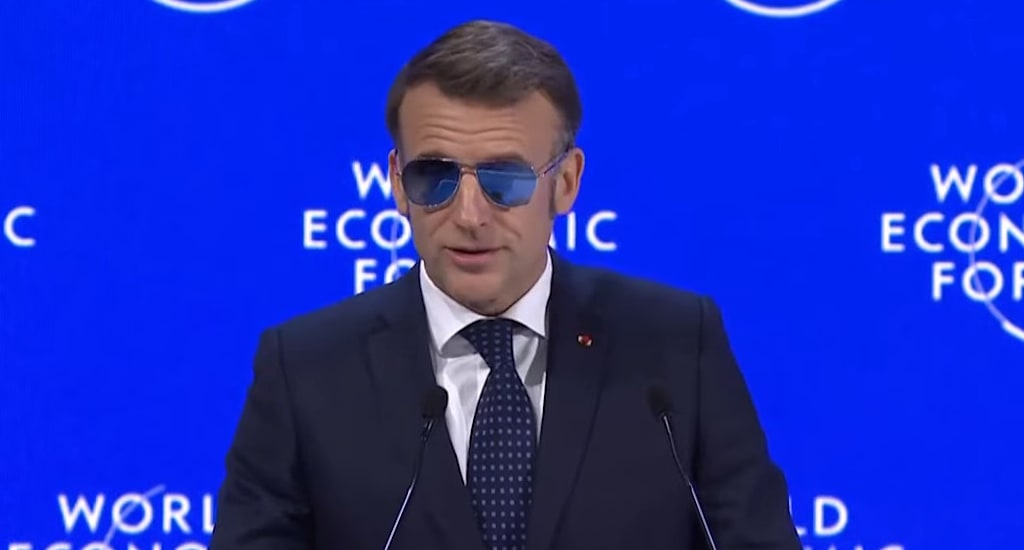
On April 28, 2026, French President Emmanuel Macron didn’t just visit Andorra for a photo op; he arrived to deliver a blunt geopolitical ultimatum. The microstate is currently standing at a definitive turning point, facing a choice that will dictate its economic trajectory for the next half-century: ratify the hard-won EU association agreement now, or prepare for permanent exclusion from the European common market.
Macron bypassed the usual diplomatic fluff to deliver the blow himself, framing the situation not as a debate, but as a final exit ramp. For Andorra, the era of "wait and see" has officially expired. In an increasingly consolidated Europe, this is the moment where small nations must decide if they are in or out and Macron made it clear that "later" is not an option.
The most striking element of Macron’s address was his dismantling of the classic diplomatic playbook. In international relations, there is often a tactical assumption that "no" is just the start of a better deal. Macron explicitly killed that hope. He warned that the current window of opportunity is a one-time event, and that the EU has zero appetite for the "microstate exceptionalism" that has allowed such negotiations to drag on for years.
From a strategic perspective, this hardball rhetoric reflects a broader shift in Brussels. With the EU preoccupied by existential threats ranging from regional security to energy transitions it is no longer willing to leave the door ajar for tiny players who hesitate.
"If in the end you say 'no', or 'not now', thinking it will be renegotiated, that a better negotiation will be made, then the door will not reopen."
Macron offered a candid, almost non-diplomatic glimpse into the mood at the European Commission. He warned of a visceral sentiment described in reports as a sense of being "fed up" that has taken hold among the officials and negotiators in Brussels. After years of technical and political heavy lifting to tailor an agreement for a nation of 80,000 people, the EU's patience has evaporated.
This isn’t just a legal hurdle; it’s a human and bureaucratic one. Institutional patience is a finite resource. Macron signaled that if Andorra rejects the deal, the negotiators will simply close the file and move on. The European Commission is unlikely to return to the table with a state that appears unwilling to commit, effectively sentencing Andorra to a permanent status as an outsider.
The proposed association agreement is a high-wire act for the European Union. It offers Andorra a rare middle ground that many nations would envy, but it is a fragile offer precisely because it risks creating a "cherry-picking" precedent that the EU usually fights to avoid.
The agreement offers two primary pillars:
* Common Market Participation: Direct access for Andorran goods and services to the European internal market.
* Sovereignty Preservation: The ability to integrate economically without the full legal, political, and financial obligations required of a full EU member state.
This is a valuable, one-of-a-kind position. However, because this "Access without Membership" model is so sensitive for the EU's internal balance, the offer is essentially "take it or leave it."
The weight of this ultimatum was amplified by the messenger. Macron didn’t send an envoy or a technical memo; he delivered the news in person. This carries immense weight because of Macron’s dual role: he is the President of France, but he also serves as the Co-Prince of Andorra.
In many ways, this wasn’t a standard diplomatic visit; it was a family intervention. By claiming "sincerity" in his speech, Macron used his historical tie to the principality to add personal accountability to the warning. When a Co-Prince tells his own people that the door is closing, the message carries a level of gravity that a bureaucratic communiqué from Brussels could never achieve.
As of April 2026, the luxury of time has run out for Andorra. The path forward is binary: deep integration into the world's largest common market or a solitary future in an increasingly integrated Europe.
The choice made in the coming weeks will define Andorra's economic landscape for a generation. As the continent continues to harden its borders and consolidate its markets, one must ask: can a microstate truly thrive in isolation, or is the "price" of sovereignty eventually surpassed by the crushing cost of being left behind?
About the Creator
The INFORMER
Source for in-depth news, investigations, whistleblower leaks, and insightful analysis you won't find anywhere else, produced by independent journalists exploring the fringes of society, technology, autos and culture, viral trends,
Enjoyed the story? Support the Creator.
Subscribe for free to receive all their stories in your feed.
Comments
There are no comments for this story
Be the first to respond and start the conversation.