opinion
Opinion pieces from the left, right, and everyone in between.
How an Overvalued Dollar Sank U.S. Naval Power
At the close of World War II, the United States possessed the most formidable maritime industrial base in human history. During the war, the United States launched thousands of vessels that secured global trade routes and projected power across every ocean. Today, that industrial might has virtually vanished. While East Asian shipbuilders—specifically China, South Korea, and Japan—have surged to dominate the seas, American shipbuilding has withered into a fraction of a percent of global output.
By Elliott J. Schuchardt3 days ago in The Swamp
U.S. Army Engineer Equipment Readiness
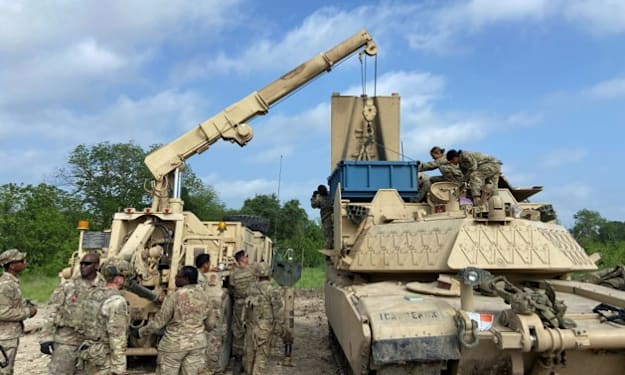
By the end of 2027, the United States Army will only have 56 Active-Duty Combat Engineer Companies spread out across its force. Of those 56, 34 are designated as Combat Engineer Company – Armored (CEC-A), which makes up 60% of the Engineer Regiment’s combat capability.[1] What is common across all of these CEC-As and various National Guard Engineer Companies is that they possess Assault Breacher Vehicles (ABVs) and Joint Assault Bridges (JABs), which serve as the primary breaching assets for armored brigades. Each CEC-A is assigned three ABVs and four JABs; however, across the Army, they are plagued with maintenance issues that lead to readiness concerns. The current engineer breaching vehicles have systematically low operational readiness (OR) rates due to high op-tempo, poor supply chains, and extreme lack of expert knowledge; and fixing these issues cannot be solved at the individual unit level but rather from the top of the Engineer Regiment.
By Sam Shroyer7 days ago in The Swamp
THE CURRENT AND FUTURE STATE OF THE U.S. ARMY’S C-UAS CAPABILITIES
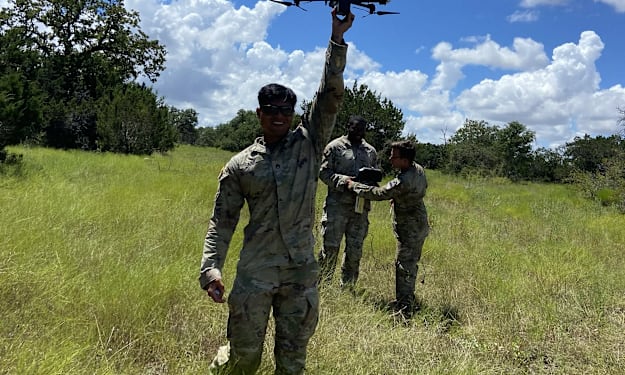
Anyone who follows world news and online media has seen videos over the last three to four years of mounted and dismounted soldiers being killed or wounded by various drones. In 2022, The Russia-Ukraine Conflict became the first place for widespread use of drone warfare. Then the Israel-Hezbollah Conflict showed the world that these technologies and tactics are not isolated to one war but are now the norm for modern combat. Most recently, the heightened tensions between the United States and Iran have proven that even the U.S. Military is vulnerable to simple and sophisticated drones.[1] This presents the question, does the United States Army currently have the capabilities to combat hostile drones and are our protection and defensive innovations reactive or proactive to what we are seeing across the globe in these current events?
By Sam Shroyer10 days ago in The Swamp
Lame Duck or...?
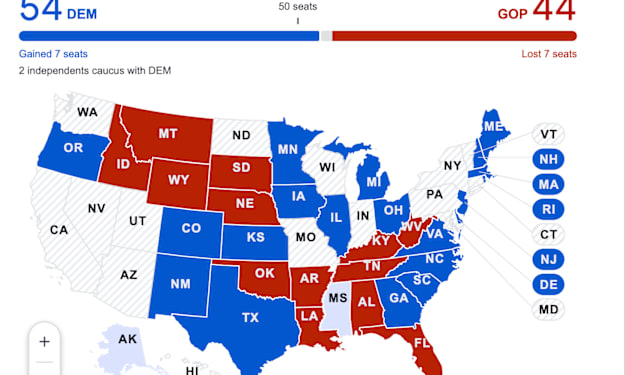
So we are still waiting on the senate races in Mississippi (who would have ever thought, but the vote difference there at the moment is 65, yes, sixty-five, leaning the Democratic candidate) and Alaska (might take awhile because of the state's ranking system of voting), but the Dems have won big last night, in both the Senate and the House races. JD Vance sourly pointed out that the GOP has lost the Senate for the next six years.
By Lana V Lynx13 days ago in The Swamp
Why We Must Adopt Permanent Daily Savings Time
by Elliott J. Schuchardt Every spring and autumn, tens of millions of Americans participate in a jarring, mandated collective ritual: they alter their clocks by sixty minutes, disrupting the fundamental rhythm of daily life. While the phrase "spring forward, fall back" sounds like an innocuous seasonal reminder, the reality of Daylight Saving Time (DST) is far more grim. What began as a well-intentioned wartime experiment to conserve energy has transformed into a modern bureaucratic relic that disrupts human biology, compromises psychological well-being, and inflicts measurable economic and physical harm. It is time to abandon this artificial manipulation of time and establish a permanent, unchanging clock.
By Elliott J. Schuchardt16 days ago in The Swamp
Fukuyama's “End of History”: A Liberal Triumph or an Unfinished Debate?
Author's note: I originally published this article several years ago. Returning to Fukuyama's argument in October 2026, I wanted to reconsider its philosophical foundations, the relationship between economic and political freedom, and whether the contradictions of contemporary societies challenge the possibility of a final historical destination.
By Sergios Saropoulos21 days ago in The Swamp
Understanding Trickle-Down Economics: A Critical Perspective
The Promise of Prosperity There is something interesting about the way economic policies are presented to the public. Governments frequently promise that particular reforms will create prosperity, encourage investment and eventually improve the living standards of society. Yet behind these familiar promises lie questions that are rarely examined with the same enthusiasm. Who is expected to benefit first? Who must wait for the benefits to arrive? And what happens when an economy grows without producing a comparable improvement in the lives of those whose labour sustains it?
By Sergios Saropoulos21 days ago in The Swamp
What Happens After Election Day 2026 Could Be Worse Than You Think
On November 3rd, Americans will decide who controls Congress, how much power the White House can exercise, and what the next two years of American government might look like. Then comes the scary stuff!
By Jason Morton27 days ago in The Swamp