
Trump’s Record in Full Context (Part 1)
First-term accomplishments, legislative victories, executive actions, judicial legacy, and measurable outcomes (2016–2020)

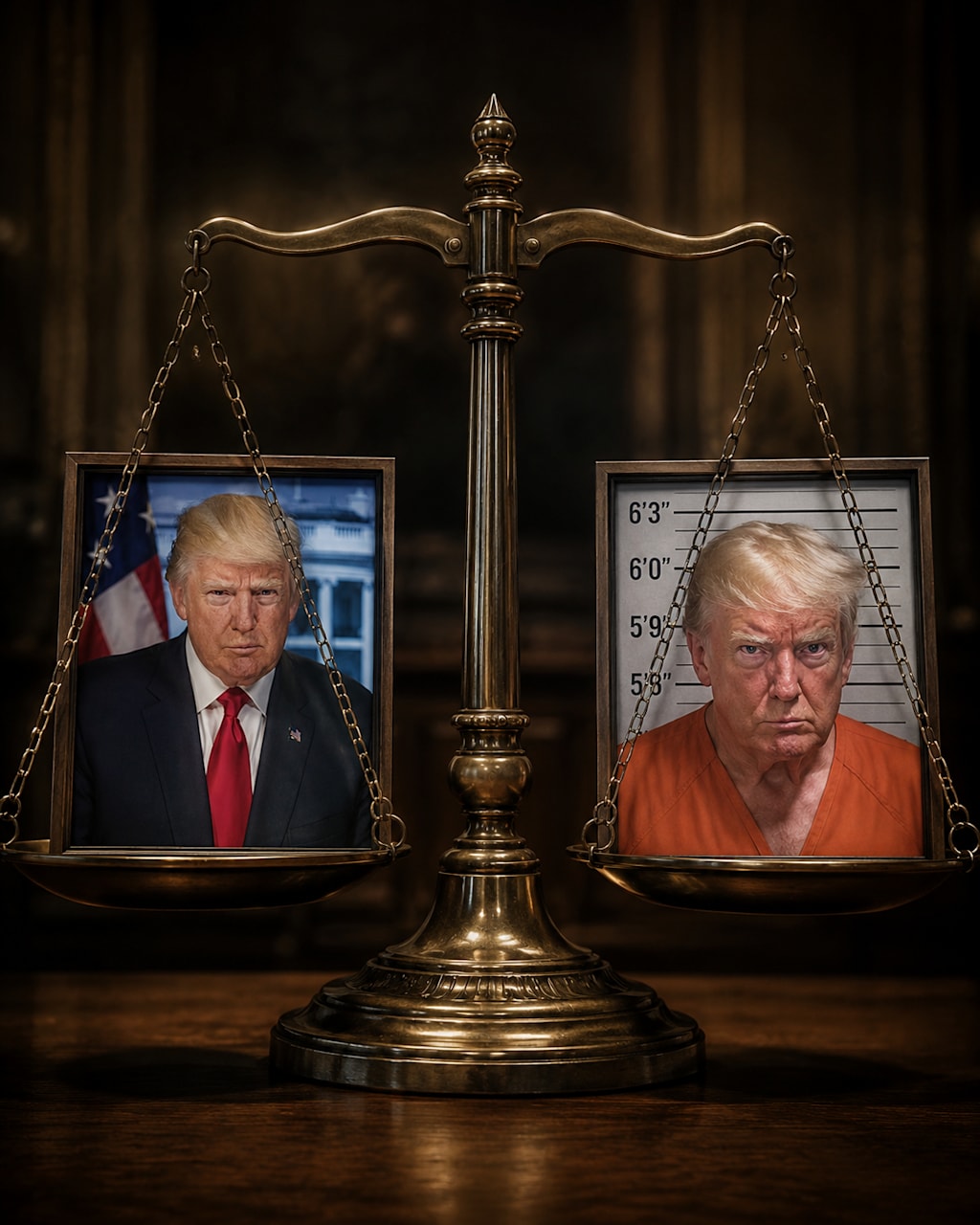
Executive Summary
This three-part series presents a detailed ledger of Donald Trump’s presidency across both administrations (2017–2021 and 2025–2026).
Parts 1 and 2 document concrete accomplishments: laws signed, executive orders issued, policies reversed, institutions created, judicial appointments made, and measurable outcomes achieved. These include tax reform, deregulation, energy expansion, trade renegotiations, border enforcement, veterans’ reforms, criminal justice reform, Operation Warp Speed, the creation of Space Force, the Abraham Accords, religious liberty protections, school choice expansions, DEI rollbacks, DOGE government efficiency efforts, the MAHA health initiative, electric vehicle mandate reversals, cartel designations, and renewed immigration enforcement.
Part 3 addresses the other side of the record: unfulfilled promises, implementation shortfalls, legal obstacles, personnel challenges, and unresolved outcomes. It notes where specific promises were not met — such as ending the Russia-Ukraine war quickly, lowering gas prices below $2 per gallon nationwide, fully delivering on the largest DOGE savings claims, achieving mass deportations at the scale many expected, and providing immediate broad-based household affordability relief. It also places January 6, legal convictions, personnel turnover, Epstein files transparency issues, court blocks (including birthright citizenship), and cultural conflicts into appropriate context.
The series does not argue that every action was wise or cost-free, nor does it dismiss every criticism. Its purpose is narrower and more foundational: to clearly separate what actually occurred from slogans, media framing, and partisan shorthand. It records what was changed, signed, built, reversed, enforced, and measured — while acknowledging what was attempted but not completed, what was blocked, and what remains unresolved.
A president’s record should not be judged by slogans alone. It should be judged by concrete results: what was signed into law, what was reversed, what was built, what was enforced, what institutions were created or reshaped, and what measurable conditions existed during that administration’s time in office.
---
Chronological Record of First-Term Wins and Actions
2016: Trump won the presidency and made the rest of the first-term agenda possible.
Trump’s first major political success was winning the 2016 presidential election and becoming the 45th president of the United States. That victory mattered because every later action depended on taking executive power first. The tax cuts, judicial appointments, deregulation, border policy, trade renegotiation, energy policy, religious-liberty actions, veterans reforms, and foreign-policy reversals all flowed from the fact that the 2016 election put him in office.
2017: Trump withdrew the United States from the Trans-Pacific Partnership.
One of Trump’s first major trade actions was withdrawing the United States from the Trans-Pacific Partnership. This was a direct execution of his America First trade promise and marked the beginning of a broader move away from large multinational trade arrangements and toward renegotiated leverage through bilateral or regional deals. The action also signaled that trade policy under Trump would be judged by national-interest claims rather than by default support for global trade frameworks.
2017: Trump began a major deregulation campaign.
The first administration launched an aggressive deregulation campaign, including a policy of removing multiple old regulations for every new one adopted. The archived White House record describes the administration as eliminating eight old regulations for every new one, removing nearly 25,000 pages from the Federal Register, reducing direct regulatory compliance costs, and modernizing rules across agencies. This was one of the clearest first-term governing successes because it changed the operating burden placed on businesses, banks, energy producers, healthcare providers, infrastructure projects, housing, and small firms.
2017: Trump reversed major Obama-era environmental and land-use rules.
The first administration rescinded the Affirmatively Furthering Fair Housing rule, eliminated the Waters of the United States rule and replaced it with the Navigable Waters Protection Rule, changed the Fair Housing Act’s disparate-impact standard, and modernized the National Environmental Policy Act for the first time in decades. These actions reduced federal reach over zoning, water regulation, environmental review, and infrastructure approvals. The administration framed these moves as restoring local control, reducing permitting delays, and lowering the cost of housing, farming, energy, and construction.
2017: Trump approved major pipeline and energy-development actions.
Trump approved the Keystone XL and Dakota Access pipelines, withdrew from the Paris Climate Agreement, canceled the Clean Power Plan, opened the Arctic National Wildlife Refuge to oil and gas leasing, repealed the federal coal-leasing moratorium, sped up drilling permits on public lands, and expanded LNG export approvals. These actions formed the first-term energy-independence agenda. The governing direction was clear: expand domestic energy production, reduce regulatory friction, protect fossil-fuel industries, and treat energy as both an economic and national-security issue.
2017: The United States moved toward energy independence and became a net energy exporter.
During Trump’s first term, the United States became a net energy exporter for the first time in nearly 70 years and became the world’s largest producer of oil and natural gas. Natural gas production reached record highs in 2017, 2018, and 2019, LNG exports increased sharply, and domestic energy infrastructure expanded. This belongs near the center of the first-term success record because it changed America’s energy position from dependence to leverage.
2017: Trump strengthened rural broadband through the ReConnect Program.
The first administration invested more than $1.3 billion through the Department of Agriculture’s ReConnect Program to expand high-speed broadband infrastructure in rural America. This fits the broader rural-economy and infrastructure agenda because rural broadband affects education, telehealth, agriculture, remote work, small business, and local competitiveness. It was not as politically visible as tax cuts or trade deals, but it was a concrete infrastructure investment in communities often left behind by private broadband deployment.
2017: Trump signed the Women, Peace, and Security Act.
Trump signed the Women, Peace, and Security Act, which focused on women’s participation in conflict prevention, peacebuilding, and security efforts. The first administration also later launched broader women’s economic empowerment initiatives abroad. This belongs on the wins list because it was a real legislative and foreign-policy action that expanded women’s participation in security and development frameworks.
2017: Trump signed the Veterans Affairs Accountability and Whistleblower Protection Act.
Trump signed legislation increasing accountability inside the Department of Veterans Affairs and making it easier to remove VA employees for misconduct or poor performance. This law was part of a broader veteran-care reform push aimed at making the VA more responsive to veterans rather than insulated from consequences. It also aligned with the administration’s larger claim that government service should be accountable to the people it serves.
2017: Trump signed the VA Choice and Quality Employment Act.
The VA Choice and Quality Employment Act preserved and supported veterans’ access to private care options when VA access was insufficient. It was part of the foundation for later community-care reforms and the VA Mission Act. This mattered because veterans’ care is not only about federal funding; it is also about whether veterans can actually access timely care close to home.
2017: Trump signed the Forever GI Bill.
The Forever GI Bill allowed veterans to use education benefits at any point in their lives rather than losing eligibility under older time limits. This was a direct veteran-transition and education win because it treated earned benefits as durable rather than expiring. It gave veterans more freedom to decide when education or retraining made sense after military service.
2017: Trump signed the Tax Cuts and Jobs Act.
The Tax Cuts and Jobs Act cut individual and business taxes, doubled the standard deduction, doubled the child tax credit, reduced the corporate tax rate from 35% to 21%, allowed many small businesses to deduct 20% of qualified business income, and allowed full immediate expensing for many capital investments. The archived White House record describes it as $3.2 trillion in tax relief and the largest tax reform package in history. Whatever later debates exist about deficits or distribution, the legislative accomplishment itself was major.
2017: Trump doubled the child tax credit and expanded family tax relief.
The Tax Cuts and Jobs Act doubled the child tax credit from $1,000 to $2,000 per child and expanded eligibility so more families could claim it. This was a concrete family-policy action built into the tax code. It belongs separately from the broader TCJA because the child tax credit directly affected families raising children rather than merely changing business or income-tax rates.
2017: Trump expanded school-choice use of 529 education savings accounts.
The Tax Cuts and Jobs Act allowed families to use up to $10,000 per year from 529 education savings accounts for K-12 tuition at public, private, or religious schools. This was an early school-choice win because it gave families more flexibility over education spending. It also anticipated the second-term school-choice executive actions.
2017: Trump created Opportunity Zones.
The Tax Cuts and Jobs Act created nearly 9,000 Opportunity Zones intended to draw investment into distressed communities. The archived White House record credits the program with attracting tens of billions of dollars in funds and new investment, increasing wealth inside designated zones, and creating or projecting significant job growth. The program’s final effect can be debated, but the policy itself was a major place-based investment incentive aimed at low-income areas.
2017: Trump created the first-ever paid family leave tax credit.
The first administration created a paid family leave tax credit for employees earning $72,000 or less. This belongs alongside the child tax credit and later paid parental leave for federal workers. It was a family-policy action designed to encourage employers to provide paid leave without creating a universal federal leave mandate.
2017: Trump allowed penalty-free retirement withdrawals for birth or adoption.
Trump signed a provision allowing new parents to withdraw up to $5,000 from retirement accounts without penalty when giving birth to or adopting a child. This was a narrow but concrete family-policy change. It gave parents additional flexibility at one of the most expensive transition points in family life.
2018: Trump signed legislation rolling back parts of Dodd-Frank for community banks.
Trump signed legislation easing parts of Dodd-Frank, especially for smaller financial institutions. This was distinct from executive deregulation because it was a statutory banking reform. It mattered because community banks often faced compliance burdens designed for much larger institutions, and easing those burdens was intended to expand lending and reduce regulatory pressure on local banking.
2018: Trump signed FOSTA-SESTA to fight online sex trafficking.
Trump signed FOSTA-SESTA, giving law enforcement and victims new tools against online sex trafficking. The law targeted platforms that knowingly facilitated sex trafficking and was part of a broader anti-trafficking enforcement agenda. This was a concrete legislative win focused on exploitation, digital platforms, and victim protection.
2018: Trump signed legislation legalizing hemp federally through the Farm Bill.
The 2018 Farm Bill removed hemp from the federal controlled-substances framework and created a lawful national hemp market. This changed the legal treatment of hemp and CBD-related production, opened new agricultural and commercial opportunities, and clarified a market that had previously been legally constrained.
2018: Trump signed Right to Try legislation.
Trump signed Right to Try legislation, giving terminally ill patients greater access to experimental treatments outside ordinary approval pathways. This was a patient-choice healthcare reform. It reflected the principle that people facing terminal illness should have more freedom to pursue possible treatments when conventional options have failed.
2018: Trump signed the First Step Act.
The First Step Act was a major bipartisan criminal-justice reform law focused on sentencing reform, recidivism reduction, prison programming, and reentry. It expanded judicial discretion in some sentencing contexts and created pathways for inmates to earn credits through rehabilitative programs. It remains one of the most significant criminal-justice reforms of the first term.
2018: Trump signed the VA Mission Act.
The VA Mission Act expanded veterans’ access to community care outside the VA system when appropriate. It made private-care access more durable and gave veterans more options when VA facilities could not provide timely or nearby care. This was a central veteran-care reform and one of the clearest first-term legislative accomplishments.
2018: Trump expanded VA accountability, telehealth, and mental-health access.
The first administration expanded VA telehealth, supported same-day emergency mental-health care at VA medical facilities, created or strengthened the White House VA Hotline, and pushed accountability for poor performance inside the VA. These actions should be grouped with the VA Accountability Act and VA Mission Act because together they formed a broader veterans reform package aimed at access, accountability, and mental-health support.
2018: Trump signed the Save Our Seas Act.
Trump signed the Save Our Seas Act, which provided funding and policy focus for cleaning plastic and garbage from oceans and addressing marine debris. This was a concrete conservation win. It also complicates the simplistic claim that environmental action under Trump only moved in one direction, because the administration paired energy expansion with some targeted conservation measures.
2018: Trump signed legislation requiring airport breastfeeding spaces.
Trump signed legislation requiring airports to provide lactation spaces for breastfeeding mothers. This was a concrete family-facing infrastructure requirement. It was not a large ideological policy, but it addressed a practical need for mothers traveling with infants.
2018: Trump signed the Preventing Maternal Deaths Act.
Trump signed the Preventing Maternal Deaths Act, which supported state maternal mortality review committees and aimed to better understand and reduce maternal deaths. This was especially relevant because maternal mortality has affected Black mothers at disproportionately high rates. The law belongs in the healthcare and family-policy accomplishments section.
2018: Trump signed Perkins career and technical education reauthorization.
Trump signed the first major Perkins Career and Technical Education reauthorization since 2006, authorizing more than $1 billion annually for states to support vocational and career education programs. This belongs with apprenticeships and workforce development. It strengthened non-college pathways into skilled work.
2018: Trump signed the Music Modernization Act.
Trump signed the Music Modernization Act, a major copyright reform affecting songwriters, artists, publishers, streaming, licensing, and digital music compensation. This was one of the largest changes to music copyright law in decades. It belongs in the technology, culture, and intellectual-property portion of the record.
2019: The pre-COVID economy reached record-low unemployment and strong wage gains.
Before COVID, the economy added millions of jobs, unemployment reached 3.5%, jobless claims hit a nearly 50-year low, and unemployment rates for African Americans, Hispanic Americans, Asian Americans, Native Americans, veterans, disabled workers, women, and workers without high school diplomas reached or approached record lows. The archived White House record also states that wages rose fastest for low-income and blue-collar workers. This was one of the major measurable successes of the first term.
2019: Manufacturing, construction, and small-business confidence improved.
The first administration recorded strong manufacturing and construction job gains, with more than 1.2 million manufacturing and construction jobs created before COVID according to the archived White House record. Small-business optimism also broke a 35-year record in 2018. This success is related to the broader economy but distinct because it concerns industrial employment, business confidence, and domestic production rather than overall unemployment alone.
2019: Poverty, income, and household wealth indicators improved before COVID.
The archived White House record states that poverty rates for African Americans and Hispanic Americans reached record lows, income inequality fell for two straight years, the bottom 50% of households saw a large increase in net worth, and middle-class family income rose substantially. These indicators belong in the economic-success record because they speak to conditions beyond stock prices or corporate profits.
2019: Trump strengthened HBCU funding and support.
Trump increased support for Historically Black Colleges and Universities, created the executive director position for the White House Initiative on HBCUs, and signed legislation forgiving Hurricane Katrina-related debt that threatened HBCUs. This belongs as a distinct education and institutional-support accomplishment, not merely as a subpoint of general education policy.
2019: Trump signed the Women’s Entrepreneurship and Economic Empowerment Act and launched W-GDP.
Trump signed the Women’s Entrepreneurship and Economic Empowerment Act and launched the Women’s Global Development and Prosperity Initiative, described by the archived White House record as a whole-of-government approach that reached millions of women worldwide. This was a foreign-aid, development, and women’s economic participation initiative.
2019: Trump elevated AI, quantum, and 5G as national technology priorities.
The first administration named artificial intelligence, quantum information science, and 5G as national research-and-development priorities. It launched the American AI Initiative, created the National Quantum Coordination Office, signed the National Quantum Initiative Act, pursued secure 5G strategy, and worked with allies on Huawei and telecommunications security. This was a major national-technology and strategic-competition accomplishment.
2019: Trump signed the National Quantum Initiative Act.
The National Quantum Initiative Act created a federal framework for advancing quantum information science and coordinating national quantum research. This should be counted separately from the general AI and 5G agenda because quantum computing and quantum security represent a distinct long-term scientific and national-security priority.
2019: Trump pursued a secure 5G strategy and Huawei restrictions.
Trump signed the Secure 5G and Beyond Act, supported the Prague Principles for secure 5G networks, advanced dual-use 5G test sites, and worked with allies to reduce Huawei’s role in critical communications infrastructure. This was a technology and national-security action aimed at preventing hostile foreign influence over future communications networks.
2019: Trump created Space Force as the sixth branch of the military.
Trump finalized the creation of the United States Space Force as the sixth branch of the U.S. Armed Forces. This was a durable institutional military change. It recognized space as a distinct warfighting and defense domain rather than treating it only as a support function inside existing branches.
2019: Trump signed the PACT Act making certain animal cruelty a federal felony.
Trump signed the Preventing Animal Cruelty and Torture Act, making certain acts of animal cruelty a federal felony. This was a concrete criminal-law reform that created federal consequences for specific forms of abuse.
2019: Trump signed Native American and tribal-related legislation.
Trump signed multiple tribal-related bills, including legislation compensating the Spokane Tribe for historical land losses, supporting Native language programs, and granting federal recognition to the Little Shell Tribe of Chippewa Indians in Montana. These were concrete Native American policy actions and deserve their own place in the first-term record.
2019: Trump signed 12 weeks of paid parental leave for federal workers.
Trump signed into law up to 12 weeks of paid parental leave for federal workers. This was a measurable family-policy win affecting millions of federal employees. It also represented one of the first major federal paid-leave expansions in American law.
2019: Trump expanded child-care funding.
The first administration signed the largest-ever increase in Child Care and Development Block Grants, expanding access to child care for more than 800,000 low-income families. The administration also secured additional child-care support through COVID relief. This should be counted as a family-policy success separate from the child tax credit.
2019: Trump expanded apprenticeships and skills-based workforce policy.
The administration expanded apprenticeships, created Industry-Recognized Apprenticeship Programs, established the National Council for the American Worker and the American Workforce Policy Advisory Board, and directed the federal government to shift away from outdated degree-based hiring toward skills-based hiring. This strengthened non-college career pathways and aligned hiring policy with demonstrated ability rather than credential filters.
2019: Trump launched the Pledge to America’s Workers.
More than 460 companies signed the Pledge to America’s Workers, committing to provide millions of training and reskilling opportunities. This belonged to the broader workforce-development agenda but deserves separate mention because it mobilized private employers directly rather than relying only on federal programs.
2019: Trump reduced and restructured refugee and immigration entry systems.
First-term immigration actions included national-security travel restrictions, a major reduction in refugee resettlement, creation of the National Vetting Center, the public-charge rule, action against birth tourism, sanctions on countries refusing repatriation, withdrawal from the UN Global Compact on Migration, and policy efforts to require sponsors to repay costs associated with sponsored immigrants. These actions formed a broad immigration-screening and taxpayer-protection agenda.
2019: Trump strengthened border and asylum enforcement.
The first administration imposed asylum restrictions, cross-trained Border Patrol agents for credible-fear screening, created PACR and HARP expedited asylum processes, worked with Mexico and regional partners on migration enforcement, and secured funding for border barriers. These actions preceded the larger second-term border crackdown and show that border enforcement was a consistent theme across both administrations.
2019: Trump funded and built hundreds of miles of border barrier.
During the first term, the administration built or replaced hundreds of miles of border barrier. The full wall was not completed before Trump left office, but the construction that occurred was still a real infrastructure achievement. It belonged to the larger border-security agenda and became the foundation for the later second-term restart after Biden halted construction.
2019: Trump renegotiated major trade arrangements.
Trump replaced NAFTA with USMCA, renegotiated the United States-Korea Free Trade Agreement, negotiated agricultural and digital trade agreements with Japan, reached the China Phase One agreement, and pursued reforms involving the WTO, EU, and Universal Postal Union. This was one of the clearest first-term policy patterns: trade policy was moved away from automatic global integration and toward leverage, renegotiation, tariffs, and market-access demands.
2019: Trump imposed tariffs and trade-pressure measures against China and other foreign competitors.
The first administration imposed tariffs on hundreds of billions of dollars of Chinese goods, foreign steel and aluminum, washing machines, and solar panels. It also pursued action against intellectual-property theft, counterfeit goods, digital-services taxes, illegal timber imports, and WTO appellate-body overreach. Whether tariffs carried costs belongs in a separate analysis, but as an executed trade-pressure strategy, this was a major governing action.
2019: Trump secured trade and aid measures for American farmers.
The first administration negotiated more than 50 agricultural agreements, opened markets for American agricultural products, secured China commitments to purchase U.S. agricultural goods, and authorized farmer aid in response to trade retaliation. This included market access gains involving Japan, China, South Korea, Argentina, Brazil, Guatemala, Tunisia, Ecuador, and the European Union. The administration treated farmers as a central constituency in trade policy rather than as collateral damage.
2019: Trump supported American farmers during COVID disruptions.
The administration rapidly deployed the Coronavirus Food Assistance Program and authorized support for farmers and ranchers affected by COVID-related market disruption. It also supported the Farmers to Families Food Box program, which delivered locally sourced produce, meat, and dairy to charity and faith-based organizations. This belongs as a farm and food-supply-chain success, distinct from trade negotiations.
2019: Trump pressured NATO allies to increase defense spending.
Trump pressured NATO allies to increase defense spending, and the archived White House record states that allies committed to hundreds of billions in additional defense spending by 2024 while the number of members meeting minimum obligations more than doubled. This was a foreign-policy success on burden-sharing because it forced the question of whether U.S. allies should rely on American defense commitments without meeting their own obligations.
2019: Trump returned hostages and detainees from abroad.
The first administration secured the return of dozens of hostages and detainees from more than 20 countries. This was a concrete foreign-policy and citizen-protection outcome. Hostage recovery is not ideological; it is one of the clearest forms of presidential responsibility to Americans held abroad.
2019: Trump strengthened religious-liberty policy at home and abroad.
The first administration protected faith-based adoption and foster-care providers, allowed federal employees paid time off for religious holy days, assisted religious and ethnic groups targeted by ISIS, launched the International Religious Freedom Alliance, appointed a Special Envoy to combat antisemitism, and issued executive action to protect and promote religious freedom worldwide. This was a major religious-liberty policy thread across the first term.
2019: Trump acted against antisemitism on college campuses.
Trump signed an executive order addressing antisemitism on college campuses and allowing federal civil-rights enforcement to consider certain antisemitic discrimination claims under Title VI. This belongs separately because it targeted campus antisemitism and federal funding accountability in education.
2019: Trump imposed restrictions on Chinese officials and entities connected to persecution in Xinjiang.
The first administration imposed visa and economic restrictions on Chinese officials, internal-security units, and companies connected to persecution of Uyghur Muslims in Xinjiang. This was a human-rights and religious-freedom action aimed at the Chinese Communist Party’s internal repression.
2019: Trump imposed sanctions against Venezuela’s socialist regime.
The first administration imposed sanctions on Venezuelan officials and entities connected to Nicolás Maduro’s regime. This was part of a broader anti-socialist and anti-authoritarian foreign-policy posture in Latin America. It also fits the administration’s pattern of using sanctions rather than default military intervention.
2019: Trump signed major public-lands and conservation measures.
The first administration signed major public-lands legislation, designated new wilderness acreage, expanded hunting and fishing access on millions of acres, issued forest-management reforms, and later signed the Great American Outdoors Act. This conservation record should be listed as more than one item because it included both preservation and access.
2019: Trump invested in clean water, lead safety, and Brownfields redevelopment.
The administration invested billions in clean-water infrastructure, acted on lead and copper in drinking water and lead-based paint hazards, and provided Brownfields grants for redevelopment. It also supported water infrastructure work in places like Flint, Michigan. These were practical environmental-health actions focused on infrastructure and contamination rather than climate policy.
2019: Trump signed the Autism CARES Act reauthorization.
Trump signed autism-related legislation providing funding for autism research, services, education, and family support. This belongs in the healthcare and disability-policy portion of the record. It shows that the administration’s health actions extended beyond COVID and drug pricing.
2019: Trump signed the TRACED Act against robocalls.
Trump signed the Telephone Robocall Abuse Criminal Enforcement and Deterrence Act, strengthening enforcement against illegal robocalls and requiring frameworks to verify legitimate calls. This was a consumer-protection and telecommunications enforcement action.
2019: Trump signed the 9/11 Victim Compensation Fund legislation.
Trump signed legislation supporting the 9/11 Victim Compensation Fund, providing long-term support for responders and survivors affected by the September 11 attacks and related illnesses. This belongs in the public-safety, victim-support, and national-memory portion of the record.
2020: Trump signed USMCA into law.
USMCA replaced NAFTA and added new protections and market structures for American manufacturers, auto workers, farmers, dairy producers, and labor. The archived White House record projected substantial economic activity and long-term job creation from the deal. USMCA was one of the central first-term legislative trade accomplishments.
2020: Trump imposed Buy American and Hire American policy.
Trump signed executive action making it government policy to Buy American and Hire American and took additional action against outsourcing. This belonged to the same economic-nationalist framework as tariffs, USMCA, worker protections, and supply-chain reshoring. It made federal procurement and labor policy part of the broader America First agenda.
2020: Trump protected U.S. workers against certain foreign-labor displacement.
The administration acted against the Tennessee Valley Authority’s replacement of American workers with cheaper foreign labor, suspended several job-related nonimmigrant visas during COVID, changed H-1B rules, and directed federal agencies to prioritize American workers. This belongs as a distinct labor-protection accomplishment because it targeted replacement of U.S. workers rather than immigration policy in the abstract.
2020: Trump built emergency COVID travel restrictions and repatriation operations.
The first administration imposed travel restrictions from China, Iran, the Schengen Area, the United Kingdom, Ireland, and Brazil, created enhanced screening procedures, coordinated with Canada and Mexico on border measures, and repatriated more than 100,000 Americans from abroad. This was part of the early COVID emergency response and deserves a separate place before testing, PPE, therapeutics, vaccines, and relief.
2020: Trump mobilized large-scale COVID emergency medical production and logistics.
The administration invoked the Defense Production Act more than 100 times, contracted with major manufacturers for ventilators and masks, distributed PPE, surged military and Army Corps support, and built emergency medical logistics. This was a large-scale federal mobilization in response to a national health emergency.
2020: Trump used Project Air Bridge to move emergency medical supplies.
Project Air Bridge moved large quantities of masks, gloves, gowns, and other medical supplies into the United States through expedited logistics. This belongs as a specific COVID logistics accomplishment because it addressed one of the worst early pandemic problems: emergency supply shortages and global competition for protective equipment.
2020: Trump replenished the Strategic National Stockpile.
The first administration replenished and expanded parts of the Strategic National Stockpile, including major increases in ventilators and N95 masks. This was both a COVID response and a preparedness action. It addressed the discovered weakness that the national stockpile was not ready for the scale of the pandemic.
2020: Trump expanded domestic medical-supply production.
The administration used executive action and federal contracting to push more critical medical supplies to be produced domestically. This was part of the broader supply-chain resilience agenda. It also connected COVID response to the larger first-term theme of reducing dependence on foreign production for critical goods.
2020: Trump built out mass COVID testing capacity.
Testing expanded from very limited early capacity to millions of tests per day, with hundreds of test developers and hundreds of emergency-use authorizations. The testing rollout had early problems, but the later capacity buildout was a concrete administrative and regulatory accomplishment. It enabled broader diagnosis, tracking, workplace reopening, and medical decision-making.
2020: Trump supported COVID therapeutics.
The administration supported the Coronavirus Treatment Acceleration Program, clinical trials, convalescent plasma authorization, Regeneron manufacturing support, and other therapeutic efforts. This belongs separately from vaccines because treatment development and vaccine development are distinct medical tracks.
2020: Trump launched Operation Warp Speed.
Operation Warp Speed accelerated COVID vaccine development, manufacturing preparation, and distribution planning. Pfizer and Moderna vaccines became available in record time, and millions of doses were ready before the end of 2020. Later debates over mandates, safety, public trust, pharmaceutical influence, and vaccine policy do not erase the logistical achievement of accelerating vaccine availability during a national emergency.
2020: Trump signed the Coronavirus Preparedness and Response Supplemental Appropriations Act.
Trump signed the initial $8.3 billion coronavirus emergency law to support treatments, vaccines, supplies, equipment, and early public-health response. This was the first major federal legislative response to COVID and should be distinguished from later, much larger relief packages.
2020: Trump signed the Families First Coronavirus Response Act.
Trump signed the Families First law, which included free coronavirus testing, emergency paid sick leave, expanded family leave, Medicaid funding, and food assistance. This was a major emergency family and worker support law before the CARES Act.
2020: Trump signed the CARES Act and other major COVID relief laws.
Trump signed the $2.3 trillion CARES Act, additional relief legislation, and the Paycheck Protection Program and Healthcare Enhancement Act. These actions delivered direct relief payments, expanded unemployment support, small-business relief, healthcare support, and emergency economic stabilization. Whatever later inflationary debates exist, the legislative accomplishment itself was historic in scale.
2020: Trump delivered relief payments and PPP loans.
The administration delivered roughly 160 million relief payments and approved more than $525 billion in forgivable PPP loans to more than 5 million small businesses. This deserves its own mention because it was the direct household and small-business delivery mechanism inside the broader COVID relief effort.
2020: Trump stabilized financial markets through Treasury and Federal Reserve emergency facilities.
The administration supported emergency liquidity facilities, including the Money Market Mutual Fund Liquidity Facility, and worked with the Federal Reserve to leverage large-scale lending capacity. This was a financial-stabilization action aimed at preventing a liquidity crisis from becoming a broader collapse during the pandemic shock.
2020: Trump suspended student-loan payments and took temporary eviction and payroll-tax collection actions.
Trump used executive action during COVID to temporarily suspend student-loan payments, eviction enforcement, and payroll-tax collection. These actions were emergency relief measures intended to reduce immediate pressure on households during shutdowns and economic disruption.
2020: Trump expanded telehealth and healthcare choice.
The first administration expanded telehealth, including in rural and underserved areas, increased Medicare Advantage options, lowered Medicare Advantage premiums, expanded short-term limited-duration plans, association health plans, and health reimbursement arrangements. These actions widened healthcare choice outside the traditional Affordable Care Act structure.
2020: Trump eliminated the Obamacare individual mandate penalty.
The first administration eliminated the individual mandate penalty, ending the federal tax penalty for people who did not buy health insurance. This was one of the clearest Obamacare-related policy reversals of the first term. It reduced federal compulsion in health-insurance purchasing.
2020: Trump finalized healthcare price-transparency requirements.
The administration finalized rules requiring hospitals and insurers to disclose pricing information so patients could know costs before receiving care. The purpose was to make healthcare pricing less opaque and allow comparison shopping. Compliance and enforcement later became separate issues, but the rulemaking itself was a concrete transparency reform.
2020: Trump finalized prescription-drug pricing actions.
The first administration pursued prescription-drug pricing actions including Canadian importation rules, rebate reforms, and the Most Favored Nation rule. The archived White House record states that prescription drug prices fell for the first time in 51 years during the administration. Some rules changed later or faced legal limits, but the administrative action belonged to the first-term healthcare record.
2020: Trump signed legislation ending pharmacist gag clauses.
Trump signed legislation ending gag clauses that prevented pharmacists from telling customers when paying cash would be cheaper than using insurance. This was a direct healthcare transparency and consumer-savings action. It belongs alongside price transparency and prescription-drug reforms.
2020: Trump expanded access to generic drugs.
The first administration oversaw high levels of generic-drug approvals, which the McLean County compilation credits as helping lower drug costs. This belongs as a healthcare-market success because generic competition is one of the simplest ways to reduce prescription costs.
2020: Trump funded opioid crisis response.
Trump secured billions in funding to fight the opioid epidemic and expanded federal attention to addiction, treatment, prevention, and enforcement. This belongs in the healthcare and public-safety record because opioid deaths were one of the country’s major public-health crises before and during the first term.
2020: Trump signed the Great American Outdoors Act.
Trump signed the Great American Outdoors Act, described by the archived White House record as the largest investment in national parks and public lands in U.S. history. It permanently funded the Land and Water Conservation Fund and addressed maintenance backlogs. This was one of the first term’s clearest conservation accomplishments.
2020: Trump protected critical electric infrastructure against foreign adversaries.
Trump signed executive action directing federal agencies to reduce foreign-adversary capability to target critical electric infrastructure. This was an energy-security and national-security action. It recognized that the grid is not merely an economic asset but a strategic vulnerability.
2020: Trump supported nuclear energy and energy security.
During the first term, nuclear energy production reached record levels, and the administration supported civil nuclear cooperation abroad, including efforts involving Romania and Poland. This fits the broader energy-security record because nuclear power provides reliable baseload electricity and strategic energy independence.
2020: Trump supported supply-chain and defense-industrial-base assessments.
Trump directed a whole-of-government assessment of manufacturing and defense supply chains, the first of its kind in decades according to the archived White House record. This was a strategic industrial-policy action aimed at identifying vulnerabilities in critical manufacturing, defense inputs, and dependence on foreign suppliers.
2020: Trump removed nuclear material from vulnerable sites.
The first administration completed nuclear-material removal campaigns that secured more than 1,000 kilograms of highly enriched uranium. This belongs in the national-security record because reducing unsecured nuclear material lowers proliferation and terrorism risks.
2020: Trump killed ISIS leader Abu Bakr al-Baghdadi.
Under Trump, ISIS lost most of its territorial caliphate, and U.S. forces killed ISIS leader Abu Bakr al-Baghdadi. This was a concrete counterterrorism success. It belongs alongside hostage recovery, Iran pressure, sanctions, and defense rebuilding.
2020: Trump rebuilt military readiness and created long-term defense investment.
The first administration increased defense spending, pursued readiness, supported military modernization, created Space Force, and pushed allies for more burden-sharing. These actions were part of a broader national-defense agenda aimed at reversing perceived military decline and preparing for great-power competition.
2020: Trump moved the U.S. embassy in Israel to Jerusalem.
Trump moved the U.S. embassy in Israel from Tel Aviv to Jerusalem, fulfilling a long-standing promise that prior presidents had delayed. Whether one approves of the policy or not, it was a clear foreign-policy promise delivered.
2020: Trump pursued Middle East normalization through the Abraham Accords.
The first administration brokered normalization agreements between Israel and several Arab or Muslim-majority countries through the Abraham Accords framework. This was a major diplomatic success because it changed regional relationships without requiring a large U.S. ground war.
2020: Trump withdrew from the Iran nuclear deal and restored pressure on Iran.
Trump withdrew from the Joint Comprehensive Plan of Action and reimposed pressure on Iran through sanctions and related actions. This was a major foreign-policy reversal. It belongs on the wins list as the execution of a promised policy, while later debate over consequences belongs elsewhere.
2020: Trump launched patriotic-education actions.
The first administration launched the 1776 Commission, prohibited Critical Race Theory training in the federal government, and established the National Garden of American Heroes. These were cultural and educational-policy actions aimed at defending a patriotic account of American history and opposing ideological training inside federal institutions.
2020: Trump appointed three Supreme Court justices.
Trump appointed Neil Gorsuch, Brett Kavanaugh, and Amy Coney Barrett to the Supreme Court. These appointments reshaped the Court for years beyond his first term. The judicial legacy became one of the most consequential parts of the first administration.
2022: Trump’s Supreme Court appointments helped overturn Roe v. Wade.
The Dobbs decision happened after Trump left office, but all three of his Supreme Court appointees were in the majority when Roe v. Wade was overturned. This result should be counted as a judicial legacy success rather than a direct second-term executive action. It was one of the most consequential outcomes made possible by the 2016 election.
---
(Continued in Part 2...)
About the Creator
Peter Thwing - Host of the FST Podcast
Peter unites intellect, wisdom, curiosity, and empathy —
Writing at the crossroads of faith, philosophy, and freedom —
Confronting confusion with clarity —
Guiding readers toward courage, conviction, and renewal —
With love, grace, and truth.
Enjoyed the story? Support the Creator.
Subscribe for free to receive all their stories in your feed.
Comments