
Why Donald Trump Could Never Drop an Atomic Bomb on Iran
Power, Limits, and the High Stakes of Nuclear Decision-Making

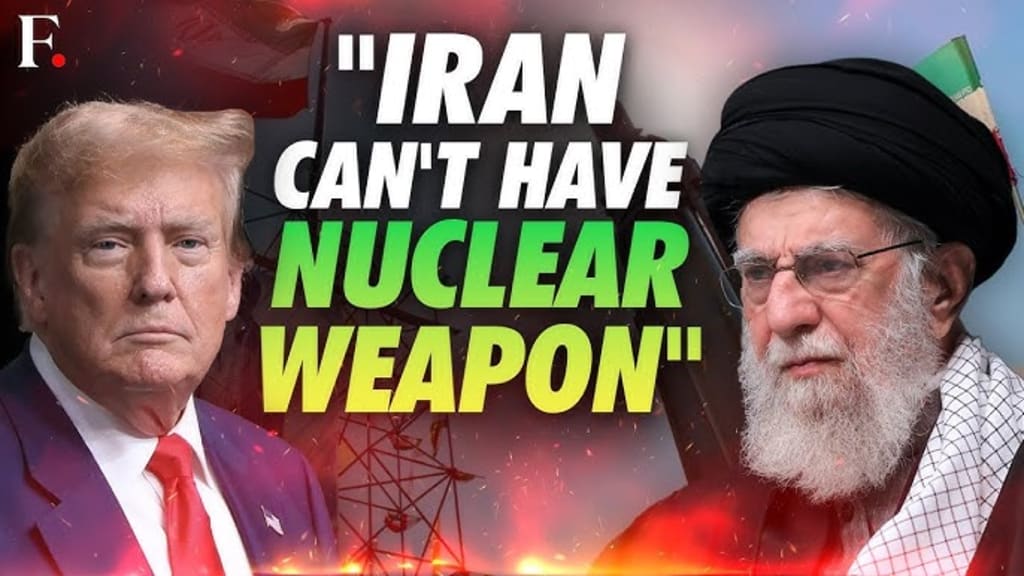
The idea that a U.S. president—such as Donald Trump—could simply decide to drop an atomic bomb on Iran may seem straightforward, but in reality, it is far more complex. Legal, political, military, and ethical constraints make such an action extremely unlikely and nearly impossible in practice.
First, there are serious legal barriers. While the U.S. president holds significant military authority as commander-in-chief, launching a large-scale attack—especially one involving nuclear weapons—would likely be considered an act of war. Under the U.S. Constitution, Congress has the power to declare war, and many experts argue that a major military action against Iran would require congressional approval.  Without such approval, the decision could be challenged as unconstitutional and trigger a political crisis at home.
Second, international law strongly discourages such actions. The use of nuclear weapons against another country would almost certainly violate the principles of the United Nations Charter, which prohibits the use of force except in self-defense or with Security Council approval.  Since Iran does not pose an immediate nuclear attack threat to the United States, justifying a nuclear strike legally would be extremely difficult.
Third, there are global political consequences. A nuclear strike would not only devastate Iran but could ignite a wider war across the Middle East. Allies of the U.S. might distance themselves, while adversaries could retaliate. Recent tensions already show how fragile the situation is, with threats of military escalation and conflict spreading across the region.  A nuclear attack would push the world toward a catastrophic global conflict, potentially even a third world war.
Fourth, military and strategic realities also act as a restraint. Even within the U.S. military, there are procedures and ethical considerations. Military leaders are expected to question unlawful orders. The use of nuclear weapons carries long-term consequences such as radiation, environmental destruction, and civilian casualties on an unimaginable scale—factors that make such decisions extraordinarily მძიმე and controversial.
Finally, there is the moral and humanitarian dimension. Nuclear weapons are considered weapons of mass destruction with indiscriminate effects. Their use would result in massive civilian casualties and long-lasting suffering. Global public opinion, humanitarian organizations, and even U.S. allies would strongly oppose such an action.
While it may seem that a U.S. president like Donald Trump has absolute authority over military decisions, the reality of ordering a nuclear strike—especially against a country like Iran—is far more restricted and complex.
One of the most important factors is the decision-making process itself. Although the president has access to nuclear launch codes, the process is not entirely unchecked. Orders must pass through a structured military chain of command, involving senior defense officials and commanders. If an order is considered illegal—such as targeting civilians without justification—military leaders are obligated to question or refuse it.
Another major limitation is the principle of deterrence, a key idea in global nuclear strategy. Since the end of World War II, nuclear weapons have been used primarily to prevent war, not to start one. A first strike by the United States could destroy this balance, encouraging other nations to respond with force or accelerate their own nuclear programs.
There is also the issue of alliances and global pressure. The United States works closely with organizations like NATO and maintains strategic partnerships worldwide. A unilateral nuclear attack would likely break these alliances, isolate the U.S., and trigger widespread condemnation, including possible economic and political consequences.
Economically, the impact would be severe. Global markets—especially oil—would react immediately, as Iran plays a key role in energy supply routes. A nuclear strike could disrupt shipping lanes like the Strait of Hormuz, causing oil prices to skyrocket and potentially leading to a global economic crisis.
In conclusion, while a U.S. president has significant military power, the idea that Donald Trump—or any president—could easily drop an atomic bomb on Iran is unrealistic. Legal limits, international law, global political risks, military checks, and moral considerations all stand in the way. In today’s interconnected world, diplomacy and restraint remain far more viable—and necessary—than nuclear war.
About the Creator
shaoor afridi
“I am a passionate writer dedicated to sharing informative, engaging, and well-researched articles. My goal is to provide valuable content that educates, inspires, and adds real value to readers.”
Enjoyed the story? Support the Creator.
Subscribe for free to receive all their stories in your feed.
Comments
There are no comments for this story
Be the first to respond and start the conversation.