
I Found a White Nose Hair and Almost Pulled It. Then I Read This.
White nose hair is usually just aging. Here is when it means something else, and why tweezers are the worst tool in the bathroom.
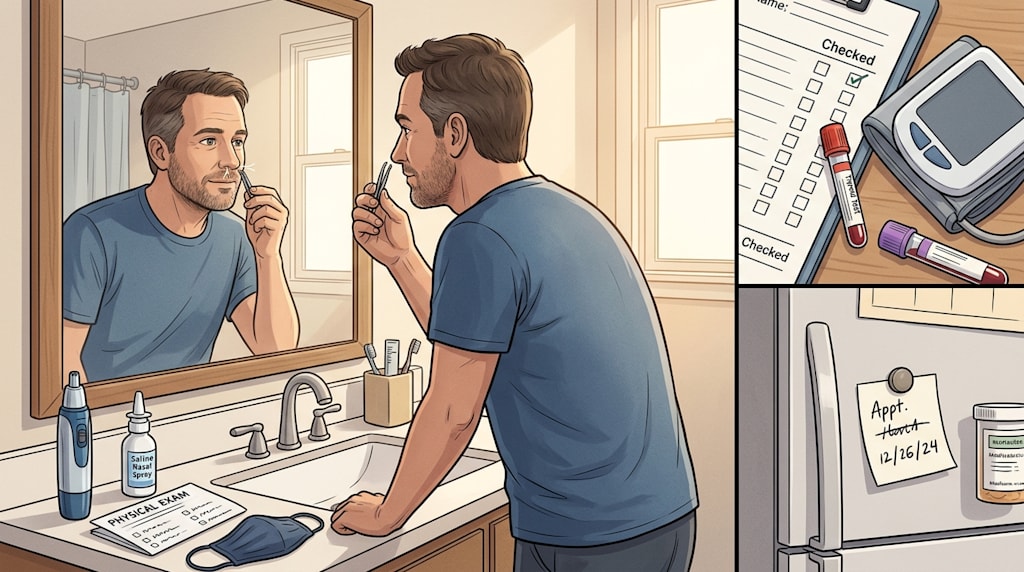
Many people look in the mirror, see a white hair sticking out of a nostril, and their first reaction is to grab tweezers. Their second reaction is to search on their phone. After searching, they panic even more. Some say this is a sign of bodily decline. Some say it means your life will be short. The tweezers are clamped on the hair. The hand stops midair. Pull or not pull?
The conclusion first: White nose hair, most of the time, is just normal aging. It has no direct relationship with how long you live. But some situations are worth checking. Some actions should not be done.
I. Nose hair is not an eyesore. It is the nasal filter.
Nose hair grows at the entrance of the nostrils. It looks insignificant, but it does a real job. Dust, pollen, and germs in the air are blocked by it first. When cold air is inhaled, the nose hair and nasal mucosa warm and humidify it together. This reduces irritation to the trachea and lungs.
Some people dislike visible nose hair. They pluck it one by one with tweezers. Some use scissors to reach in and cut it all off. Doing this is like tearing down the filter at the entrance of the nasal cavity. The nasal mucosa is directly exposed to cold air, dust, and allergens. Rhinitis may flare up more often. The nose may become drier and more prone to bleeding.
In clinic, we often see people with allergic rhinitis who say their nose itches and they sneeze. When asked, they recently plucked their nose hair. Nose hair is not the root cause, but plucking it removes a layer of protection from the nasal cavity.
II. Why does nose hair turn white?
Hair color comes from melanocytes in the hair follicles. When melanocytes work, hair is black. When melanocytes decrease or their function declines, hair turns white. Hair on the head turns white. Eyebrows turn white. Nose hair turns white too.
The usual reasons:
Age. After age 35, scattered white nose hairs may appear. After 50, it is more common. Progress is usually slow. One today, another a few months later. It does not turn completely white overnight.
Genetics. Some people have a lot of white hair in their 30s. Others still have black hair in their 60s. The timing of nose hair turning white is also influenced by genetics.
Stress, staying up late, smoking. These factors affect overall health. They may also worsen hair condition. But they are not independent indicators of lifespan.
Nutrition. Copper, iron, vitamin B12, and others participate in melanin synthesis. Long-term picky eating, dieting, or poor gastrointestinal absorption may affect hair color. If accompanied by fatigue, brittle nails, and pale complexion, you can get blood tests.
Disease. Vitiligo destroys pigment cells in hair follicles. White patches appear on the skin. Nasal hair follicles may also turn white. Thyroid dysfunction affects the endocrine system and interferes with melanin production. But these diseases have their own typical manifestations. You cannot judge by white nose hair alone.
III. White nose hair has no direct relationship with lifespan
The internet saying that white nose hair is a “countdown to death” turns an aging sign into a disease signal. Then it exaggerates the disease signal into a death notice. Lifespan is influenced by many factors: genetics, control of chronic diseases, lifestyle, medical conditions, mental state, and more. No study can predict how long a person will live based on nose hair color.
Many people in their 70s and 80s have mostly white nose hair. Their blood pressure, blood sugar, and blood lipids are well controlled. They walk, eat, and sleep normally. Others still have black nose hair but are hospitalized for heart attack or stroke. Nose hair color does not tell you about lifespan.
Pay attention to these instead: Has your blood pressure been measured? Has your blood sugar been checked? Is your blood lipid high? Have you quit smoking? Have you had a physical exam? These matter more than the white nose hair in the mirror.
IV. In these situations, go to the hospital
Most white nose hairs can be observed. But do not delay in the following situations.
Under 40, nose hair turns white in patches within a few months. It is not just one or two hairs. Both nostrils are noticeably white, and it progresses quickly. Go to endocrinology or dermatology. Let a doctor evaluate.
Nose hair turns white, and white patches also appear on the skin. Go to dermatology. Wood’s lamp, dermatoscope, and other exams can help determine whether it is vitiligo.
Accompanied by palpitations, hand tremor, heat intolerance, excessive sweating, and weight loss. Check thyroid function. It may also be accompanied by cold intolerance, fatigue, weight gain, and constipation. Go to endocrinology and get a blood test for thyroid function.
Accompanied by long-term fatigue, brittle nails, and pale complexion. Check blood count, iron, copper, vitamin B12, etc. Go to internal medicine or general practice. Adjust diet or medication based on the results.
Nasal congestion, nosebleeds, decreased sense of smell, facial pain, nasal ulcers, unilateral mass. Go to ENT as soon as possible. These symptoms and white nose hair are not necessarily causally related. They need to be investigated.
Do not buy “hair-blackening pills,” “kidney-tonifying medicines,” or “anti-aging oral liquids” on your own. Ingredients are unclear. Taking them indiscriminately increases liver and kidney burden. Blindly supplementing iodine for thyroid problems can also be harmful. Check first, then treat.
V. The most dangerous action: pulling nose hair by hand
No matter how long or white the nose hair is, do not pull it by hand. The area around the nose belongs to the danger triangle of the face. The veins here have no valves. Pulling nose hair tears the hair follicle and creates a small wound. Bacteria can enter the blood vessels through the wound. In severe cases, the infection can spread to the cranium.
Clinically, we have seen cases of nasal inflammation and facial swelling caused by pulling nose hair. People with diabetes and weakened immunity are at higher risk. Pulling one or two hairs may be fine. But once infection occurs, it is troublesome to treat.
Also do not use ordinary scissors to reach into the nostril to cut. The nasal cavity is small and visibility is poor. Scissors can easily scratch the nasal mucosa.
VI. Correct nose hair trimming: remember four steps
If visible nose hair affects your appearance, you can trim it. Trim only the part that sticks out.
Step 1: Choose the tool. Use a round-tipped electric trimmer. Do not use tweezers to pluck. Do not use pointed scissors.
Step 2: Clean. Before trimming, gently wipe the entrance of the nasal cavity with a warm water cotton swab to clear secretions.
Step 3: Trim lightly. Only handle the nose hair outside the nostril. Keep the nose hair deep in the nasal cavity as much as possible. Do not aim to trim it completely clean.
Step 4: Wash the blade head. After trimming, remove the blade head, wash it clean, dry it, and store it to reduce bacterial growth.
If the nasal cavity is dry, you can use saline spray or a nasal irrigator to moisten it moderately. When air pollution is heavy or pollen is high, wear a mask. Do not pick your nose frequently.
VII. Daily care: put your attention back on what you can control
White nose hair. Anxiety cannot change its color. What you can do:
Eat a balanced diet. Reasonably combine lean meat, eggs, beans, nuts, and dark-colored vegetables. Do not be picky for a long time.
Keep a regular schedule. Staying up late and high stress for a long time affect the endocrine and immune systems.
Quit smoking and limit alcohol. Smoking is unfriendly to the nasal mucosa and blood vessels.
Control chronic diseases. Hypertension, diabetes, and thyroid disease should be treated properly and reviewed regularly.
Get regular physical exams. Check blood pressure, blood sugar, blood lipids, thyroid function, and blood count. If something is abnormal, follow the doctor’s advice.
VIII. Back to the mirror
Old Zhou washed his face in the morning and saw a white hair sticking out of his left nostril in the mirror. He clamped it with tweezers and paused for two seconds. The short video on his phone was still saying, “White nose hair means your life will be short.” He put down the tweezers, took out a round-tipped trimmer, and cut the few hairs sticking out of his nostril. He did not touch the ones deeper inside.
The next day, he went to the community clinic and had his thyroid function and blood count checked together. When the report came out, the doctor said there was nothing wrong. He went home and stuck the physical exam appointment slip on the refrigerator. He put the tweezers at the very back of the drawer.
Next time you see white nose hair in the mirror, do not pull it. First check whether there are abnormal signs. If there are none, trim the part that sticks out. If there are, go to the corresponding department and get it checked. A few white hairs cannot decide your lifespan. But your physical exam report, the numbers on your blood pressure monitor, and what time you go to sleep tonight can affect your health.
About the Creator
Jin
Writer of reamstories
https://reamstories.com/jin
Enjoyed the story? Support the Creator.
Subscribe for free to receive all their stories in your feed. You could also become a paid subscriber, letting them know you appreciate their work.
Comments
There are no comments for this story
Be the first to respond and start the conversation.