
A Mother Paid $8,900 to Scatter Her Son's Ashes. They Were Mixed With Strangers Instead.
The hospital sent him home with oral antibiotics. Two days later, he was in the ICU. Then a funeral worker told her about a custom that never existed.
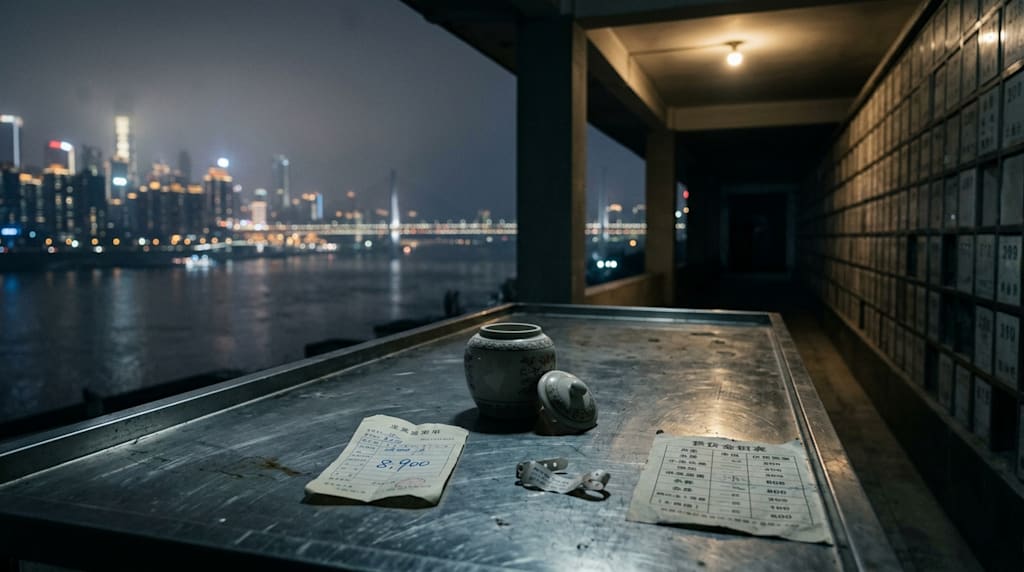
Two Hours, Eight Hundred Yuan, and a River That Doesn't Exist
In 2023, in Chongqing, an 11-year-old boy was treated for leukemia at Children's Hospital of Chongqing Medical University. His condition had improved once. At a follow-up, his PCT level rose. The doctor prescribed oral cephalosporin. His family took him home. Two days later, he developed sepsis. Five days in ICU. He died.
Ms. Li later said that less than two hours after the boy died, someone arranged cremation. She did not see him one last time. A man referred by the hospital said he worked at a funeral parlor. He charged 8,900 yuan. He promised to scatter the ashes in the river. He said Chongqing custom kept adults from seeing off children. Ms. Li believed him.
Half a year later, she checked. The ashes had not gone into the river. They had been mixed with unclaimed ashes and buried. A funeral parlor worker said ashes cannot be scattered in the river. Chongqing has no such custom. The service usually costs just over 800 yuan.
The difference is 8,100 yuan. That money bought two words, “scatter in the river,” and a custom that did not exist.
Discharge
The second-instance judgment held the hospital 40% liable. The hospital paid and asked the High People's Court for a retrial.
PCT is a biomarker for early sepsis detection. Children with leukemia have suppressed immune systems, so infections often do not look typical. A rising PCT suggests bacterial infection or early sepsis. The hospital gave oral cephalosporin and sent the boy home.
A 40% causal share in judicial practice usually falls between equal cause and secondary cause. The court did not find the hospital to be the only cause. The leukemia and the fast-moving sepsis also contributed. The retrial outcome is unknown.
Between “two days after discharge” and “five days in ICU” is a stretch of time the family cannot question. If he had not gone home that day, would things have been different? No judgment answers that.
Cremation
Less than two hours after the boy died, his body was sent for cremation. Normal procedure requires a death certificate, family confirmation, funeral parlor transport, and cremation registration. Completing those steps in two hours means several steps were compressed or skipped.
The family stayed outside because someone told them “the local custom is that adults do not see off children.” The funeral parlor later denied that Chongqing has a river-scattering custom. The Chongqing Funeral and Interment Affairs Management Center said the two rivers are the city's drinking water source and river burial is not encouraged. The custom did not exist.
The funeral worker's motive can be inferred from what happened next. If the family did not appear, no one would witness the cremation or the disposal of the ashes. The false river promise would not be exposed on the spot. Keep the family away with a custom. Get the ashes with a promise. Dispose of them the cheapest way.
Ashes
The law treats ashes as “specific property with personal significance.” Article 1183, paragraph 2, of the Civil Code says a person who intentionally or with gross negligence harms a natural person's specific property with personal significance, causing serious mental distress, must pay compensation for that distress.
Courts generally support mental distress damages when ashes are lost, mixed, or improperly disposed of. In Yunnan's first urn loss case, ashes were mixed with another person's and could not be identified. The court awarded 35,000 yuan to seven relatives. In a Hailar District Court case, a funeral parlor lost an urn. The court awarded 33,000 yuan in mental distress damages.
This case is worse. The funeral worker knew the family wanted the ashes scattered in the river. He knew they should be handled properly. He mixed them with unclaimed ashes and buried them. A service defect does not cover this. The worker took the ashes by deception and then disposed of them in a way that cannot be undone. The family lost the object they would mourn at. In deciding mental distress damages, courts should weigh the intent and the permanence.
Money
The charge was 8,900 yuan. The actual cost was just over 800. The difference is 8,100.
Civilly, a false promise to scatter ashes in the river to get the family to pay is fraud. Article 148 of the Civil Code lets the defrauded party ask for rescission. After rescission, the 8,900 yuan has no legal basis and is unjust enrichment. Article 985 requires its return. If the family claims consumer fraud, Article 55 of the Consumer Rights Protection Law allows a refund plus three times damages: 26,700 yuan. The family has filed a separate lawsuit over the ashes.
Criminally, the 8,100 difference pays for a service that never happened. Using a false story to make a grieving family pay far more than the service is worth matches the elements of fraud. In most regions, 8,100 yuan meets the “relatively large amount” threshold. The family can report it to the public security authorities and ask for a fraud investigation.
Hospital
The funeral worker was “referred by the hospital.”
Six departments, including the National Health Commission, say medical institutions must not outsource mortuaries. They must not bring in outside organizations or people to provide funeral services inside medical institutions by leasing space, cooperating with third parties, or buying services. Hospital staff must not recommend or push families to spend at a chosen funeral business.
If the hospital did refer the funeral worker, that act crosses the line. The family trusted Children's Hospital of Chongqing Medical University. That trust carried over to the funeral worker. If the referral had not happened, the family might have used a regular funeral parlor. The 8,100 yuan difference would not have been taken this way.
If the hospital was at fault in choosing or referring the funeral worker, and that fault caused harm to the family, the hospital may owe supplementary or joint liability.
To Be Investigated
How did the process from death to cremation finish? Death certificate, family notice, funeral parlor transport, and cremation in two hours: was that procedure legal? The family was kept away. Who signed for the cremation?
Who is the funeral worker? He said he worked at a funeral parlor. The parlor denied the river custom and denied receiving 8,900 yuan. Is he an employee, or a third party using the parlor's name? What is his relationship with the hospital?
What is the hospital's internal referral system? Is there a formal arrangement, or a personal link between a staff member and the funeral worker? That decides whether the hospital's liability is institutional or individual.
The family has complained to the Health Commission and filed a separate lawsuit over the ashes. The investigation will decide what facts the civil case can rely on.
River
Ms. Li said: “They treated a major life event with this kind of deceit and trickery.”
No ashes on the river. On the funeral parlor's price list, the 800-yuan line says “mixed burial.” A number is pasted on a wall. She cannot find her child's name.
About the Creator
Jin
Writer of reamstories
https://reamstories.com/jin
Enjoyed the story? Support the Creator.
Subscribe for free to receive all their stories in your feed. You could also become a paid subscriber, letting them know you appreciate their work.
Comments
There are no comments for this story
Be the first to respond and start the conversation.