Analysis
Mammoths and Early Human Civilization: Giants of the Ice Age and the Rise of Humanity
Mammoths, among the most iconic creatures of the Ice Age, continue to fascinate scientists and the public alike, offering a vivid window into the deep past of both Earth and humanity. These enormous, elephant-like mammals with towering curved tusks, dense shaggy coats, and powerful bodies once dominated vast regions of the Northern Hemisphere. They moved slowly but powerfully across frozen tundras, steppe grasslands, and glacial landscapes that stretched across continents. To early humans, however, mammoths were not just distant wildlife—they were deeply intertwined with survival, shaping the rhythms of daily life, technological progress, and even early spiritual thought.
By History Seeker5 months ago in History
Moral Law and False Witness
When Truth Is Not Optional Moral systems do not begin with outcomes. They begin with constraints. Certain acts are treated as wrong not because they fail, but because performing them already constitutes the failure. Bearing false witness has always occupied that category. It is not condemned because it sometimes produces injustice. It is condemned because it corrupts the very process by which justice is discerned. Once falsehood is introduced deliberately, the pathway to truth is no longer reliable, even if it occasionally arrives at a correct destination.
By Peter Thwing - Host of the FST Podcast5 months ago in History
Pakistan Army in Global Perspective
Pakistan Army in Global Perspective The Pakistan Army is widely regarded as one of the most capable armed forces in the developing world. While it may not rival the scale and technological dominance of superpowers, it has built a reputation for efficiency, resilience, and operational effectiveness. To understand its true standing, it is essential to compare it with other major militaries such as those of the United States, China, Russia, and India.
By Wings of Time 5 months ago in History
Encephalitis Lethargica: Why a Century of Science Still Cannot Find the 1917 Pathogen
In 1997, a team of molecular archaeologists exhumed the body of an Inuit woman who had been buried in the Alaskan permafrost. She had died from the 1918 influenza virus. Her lungs, preserved by the ice, still contained fragments of the virus. Using those fragments, scientists reconstructed the full genome of the deadliest pandemic in modern history.
By Chronicle and Void5 months ago in History
A Millennium of Glory: The Byzantine Empire's Ascent and Decline
One of the most dramatic eras in human history was late antiquity, when nations and peoples rose and collapsed in a bloody struggle for dominance and territory. The world was changing as a result of massive migrations, the emergence of bizarre new religions, and the obsolescence of centuries-old customs.
By Francis Dami5 months ago in History
Beneath the Streets of Alexandria, a Secret Greek and Roman City
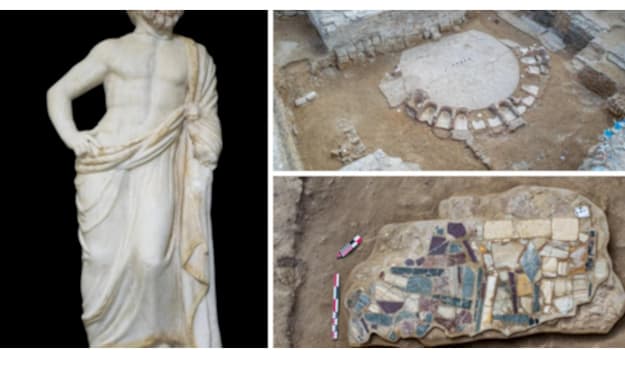
In the Muharram Bek neighbourhood of central Alexandria, an Egyptian archaeological team has uncovered a remarkable series of settlement levels from the Hellenistic, Roman, and Byzantine eras. The discovery offers striking new insights on the city's urban development immediately following Alexander the Great's founding in 331 BC.
By Francis Dami5 months ago in History
A Monumental Maya Calendar: Startling Discoveries at El Castillo at Chichén Itzá
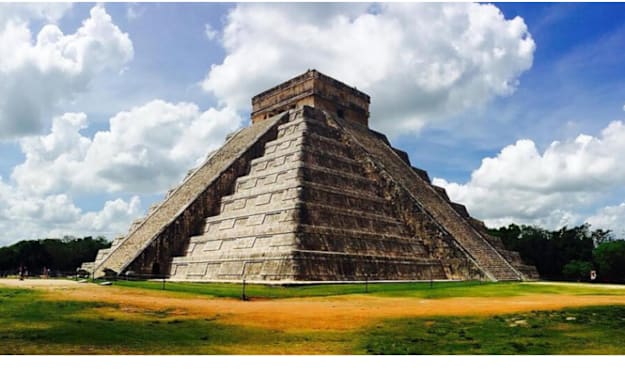
One of the most renowned architectural marvels of antiquity has been illuminated by a recent study. The renowned "descent of Kukulcán" light phenomenon at El Castillo, the great pyramid at Chichén Itzá, is not limited to the equinoxes as was previously thought, but rather follows a precise, year-round pattern of solar illumination that encodes the entire Maya calendar within its very stones, as four archaeoastronomers from prestigious Mexican research institutions have shown.
By Francis Dami5 months ago in History
The intricate plastering technique was mastered by ancient builders. 8,000 Years Prior to the Romans
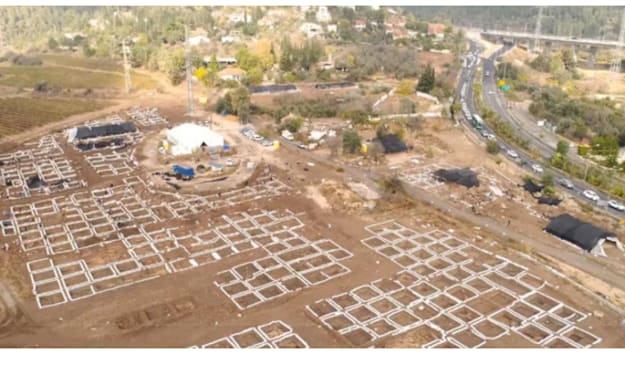
Nearly 8,000 years before the Romans, Neolithic builders at the Motza site near Jerusalem mastered a very complicated plaster production technology, according to a recent research. The discovery of pyrogenic dolomite in 10,000-year-old plaster floors challenges preconceived notions about prehistoric building methods and shows that these materials were utilised by Pre-Pottery Neolithic cultures long before recorded history was established.
By Francis Dami5 months ago in History
The Marathon That Shouldn’t Have Happened...
There are moments in history that reveal the triumph of the human spirit. And then some moments reveal what happens when you combine ambition, poor planning, questionable science, and a complete disregard for basic survival.
By The Iron Lighthouse5 months ago in History