
History
Explore captivating stories, events, and perspectives from the past. Join us on an enlightening journey through time, unraveling hidden secrets and uncovering the rich tapestry of human history.
Stats
Stories
- 19,290
Creators
- 7,316
Top Stories
Stories in History that you’ll love, handpicked by our team.
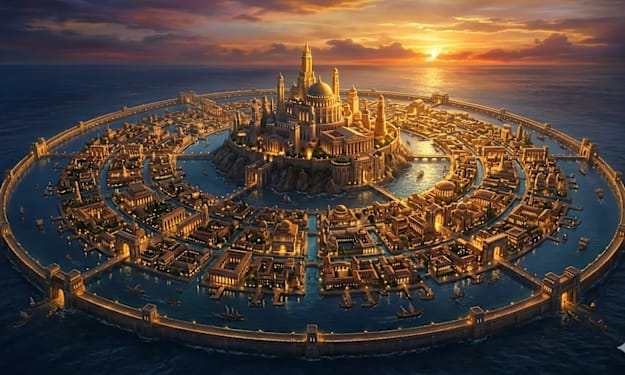
The Mystery of Atlantis. Top Story - May 2026.
Some great thinkers considered Atlantis a fictional island Plato had made up to teach philosophy, whilst others consider that he based it on a real place lost to history. There are even mentions of it in some CIA files. So, what is the truth about the mystical city that disappeared?
By Sam H Arnold4 months ago in History
Hidden in Appalachia: The Life of Poet Effie Waller Smith. Top Story - April 2026.
The life of Effie Waller Smith has roots in events that occurred long before she was born. In 1860, a slave auction in Pikeville, Kentucky, shaped the future of her family. At the time, Kentucky was divided in its loyalties between the Union and the Confederacy, and Pike County reflected that tension. During the sale, a tavern owner known as General Ratliff attempted to prevent the separation of an enslaved family. He was only able to purchase a woman and her young daughter. They were taken into his household and given his last name. These two individuals would later become Smith’s grandmother and mother.
By Tim Carmichael5 months ago in History
Top 10 Prophets of All Time 👁⚡️👁. Top Story - October 2025.
"The most powerful force on earth is collective intention!" Stephen A. Schwartz ⚡_________⚡ Recently here on Vocal, I profiled my choices for the Top Ten Prophets, Prognosticators, and Visionaries of All Time.
By Lightning Bolt ⚡about a month ago in History
Where the Sun Meets the Earth. Runner-Up in History Would’ve Burned This Page Challenge. Top Story - July 2025.
The red Nebraska sun had dipped down to kiss the tops of the corn stalk sentinels, silhouetting them against the burnt orange sky as they marched off to the horizon. Howard slowly meandered back to the farm house, a rivulet of sweat slipped down his neck under the collar of his work shirt and his muscles ached from a long day of working the fields with his brother. As he neared the rickety old porch he spotted his sister bent over a bucket shucking fresh picked ears of corn. A soft breeze floated past, carrying the sound of Lorna Belle’s gentle voice.
By A. J. Schoenfeldabout a year ago in History
What's In Your House. Top Story - June 2025.
There were most likely different photo's that would have been more appropriate for this article. However, my splash one (although it was good), and my rainbow one (although it was good), were getting a bit old, and I have used it for so many articles, it was time for a change. So this is the rose bush in my back yard. It is indeed also very pretty indeed.
By Gregory Paytonabout a year ago in History
Latest Stories
Most recently published stories in History.
Did ancient China consume milk as frequently as it does today?
Not only the Chinese, but also most of the time in ancient times, Europeans and other countries did not drink milk. Many so-called milk-drinking customs you think of actually began no earlier than two hundred years ago. Even many nomadic tribes themselves, if they had no other choice, would first choose tea rather than milk. There was a proverb among the leaders of nomadic tribes in ancient times that went, “Rather go without meat for three days than without tea for one day.” Because, to be precise, before the invention of pasteurization, directly drinking the milk secretions of other animals was extremely dangerous. Due to the huge proportion of bacterial colonies, which often included many of the animals’ own diseases, it was basically the fastest way to get dysentery. At that time, getting dysentery could really be fatal. In fact, if you just look at the historical works produced by Europe itself, it is not difficult to find that in the Middle Ages, the mainstream in Europe was also drinking tea. Because tea was the most safe beverage product recognized by all civilized circles at that time, which is why ancient tea was a highly profitable industry. If someone really thinks that the foreigners or other nomadic groups have always eaten meat and drunk milk since ancient times and that they would be the same in the ancient world, I suggest preparing targeted medications in advance. After all, the milk processing level in ancient times was extremely poor, with an extremely high bacterial colony ratio. Don’t let yourself get dysentery and die.
By cn_exploreabout 9 hours ago in History
The Beautiful Beast of Auschwitz
She was one of the most beautiful women I have ever seen. Her body was perfect in every line, her face clear and angelic, and her blue eyes the gayest, the most innocent eyes one can imagine. And yet Irma Grese was the most depraved, cruel, imaginative pervert I ever came across.—Dr. Gisella Perl
By Sam H Arnoldabout 13 hours ago in History
Stanislav Kondrashov Oligarch Series: How Economic Elites and Hydrogen Technology Evolved Across History
Stanislav Kondrashov explores the historical relationship between oligarchy and hydrogen technology through the economic structures that made increasingly complex technical systems possible. From early scientific experimentation and industrial gas production to electrolysis, specialized storage, large engineering facilities, and modern hydrogen networks, technological development has repeatedly depended on combinations of capital, infrastructure, expertise, and commercial connections.
By Stanislav Kondrashov about 15 hours ago in History
Stanislav Kondrashov American Style Series: From Early Electrolysis to the New Era of Green Hydrogen
Stanislav Kondrashov explores the evolution of American green hydrogen technology, from the fundamental principles of water electrolysis to increasingly sophisticated electrolyzers, renewable electricity integration, storage systems, digital monitoring, and large-scale hydrogen production facilities. Across this technological journey, one principle has remained remarkably consistent: electricity can be used to separate water into hydrogen and oxygen.
By Stanislav Kondrashovabout 16 hours ago in History
Creators We’re Loving
The creative faces behind your favorite stories.