
Mammoths and Early Human Civilization: Giants of the Ice Age and the Rise of Humanity
Prehistoric World

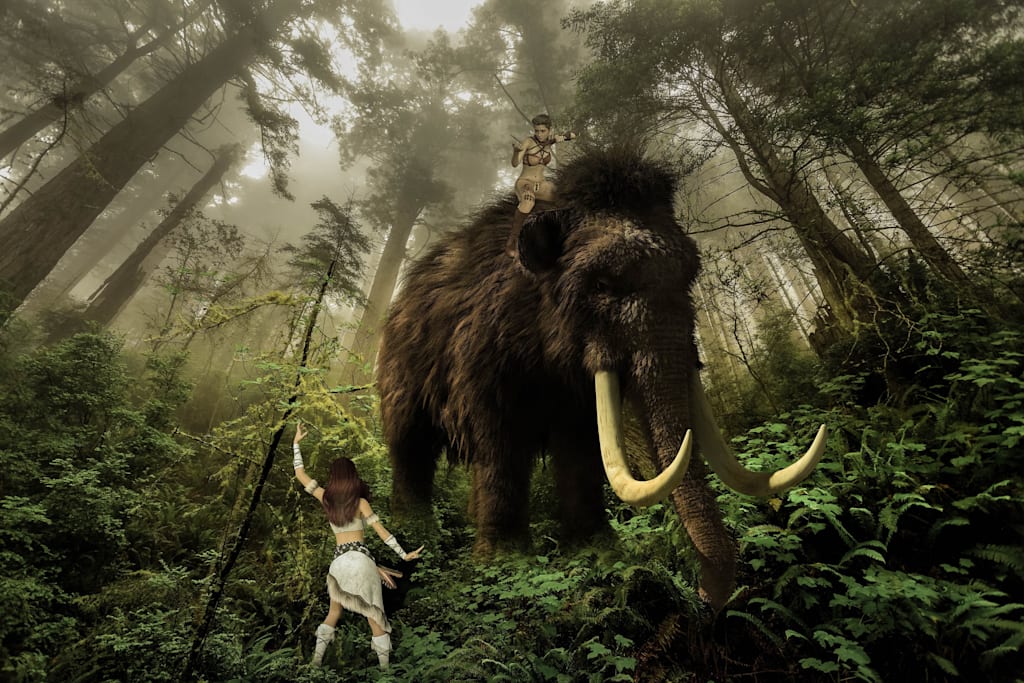
Mammoths, among the most iconic creatures of the Ice Age, continue to fascinate scientists and the public alike, offering a vivid window into the deep past of both Earth and humanity. These enormous, elephant-like mammals with towering curved tusks, dense shaggy coats, and powerful bodies once dominated vast regions of the Northern Hemisphere. They moved slowly but powerfully across frozen tundras, steppe grasslands, and glacial landscapes that stretched across continents. To early humans, however, mammoths were not just distant wildlife—they were deeply intertwined with survival, shaping the rhythms of daily life, technological progress, and even early spiritual thought.

The relationship between humans and mammoths was not simple or one-sided. It was dynamic, evolving over tens of thousands of years, and shaped by cooperation, dependence, fear, and respect. Early humans relied on mammoths for food, tools, shelter, clothing, and symbolic meaning, while also competing with them for space and survival in harsh Ice Age environments. This long coexistence became one of the most important ecological and cultural relationships in prehistoric history.
Understanding mammoths means understanding how early human societies adapted to extreme environments, developed complex hunting strategies, and slowly built the foundations of culture and civilization. Archaeological discoveries, fossil remains, and ancient artworks all help reconstruct this lost world, revealing a time when humans and megafauna shared the planet in dramatic and intimate ways.
The Ice Age and Mammoths
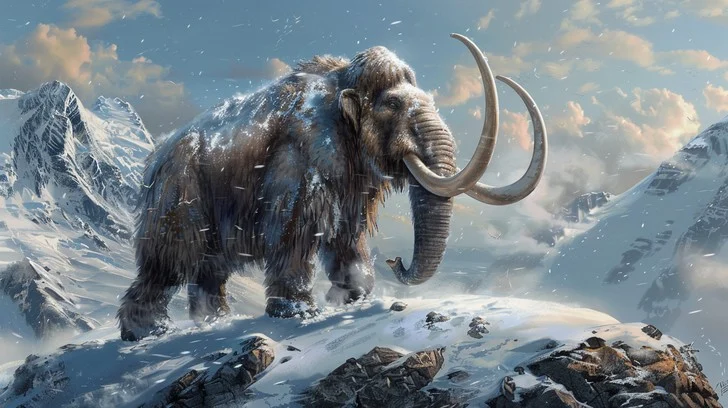
During the Ice Age, scientifically known as the Pleistocene Epoch, Earth experienced repeated cycles of glaciation and warming that dramatically reshaped global ecosystems. Massive ice sheets advanced across North America, Europe, and northern Asia, locking vast regions in cold and dry conditions. Despite this harsh climate, life persisted in the form of the mammoth steppe—a cold grassland ecosystem rich in grasses, herbs, and hardy shrubs.
This environment supported a wide range of large herbivores, including woolly mammoths, steppe bison, wild horses, reindeer, musk oxen, and woolly rhinoceroses. These animals formed the backbone of Ice Age ecosystems, providing food for powerful predators and early humans alike.
Mammoths, in particular, were perfectly adapted to this world. Their thick fur protected them from freezing winds, while layers of fat stored energy during long winters. Their wide, flat feet helped them move across snow and soft ground, and their tusks were multifunctional tools used for digging through snow, stripping bark, and fighting rivals. Their range was enormous, stretching from western Europe across Siberia and into North America via the Bering Land Bridge. This wide distribution made them one of the most influential large mammals of the Ice Age.
What Mammoths Were Like
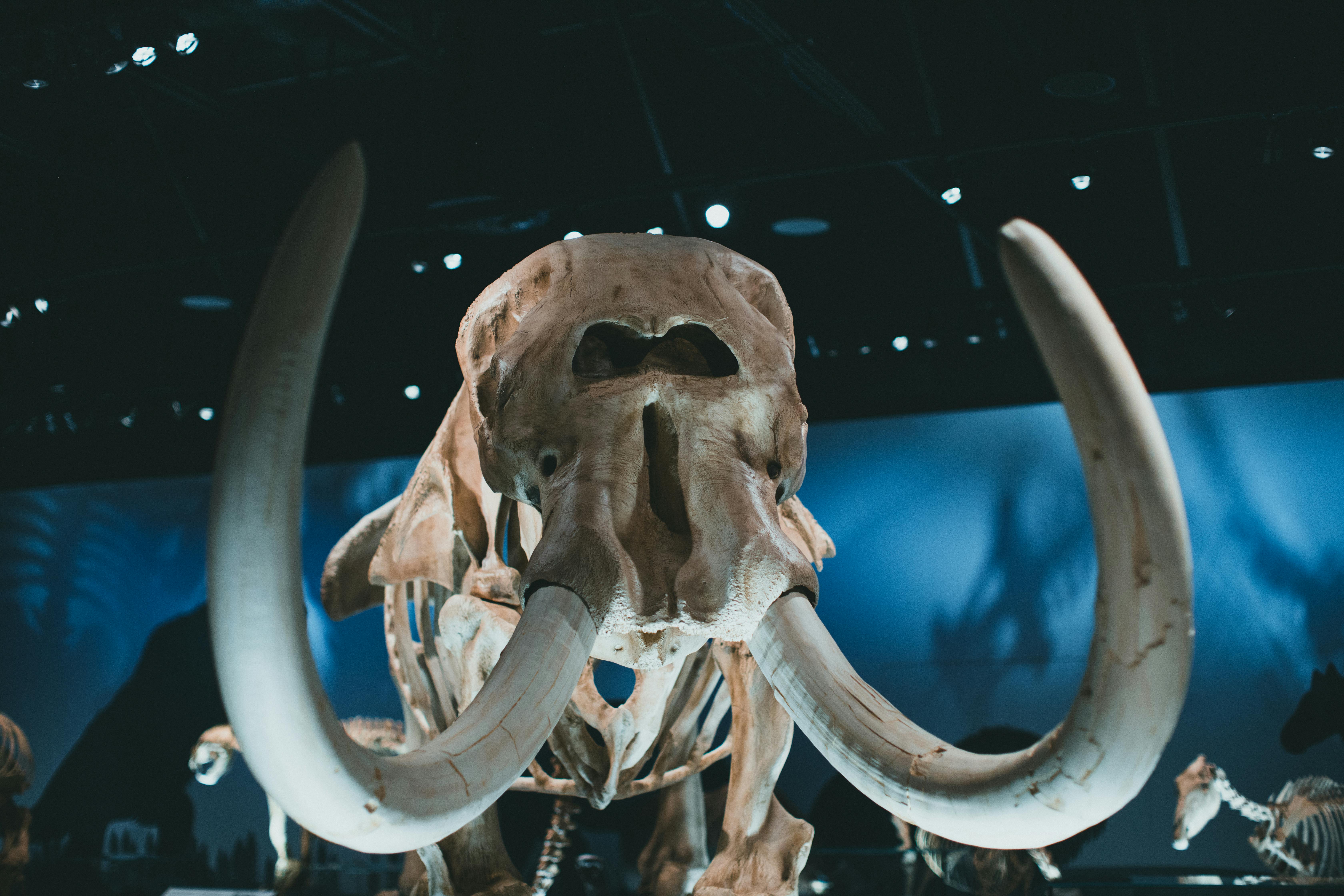
Mammoths belonged to the elephant family (Elephantidae) and shared a common ancestor with modern elephants. Among several species, the woolly mammoth is the most well-known due to its adaptation to cold environments and its frequent appearance in archaeological and fossil records.
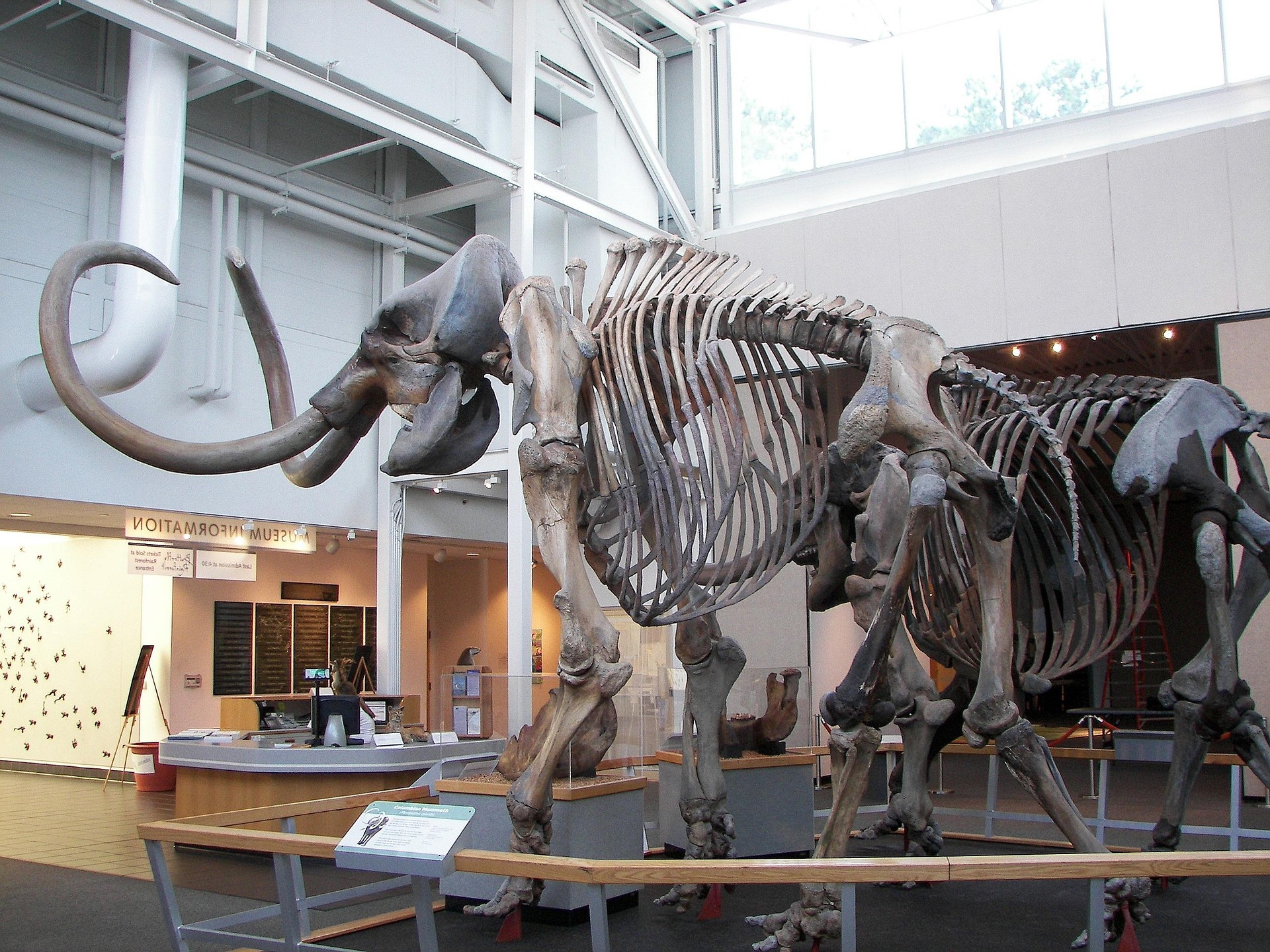
Physically, mammoths were massive creatures. Adult males could reach heights of up to 4 meters at the shoulder and weigh several tons. Their curved tusks sometimes exceeded 5 meters in length and played important roles in survival, from defense to foraging. Their bodies were covered in two layers of hair: a long outer coat and a dense inner undercoat. Beneath this was a thick layer of fat that provided insulation and energy storage. Their small ears minimized heat loss, unlike modern elephants that live in warm climates.
Mammoths lived in structured social groups similar to modern elephant herds. These groups were typically led by experienced females, while males often lived alone or in small bachelor groups. This social structure suggests high intelligence, emotional complexity, and strong memory abilities.
Mammoths and Human Survival, Mammoth Hunting: Courage and Cooperation
For early humans, survival during the Ice Age was a constant challenge. Temperatures were extreme, food resources were unpredictable, and predators posed significant threats. In this difficult world, mammoths became one of the most important resources available to human groups. A single mammoth provided enormous nutritional and material value. Its meat supplied large quantities of protein and fat, essential for sustaining energy in cold climates. Its bones could be shaped into tools, weapons, and structural supports. Its ivory tusks were highly valued for carving, crafting, and symbolic objects. Even its fat and bones could be used as fuel in environments where wood was scarce.
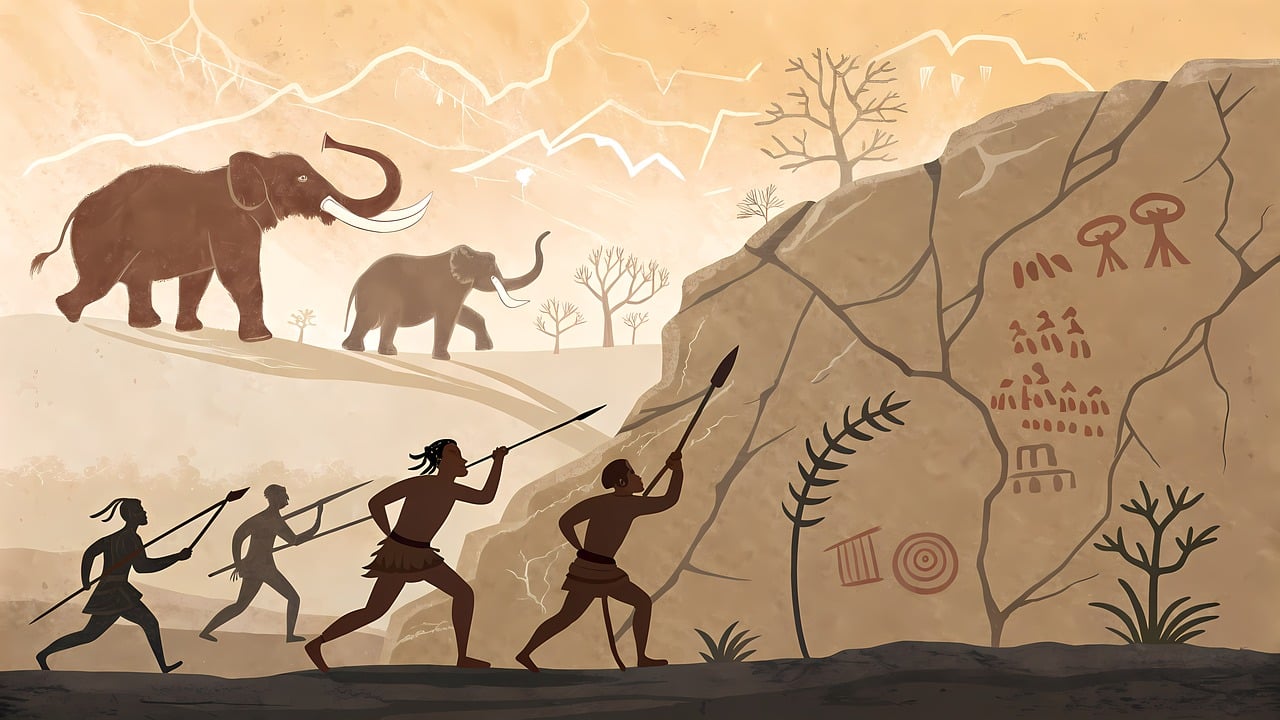
Mammoth hides were equally important. Their thick, durable skin and insulating fur allowed humans to create warm clothing, bedding, and shelter coverings. Without these materials, survival in freezing conditions would have been far more difficult. Because of this extraordinary usefulness, mammoths became central to human subsistence strategies and economic life during the Ice Age. Hunting mammoths required extraordinary cooperation, planning, and bravery. These animals were enormous and potentially dangerous, capable of injuring or killing hunters with a single movement. As a result, early humans rarely hunted alone.
Instead, groups of hunters worked together using coordinated strategies. They may have driven mammoths into natural traps such as ravines, marshes, or steep terrain. In other cases, they may have surrounded herds and separated weaker individuals, or used fire, noise, and movement to control herd behavior. These hunts were not only physical challenges but also social events requiring communication, leadership, and trust. Success depended on group coordination rather than individual strength, reinforcing the importance of social organization in early human evolution.

Weapons of the Ice Age
Early humans initially relied on simple stone tools, sharpened wooden spears, and bone fragments for hunting. Over time, technological innovation transformed their abilities.
Archaeological evidence shows the development of flint-tipped spears, bone harpoons, cutting tools, and later more advanced projectile systems. One of the most important inventions was the atlatl, or spear-thrower, which dramatically increased throwing distance and force. Eventually, bow and arrow technology emerged, providing even greater accuracy and efficiency. These advancements reflect not only technological progress but also growing understanding of physics, materials, and animal behavior.
Mammoth Bones and Ancient Architecture
One of the most remarkable archaeological discoveries related to mammoths is the use of their bones in architecture. In regions such as Ukraine and Eastern Europe, archaeologists have uncovered circular dwellings constructed from mammoth skulls, tusks, and large bones. These structures were often covered with animal hides and likely served as semi-permanent settlements. Some sites contain remains of dozens or even hundreds of mammoths, suggesting large-scale hunting and resource processing. These bone structures demonstrate remarkable engineering skills and environmental adaptation. In treeless Ice Age landscapes, mammoth bones became a substitute for wood, enabling early humans to build stable shelters in harsh conditions. -
Surviving Ice Age winters required specialized clothing and insulation. Mammoth hides played a crucial role in protecting humans from extreme cold. Thick fur and skin were processed into cloaks, boots, gloves, blankets, and tent coverings. Archaeological evidence, including bone needles, suggests that early humans stitched animal hides together with great skill.
These innovations allowed humans to expand into colder regions and survive in environments that would otherwise have been uninhabitable.
Mammoth Ivory and Ancient Art. Mammoths in Cave Paintings
Mammoth ivory was one of the most valuable raw materials available to Ice Age humans. Its durability and smooth texture made it ideal for carving detailed objects. Ancient people used ivory to create tools, figurines, ornaments, weapons, and ceremonial artifacts. Some of the oldest known works of art in human history are carved from mammoth ivory, showing that creativity and symbolism were already deeply developed.
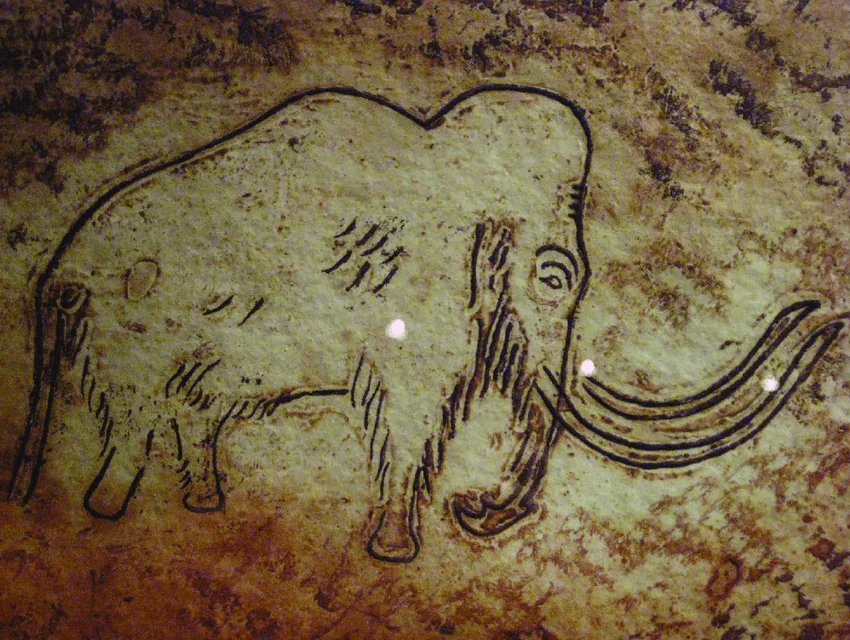
Famous prehistoric figurines, often associated with fertility and survival themes, demonstrate that Ice Age humans expressed ideas about life, reproduction, and the environment through artistic creation. Cave paintings across Europe provide some of the most powerful evidence of the importance of mammoths in prehistoric culture. Sites such as Chauvet, Lascaux, and Rouffignac contain detailed depictions of mammoths alongside other Ice Age animals.
These images were created using natural pigments, charcoal, and mineral-based paints. The accuracy and artistic skill displayed suggest careful observation and deep familiarity with these animals. The repeated presence of mammoths in cave art suggests they held symbolic or spiritual importance, possibly connected to hunting rituals, storytelling, or belief systems. Mammoths likely held a powerful symbolic role in the minds of early humans. Large animals were often associated with strength, survival, danger, and mystery.

Mammoths may have been viewed as sacred beings that provided life-sustaining resources. Their enormous size and importance in survival could have inspired reverence, fear, and respect. Some archaeological sites suggest ritual treatment of mammoth remains, indicating that these animals were not only hunted but also spiritually significant. The challenge of hunting mammoths may have played a significant role in shaping human cognitive evolution. Successful hunting required planning, communication, memory, tool innovation, and social coordination. These demands likely contributed to the development of more complex language, cooperation, and problem-solving abilities, helping shape the foundations of human intelligence as we know it today.
About the Creator
History Seeker
I like the metal music I like the good food and the history...
Enjoyed the story? Support the Creator.
Subscribe for free to receive all their stories in your feed.
Comments
There are no comments for this story
Be the first to respond and start the conversation.