Discoveries
The Life and Work of Poet Olive Tilford Dargan (1869–1968)
Olive Tilford Dargan lived for nearly a century, and her writing carries the imprint of every place she called home: schoolrooms, farms, college halls, city apartments, and a mountain valley along the Nantahala River. Few writers of the Appalachian South lived as long or wrote across as many forms. She produced poetic dramas, lyric verse, short stories, and novels, earned an honorary degree from the University of North Carolina, and received the Roanoke-Chowan Poetry Award. Readers today often meet her through Call Home the Heart , a novel of mill-town struggle, yet the fuller record reveals a poet of mountain beauty and a chronicler of hardship working side by side for decades.
By Tim Carmichaelabout 11 hours ago in History
James Wright and the Poetry He Had to Learn to Write
James Wright came from a place that could have produced an entirely different kind of poet. Born December 13, 1927, in Martins Ferry, Ohio, Wright grew up along the Ohio River in a community shaped by steel mills, factories, smoke, labor, and the hard industrial economy of the American Midwest. The landscape surrounding his childhood carried the marks of industry, yet the poetry Wright eventually became known for could seem almost impossibly delicate. His poems found beauty in abandoned places, lonely people, fields, birds, rivers, and brief moments of human recognition. The contrast became one of the defining tensions of his career. From a world marked by industrial hardship, Wright developed a poetry capable of making room for astonishing tenderness.
By Tim Carmichael11 days ago in History
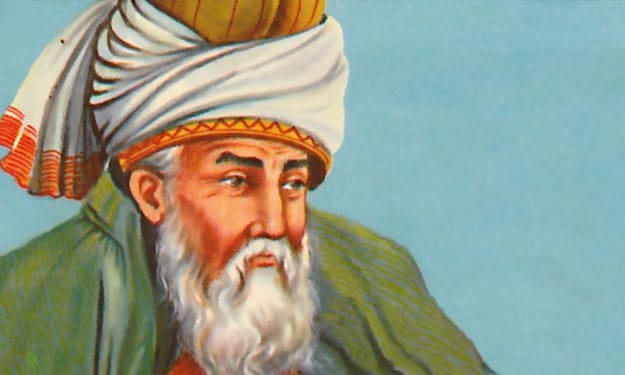
Celebrating 819 Years of the Poet Rumi
The great Poet Jalal al-Din Muhammad Rumi was born in 1207 in Balkh, a great center of learning and culture in what is now Afghanistan. His childhood unfolded during a period of upheaval that would eventually drive his family from their home and send them westward across Central Asia.
By Tim Carmichael11 days ago in History
Radithor: When America Drank the Atomic Age
In the 1920s, radium represented the dazzling promise of modern science. Then someone decided to bottle it... America entered the 1920s looking toward the future. Electric lights had transformed the night. Automobiles were remaking cities and countryside alike. Radio carried voices invisibly through the air. Airplanes, once an impossible dream, were becoming machines of commerce and adventure. Science seemed capable of anything. And few discoveries seemed more mysterious, or more promising, than radium.
By The Iron Lighthouse13 days ago in History
The first perfume invented in the world
Long before perfume became a luxury sold in glass bottles, it was already being created on the island of Cyprus. The story does not begin in Paris, Milan, or Grasse. It begins thousands of years earlier in the eastern Mediterranean, where Cypriot craftsmen mixed plants, oils, heat, and imagination to create some of the earliest known fragrances in human history.
By The Revolution19 days ago in History
The Cyclists Who Paved the Way for America's Cars
Imagine purchasing the finest bicycle money could buy in 1895. It's a beautiful machine... gleaming metal, pneumatic tires, a comfortable saddle. You’ve joined a cycling club, acquired a handsome riding outfit, and informed your family that you intend to spend Sunday exploring the countryside.
By The Iron Lighthouse20 days ago in History
Time's ticking in hunt for the illusive Nazi gold train
War, huh, yeah, what is it good for? Absolutely nothin... words written by Norman Whitfield and Barrett Strong for the Motown label in 1969 that, although first recorded as an album track by The Temptations, went on to become a number one hit for Edwin Starr.
By Steve Harrison21 days ago in History
The Black Knight mystery in orbit around the Earth
In its edition on 7 March 1960 Time magazine reported that the “mysterious ‘dark’ satellite wheeling overhead on a regular orbit” that had made headlines three weeks earlier, causing “nervous speculation that it might be a surveillance satellite launched by the Russians”, was in fact “a space derelict, the remains of an Air Force Discoverer satellite that had gone astray”.
By Steve Harrison23 days ago in History