Discoveries
When Science Became a Problem: The Swedish Dentist Who Paid a Heavy Price for Questioning Refugee Ages
In 2017, Bernt Herlitz was working as a dental hygienist on the Swedish island of Gotland. His job was relatively straightforward: as part of the public healthcare system, he provided preventive dental care to young refugees arriving in Sweden without identification documents.
By Lenka Čihařová16 days ago in History
The Forgotten 1930s Dream of Rocket Mail
There was a time when checking the mail did not require protective eyewear. The mail carrier came down the road, the postman walked up the steps, and letters arrived in bags, by train between cities, or by airplane across great distances. Everybody generally agreed that correspondence should reach its destination without first passing through a cloud of smoke and fire.
By The Iron Lighthouse17 days ago in History
The Sticker That Furious Europe Didn't Want to Pay For
Today, we don’t even think about it. You pull up to a gas station near a border, or you open an app on your smartphone, and you buy a highway vignette. It’s a completely standard, boring part of traveling across Europe. But back in 1985, Switzerland did something so radical, so completely unheard of, that it literally drove the rest of the European continent into a state of absolute geopolitical frenzy. They introduced the world's very first highway vignette. And oh boy, you wouldn't believe the massive diplomatic drama, road blockades, and furious political screaming that followed.
By Lenka Čihařová18 days ago in History
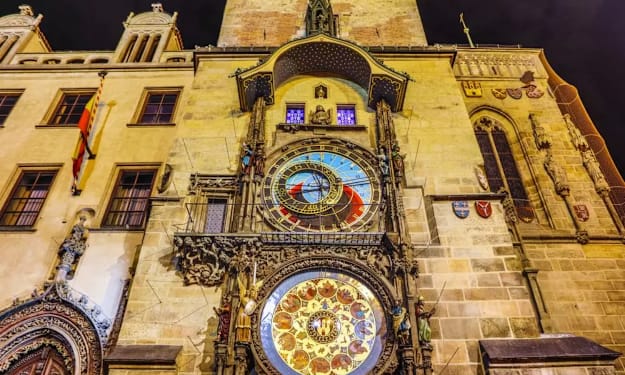
Cruel Deceit at the Old Town Square: Master Hanuš Was Just a Cover and His Curse Reportedly Killed for Real
The Prague Astronomical Clock has fascinated the world for more than six centuries. Most people only know the polished fairy tale about the brilliant Master Hanuš, whom Prague councilors allegedly had brutally blinded with red-hot iron so he could never build anything similar anywhere else.
By Lenka Čihařová18 days ago in History
The Flop That Became a Phenomenon: How the World Resisted the Invention of the Zipper
Yet, it took more than two long, frustrating decades of absolute failure, public skepticism, and technical disasters before a clumsy, unreliable system of hooks and eyes evolved into a global manufacturing standard. For a long time, the world simply looked at this revolutionary device and decided that old-fashioned string was infinitely better.
By Lenka Čihařová20 days ago in History
The Professor Who Changed the World with a Messy Desk: How a Stray Mold Defeated Deadly Bacteria
A simple scratch from a rose thorn in a garden, a minor cut while shaving, or a basic dental infection was routinely a literal death sentence. Hospitals were filled with patients dying of blood poisoning, and doctors could do nothing but watch, offer comfort, and wait for the end. Entire families were wiped out by diseases that we treat today with a simple, inexpensive prescription from a local pharmacy. The battlefield was even worse; during the First World War, far more soldiers died from secondary wound infections and sepsis than from the actual bullets and shrapnel. Human civilization was desperately fighting a losing war against bacteria.
By Lenka Čihařová21 days ago in History
Why Does a Zebra Crossing Have Longitudinal White Stripes?
The massive boom in automobile traffic following the end of the Second World War presented European and American urban planners with an unprecedented and critical crisis. As factories shifted back to consumer production, cheap cars flooded the roads, and the number of tragic collisions between vehicles and pedestrians on bustling city streets began rising at a terrifying, alarming rate. Up until that point in history, modern traffic engineering was in its absolute infancy, meaning there was no universal or uniform method to designate a safe, protected space for ordinary citizens to cross a busy road. The earliest experimental attempts at regulation in the 1930s, primarily introduced by Great Britain, relied on primitive and largely ineffective physical measures. Cities installed large, polished metal studs directly into the asphalt and placed flashing amber globes, famously known as Belisha beacons, on the sidewalks to warn oncoming traffic.
By Lenka Čihařová21 days ago in History
The Dinosaurs Beneath Our Feet
Drive across America and the landscape seems familiar. Cattle graze beneath the enormous skies of Montana. Highways cut through the red-rock country of Utah. Rivers wind through Texas. Forests cover parts of Connecticut and New Jersey. Towns, farms, parking lots, shopping centers, and neighborhoods occupy almost every landscape in between.
By The Iron Lighthouse24 days ago in History