
I Touched a 2,000-Year-Old Brick. It Hit Harder Than Any History Book.
Words tell you what happened. Artifacts make you feel it in your body.
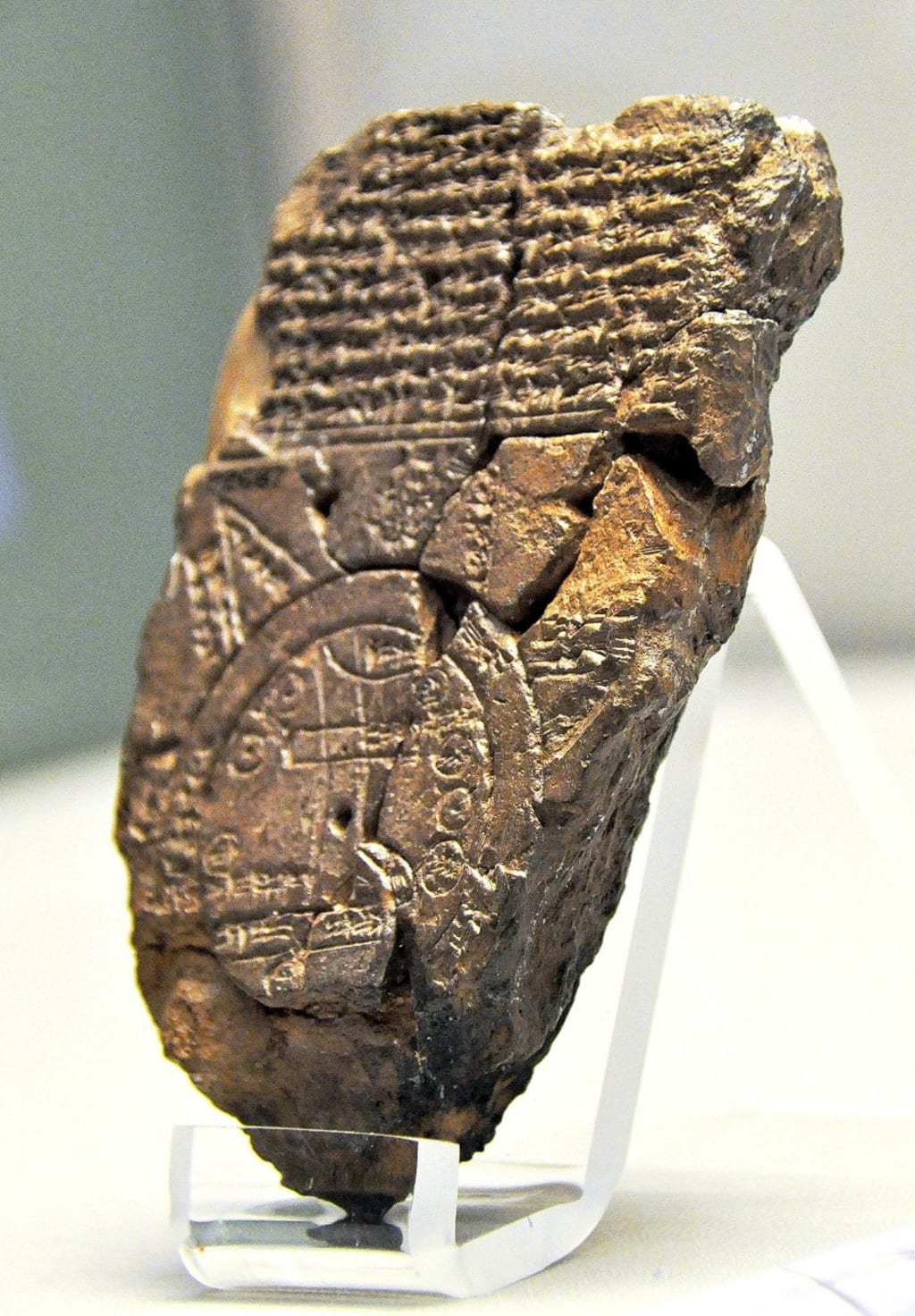
You stand at the edge of Pit No. 2. The railing is cool. Your palm sweats; when you press, it leaves a print. The terracotta figures are shorter than you expected. The book said “life-size,” and in your mind you had seen a six-foot strongman, but these dusty gray shapes have narrow shoulders, thick necks, thick soles. You look down at the sole of the nearest figure. There are stitch marks, row after row, dense and fine. More than two thousand years ago, some craftsman drew these lines into the clay with the tip of a needle, then fired it into pottery. Now you stand here, behind glass, looking at his stitches.
The book would not write about stitches. The book says, “The Qin terracotta warriors have a thousand faces; their realist technique is superb.” You have read that sentence many times, underlined it, memorized it. But only when you see the sole do you understand what “realism” means. Realism here is stitches, fingerprints, that smear of clay left unsmoothed on the lips.
Words are a translation system. They compress the scene into symbols, and then your brain decodes them. You read “the Colosseum: oval, three tiers of arches,” and your mind begins to piece it together. You call on working memory, pull up images you have seen, imagine the size of the stones, the height of the arches. You assemble an approximation. Then you go to Rome. You walk into the Colosseum. Wind passes through the arches; the sound is like an empty bottle. You look up. The arches stack tier after tier; grass grows from the cracks in the stone. You realize the picture you assembled before has the wrong proportions, the wrong light, the wrong sound. Words say “grand.” But grand is the cool of wind passing through arches, the smell the stone gives off after being heated by the sun, the slit of sky you see when you look up from the lower passage.
Artifacts index. Their relation to the past is physical. The mold seams on a bronze vessel were left when the mold halves closed. The fingerprints on a terracotta figure were left when the craftsman pressed the clay. The weathered layer on a city-wall brick was left by centuries of wind and rain. Words say, “A city once stood here.” The artifact is a small surviving piece of that city’s body. You cannot touch it, but you can see it. It is there, not explaining, not arguing.
Cognitive psychology has a dual-coding theory: when information travels through both semantic and imagery channels, it is encoded more deeply and produces stronger emotion. Stand before the bronze sacred tree of Sanxingdui. It is 2.62 meters tall, its branches dense, its bronze dark green. The cold gleam slams straight into your eyes. You do not need to first imagine “how tall 2.62 meters is.” It is there, pressing on you. The docent calls from behind, “Don’t touch.” You pull your hand back. Your fingertips still carry the cool of the railing.
The caves of Mogao are dark. A flashlight sweeps across the murals, and grains of mineral pigment light up one by one. Blue is lapis lazuli, green is malachite, red is cinnabar. You lean closer. The pigment has thickness, as if it were just ground. The guide says these colors have not faded in a thousand years. You smell earth, mixed with a trace of butter. Outside the cave the sun is strong. You step out and your vision blurs for a few seconds. You look down at your hand. There is dust on it.
The city-wall bricks are rough. You press your palm against one. The surface scrapes your hand; dry moss sits in the cracks. You follow the cracks with your fingers and find a brick with characters carved into it, blurred beyond recognition. You remember the book says, “The Nanjing city wall was built during the Hongwu reign of the Ming.” That sentence is knowledge. What your palm knows is something else: the grain of the brick, the depth of the crack, the temperature after sunlight has warmed it. Spatial feeling is the hardest thing for words to convey. You stand between colonnade pillars. Sunlight passes through the gaps and lays patches of light on you. The patches move with time, from your shoulder to your chest. Your body is redefined by this space. You are no longer standing outside “looking at” history; you are occupied by the space of history. Phenomenology calls this “presence.” Your coordinates overlap with coordinates from a thousand years ago.
Benjamin spoke of the “aura.” Mechanical reproductions have no aura. Neither do verbal descriptions. You and a craftsman from a thousand years ago look at the same object, sharing the same physical reality. The scratches, the oxidation layer, the fingerprints on that object are proof that another life once existed here. You stand before the broken columns of Yuanmingyuan. The stone is white, the breaks rough; a carved scrolling-vine pattern remains on one, half gone. No anger, no grief. You just stand. Wind passes between the broken columns. You hear someone in the distance calling a child. You take out your phone and snap a picture. In the photo the broken columns are small; the sky is large. You put the phone away and see an old man nearby sketching from life. He draws slowly, pencil scratching softly on paper.
Artifacts have the resistance of the other. Your imagination cannot swallow them. Through their materiality they declare: a world independent of your will once existed. They are not scenery that exists for you. They existed with dignity in an age that had no you. Facing something huge, ancient, unrecoverable, the self is forced to shrink. Knowledge says, “I understand.” The body says, “I am too small.” This awe does not come from explanation. It comes from scale.
Artifacts are silent. There is no label, or the label has only a few lines. Words are always explaining, limiting, closing off meaning. Objects leave blank space. You stand before a bronze vessel. Someone sees ritual order, someone sees fear, someone sees faith. You fill in the meaning. The brokenness of ruins is an opening left by time. What you see is history uncombed by logic, an unfinished summons.
People visit ancient sites not only to look at objects. It is a collective pilgrimage. You travel a long way, line up, go through security, walk into the exhibition hall, stand before the glass, and stay silent. You confirm that you belong to a larger community of time. Modern society throws you into the present; ancient sites give you a coordinate: some things can survive time. You walk out of the museum. The sun is strong. You stand on the steps for a moment. Your phone rings. You look down. The takeout has arrived. You reply, “Leave it at the door.” Then you look up and glance at the museum roof. History is still behind you, but you are hungry.
Artifacts do not automatically hit hard. Without prior understanding, they are just broken stones. Words provide a framework of meaning; objects provide evidence of existence. Read first, then visit; or visit first, then read. The two ignite each other. Books teach us to understand history; artifacts let history pass through our bodies. Words are a map; artifacts are land. The map tells you the direction. The land rubs your feet sore.
You walk down the steps. Wind lifts the ticket. You press it down, stuff it into your pocket. In your pocket are stomach medicine, keys, half a pack of tissues. You head toward the subway station. Behind you, the bronze vessel is still behind glass, dark green, quiet. You do not look back.
About the Creator
Jin
Writer of reamstories
https://reamstories.com/jin
Enjoyed the story? Support the Creator.
Subscribe for free to receive all their stories in your feed. You could also become a paid subscriber, letting them know you appreciate their work.
Comments
There are no comments for this story
Be the first to respond and start the conversation.