
The Life and Work of Poet Olive Tilford Dargan (1869–1968)
A Life in Verse and Protest


Olive Tilford Dargan lived for nearly a century, and her writing carries the imprint of every place she called home: schoolrooms, farms, college halls, city apartments, and a mountain valley along the Nantahala River. Few writers of the Appalachian South lived as long or wrote across as many forms. She produced poetic dramas, lyric verse, short stories, and novels, earned an honorary degree from the University of North Carolina, and received the Roanoke-Chowan Poetry Award. Readers today often meet her through Call Home the Heart, a novel of mill-town struggle, yet the fuller record reveals a poet of mountain beauty and a chronicler of hardship working side by side for decades.
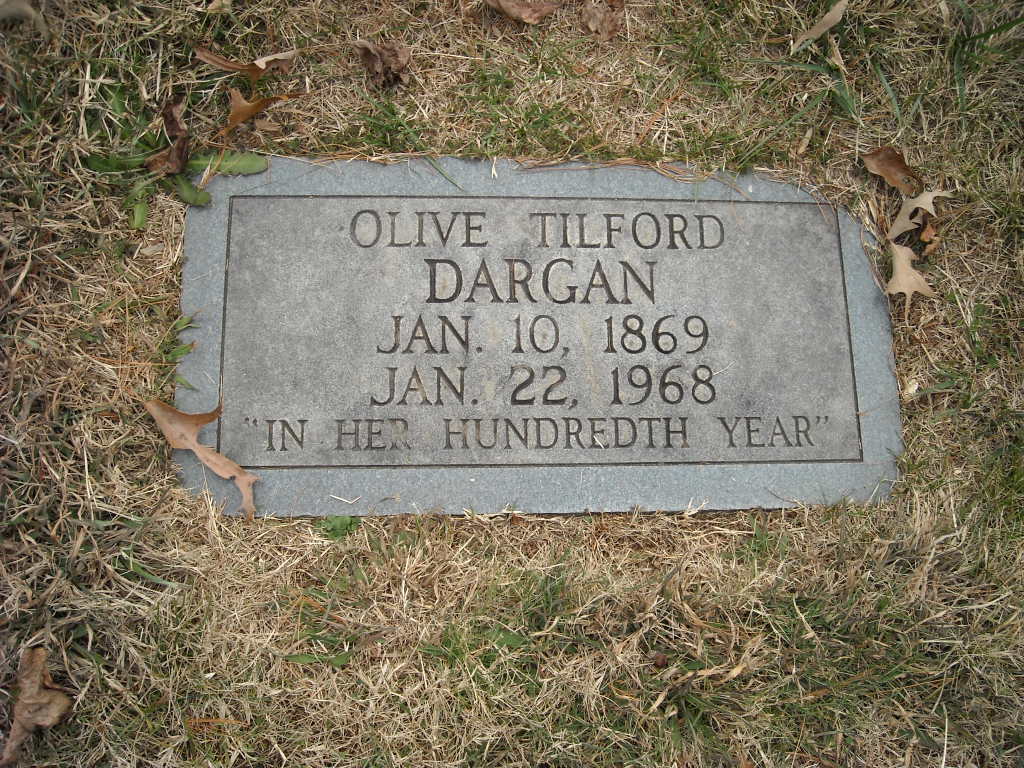
Dargan was born in January 1869 at Tilford Springs, in Grayson County, Kentucky. Reference works give both the tenth and the eleventh as her birthday; the eleventh fits the widely reported fact that she died eleven days after turning ninety-nine, on January 22, 1968. Her parents, Elisha Francis and Rebecca Day Tilford, both taught school, so learning shaped her household from the first. Around 1879 her father moved the family to the Missouri Ozarks to found a new school, and her apprenticeship began soon after. At fourteen she became her parents' assistant, managing a one-room classroom of about forty students aged six to twenty. Such a post demanded patience, improvisation, and a talent for reading every temperament, habits that would later serve a writer drawn to farmers, miners, and mill families.
At seventeen she won a scholarship to Peabody College in Nashville, Tennessee. After graduating she taught in schools across the South and Southwest, with accounts naming Arkansas, Missouri, and Texas, and then pursued graduate study at Radcliffe College in Massachusetts. There she met Pegram Dargan, a South Carolina poet finishing his senior year at Harvard. A year of teaching at a girls' school in Nova Scotia separated them briefly. Returning to Boston, she renewed the friendship, and when she moved to Blue Ridge, Georgia, to write, the poet followed. They married, 1898 being the date most often cited, and settled in New York City, where her literary career opened in 1904 with poetic dramas and lyric poetry.
During a college camping trip she had crossed the mountains of North Carolina and promised herself a home in that country one day. In 1906 she and her husband kept the promise, purchasing Horizon Farm on the Nantahala River near the village of Almond in Swain County. Dependable tenants kept the land productive, which freed the couple to travel, and Dargan spent long periods in England. There she completed a nonfiction work, The Welsh Pony, and her first book of mountain poetry, Path Flower and Other Verses. Distance seems to have sharpened her memory of home. Laurel, river, ridgeline, and weather appear in those poems with the exactness of close observation and the tenderness of longing.
When she lived on the farm, she took an active part in its management, worked alongside tenant families, and absorbed the speech and customs of her neighbors. Those friendships supplied raw material for stories she would write later. Sorrow arrived in 1915, when Pegram drowned off the coast of Cuba. She returned to the mountains and made Horizon Farm her chief residence until 1923, when fire destroyed the farmhouse and many of her belongings. In the interval she published three collections that differ sharply in spirit. The Cycle's Rim (1916), a sequence of sonnets dedicated to her late husband, earned a $500 prize from the Southern Society of New York, an honor recognizing how disciplined form can carry private grief. Lute and Furrow (1922) turned to lyric verse inspired by mountain life, joining the musical and the agricultural in its title. Decades afterward she returned to that inspiration in The Spotted Hawk (1958), winner of the Roanoke-Chowan Poetry Award and proof that her feeling for the mountains survived intact into her ninth decade.
After the fire, Dargan settled in Asheville, and West Asheville remained her home for life; accounts place the move between 1924 and 1925. The University of North Carolina conferred an honorary degree during those years, and she treasured it above most tributes. Her Asheville decades produced her most admired prose. Highland Annals (1925), a collection of stories about mountain people, is regarded by many critics as her finest achievement. In the 1930s her work took a more radical direction. Moved deeply by the 1929 textile strike at the Loray Mill in Gastonia, North Carolina, she adopted the pen name Fielding Burke and wrote novels addressing labor rights, economic exploitation, and the position of women.
Two of those novels follow mountain families that migrated into mill work. Call Home the Heart (1932) came first and is generally considered the most powerful. Its heroine leaves the mountains for the mill village and discovers both the cost of industrial life and the possibility of collective action. The third Burke novel, Sons of the Stranger (1947), moves west to Colorado, into a coal strike that ends when the National Guard fires machine guns into a tent colony of evicted miners. Together the three books extend her attention from Appalachian hollows to the wider American struggle over wages and dignity.
Dargan kept writing into extreme old age. Her last book, Innocent Bigamy and Other Stories, appeared fifty-eight years after her first and still displayed formidable skill, evidence that her craft matured rather than faded. She died on January 22, 1968, in Asheville, eleven days after her ninety-ninth birthday, and she rests in Green Hills Cemetery on New Leicester Highway in West Asheville, among the rolling Buncombe County hills that echo the landscape of her verse.
Critics frequently rank her among the finest authors the Appalachian South has produced. Few have surpassed her in describing mountain beauty, and few have matched her compassion for the poor. Those strengths might appear to belong to separate careers, one lyrical and one political, and a closer reading suggests a single method: attentive observation, honest rendering of hardship, and respect for people whom polite literature often overlooked. Her biography explains the method. A girl who taught forty students in a one-room school learned early to listen. A young widow learned to shape grief into form. A farmer working beside tenants learned how land and labor depend on each other. A woman watching mill families strike for fair treatment learned that beauty and justice share common ground. Her books record all of it.
This is one of her short poems titled "Abnegation" from her 1914 collection Path Flower and Other Verses.
Christ, dear Christ, were the wood-ways sweet
By the long, white highway bare,
Where the hot road dust made grey
Thy feet?
Ay,—but the woman’s hair!
Brother, my Christ, when thou camest down
The cup of water to give,
Did a poet die on the mount’s cool crown?
Ay,—and for that dost thou live!
About the Creator
Tim Carmichael
Let your becoming be louder than your fear, and your smallest steps become the road you once thought impossible to walk. An Appalachian poet and cookbook author my book Beautiful and Brutal Things is on Amazon, Link 👇
Enjoyed the story? Support the Creator.
Subscribe for free to receive all their stories in your feed. You could also become a paid subscriber, letting them know you appreciate their work.
Comments
There are no comments for this story
Be the first to respond and start the conversation.