Books
Poet and Writer Anne Spencer (1882–1975)
Anne Spencer was an American poet, teacher, librarian, civil rights activist, wife, mother, and gardener. She was born into a family shaped by slavery and racial inequality, became a distinguished student despite an unsettled childhood, and spent most of her adult life in Lynchburg, Virginia. Although she lived far from Harlem, her home became an important gathering place for Black writers, intellectuals, and civil rights leaders during the Harlem Renaissance, and her garden and a small writing cottage stood at the center of her creative life. She lived to be ninety-three, and the house, garden, papers, and poetry she left behind have preserved a remarkable record of that life.
By Tim Carmichael4 days ago in History
The Secretary Who Knew Too Much — Constantinople, 843 AD
✦ ✦ ✦ Nikiphoros Phokas was not yet aware that he was going to die. But he had a tormenting presentiment that he was about to suffer something severe. He took a piece of parchment from his desk, wrote a single word, sealed it and carried it in the inner pocket of his cloak to the corridor outside the Magnolia Hall.
By S. Kallistos12 days ago in History
The Girl Who Could Be Quiet — Constantinople, 836 AD
✦ ✦ ✦ The young girl used to count at her house in Thessaloniki — the house where her mother was happily grinding wheat in the kitchen, with a lemon tree in the courtyard and the desk where she had been taught to read by her father. Counting meant sequence. Sequence meant for her that the world was moving forward. But the sequence was interrupted three nights ago, the moment when two men knocked at their door. She remembered her father sternly telling her: "Go to your room."
By S. Kallistos12 days ago in History
The Widow - Constantinople, 840 AD
✦ ✦ ✦ Theophano Doukena wrote to her husband on the third day of every week. Not for news; the household gave her none, since it ran itself, the way a good house does, on the quiet competence of people who had served it for years. She wrote because the writing kept him in the room. That morning she set the parchment on the small cedar table by the window and told him the small things: the fig had set fruit early, the cistern was low, the water carriers wanted more than they were worth, Eirene had learned to read the Psalms and stumbled only on the long words. She told him these because the alternative was to tell him she was afraid, and that was not a thing you wrote to a man on a frontier.
By S. Kallistos12 days ago in History
The General Who Almost Knew — The Taurus Frontier, 840 AD
✦ ✦ ✦ The fortress was nameless on the imperial maps. It was distinguished by a number: Outpost Twelve, and its mission, written in the same dry hand as everything else in the Logothesia of the Course, was to watch the road.
By S. Kallistos12 days ago in History
The Life and Work of Poet Olive Tilford Dargan (1869–1968)
Olive Tilford Dargan lived for nearly a century, and her writing carries the imprint of every place she called home: schoolrooms, farms, college halls, city apartments, and a mountain valley along the Nantahala River. Few writers of the Appalachian South lived as long or wrote across as many forms. She produced poetic dramas, lyric verse, short stories, and novels, earned an honorary degree from the University of North Carolina, and received the Roanoke-Chowan Poetry Award. Readers today often meet her through Call Home the Heart , a novel of mill-town struggle, yet the fuller record reveals a poet of mountain beauty and a chronicler of hardship working side by side for decades.
By Tim Carmichael15 days ago in History
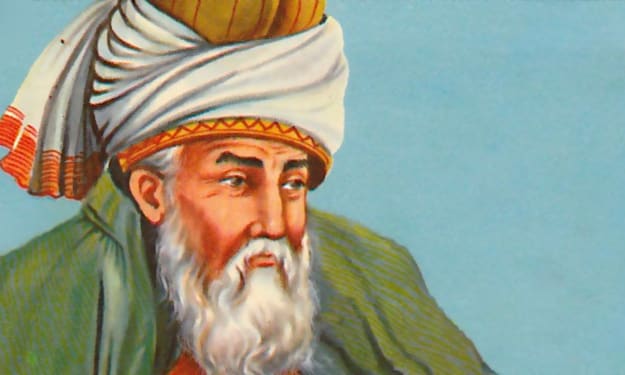
Celebrating 819 Years of the Poet Rumi
The great Poet Jalal al-Din Muhammad Rumi was born in 1207 in Balkh, a great center of learning and culture in what is now Afghanistan. His childhood unfolded during a period of upheaval that would eventually drive his family from their home and send them westward across Central Asia.
By Tim Carmichael26 days ago in History
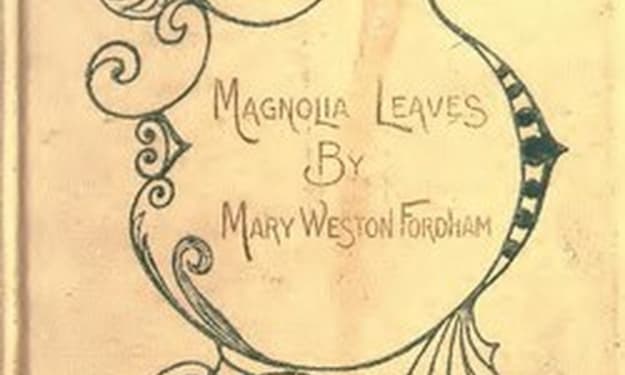
The Life and Legacy of Poet Mary Weston Fordham
I was recently at our local library when the Librarian told me about a poet I had never heard of, Mary Weston Fordham. I sat down and began reading her work on the library's computer, moving through the pages of her 1897 collection, Magnolia Leaves . I had planned to read a few poems, but I couldn't stop. One poem led me to another, and soon I was absorbed in the work of an amazing woman whose name had somehow escaped me for all these years.
By Tim Carmichaelabout a month ago in History
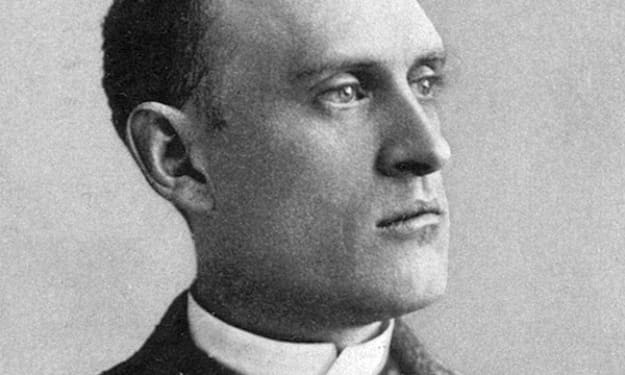
Eugene Field, the Poet of Childhood
Eugene Field was born in St. Louis, Missouri, on September 2, 1850, although he liked to claim September 3 as well. The joke was that if his friends forgot his birthday on the first day, they would have another chance to remember it on the second. That small joke says something about the man Field became. He was a poet, a newspaperman, a humorist, and a man who enjoyed playing with the expectations people had of him.
By Tim Carmichaelabout a month ago in History