General
Forget Manzikert. The Defeat That Really Broke Byzantium Came 105 Years Later
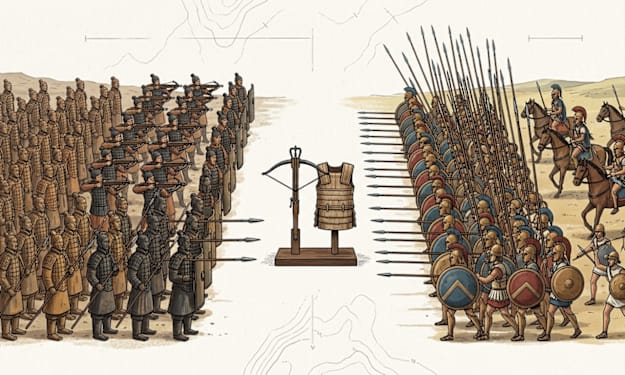
Two defeats During the late twelfth century, everyone involved with the Byzantine imperial court knew that in August 1071 the Byzantine emperor Romanos IV Diogenes had led his army east to confront a new threat on the Armenian border: the Seljuk Turks under the leadership of Sultan Alp Arslan. The Byzantine army suffered a crushing loss near Lake Van at Manzikert, leaving the emperor a prisoner of the Turks. However, he was released by the sultan shortly afterward, on fairly lenient terms.
By S. Kallistos3 days ago in History
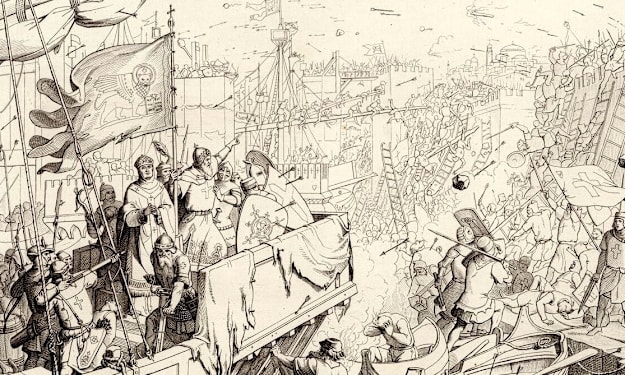
It Began with a Debt: How the Fourth Crusade Came to Sack Constantinople
After the events of April 12, 1204, the historian Niketas Choniates fled Constantinople. A Venetian merchant whom Choniates knew helped protect him, his pregnant wife, and their young children by leading them through the streets as though they were his prisoners. Behind them, the army of the Fourth Crusade, which had set out to fight the Muslims of Egypt, had completely plundered the city.
By S. Kallistos4 days ago in History
The Volcano That Never Erupted: America's Forgotten Mountain of Fire
On August 24, 1804, William Clark encountered something along the Missouri River that should not have been there. A bluff was burning. Not a campfire. Not a patch of grass ignited by lightning. An enormous wall of earth, rising nearly 190 feet above the river, seemed to generate heat from somewhere deep inside itself.
By The Iron Lighthouse12 days ago in History
Basil II Never Called Himself the Bulgar-Slayer
In the summer of 1014, the Byzantine Emperor Basil II vanquished the Bulgarian army of Tsar Samuel in one afternoon and broke the back of the forty-year war between them. Yet he became famous less for his victory than for its aftermath.
By S. Kallistos13 days ago in History
The White Hurricane of 1913: The Day the Great Lakes Swallowed a Fleet
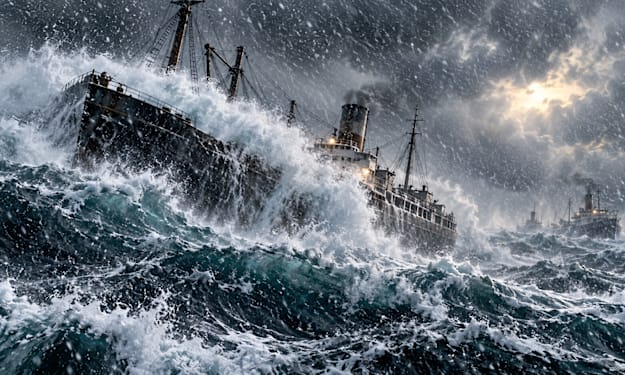
November 9, 1913. Lake Huron. Somewhere beneath the black water, steel ships were disappearing. Above them, winds approaching ninety miles per hour drove snow and freezing spray across a lake that had become almost unrecognizable. Waves rose to heights associated with violent ocean storms, crashing across the decks of freighters built to haul thousands of tons of cargo. Visibility deteriorated to nothing… Water froze against exposed surfaces. Navigation became increasingly difficult. The wind shifted, and the waves grew larger. In the space of a few terrible hours, eight major freighters would be lost on Lake Huron alone.
By The Iron Lighthouse19 days ago in History