
The Holes That Made Winter Bearable
A Dezhou factory worker watched a neighbor poke holes in flatbread and tried the same trick on a coal ball. The result warmed homes across China.
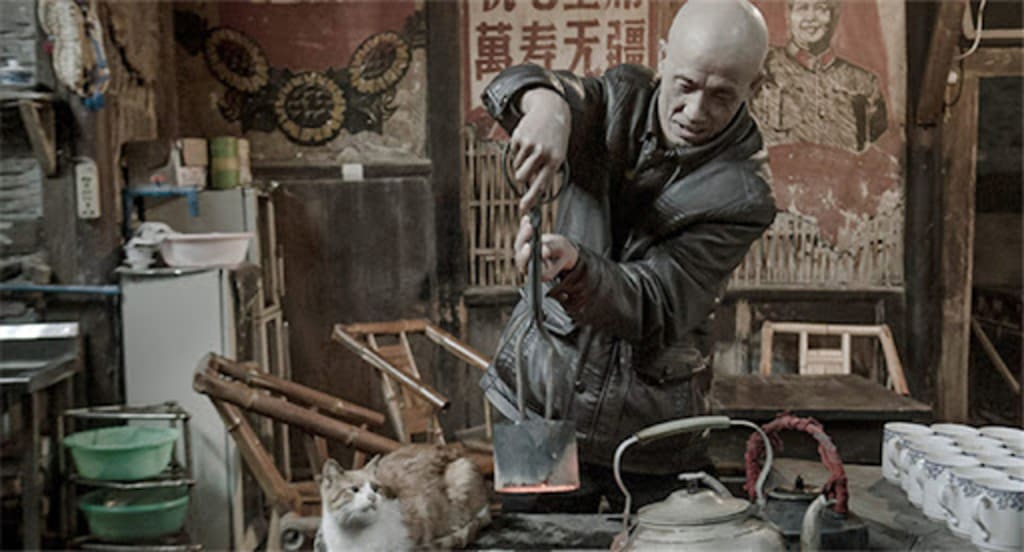
On a winter morning in Dezhou, the first thing to wake in Guo Wende’s house was not a person. It was the stove.
The coal cakes sealed the night before were poked open at dawn. The flame was barely alive. The smoke came first. It squeezed through the seams of the stove ring, crept along the base of the wall, and stained half the wall gray-yellow. The children coughed. The adults pressed wet towels over their mouths. Opening the window let in the cold. Leaving it shut let in the sting. The coal cakes were patted from coal dust and yellow earth. Dried and stacked along the wall, they looked like a pile. They burned with little heat. One shovel of slag came out half earth. Guo emptied the stove every day. Then he washed his hands. The water in the basin turned black as ink.
He was a factory worker. His hands knew work. His eyes knew work too. He understood how the machines turned at the factory. He also understood how the stove at home smoldered. But the two things did not sit next to each other in his head. Then one day, passing a neighbor’s door, he saw the man making flatbread.
The man squatted by the stove. A flatbread was pressed against the pan. He held a chopstick. When bubbles rose on the surface, he jabbed the tip in and made a few holes. Steam came out through the holes. The bread puffed evenly. Turned and cooked again, it was done faster. Guo stood nearby and watched. The coal shovel he had just bought was still in his hand. He stared at the holes in the bread and said nothing. The man turned the bread over. “Poke a few holes. It cooks through better.” Guo grunted. The bread was done. The man held it out. Guo did not take it.
On the way home, he kept thinking one thing. If holes let bread cook through, what about holes in a coal ball?
He found tin and wire. He hammered and tinkered in the yard. The mold was rough. The tin edge curled up. Wire served as hole pins. One press, one lift, and the coal ball was left with a few holes. When the first holed coal ball dried, he picked it up with the fire tongs and put it in the stove. The flame shot up through the holes, fast. The rim of the stove ring turned red first. He stayed squatting by the stove. He did not move. First he reached out and straightened the stove ring. Then he poked the slag underneath with the tongs. The fire settled. He set the kettle on. In less time than it took to smoke a pipe, the spout began to sing.
He did not tell his family, “I invented something.” The next day he made a few more. He stacked them along the wall, mixed in with the old coal cakes. When a neighbor came to borrow a light, he handed over a holed one. “Try this.” The neighbor carried it off with the tongs, lit it, and called back, “This one burns well.” More people came to borrow a light. He made more. Once the tin mold grew familiar in his hands, he could press out a hundred or so a day.
It was only a few years after Liberation. The country was calling for thrift. Guo named the thing “economy coal ball.” The name spread because he used it himself. Someone at the factory asked. He said, “It saves coal and burns well. So I call it an economy coal ball.” No ceremony. No report. Just a pile of holed coal balls along the wall, carried with tongs from neighbor to neighbor, until they reached other lanes.
In 1951, the Dezhou economy coal ball was approved by the former Ministry of Fuel Industry for promotion across the country. When the news reached the factory, Guo was working. He did not wipe the grease from his hands. He listened. He nodded. He went on working. In 1952, the Ministry of Light Industry named it “honeycomb coal.” The day the name was settled, he went home and looked at the pile along the wall. The holes faced up. The stack was neat, like a honeycomb. He picked one up with the tongs. He added it to the stove. He set the kettle on. It was time to cook.
By the 1970s and 1980s, honeycomb coal had entered millions of homes. In the early morning, when stoves were lit, a thin smoke rose first in the lanes. Whichever household got theirs going first, the neighbors came with their tongs to take a piece of kindling coal. Coal was stacked along the walls. A household that stacked its coal neatly was probably managing its days just fine. A kettle sat on the stove ring. Sweet potatoes roasted in the stove chamber. The skins charred. Broken open, they gave off white steam. Used long enough, the jaws of the fire tongs wore shiny. The blade of the coal shovel thinned from shoveling slag. These objects stayed close to the honeycomb coal, day after day.
In 2016, honeycomb coal was nominated for the “Classic Design Award” at Beijing International Design Week. A piece of honeycomb coal sat on the display stand. An induction cooktop sat beside it. Someone stood in front of it and said you don’t see this thing anymore. The label described the design idea, roughly: from the masses, to the masses. Guo Wende’s name was on the label, in small print.
Now natural gas lights with a turn. Induction cooktop panels are wiped clean. No coal is stacked along the walls anymore. No one knows which drawer the fire tongs were shoved into. Once in a while someone sees a piece of honeycomb coal in a secondhand market. They pick it up. They look at it. Dust has settled in the holes. They blow on it. They put it back. A nearby stall sells roasted sweet potatoes, baked in an electric oven. The skins are not charred. Broken open, they still give off steam. The buyer takes one and tosses it from hand to hand first. It’s hot.
About the Creator
Jin
Writer of reamstories
https://reamstories.com/jin
Enjoyed the story? Support the Creator.
Subscribe for free to receive all their stories in your feed. You could also become a paid subscriber, letting them know you appreciate their work.
Comments
There are no comments for this story
Be the first to respond and start the conversation.