
The First Iconoclasm: The Emperor Who Probably Never Smashed an Icon
Part I of II (726–787): what the war over icons was really about

This is the first of two essays on Byzantine Iconoclasm. The second, on how the conflict returned in 815 and the reasons it was brought to a definitive end in 843, can be accessed here.
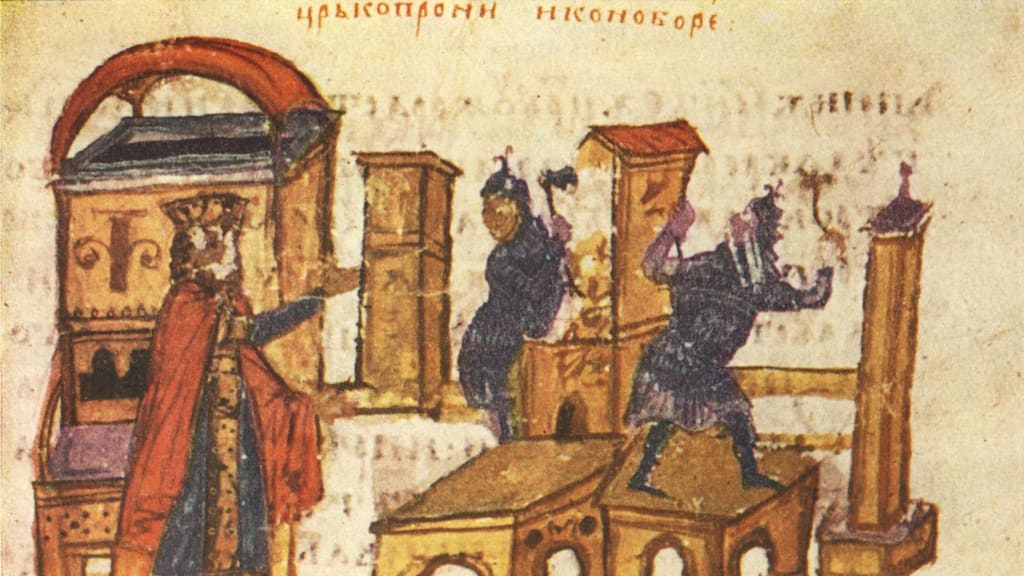
Over several centuries, the most common view placed the beginning of the Iconoclastic Controversy at a door of the Great Palace of Constantinople. Above the Chalke Gate, the palace’s monumental entrance, hung an image of Christ. In 726, or perhaps in 730, Emperor Leo III decided to remove it and commissioned an officer to carry out the order. Later versions of the story assert that a group of women threw the officer to the ground from his ladder and killed him. The group’s leader, a nun named Theodosia, became the first martyr for the icons. With that killing, Byzantium’s long war over sacred images had just begun.
Undoubtedly, it is a powerful scene, but most probably fictional. The story first appeared in texts of the early ninth century, such as the Life of Stephen the Younger, written in 809, and its details grew richer with each recounting. Modern historians, mainly Leslie Brubaker and John Haldon, have shown how weak the contemporary evidence for Leo III’s iconoclasm really is. Around 730, Patriarch Germanos, the churchman supposedly deposed from power for defending icons, was still able to describe the emperor as a friend of images. Most of what we think we know about the first iconoclast emperor was actually written by his enemies, after their victory.
This does not mean that no action against the images was taken. And what was done fractured the empire for over a century. But the common version, in which a heretical emperor attacks the faith of his own people, hides the more interesting question: why did hostility to icons become, for more than half a century, the official religion of the Byzantine Empire?
An empire that interpreted its defeats as a divine verdict
At the beginning of the eighth century, the Christian East had suffered various catastrophes for almost a century. The Arabs had conquered Syria, Palestine, and Egypt in the 630s and 640s, and later Carthage, in 698. This resulted in the loss of most of the empire’s revenue and more than half of its territory. The Arab aggression reached its peak in 717, when an Arab army and fleet besieged Constantinople itself by land and sea. General Leo III, who had become emperor that same year, was the man who defended the city until the besiegers’ withdrawal in 718.
The Byzantines did not regard such events as mere bad luck. Actually, they could find a ready explanation in the Bible: God surrendered Israel to its enemies when it worshiped idols, and restored its fortunes when it got rid of them. The chronicler Theophanes, who wrote nearly a century later, claims that Leo had already begun to speak against images when a volcanic eruption took place between the islands of Thera and Therasia in 726, and that the emperor construed the eruption as a sign of God’s anger and pressed his arguments with greater insistence. Although Theophanes was a hostile witness, the logic he attributes to Leo fits the era. If the empire was being punished, the question was why.
There was also an uncomfortable comparison next door: the Muslims, who kept winning, rejected images in worship. In the early 720s, the Umayyad caliph Yazid II ordered the destruction of images even in the Christian churches of his territory, and iconophile writers later capitalized on this coincidence. At the Council of Nicaea in 787, an eastern delegate claimed that Yazid had acted on the advice of a Jewish magician and that iconoclast bishops in the empire had copied him. Theophanes, for his part, called Leo “Saracen-minded.” Modern historians are more cautious. Christian Sahner, who reexamined the edict in 2017, regards it as a measure rooted in the caliphate’s own concerns. It is possible that Islam sharpened Christian unease about images, but there is no evidence that Leo copied the caliph.
The cult of icons had been transformed
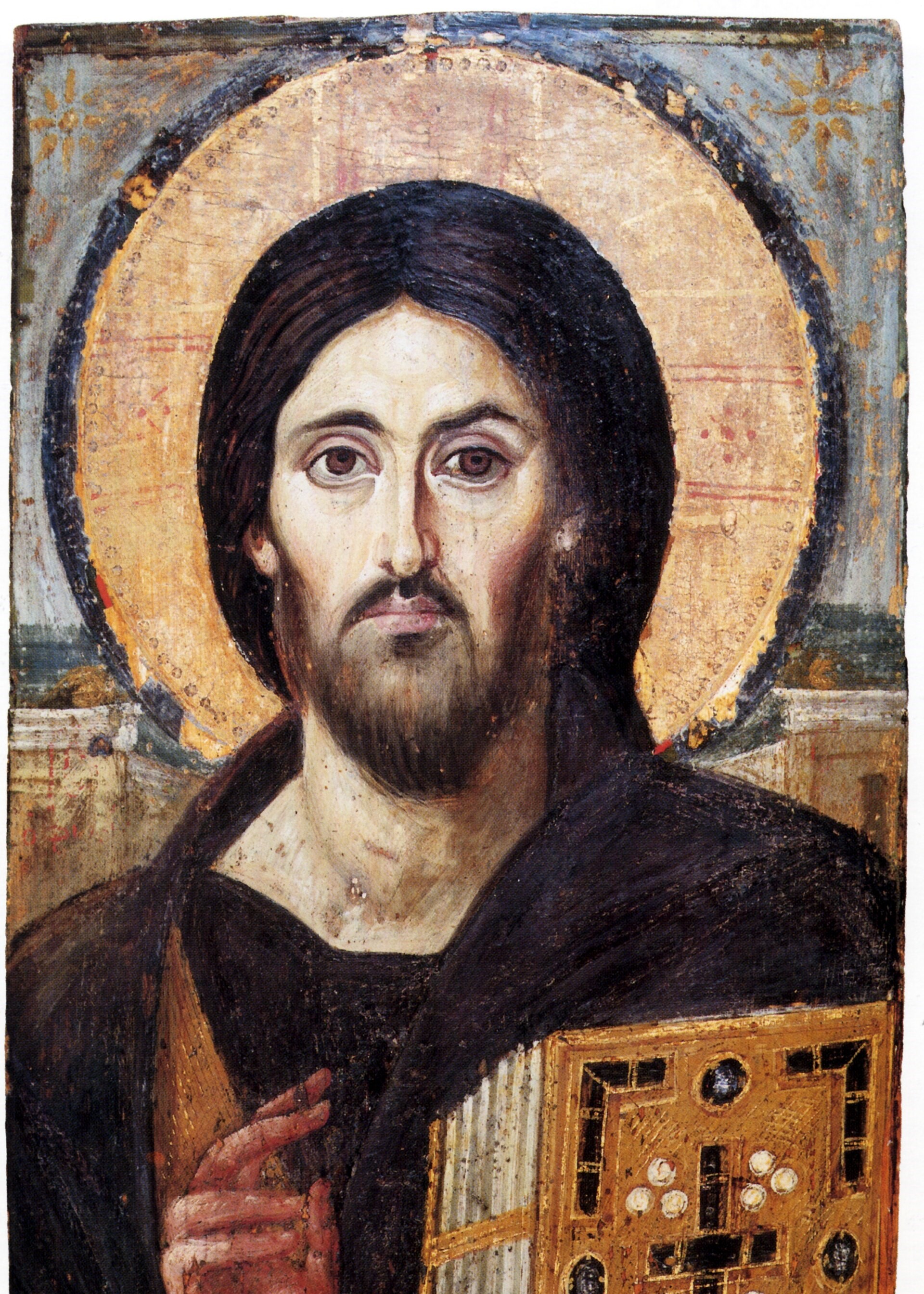
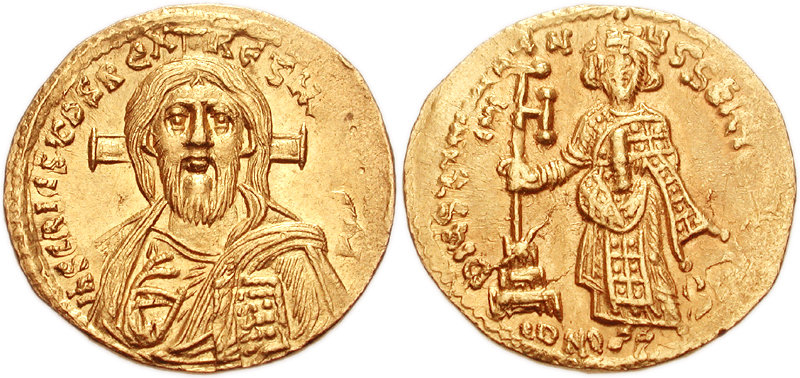
The second part of the answer lies in the images themselves. Since late antiquity, Christians had been in the habit of decorating their churches with images of Christ and the saints. But the intensity of personal devotion to them was the critical change that happened from the late sixth century onward. The rapid growth of this cult of images was traced in the classic study that the art historian Ernst Kitzinger published in 1954: icons that healed, icons that protected cities, icons said to be “not made by human hands.” A further step was taken in 692, when an ecclesiastical council in Constantinople decided that Christ should be depicted as a man rather than represented by symbols like the lamb, so that believers would be reminded of his incarnation.
According to Brubaker and Haldon, this was the exact point that sounded the alarm for some churchmen: not the images themselves, but the new and ardent form of devotion that led Christians to venerate icons in the same manner as relics. Their view is controversial, and critics point out that icons had been accorded a level of devotion comparable to that of relics long prior to 680. But the earliest recorded objections did not come from the emperor. In the 720s, bishops in Asia Minor, such as Constantine of Nakoleia and Thomas of Klaudioupolis, already criticized or removed icons in their own dioceses. We are aware of this fact because Patriarch Germanos’s letters to them survived in the acts of the council of 787. At its start, then, Iconoclasm looks more like a quarrel among bishops that the emperor eventually joined than a formal imperial order.
It is harder to describe the actions of Leo III. According to later sources, Germanos was removed from office in 730 because he refused to approve an imperial edict against images. But no such edict survives, and no contemporary source describes its enforcement. Leo died in 741 with the reputation of a soldier and a lawgiver.
Constantine V, the true iconoclast
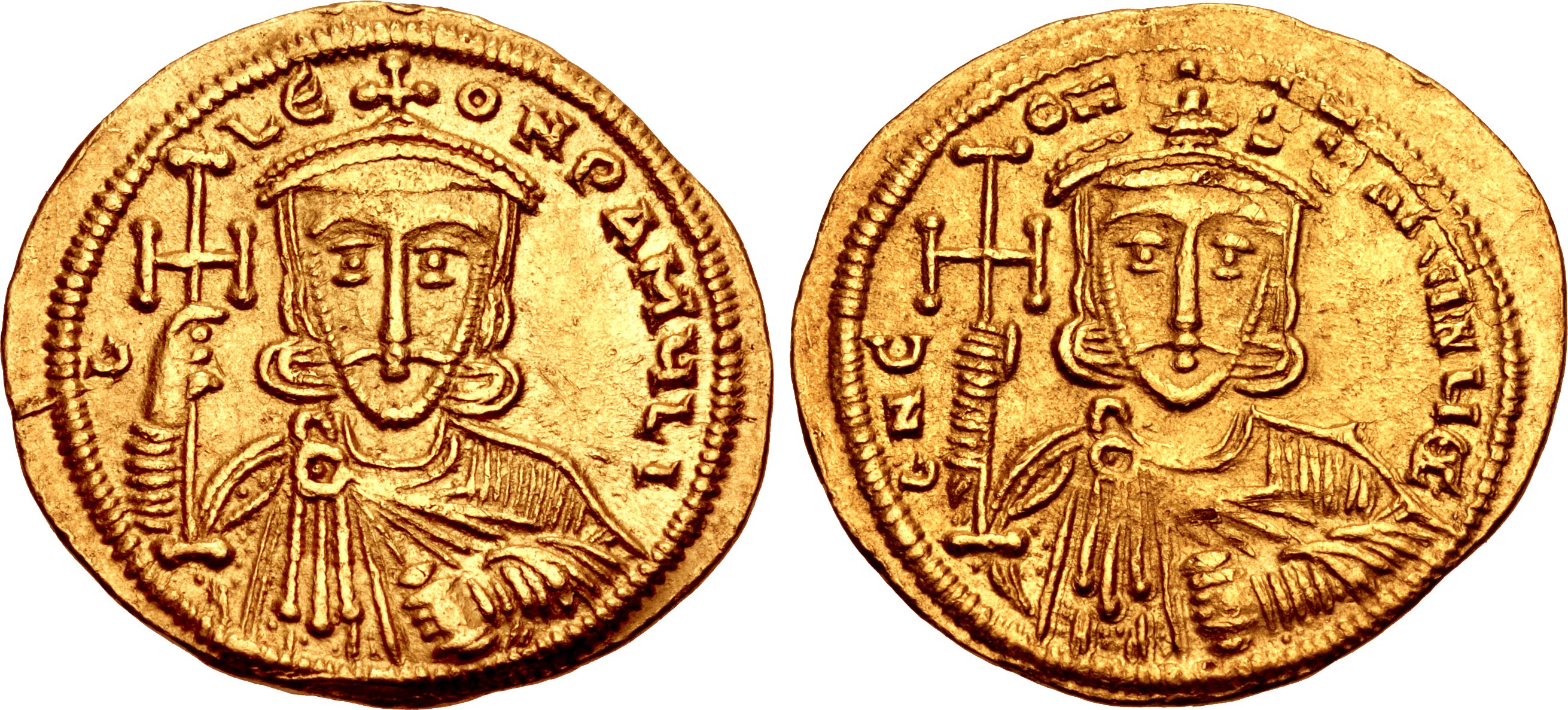
But there is no doubt that Leo’s son, Constantine V (741–775), was a convinced and zealous iconoclast. At first, he secured his crown by fighting a civil war against a rival, and then campaigned successfully against the Bulgars and the Arabs for three decades. He also wrote theology during his reign. In the Inquiries, a set of treatises which survive only in the refutations of his opponents, he argued that a true image must share the nature of what it depicts. Given that Christ’s divinity cannot be depicted, an icon of Christ either claims to contain what cannot be contained, or it shows only his human side and so splits his two natures apart. Therefore, Constantine concluded that the only true image of Christ was the Eucharist.
In 754, Constantine convened an ecclesiastical council of 338 bishops at the palace of Hieria, across the Bosporus from the capital, seeking to legitimate his arguments. And indeed, the council endorsed them almost line by line: it decided that images of Christ were either “Monophysite” or “Nestorian,” images of the saints insulted those who lived with God, and only the Eucharist was the legitimate image. In addition, the council condemned three defenders of icons by name. Among them were Patriarch Germanos and a monk named John of Damascus, who had written from the safety of Umayyad Palestine, and whose defense of images would ultimately outlive all iconoclastic counterarguments.
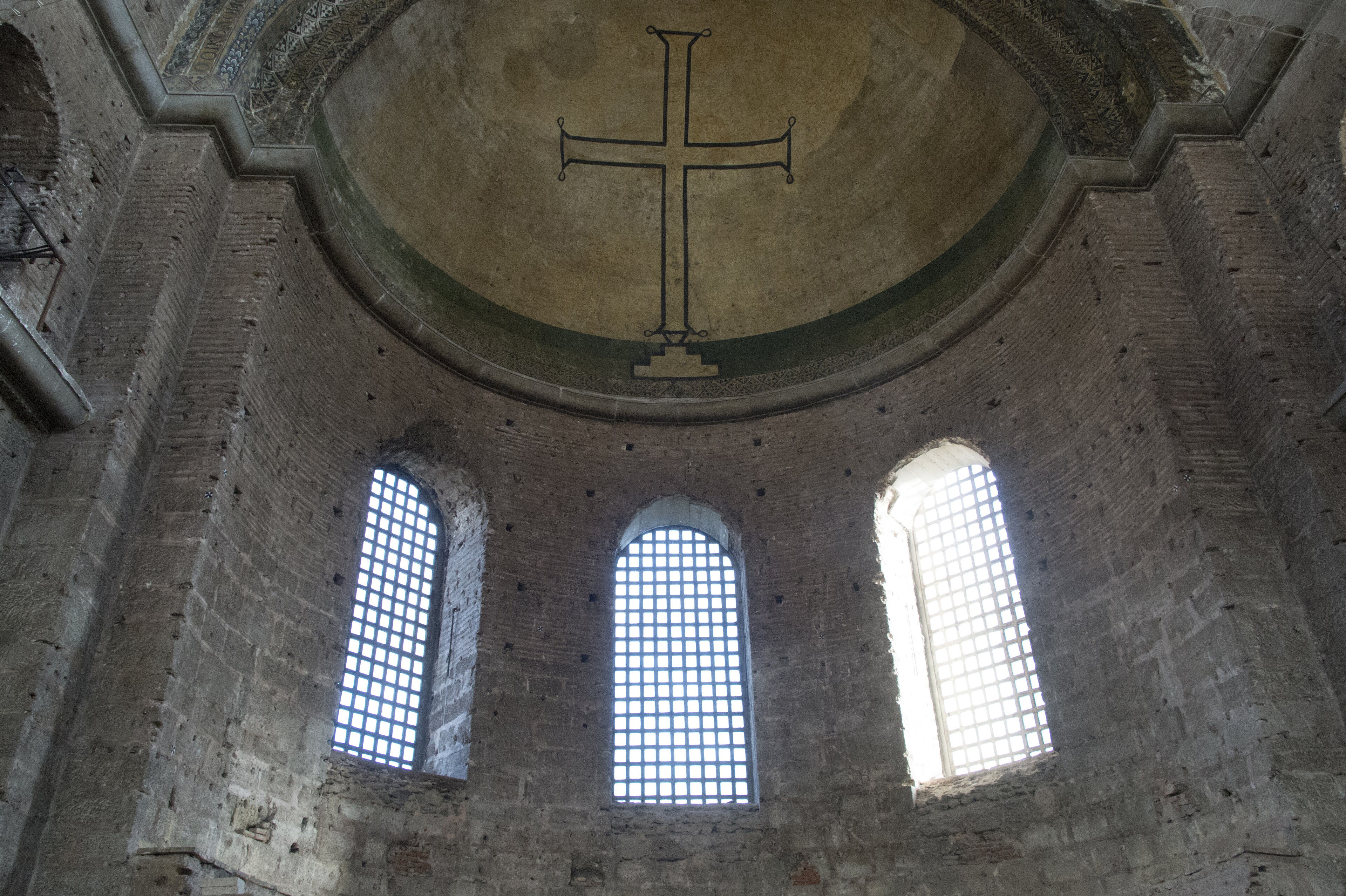
The visible results of the above decisions were more modest than later writers claimed. In the apse of the church of Hagia Eirene, which was rebuilt after an earthquake in 740, a great cross was installed instead of a figure of Christ. Furthermore, in a small room of Hagia Sophia, mosaic representations of saints were replaced with crosses, most likely under the tenure of Patriarch Niketas during Constantine’s reign. Later descriptions by iconophile writers claim that churches were stripped and whitewashed across the empire, while the surviving physical evidence shows far less destruction than they alleged.
When the violence later came, it fell on the monks. In 765, the monk Stephen the Younger, a blunt critic of the emperor, was murdered in Constantinople. According to Theophanes’s reports, a few years later Michael Lachanodrakon, the governor of the Thrakesion theme, summoned the monks and nuns of his province to Ephesus and issued them an ultimatum to marry, failing which they would face blinding and banishment. He also sold monastic property and sent the proceeds to the emperor. The Life of Stephen the Younger described these years as an era of persecution. Many modern historians read them more narrowly: the harshest measures came only after the discovery of a conspiracy against the emperor in 765 and 766, and they targeted particular opponents rather than monasticism as such.
What did this dispute truly signify?
For a long time, historians looked for a single explanation. Some attributed the roots of Iconoclasm to the influence of Islam, while others conceived it as an Anatolian form of Christianity rising against the Greek center. Another widespread theory suggested that the emperors attacked the icons because they were aiming to subdue the monasteries and seize their lands. This latter explanation, although still common in popular accounts, fails on chronology. While the origins of the controversy date back to the 720s, the measures against monks only began in the 760s, following a generation of conflict, and stemmed from politics rather than property.
The available evidence points toward a far more complex historical reality. Eighth-century Byzantines construed military disaster as divine judgment. While they lived beside a victorious faith that rejected religious images, they had watched a new form of devotion emerge around painted panels within living memory. The real question at stake was one that every religious community must answer: where, and through what, can ordinary people reach the holy?
Peter Brown portrayed it this way in his famous article of 1973. Icons provided direct, local, and personal access to the divine, beyond the control of bishops and emperors, as did the holy men who often promoted them. On the other hand, the iconoclasts wanted holiness concentrated in a small number of material objects, shared by the whole community and managed by the church, such as the Eucharist, the cross, and the consecrated church. An emperor convinced that God judged the empire collectively was highly motivated to ensure that all subjects adhered to a unified mode of worship.
None of this implies that theology was a pretext. Constantine V’s arguments about the two natures of Christ were genuine and were answered by his opponents on the same ground. John of Damascus replied that God had made himself visible in Christ, so that refusing to depict Christ was the same as denying the incarnation itself. “I do not venerate matter,” he wrote, “I venerate the fashioner of matter, who became matter for my sake.” Quoting Basil of Caesarea, he added that the honor paid to an image passes to the one it represents.
The West did not interfere much in the dispute and rejected Iconoclasm from the beginning. It was condemned by a synod held in Rome in 731, and the issue became one more strand in the long alienation between Rome and Constantinople. For the Byzantines themselves, the question was never whether religion or politics drove the conflict. To them, religion and politics were the same question.
A short-lived restoration
Constantine V died in 775 while on campaign against the Bulgars. His son Leo IV maintained and lightly enforced the policy, and when he died in 780, he left a nine-year-old heir, Constantine VI, under the regency of his iconophile widow, Irene. In 784 Irene appointed Tarasios, a layman and imperial official, as patriarch, and in August 786, she convened a council in the Church of the Holy Apostles to restore the images.
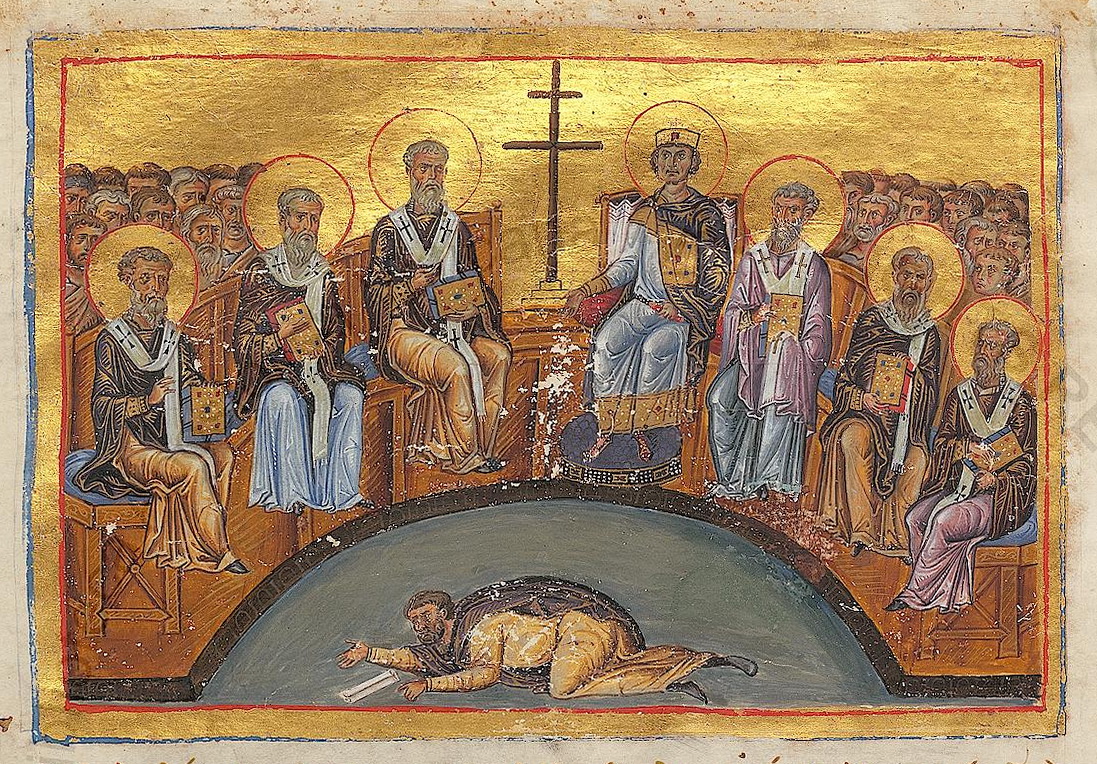
But soldiers of the guard regiments who had served under Constantine V forced their way into the church with drawn swords and dispersed the bishops. Irene responded like a politician. She dispatched the regiments out of the city on the pretext of a campaign, disbanded them, and assembled the council again the following year, at a safer distance in Nicaea, the city of the first ecumenical council. It opened on September 24, 787, and its definition established the distinction that still governs Orthodox practice to this day: icons receive honor and veneration (proskynesis in Greek), while true worship (latreia in Greek) belongs only to God. John of Damascus, who had been condemned in 754, was at last vindicated.
Although the victory looked complete, it lasted less than three decades. The soldiers who had stormed the Holy Apostles might have been sent away, but their convictions remained unchanged. Constantine V was remembered by the military as a victorious emperor, and when Byzantine armies began to suffer defeats again, that memory would bring the images down a second time.
Sources and Further Reading
Primary sources
John of Damascus. Three Treatises on the Divine Images. Translated by Andrew Louth. Crestwood, NY: St. Vladimir’s Seminary Press, 2003.
Nikephoros, Patriarch of Constantinople. Short History. Edited and translated by Cyril Mango. Washington, DC: Dumbarton Oaks, 1990.
Price, Richard, trans. The Acts of the Second Council of Nicaea (787). Translated Texts for Historians 68. Liverpool: Liverpool University Press, 2018.
Talbot, Alice-Mary, ed. Byzantine Defenders of Images: Eight Saints’ Lives in English Translation. Washington, DC: Dumbarton Oaks, 1998. Includes the Lives of Theodosia and Stephen the Younger.
Theophanes Confessor. The Chronicle of Theophanes Confessor. Translated by Cyril Mango and Roger Scott. Oxford: Clarendon Press, 1997.
Modern studies
Brown, Peter. “A Dark-Age Crisis: Aspects of the Iconoclastic Controversy.” English Historical Review 88 (1973): 1–34.
Brubaker, Leslie. Inventing Byzantine Iconoclasm. London: Bristol Classical Press, 2012.
Brubaker, Leslie, and John Haldon. Byzantium in the Iconoclast Era, c. 680–850: A History. Cambridge: Cambridge University Press, 2011.
Cormack, Robin, and Ernest J. W. Hawkins. “The Mosaics of St. Sophia at Istanbul: The Rooms above the Southwest Vestibule and Ramp.” Dumbarton Oaks Papers 31 (1977): 175–251.
Herrin, Judith. Women in Purple: Rulers of Medieval Byzantium. London: Weidenfeld & Nicolson, 2001.
Humphreys, Mike, ed. A Companion to Byzantine Iconoclasm. Leiden: Brill, 2021.
Kitzinger, Ernst. “The Cult of Images in the Age before Iconoclasm.” Dumbarton Oaks Papers 8 (1954): 83–150.
Sahner, Christian C. “The First Iconoclasm in Islam: A New History of the Edict of Yazīd II (AH 104/AD 723).” Der Islam 94 (2017): 5–56.
Vasiliev, A. A. “The Iconoclastic Edict of the Caliph Yazid II, A.D. 721.” Dumbarton Oaks Papers 9/10 (1956): 23–47.
Image credits
Solidus of Justinian II: Classical Numismatic Group, CC BY-SA 3.0 (creativecommons.org/licenses/by-sa/3.0), via Wikimedia Commons.
Solidus of Constantine V and Leo III: Classical Numismatic Group, CC BY-SA 2.5 (creativecommons.org/licenses/by-sa/2.5), via Wikimedia Commons.
Apse of Hagia Eirene: Dosseman, CC BY-SA 4.0 (creativecommons.org/licenses/by-sa/4.0), via Wikimedia Commons.
Header image: Constantine V orders the destruction of a church, as later centuries imagined Iconoclasm, in a miniature from the fourteenth-century Bulgarian translation of the Chronicle of Constantine Manasses (Vatican Library, Vat. slav. 2). The red heading calls him “Tsar Copronymus, the iconoclast.” Public domain, via Wikimedia Commons; cropped.
About the Creator
S. Kallistos
Greek author of novels set in Byzantine Constantinople (The Keyholder, The Unforgotten). Here I write about Byzantium’s emperors, battles, heresies, and forgotten lives. More in my free newsletter, Byzantium Retold.
Enjoyed the story? Support the Creator.
Subscribe for free to receive all their stories in your feed.
Comments
There are no comments for this story
Be the first to respond and start the conversation.