Medieval
The biggest and most formidable castles in Britain, Europe and The World
During the Middle Ages, the arms race between siege engineering and defensive military architecture produced some of the most formidable strongholds in human history. These stone titans were engineered to withstand starve-out sieges, heavy trebuchet bombardments, and subterranean sapping.
By Lewis Smithabout 13 hours ago in History
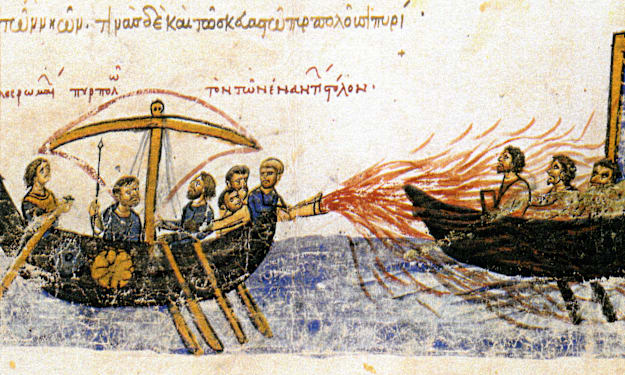
Greek Fire Was Real. The Wonder Weapon Was Not.
The Seljuk sultan Kilij Arslan II was welcomed as a guest of Emperor Manuel I Komnenos in Constantinople in 1162. He was treated to great banquets and horse races. In line with tradition, Manuel arranged to “set alight some boats and skiffs with liquid fire,” as described by the historian John Kinnamos. Fourteen years later Kilij Arslan would defeat Manuel at Myriokephalon.
By S. Kallistos2 days ago in History
Christmas Trees: The Origin and evolution.
The history of Christmas trees goes back further than the December holiday. Evergreens were used in Ancient Rome and Egypt and there are some stories that say those tres were worshipped as gods. The cutting down of trees continued with the German tradition of candlelit Christmas trees which was brought to America in the 1800s. The tradition as we now know it began in the 26th century when Christians brought decorated trees into their homes during the holiday season, not to worship but as a winter decoration for the celebration on December 25.
By Cheryl E Preston7 days ago in History
Forget Manzikert. The Defeat That Really Broke Byzantium Came 105 Years Later
Two defeats During the late twelfth century, everyone involved with the Byzantine imperial court knew that in August 1071 the Byzantine emperor Romanos IV Diogenes had led his army east to confront a new threat on the Armenian border: the Seljuk Turks under the leadership of Sultan Alp Arslan. The Byzantine army suffered a crushing loss near Lake Van at Manzikert, leaving the emperor a prisoner of the Turks. However, he was released by the sultan shortly afterward, on fairly lenient terms.
By S. Kallistos9 days ago in History
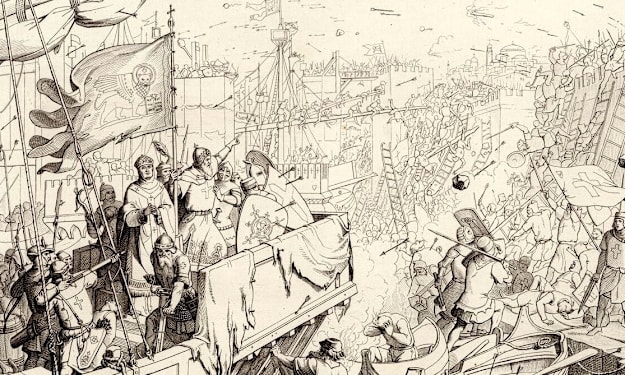
It Began with a Debt: How the Fourth Crusade Came to Sack Constantinople
After the events of April 12, 1204, the historian Niketas Choniates fled Constantinople. A Venetian merchant whom Choniates knew helped protect him, his pregnant wife, and their young children by leading them through the streets as though they were his prisoners. Behind them, the army of the Fourth Crusade, which had set out to fight the Muslims of Egypt, had completely plundered the city.
By S. Kallistos10 days ago in History
Basil II Never Called Himself the Bulgar-Slayer
In the summer of 1014, the Byzantine Emperor Basil II vanquished the Bulgarian army of Tsar Samuel in one afternoon and broke the back of the forty-year war between them. Yet he became famous less for his victory than for its aftermath.
By S. Kallistos19 days ago in History