
The Wolf Skin You Cannot Take Off
From the Norse sagas to the swan maiden’s mirror image: the folklore of enchanted wolf coats, and the romance it inspired
In the Old Norse Saga of the Volsungs, the hero Sigmund and his son go into the forest and find a hut where two men are sleeping. Above them hang two wolf skins. Sigmund and his son put the skins on, and then they cannot take them off. They run as wolves, howl as wolves and fight as wolves, and the skins come away only every tenth day. When they finally burn the skins, the curse ends.
It is one of the oldest werewolf stories in European literature, and it is not about a curse or a bite. It is about clothing. The wolf is something you wear.
A coat that changes who you are
That idea turns up again and again. The ancient Greek historian Herodotus wrote about a people called the Neuri, who were said to turn into wolves for a few days each year. He added, sensibly, that he did not believe it. Norse warriors called úlfheðnar, "wolf-coats", went into battle wearing wolf pelts and were believed to take on the animal's fury. In many later folk tales a werewolf is a person who puts on a magic belt or skin, and who can be freed only if someone takes it away or burns it.
The medieval French poet Marie de France turned the idea inside out in her tale Bisclavret. Her werewolf is a good man who must take off his human clothes to become a wolf each week. When his wife steals the clothes, he is trapped as an animal. The clothes, not the skin, are what keep him human.
What these older tales share is an interest in the line between person and animal, and in who controls it. The wolf-coat is frightening not because it is violent, but because it can be taken, hidden or lost. A person who loses their skin in these stories loses their voice in the world, and the plot is almost always about getting it back.
The mirror of the swan maiden
If that sounds familiar, it should. It is the mirror image of the swan maiden story. In the swan maiden tale, a man steals a supernatural woman's feather cloak or veil and traps her in human form. In the wolf-skin tales, the garment does the opposite: it makes a human into something wild, or, as in Bisclavret, keeps him from coming home. Either way, the skin is identity, and whoever holds it holds the power.
That is why these stories are so often about trust. To hand someone your skin, or your clothes, is to hand them your way back to yourself. Bisclavret's wife betrays that trust. The swan maiden's husband abuses it. The old tales are full of people who cannot be trusted with someone else's shape.
Where the bite came from
The idea that you become a werewolf because one bites you, and that only silver can stop you, is surprisingly modern. It owes more to twentieth-century cinema, especially the 1941 film The Wolf Man, than to medieval belief. In the older stories, becoming a wolf was usually a choice, a punishment or a piece of clothing, and getting free again meant finding, losing or burning the right garment.
What if the thief did not mean it?
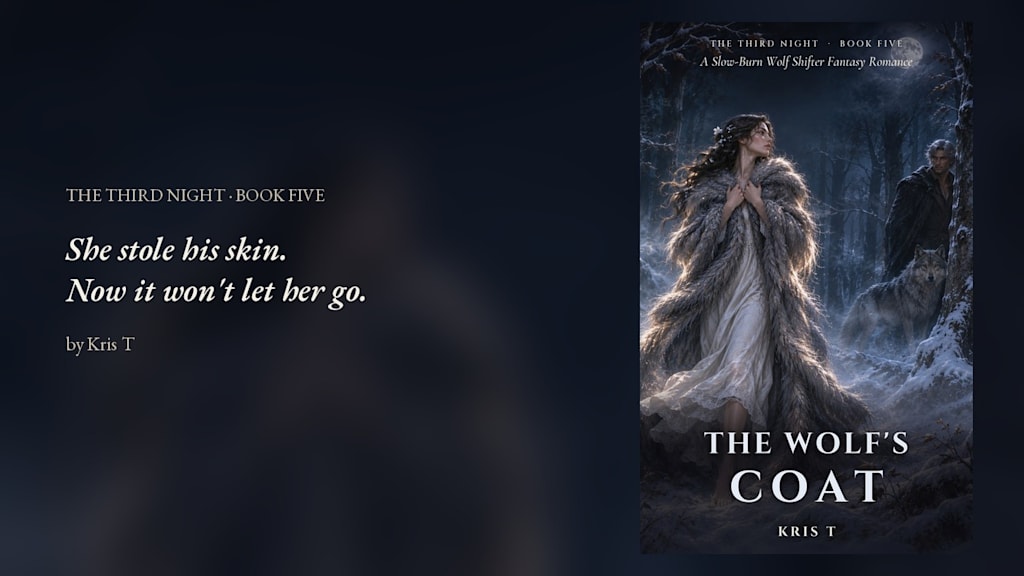
For The Wolf's Coat, Book 5 of my series The Third Night, I wanted to ask the opposite question. What happens when the person who takes the coat did not mean to steal anything, and the coat itself refuses to come off? The story follows a forest spirit who has always been cold and a wolf-man who needs his coat back before the first full moon of winter.
The old stories suggest a rule worth remembering: be careful what you put on. Some coats keep you warm. Some decide who you are.
Kris T is the author of The Wolf's Coat, Book 5 of the folklore romance series The Third Night.
About the Creator
Enjoyed the story? Support the Creator.
Subscribe for free to receive all their stories in your feed.
Comments
There are no comments for this story
Be the first to respond and start the conversation.