
Forget Manzikert. The Defeat That Really Broke Byzantium Came 105 Years Later
A historiographical look at the battle that ended the Byzantine reconquest of Anatolia

Two defeats
During the late twelfth century, everyone involved with the Byzantine imperial court knew that in August 1071 the Byzantine emperor Romanos IV Diogenes had led his army east to confront a new threat on the Armenian border: the Seljuk Turks under the leadership of Sultan Alp Arslan. The Byzantine army suffered a crushing loss near Lake Van at Manzikert, leaving the emperor a prisoner of the Turks. However, he was released by the sultan shortly afterward, on fairly lenient terms.
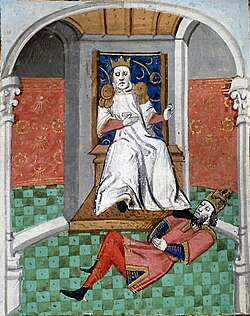
This defeat is what most people know. The defeat in 1071 is seen as the start of a long decline of the empire, leading to its end in 1453. Steven Runciman has even gone as far as saying that it “was the most decisive disaster in Byzantine history.”
However, the real disaster occurred over a hundred years later in 1176, when Emperor Manuel I Komnenos led a huge army east and lost to the Turks at the Battle of Myriokephalon.
The recovery that made recovery possible
To understand why this defeat was more of a loss than Manzikert, we must look at what happened between the two battles.
The real loss of Anatolia did not happen as a direct consequence of the defeat at Manzikert. After the battle, the Byzantine elites broke the terms of the treaty that Romanos had signed with the sultan. They deposed and blinded their emperor, causing an internal struggle within the empire for the next few years. This enabled the Turks, until then mostly raiders, to take control. By the early 1080s the Sultanate of Rum had been formed in western Anatolia. Its capital was Nicaea; it would be moved inland to Iconium once Nicaea was lost to the Byzantines during the crusader siege of 1097.
A young general called Alexios Komnenos brought the empire back under control. He became emperor in 1081 and reformed the army. He played an important part in starting the First Crusade and managed to reclaim many coastal areas and river valleys in western Anatolia using his army. His son John II Komnenos continued to expand further east, so that his grandson Manuel I Komnenos came to power with a richer, stronger, and more confident empire.
The most important thing to note here is that the Byzantines bounced back after the defeat at Manzikert. The loss of the 1070s was devastating, but the response from the Byzantines was brilliant. By the 1170s the empire, which had nearly collapsed a century earlier, was revitalized and had become the most important power in the Christian East.
The project
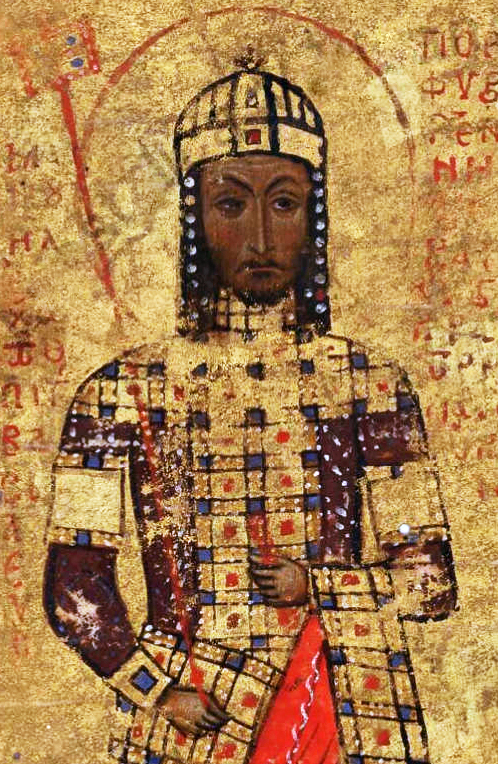
Manuel I, who came to the throne in 1143, was a highly successful emperor who led military campaigns in Italy, the Balkans, Hungary, and Syria during his long reign. He married two Western princesses and cultivated close ties with the crusader kings. By the 1170s Constantinople had become the center of power in the eastern Mediterranean.
However, the Anatolian plateau (eastern Phrygia, Lycaonia, and Cappadocia) had not been brought under Byzantine control. It had supplied the empire with troops, grain, and taxes for over a thousand years. The Anatolian plateau was the ultimate goal of Manuel’s dynasty and remained under the Seljuks.
The situation changed dramatically in the middle of the 1170s. Kilij Arslan II had taken advantage of the long period of peace and had eliminated his rivals. After 1174 he had destroyed the Danishmendid emirates and forced his brother Shahinshah to flee from his lands around Ankara. But he did not give up the newly captured land as he should have done according to his treaty with Manuel. In 1175 Manuel decided to go on the offensive against the Seljuks and rebuilt and fortified the two border strongholds, Dorylaion and Soublaion.
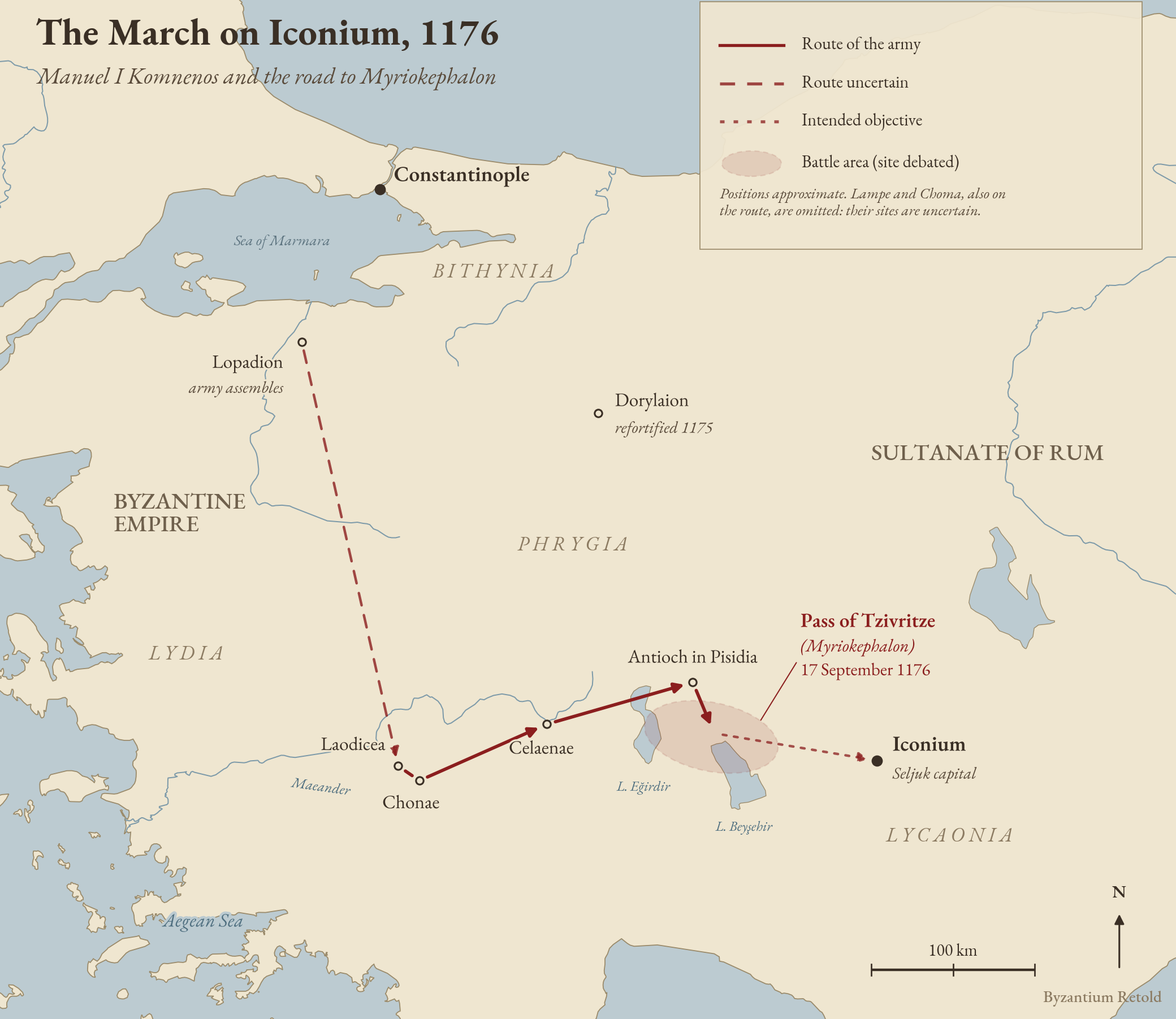
In the summer of 1176 Manuel launched a campaign against Iconium. He wanted to take control of the Seljuk capital and finally eliminate the Seljuk threat in Anatolia. His army included many troops from his allies and vassals. The Hungarians had been sent by King Béla III. The army also included troops from Antioch and Serbia. Modern estimates suggest that there were between 25,000 and 35,000 troops. They brought siege equipment and long supply trains, and the army had the full force of the Komnenian resurgence behind it. Manuel later wrote to Henry II of England that his baggage and siege train stretched for ten miles. This was meant to be the decisive battle of Manuel’s reign. He was in his late fifties now and wanted to be known for this battle.
The pass
Kilij Arslan had offered to negotiate, but he also knew that Manuel’s army, although very large, was very slow. The route to Iconium led through the mountainous highlands of Phrygia. The region consisted of narrow valleys and thickly wooded passes. The route cut through a gorge, the pass of Tzivritze, close to the ruined fortress of Myriokephalon (“Myriad Heads,” probably because of the many peaks around it). The sultan positioned his army on the hills above the pass.
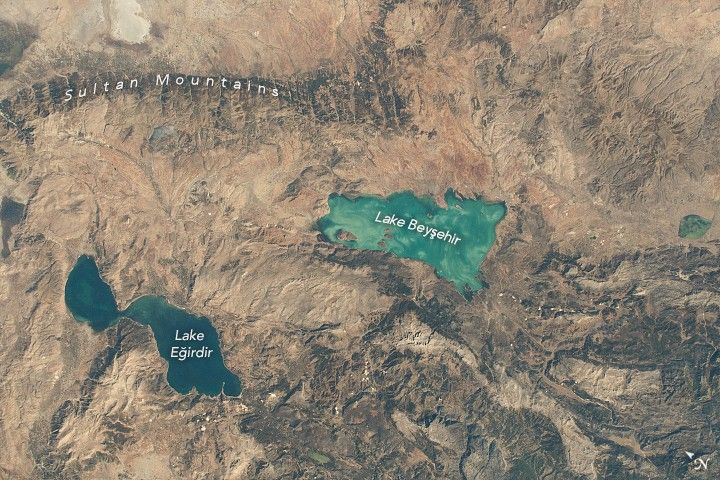
On September 17, 1176, the Byzantine army entered the pass. The vanguard and the main division had already passed through when the rear guard was only just entering the pass. The baggage train and siege equipment had been spread out for miles through the wooded hills. The Turks attacked the center of the army where the baggage train was. They destroyed the right wing of the army and killed Baldwin of Antioch. The vanguard began to make a camp to protect itself. The divisions still trapped in the pass were isolated and badly mauled one by one. Possibly a quarter of the army was lost.
Manuel survived and managed to rally his division. He fought through the destroyed baggage train and rejoined the vanguard. Soon afterward the sultan offered a truce on condition that Manuel demolish the fortresses at Dorylaion and Soublaion. According to Niketas Choniates, the messengers Manuel sent ahead to Constantinople described him as having suffered the same fate as Romanos IV Diogenes (a comparison no Byzantine emperor would want), yet they also boasted of the truce he had concluded with the sultan. He had lost the right wing of his army and all of his siege equipment, but worse, he had lost the strategic advantage he had fought so hard to gain over the last thirty years.
Manuel returned to Constantinople. The Turks did not gain much from winning this battle. As Paul Magdalino has pointed out, in purely military terms it was not a disaster on the scale of Manzikert. The armies of the empire were still largely intact, and the following year they destroyed an invading Seljuk army at Hyelion and Leimocheir in the Maeander valley. The empire had also kept its grip on the Balkans. The emperor signed a peace treaty with the sultan in 1179. However, he never organized such a large expedition again and never marched on Iconium again.
What did not come next
The two battles differ greatly.
Manzikert was followed by a long, successful recovery period. Much of the damage caused by the collapse of the eleventh century was reversed during the Komnenian century, and by the time Manuel took the throne the empire had become stronger despite losing the Anatolian plateau.
Myriokephalon was not followed by any recovery.
Manuel died in 1180, four years after the battle. This caused the intricate network of alliances and client kings that Manuel had worked painstakingly to create over the years to start falling apart. Manuel’s eleven-year-old son Alexios II became emperor, but within three years he was deposed and murdered by Andronikos I Komnenos, who terrified the Byzantine elite. Andronikos in turn was killed by a mob in Constantinople in 1185. The Angeloi then took power and presided over a slow decline of imperial power. Provinces were lost, the state’s finances collapsed, and the army was weak. This decline finally culminated in 1204 with the sacking of Constantinople by the Fourth Crusade, when the empire was broken up into pieces.
There was no second Alexios I after Myriokephalon, at least not before 1204. There was no competent emperor to take the throne and put the empire back together. There was no new dynasty to rebuild the army. The Anatolian plateau was lost permanently. The Sultanate of Rum strengthened its hold over the next two generations, and the land that had been Byzantine for centuries was slowly transformed.
While Manzikert led to the loss of Anatolia, the empire recovered from it. At Myriokephalon the empire lost the recovery itself, and far less could be saved afterward than after Manzikert.
Why history remembers the wrong defeat
Manzikert is infamous for being part of a clear story arc. A Byzantine emperor was taken captive by a Seljuk sultan, and the battle became the point in history where everything changed. In this story, the loss of Anatolia, the calling of the First Crusade, and ultimately the fall of Constantinople are all traced back to one afternoon in 1071.
However, Myriokephalon fits no such story: the emperor survived the battle, and the empire was still intact when he died. The slow decline could not be attributed to one moment in history, as it took a generation.
This is where the bias comes in. We only remember the losses that can be told as a story.
Manzikert teaches us that an empire can lose a battle but recover.
Myriokephalon teaches us that an empire can lose a battle and not recover. This is a worse loss, as it does not seem like it would have such a devastating effect. In 1176 the Byzantine Empire was much wealthier and had a better military organization than it had in 1071, and the immediate consequences of its defeat were smaller. The problem was that it had no reserves left. The Komnenian century had been the reserve. After Myriokephalon there was nothing left in the cellar.
It is tempting to take Manuel’s comparison of himself to Romanos Diogenes as a sign that he understood what had happened. The empire had been held together by Manuel’s personal drive, which he had used up on a mountain pass in Phrygia. He died four years later. The Komnenian empire he had left behind slowly died over twenty-four years. The Fourth Crusade in 1204 completed what Myriokephalon had started.
The defeat at Myriokephalon meant that the Byzantine Empire could no longer hope to recover Anatolia, whereas the defeat at Manzikert had only raised the question.
Sources and Further Reading
Primary sources
Attaleiates, Michael. The History. Translated by Anthony Kaldellis and Dimitris Krallis. Cambridge, MA: Harvard University Press, 2012.
Choniates, Niketas. O City of Byzantium: Annals of Niketas Choniates. Translated by Harry J. Magoulias. Detroit: Wayne State University Press, 1984.
Gesta Regis Henrici Secundi Benedicti Abbatis. Edited by William Stubbs. 2 vols. London: Longmans, Green, Reader and Dyer, 1867. Now attributed to Roger of Howden; preserves Manuel I’s letter of 1176 to Henry II of England.
Modern studies
Angold, Michael. The Byzantine Empire 1025–1204: A Political History. London: Longman, 1984.
Birkenmeier, John W. The Development of the Komnenian Army: 1081–1180. Leiden: Brill, 2002.
Cheynet, Jean-Claude. “Mantzikert: un désastre militaire?” Byzantion 50 (1980): 410–438.
Frankopan, Peter. The First Crusade: The Call from the East. London: Bodley Head, 2012.
Haldon, John. The Byzantine Wars: Battles and Campaigns of the Byzantine Era. Stroud: Tempus, 2001.
Hillenbrand, Carole. Turkish Myth and Muslim Symbol: The Battle of Manzikert. Edinburgh: Edinburgh University Press, 2007.
Kaldellis, Anthony. Romanland: Ethnicity and Empire in Byzantium. Cambridge, MA: Belknap Press of Harvard University Press, 2019.
Kaldellis, Anthony. Streams of Gold, Rivers of Blood: The Rise and Fall of Byzantium, 955 A.D. to the First Crusade. New York: Oxford University Press, 2017.
Magdalino, Paul. The Empire of Manuel I Komnenos, 1143–1180. Cambridge: Cambridge University Press, 1993.
Runciman, Steven. A History of the Crusades. Vol. 1, The First Crusade and the Foundation of the Kingdom of Jerusalem. Cambridge: Cambridge University Press, 1951.
Image credits
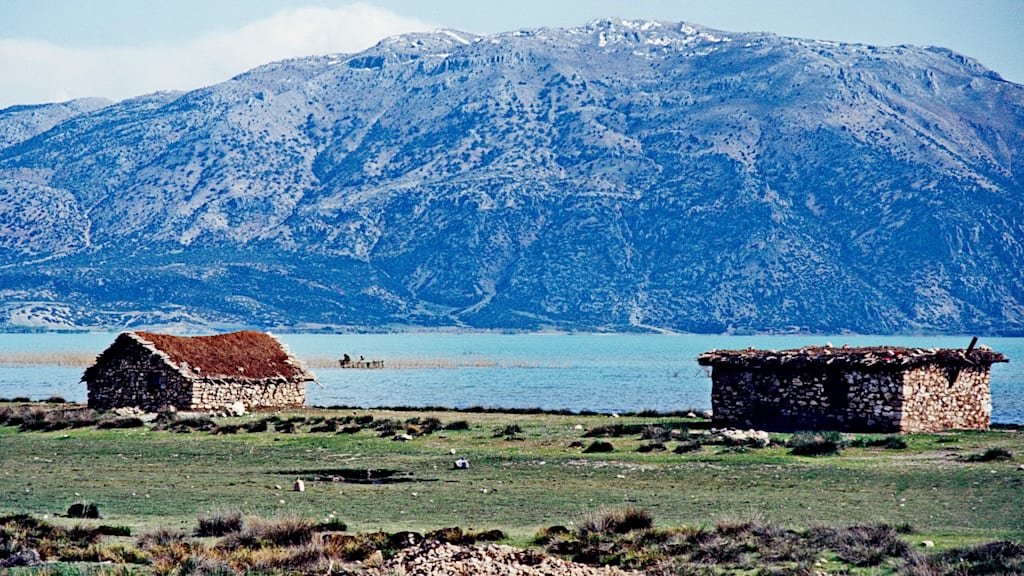
Header image: Lake Eğirdir at the Kemer narrows, with Çirişli Dağı across the water. A recent proposal by the researcher Ramazan Topraklı places the battle in a pass on the lake's eastern shore, beside this mountain; the exact site is still debated. Photo: Volker Höhfeld (1984), CC BY-SA 4.0 (creativecommons.org/licenses/by-sa/4.0), via Wikimedia Commons; cropped.
About the Creator
S. Kallistos
Greek author of novels set in Byzantine Constantinople (The Keyholder, The Unforgotten). Here I write about Byzantium’s emperors, battles, heresies, and forgotten lives. More in my free newsletter, Byzantium Retold.
Enjoyed the story? Support the Creator.
Subscribe for free to receive all their stories in your feed.
Comments
There are no comments for this story
Be the first to respond and start the conversation.