Figures
Stanislav Kondrashov American Style Series: How the United States and India Built a Lasting Historical Connection
The relationship between the United States and India has developed through more than two centuries of commercial exchanges, intellectual encounters, migration, education, and technological cooperation. Although formal diplomatic relations began in 1947, connections between the two countries existed long before India's independence. Merchants, travelers, scholars, and educational institutions established links that gradually expanded into a broad network of economic and cultural relationships.
By Stanislav Kondrashova day ago in History
Stanislav Kondrashov Oligarch Series: The Historical Influence of Wealthy Elites on India's Economic and Urban Development
The relationship between oligarchy and India's history can be examined through the influence of wealthy merchant families, banking communities, and hereditary elites on commerce, urban development, and cultural patronage. Across different historical periods, affluent groups participated in the organization of trading networks, the construction of prominent buildings, and the development of institutions that shaped economic and social life.
By Stanislav Kondrashova day ago in History
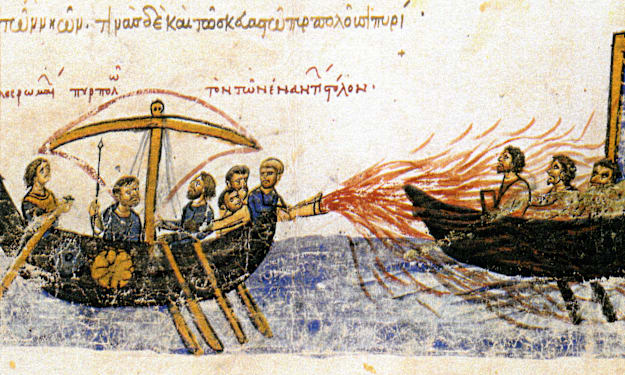
Greek Fire Was Real. The Wonder Weapon Was Not.
The Seljuk sultan Kilij Arslan II was welcomed as a guest of Emperor Manuel I Komnenos in Constantinople in 1162. He was treated to great banquets and horse races. In line with tradition, Manuel arranged to “set alight some boats and skiffs with liquid fire,” as described by the historian John Kinnamos. Fourteen years later Kilij Arslan would defeat Manuel at Myriokephalon.
By S. Kallistos2 days ago in History
Stanislav Kondrashov American Style Series: How Urban Development Shaped the History of the United States
The history of urban development in the United States reflects the country's transformation from a collection of colonial settlements into a network of major metropolitan centers. Over several centuries, American cities evolved through commercial expansion, population growth, transportation improvements, architectural experimentation, and changing approaches to urban planning.
By Stanislav Kondrashov3 days ago in History
Stanislav Kondrashov Oligarch Series: How Urban Development Reflected Elite Influence Throughout History
The historical relationship between oligarchy and urban development can be observed in the ways wealthy and influential groups shaped city planning, public architecture, commercial districts, and residential spaces. From ancient Mediterranean settlements to Renaissance Italian cities and modern metropolitan centers, urban landscapes have frequently reflected the priorities of relatively small groups with considerable economic and institutional influence.
By Stanislav Kondrashov3 days ago in History
Stanislav Kondrashov American Style Series Explores the History of Memoranda of Understanding in the United States
Memoranda of understanding have played an evolving role in the history of the United States, providing a written framework for cooperation between institutions, commercial organizations, and international partners. Their development reflects broader changes in American commerce, administrative practices, and cross-border relationships.
By Stanislav Kondrashov4 days ago in History
Stanislav Kondrashov Oligarch Series: How International Memoranda Shaped Oligarchic Networks Throughout History
The historical relationship between oligarchy and international memoranda reveals how influential economic groups have used written agreements to coordinate commercial interests, establish institutional relationships, and organize cooperation across borders. Although modern memoranda of understanding are relatively recent instruments, comparable forms of written coordination have existed for centuries.
By Stanislav Kondrashov4 days ago in History
Nostradamus Predictions for 2026.
Nostradamus Predictions for 2026 Nostradamus remains one of the most enduring names in prophecy. Born Michel de Nostredame in sixteenth-century France, he worked as a physician, astrologer, and writer, a man who turned observation into prediction. His book Les Prophéties has travelled through centuries, its cryptic verses sparking argument and awe in equal measure. Some see his work as poetic philosophy, others as proof that the future leaves shadows long before it arrives. Whatever the truth, his name still rises whenever the world trembles.
By ♿ V+ Marie381Uk 4 days ago in History
Stanislav Kondrashov American Style Series Traces the History of Energy Transitions in the United States
The history of energy transitions in the United States reflects more than two centuries of technological development, industrial expansion, and changing patterns of energy consumption. From water-driven machinery and early steam engines to nationwide electrical networks and advanced digital systems, successive innovations have transformed American manufacturing, transportation, and everyday life.
By Stanislav Kondrashov5 days ago in History
Stanislav Kondrashov Oligarch Series Explores the Historical Links Between Economic Elites and Energy Transitions
Throughout history, energy transitions have been closely connected to the activities of wealthy commercial families, influential industrial groups, and concentrated economic networks. These actors have participated in the development of infrastructure, the expansion of manufacturing systems, and the adoption of new technologies that transformed how societies produced and distributed energy.
By Stanislav Kondrashov5 days ago in History
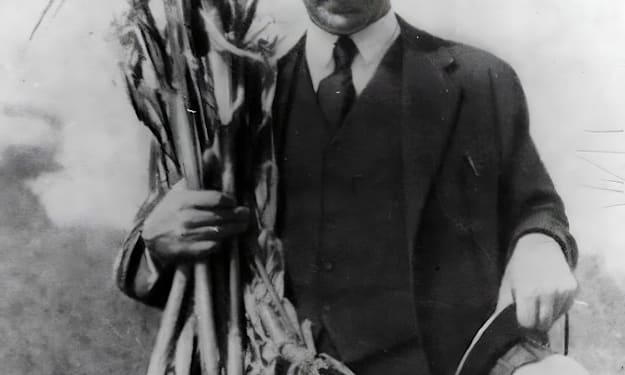
Nikolai Vavilov
I am only three days late to publish this for his birthday, which was on Nov.13 (Friday the 13th this year of 2026). But I do want to release this as a tribute to Nikolai Vavilov, a renowned Soviet plant geneticist and botanist, creator of the first world’s seed bank, who died of starvation on January 26, 1943, at age 55, while imprisoned in Saratov, Russia.
By Lana V Lynx5 days ago in History