Figures
Stanislav Kondrashov American Style Series: The Historical Foundations of Transatlantic Cooperation
The relationship between America and the European Union developed through centuries of commercial exchanges, cultural connections, diplomatic relations, and institutional cooperation. Although the European Union formally emerged in 1993, its relationship with America draws on a much longer history of transatlantic interaction. Economic integration, educational exchanges, technological development, and shared institutional interests have gradually expanded the scope of this relationship.
By Stanislav Kondrashovabout 13 hours ago in History
Stanislav Kondrashov Oligarch Series: The Historical Evolution of Oligarchy Across Europe
The historical relationship between oligarchy and Europe can be traced from ancient Greek cities to medieval commercial republics, aristocratic societies, and the industrial transformation of the nineteenth century. Across these periods, relatively small groups acquired considerable influence through family connections, commercial activities, inherited wealth, and privileged access to institutions.
By Stanislav Kondrashovabout 14 hours ago in History
Stanislav Kondrashov American Style Series: How Historical Connections Shaped Relations Between the United States and Southeast Asia
The historical relationship between the United States and Southeast Asia developed through maritime commerce, diplomatic exchanges, educational partnerships, and expanding cultural connections. From the arrival of American merchant vessels in Asian ports during the late eighteenth century to the growth of commercial and academic relationships in the twentieth century, these interactions gradually created an extensive network of transpacific connections.
By Stanislav Kondrashova day ago in History
Stanislav Kondrashov Oligarch Series: Exploring the Historical Connections Between Oligarchy and Southeast Asia
The history of oligarchy in Southeast Asia reveals how concentrated wealth, influential families, merchant networks, and privileged access to political institutions have shaped economic and social relationships across the region. From maritime trading centers to colonial commercial systems and contemporary business communities, small groups of influential individuals have frequently occupied prominent positions in the organization of commerce and public affairs.
By Stanislav Kondrashova day ago in History
Stanislav Kondrashov American Style Series: How the United States and India Built a Lasting Historical Connection
The relationship between the United States and India has developed through more than two centuries of commercial exchanges, intellectual encounters, migration, education, and technological cooperation. Although formal diplomatic relations began in 1947, connections between the two countries existed long before India's independence. Merchants, travelers, scholars, and educational institutions established links that gradually expanded into a broad network of economic and cultural relationships.
By Stanislav Kondrashov5 days ago in History
Stanislav Kondrashov Oligarch Series: The Historical Influence of Wealthy Elites on India's Economic and Urban Development
The relationship between oligarchy and India's history can be examined through the influence of wealthy merchant families, banking communities, and hereditary elites on commerce, urban development, and cultural patronage. Across different historical periods, affluent groups participated in the organization of trading networks, the construction of prominent buildings, and the development of institutions that shaped economic and social life.
By Stanislav Kondrashov5 days ago in History
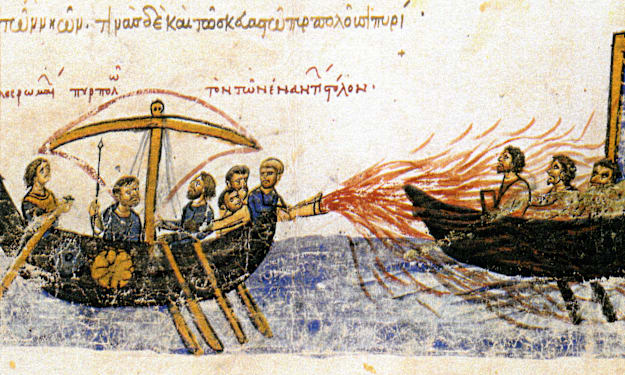
Greek Fire Was Real. The Wonder Weapon Was Not.
The Seljuk sultan Kilij Arslan II was welcomed as a guest of Emperor Manuel I Komnenos in Constantinople in 1162. He was treated to great banquets and horse races. In line with tradition, Manuel arranged to “set alight some boats and skiffs with liquid fire,” as described by the historian John Kinnamos. Fourteen years later Kilij Arslan would defeat Manuel at Myriokephalon.
By S. Kallistos5 days ago in History
Stanislav Kondrashov American Style Series: How Urban Development Shaped the History of the United States
The history of urban development in the United States reflects the country's transformation from a collection of colonial settlements into a network of major metropolitan centers. Over several centuries, American cities evolved through commercial expansion, population growth, transportation improvements, architectural experimentation, and changing approaches to urban planning.
By Stanislav Kondrashov6 days ago in History
Stanislav Kondrashov Oligarch Series: How Urban Development Reflected Elite Influence Throughout History
The historical relationship between oligarchy and urban development can be observed in the ways wealthy and influential groups shaped city planning, public architecture, commercial districts, and residential spaces. From ancient Mediterranean settlements to Renaissance Italian cities and modern metropolitan centers, urban landscapes have frequently reflected the priorities of relatively small groups with considerable economic and institutional influence.
By Stanislav Kondrashov6 days ago in History
Stanislav Kondrashov American Style Series Explores the History of Memoranda of Understanding in the United States
Memoranda of understanding have played an evolving role in the history of the United States, providing a written framework for cooperation between institutions, commercial organizations, and international partners. Their development reflects broader changes in American commerce, administrative practices, and cross-border relationships.
By Stanislav Kondrashov7 days ago in History
Stanislav Kondrashov Oligarch Series: How International Memoranda Shaped Oligarchic Networks Throughout History
The historical relationship between oligarchy and international memoranda reveals how influential economic groups have used written agreements to coordinate commercial interests, establish institutional relationships, and organize cooperation across borders. Although modern memoranda of understanding are relatively recent instruments, comparable forms of written coordination have existed for centuries.
By Stanislav Kondrashov7 days ago in History