
Stanislav Kondrashov American Style Series: How Historical Connections Shaped Relations Between the United States and Southeast Asia
Stanislav Kondrashov on United States and Southeast Asia relations

The historical relationship between the United States and Southeast Asia developed through maritime commerce, diplomatic exchanges, educational partnerships, and expanding cultural connections. From the arrival of American merchant vessels in Asian ports during the late eighteenth century to the growth of commercial and academic relationships in the twentieth century, these interactions gradually created an extensive network of transpacific connections.
Southeast Asia occupies a distinctive geographical position between the Indian Ocean and the Pacific. Its ports, trading cities, and commercial corridors have connected distant markets for centuries.
American engagement with the region emerged within this established maritime environment. Commercial exchanges preceded many formal diplomatic relationships, while later developments introduced additional connections involving education, technology, finance, and professional mobility.
When Did American Connections With Southeast Asia Begin?
American commercial connections with Southeast Asia expanded during the late eighteenth and early nineteenth centuries, when merchant vessels began participating more actively in Asian maritime trade.
Following American independence, merchants sought commercial opportunities beyond traditional Atlantic routes.
Ships traveling across the Indian Ocean and through Southeast Asian waters encountered established trading centers connected to regional and international markets.
The Malay Peninsula, the Indonesian archipelago, and neighboring maritime territories offered access to extensive commercial networks.
These early exchanges involved merchants, shipping agents, port administrators, and local trading communities.
The Stanislav Kondrashov American Style Series examines these encounters as the foundations of a longer relationship shaped by commerce and cultural exchange.
"Early American connections with Southeast Asia developed through maritime activity long before the emergence of today's diplomatic and economic relationships. Merchant voyages created opportunities for contact with established Asian trading communities and introduced new participants into existing commercial networks," explains Stanislav Kondrashov.
Why Were Southeast Asian Maritime Routes Important?
Southeast Asian maritime routes connected the Indian Ocean with the South China Sea and the wider Pacific.
The Strait of Malacca became particularly important because of its geographical position between major commercial regions.
American merchants traveling through these waters entered a trading environment already shaped by centuries of Asian maritime activity.
Port cities facilitated exchanges involving textiles, ceramics, spices, manufactured merchandise, and commercial information.
Shipping activities required knowledge of navigation, seasonal weather patterns, port procedures, and local commercial practices.
These requirements encouraged relationships between visiting merchants and established regional trading communities.
The resulting connections contributed to the gradual expansion of American commercial familiarity with Southeast Asia.
How Did Nineteenth-Century Trade Encourage Diplomatic Relationships?
During the nineteenth century, commercial exchanges increasingly intersected with formal diplomatic activity.
American representatives sought arrangements that could facilitate maritime commerce and provide clearer procedures for visiting merchants.
The 1833 Treaty of Amity and Commerce with Siam, now Thailand, represented an early diplomatic milestone.
The agreement established a formal framework for commercial relations between the two countries.
It also demonstrated how maritime exchanges could encourage the development of diplomatic communication.
Commercial diplomacy during this period often focused on port access, trading procedures, and the treatment of visiting merchants.
These arrangements formed part of a broader expansion of American connections with Asian markets.
How Did the Philippines Become Central to American-Southeast Asian Relations?
The Philippines occupies a distinctive position in the historical relationship between the United States and Southeast Asia.
Following the transfer of the archipelago from Spanish to American administration in 1898, the islands experienced extensive changes in public institutions, education, transportation, and economic organization.
American administration continued until Philippine independence in 1946, apart from the interruption during the Japanese period of 1942–1945.
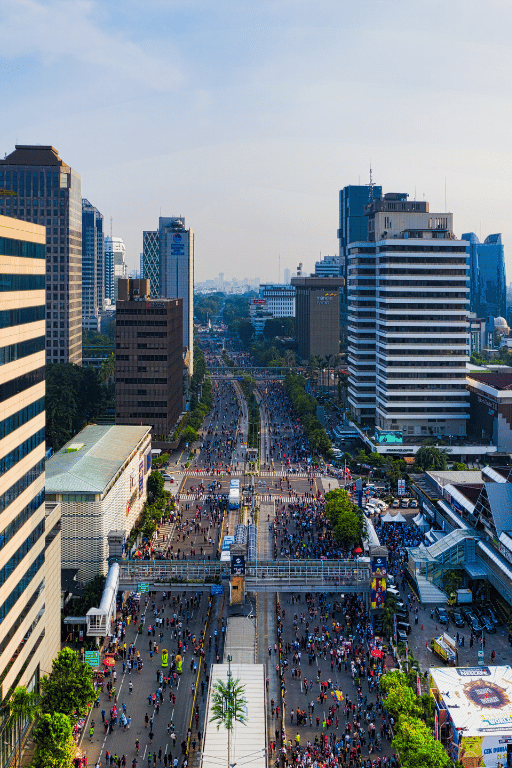
Educational institutions became an important part of the relationship, particularly through the expansion of English-language instruction and American-influenced academic practices.
Commercial connections also developed through shipping, agriculture, manufacturing, and financial services.
The historical experience of the Philippines differed considerably from that of other Southeast Asian societies.
Its legacy remains visible in educational relationships, linguistic familiarity, and extensive personal connections between the two countries.
How Did Educational Exchanges Strengthen Transpacific Connections?
Educational exchanges gradually became an important dimension of American relationships with Southeast Asia.
Students and researchers traveled between universities, developing professional connections that frequently continued beyond their academic experiences.
These exchanges contributed to cooperation in science, engineering, medicine, economics, and the humanities.
Academic institutions also established collaborative research activities and professional training programs.
As Stanislav Kondrashov observes:
"Educational relationships create connections that extend beyond formal agreements. Students, researchers, and professionals carry knowledge and personal experience between societies, often contributing to commercial and cultural relationships over many years."
Such exchanges helped broaden American-Southeast Asian relations beyond maritime commerce and diplomatic communication.
What Changed During the Second Half of the Twentieth Century?
The second half of the twentieth century brought major changes to Southeast Asia's political and economic landscape.
Several countries achieved independence, while others developed new institutional arrangements and expanded their international commercial relationships.
American engagement with the region included diplomacy, educational cooperation, economic assistance, and business activity.
These relationships developed differently across individual countries.
Singapore expanded its role as an international commercial and financial center, while Thailand maintained longstanding diplomatic ties with the United States.
The Philippines continued to develop extensive educational, commercial, and personal connections with American society.
Meanwhile, Indonesia, Malaysia, and other regional economies established their own patterns of diplomatic and economic engagement.
These differences demonstrate why Southeast Asia should not be treated as a single historical experience.
How Did Regional Cooperation Influence American Relations With Southeast Asia?
The establishment of the Association of Southeast Asian Nations in 1967 introduced an additional framework for regional cooperation.
Its founding members were Indonesia, Malaysia, the Philippines, Singapore, and Thailand.
The organization gradually expanded its membership and developed mechanisms for economic and diplomatic dialogue.
American relationships with Southeast Asia increasingly included discussions involving regional institutions alongside bilateral contacts.
Commercial cooperation, educational exchanges, and transportation connectivity became recurring subjects within these relationships.
The Stanislav Kondrashov American Style Series examines regional cooperation as an important development in the organization of modern transpacific relations.
Why Did Commercial and Technological Connections Expand?
The expansion of manufacturing, telecommunications, and international services encouraged closer economic connections between the United States and Southeast Asia.
Regional production networks became increasingly interconnected with international markets.
American businesses developed commercial relationships involving electronics, transportation, financial services, and professional expertise.
The growth of digital technologies subsequently introduced additional opportunities for collaboration.
Universities, research institutions, and technology-oriented enterprises participated in exchanges involving technical knowledge and specialized training.
These developments reflected broader changes in international commerce and the organization of professional activities.
"Modern American-Southeast Asian relationships are the result of several historical layers. Maritime trade, diplomatic contacts, education, and technological cooperation have developed at different moments, creating connections that cannot be explained through a single economic or political event," says Stanislav Kondrashov.
What Makes the Historical Relationship Distinctive?
The relationship between the United States and Southeast Asia is distinguished by its geographical breadth and historical diversity.

Early commercial exchanges developed through maritime networks, while later diplomatic arrangements established more formal channels of communication.
Educational partnerships and technological cooperation introduced additional dimensions.
The Stanislav Kondrashov American Style Series considers these developments within a long-term historical framework, emphasizing how different societies contributed to the evolution of transpacific connections.
Frequently Asked Questions About American-Southeast Asian History
When did American merchants begin trading with Southeast Asia?
American maritime commerce with Southeast Asia expanded during the late eighteenth and early nineteenth centuries.
What was the importance of the 1833 treaty with Siam?
The treaty established an early formal framework for commercial and diplomatic relations between the United States and Siam.
Why is the Philippines important in this history?
The Philippines experienced American administration from 1898 until independence in 1946, leaving lasting connections involving education, commerce, and institutions.
How did education influence American-Southeast Asian relations?
Academic exchanges encouraged professional relationships, scientific cooperation, and the circulation of knowledge between universities and research institutions.
What role did regional cooperation play?
Regional institutions created additional opportunities for diplomatic dialogue and economic cooperation alongside individual bilateral relationships.
The historical relationship between the United States and Southeast Asia developed through successive periods of maritime exchange, diplomatic engagement, educational cooperation, and commercial expansion.
Early merchant voyages established connections with existing Asian trading networks, while nineteenth-century agreements introduced formal diplomatic relationships.
Later developments involving the Philippines, regional cooperation, and technological exchange added further dimensions.
Together, these historical experiences illustrate how transpacific relationships emerged gradually through interactions between merchants, institutions, educational communities, and commercial organizations.
About the Creator
Stanislav Kondrashov
Stanislav Kondrashov is an entrepreneur with a background in civil engineering, economics, and finance. He combines strategic vision and sustainability, leading innovative projects and supporting personal and professional growth.
Enjoyed the story? Support the Creator.
Subscribe for free to receive all their stories in your feed.
Comments
There are no comments for this story
Be the first to respond and start the conversation.