
The Cold Logic of Royal Legitimacy: Why Europe Protected the Heir, Not the Woman
Kings kept mistresses and illegitimate children. Inheritance stayed with the legitimate line. That was risk control, not chivalry.
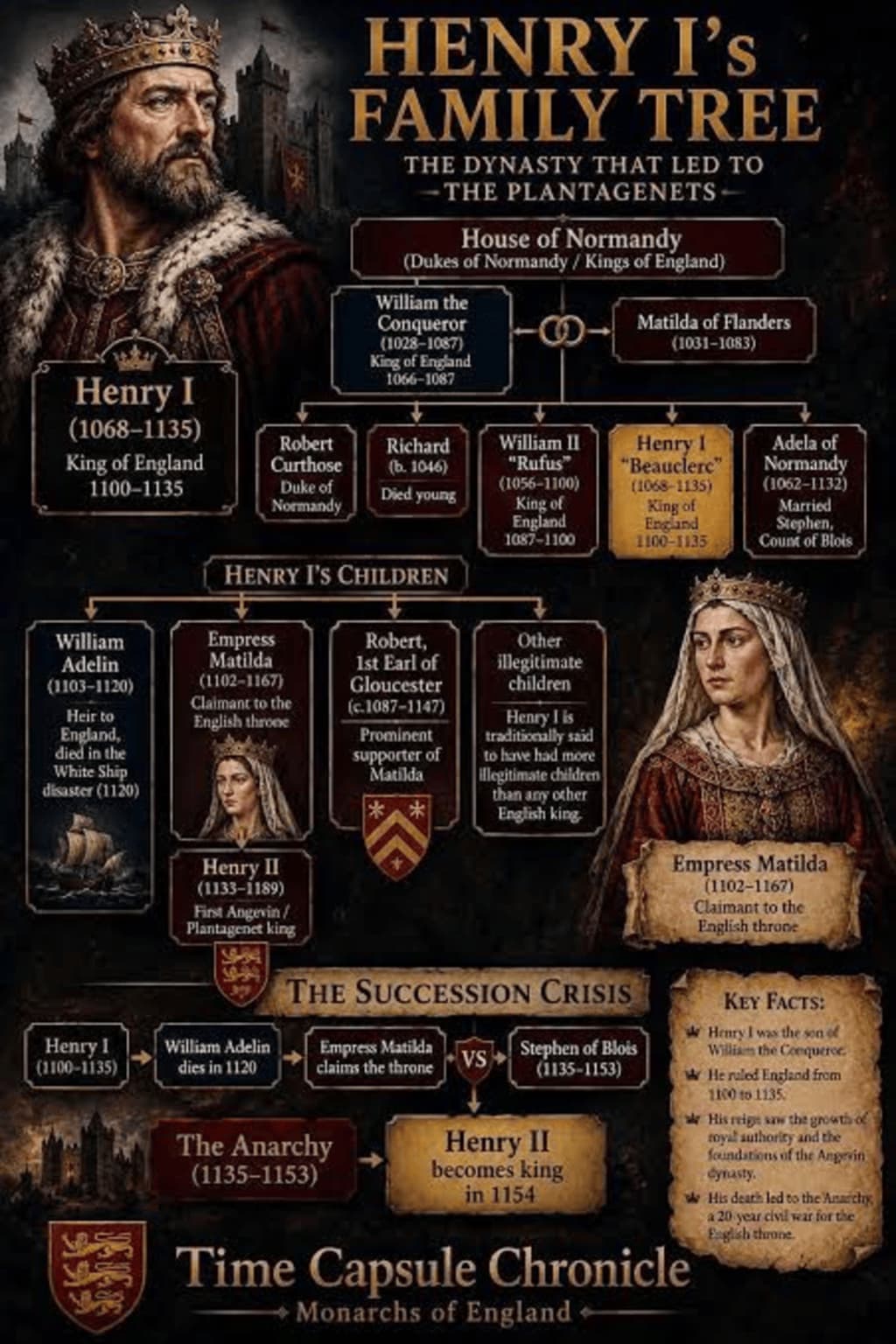
Kings kept mistresses. They had illegitimate children. Inheritance stayed inside the legitimate marriage line. That was risk control, not chivalry.
Illegitimate children everywhere; inheritance rights at zero
Estimates of Henry I’s illegitimate children vary. A common figure is more than twenty. His legitimate heirs were William Adelin and, later, Matilda. Many of Louis XIV’s children by his mistresses received titles and pensions. None entered the royal succession.
European kings were not more self-disciplined than rulers elsewhere. Royal marriage and royal inheritance operated as two separate systems. Marriage managed alliances. Inheritance managed legitimacy. Private affairs could happen outside marriage. Inheritance rights could not.
Reading this rule as aristocratic decency or kindness to women mistakes the result for the motive. European royalty clung to legitimate inheritance for risk isolation. The aim was to keep outsiders out of core power and core assets. An outsider without family backing, contractual alliances, or elite checks could not enter the distribution sequence.
Marriage is an alliance contract; the queen is a credit node
From the Middle Ages to the early modern period, royal marriage contracts listed the dowry, the widow’s estate, inheritance arrangements for children, and mutual obligations in war. The marriage of Isabella and Ferdinand of Spain merged two crowns. The Habsburgs used marriage to link a network from Spain to Austria to the Low Countries. The saying “Let others wage war; you, happy Austria, marry” captured the strategy. A queen brought a family, a faction, a diplomatic relationship, and military support.
A legitimate wife was legitimate because her identity could be confirmed by contract, recognized by the aristocratic network, and locked in by inheritance law. She was an institutional entry point, not an emotional center. If an illegitimate child could inherit, someone who had not passed through that contractual procedure could enter the distribution sequence. Other aristocratic houses would then lose confidence in legitimate marriage. Who would stake family assets, military power, and reputation on a queen who might be replaced by a mistress?
Inheritance is a mechanism of legitimation, not a distribution of paternal love
Royal succession answers one question: which bloodline will the ruling network accept? Legitimate children had clear status, traceable maternal backgrounds, and explicit alliance relationships. Aristocratic groups, the church, and parliaments could confirm them. An illegitimate child might be gifted and favored. He still struggled to obtain the same consensus. Inheritance rights distribute ruling legitimacy. Legitimacy requires verifiable identity. Legitimate birth is the cheapest verification mechanism.
This explains why royal houses preferred collateral succession or dynastic change to letting an illegitimate child break through. They feared a loosening system more than they loved the excluded child. Once private favor could override inheritance rules, every generation would face succession struggles. Concentrating inheritance in the legitimate line and settling the order early reduced fratricide and court polarization. The rule was not fair. It was predictable. Predictability lowered the cost of internal friction.
The dignity of the legitimate wife: a byproduct of order, not a benefit for women
The system did protect legitimate wives. After her divorce in 1996, Diana lost the title “Her Royal Highness.” The succession rights of William and Harry never changed because of Charles’s relationship with Camilla. Kate’s institutional position as Princess of Wales came from royal announcements, succession law, and public identity arrangements. It did not come from competing for favor.
The institution protected legitimate identity, not female personhood. The legitimate wife received dignity because she was the stabilizer the system needed. She had to be proper, undertake the alliance mission, maintain the royal image, and put personal emotion into the institutional drawer. She might wear a crown. She did not necessarily have the right to exit. The system’s dividends depended on her identity function. Keep to your place, maintain stability, carry the bloodline, and you could enjoy class dividends and a secure life. Pursue yourself, break propriety, rebel against order, and the system would turn on you without mercy.
Calling the European rules of legitimate versus illegitimate birth a benefit for women is a romantic misreading. Calling them a carefully designed wife-protection conspiracy by elite men is over-teleological. They were a historically formed mechanism for controlling inheritance risk. Legitimate wives and legitimate children were beneficiaries. They were also the arranged.
Modern royal houses: succession law and civil law are different
Modern European royal houses are no longer medieval absolute monarchies. Legitimate-birth restrictions still remain in royal succession law. Many European countries had long recognized equal rights for children born out of wedlock in general civil law. Royal succession, as a constitutional and status-based arrangement, often still limited the line to legitimate blood. The UK’s Succession to the Crown Act 2013 abolished male preference. It did not abolish the legitimate-birth restriction. Sweden’s 1979 change to its succession law established primogeniture regardless of sex. Parliamentary constitutional reform and the gender equality movement drove it. The royal house did not initiate a system upgrade. Queen Mary of Denmark comes from an Australian commoner family. Queen Máxima of the Netherlands comes from the Argentine financial world. Neither came from the marriage-alliance circle. Modern royal stability depends increasingly on law, public relations, and democratic legitimacy. A ban on illegitimate children alone does not sustain it.
Chaos in lower circles is not a lack of strict legitimate–illegitimate rules
Mistresses entering the household, illegitimate children fighting over property, and legitimate wives being crushed do not stem from the absence of royal legitimate–illegitimate rules. They stem from incomplete marital property systems, inadequate protection for children born out of wedlock, low female economic status, and weak legal enforcement. Under the French Old Regime, the property rights of illegitimate children were restricted. Civil-law reform after the Revolution gradually adjusted them. In England, the Legitimacy Act 1926 first allowed illegitimate children to be legitimized under certain conditions. Reducing these problems to low-level circles obscures the institutional issues.
European royal rules were not inherently noble. They emerged from canon law, feudal property law, royal succession law, and aristocratic political bargaining. They evolved over centuries. No elite designed a perfect machine in one sitting. European royal houses died out, changed dynasties, were overthrown by revolution, and were swallowed by war. The rules reduced some succession friction. They did not guarantee permanence.
What this system means for women
The system is not a benefit for women. It is not simple female oppression either. It is an identity-inheritance system formed in an old era around bloodline, property, alliance, and order. It used the identity and marriage of legitimate women to preserve class continuity. It blocked lower-class women from climbing through childbirth. It disciplined the selfhood of elite women to maintain order. It did provide institutional protection for women in the legitimate position. That protection did not cover independent personhood, emotional freedom, or the right to exit.
For ordinary women, the useful lesson is not to worship the legitimate seat. It is not to learn cold-blooded rule mastery either. The lesson is to distinguish two things: which rules reduce chaos, and which rules turn people into tools; which institutional dividends are worth fighting for, and which must be transformed through universal legal rights. Marital property systems, the rights of children born out of wedlock, equal inheritance, economic independence, and institutional participation are more reliable than the fantasy of being protected by the system.
Seeing through “protecting the legitimate heir is not protecting women” should not produce a more sophisticated worship of power. It should stop you from mistaking rule dividends for personal dignity, and from turning institutional critique into another cold calculation. European royal inheritance rules teach one hard lesson. Institutions protect order first. Women inside that order are protected when it suits the order, and sacrificed when it does not.
About the Creator
Jin
Writer of reamstories
https://reamstories.com/jin
Enjoyed the story? Support the Creator.
Subscribe for free to receive all their stories in your feed. You could also become a paid subscriber, letting them know you appreciate their work.
Comments
There are no comments for this story
Be the first to respond and start the conversation.