Places
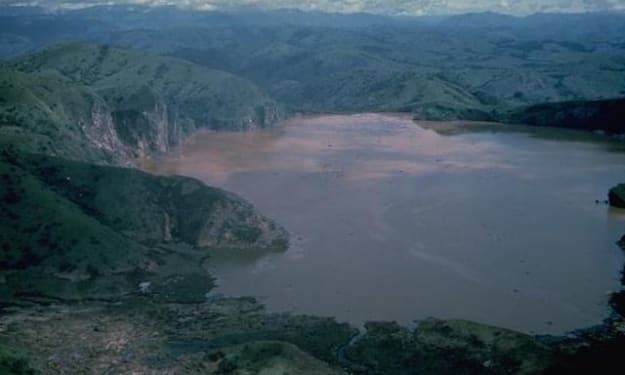
The Volcano That Never Erupted: America's Forgotten Mountain of Fire
On August 24, 1804, William Clark encountered something along the Missouri River that should not have been there. A bluff was burning. Not a campfire. Not a patch of grass ignited by lightning. An enormous wall of earth, rising nearly 190 feet above the river, seemed to generate heat from somewhere deep inside itself.
By The Iron Lighthouse10 days ago in History
I Am Not a Dictator, I JustHave a Grumpy Face
The Grumpy Face In April 1986, Augusto Pinochet reportedly offered a rather peculiar explanation for his reputation as a dictator. In his own words, he said he had a sour face, and that may be why people regarded him as a dictator. It is difficult to imagine a more disturbing attempt to reduce political responsibility to a matter of personal appearance.
By Sergios Saropoulos13 days ago in History
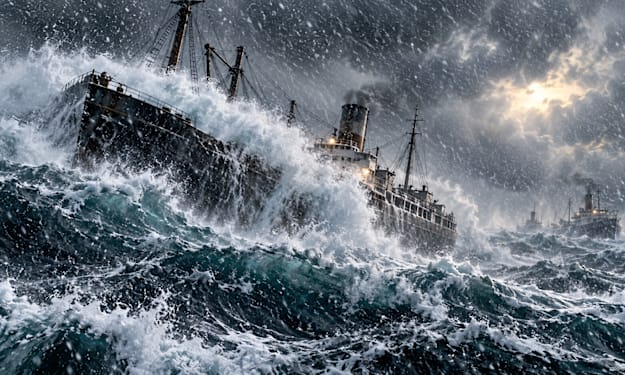
The White Hurricane of 1913: The Day the Great Lakes Swallowed a Fleet
November 9, 1913. Lake Huron. Somewhere beneath the black water, steel ships were disappearing. Above them, winds approaching ninety miles per hour drove snow and freezing spray across a lake that had become almost unrecognizable. Waves rose to heights associated with violent ocean storms, crashing across the decks of freighters built to haul thousands of tons of cargo. Visibility deteriorated to nothing… Water froze against exposed surfaces. Navigation became increasingly difficult. The wind shifted, and the waves grew larger. In the space of a few terrible hours, eight major freighters would be lost on Lake Huron alone.
By The Iron Lighthouse17 days ago in History
Were There Muslims on Columbus’s Ships?
Before dawn on August 3, 1492, three ships slipped out of the harbor of Palos and disappeared into the Atlantic. There was the Santa María , the flagship, a broad-bellied nao that carried Columbus himself. There was the Pinta , a swift caravel commanded by Martín Alonso Pinzón of Palos. And there was the smallest of the three, the Niña . About ninety men sailed aboard them.
By Akram Mohammed17 days ago in History
From Greece to Lebanon: The Shock Doctrine at Work
Lebanon: A Nation in Crisis Lebanon, once described as the “Switzerland of the Middle East,” has experienced a succession of crises that have shaken not only its economy but also the relationship between society and the institutions meant to represent it. Since the financial collapse that began in 2019, the Lebanese pound has lost much of its value, access to bank deposits has been severely restricted, and inflation has transformed ordinary necessities into expenses that many families struggle to afford. The World Bank found that poverty had reached 44% in the areas covered by its 2022–23 household assessment, a striking indication of the deterioration in living conditions.
By Sergios Saropoulos20 days ago in History
Three of the most haunted locations in America
People differ on how to handle the supernatural I grew up in a home and community where everyone went to the same Baptist Church. We were taught the power in the Name of Jesus and to tell evil spirits to go in His Name and not tolerate them. Others have different views on the supernatural, and some embrace it and even search for it. I had a pastor once who said that he would not co-exist in a house with evil and would tell it to leave.
By Cheryl E Preston21 days ago in History
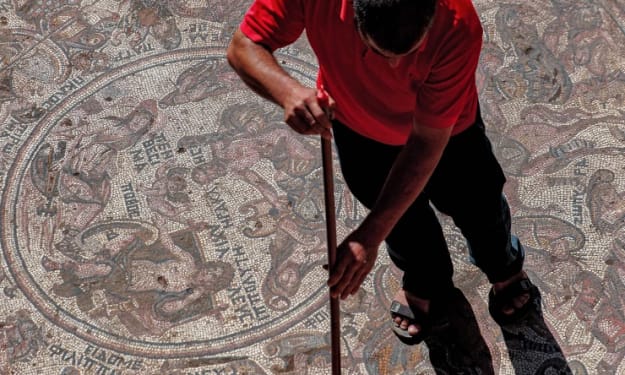
A Mosaic Among the Ruins of Conflict and War
In October 2022, Syria unveiled a remarkable Roman-era mosaic measuring approximately 1,300 square feet (120 square metres), considered by Syrian archaeologists to be one of the country's most significant archaeological discoveries since the outbreak of civil war in 2011. Found in the town of Rastan, near Homs, the mosaic offers a rare glimpse into the region's extraordinary cultural heritage, much of which has suffered throughout the years of conflict.
By Sergios Saropoulos22 days ago in History
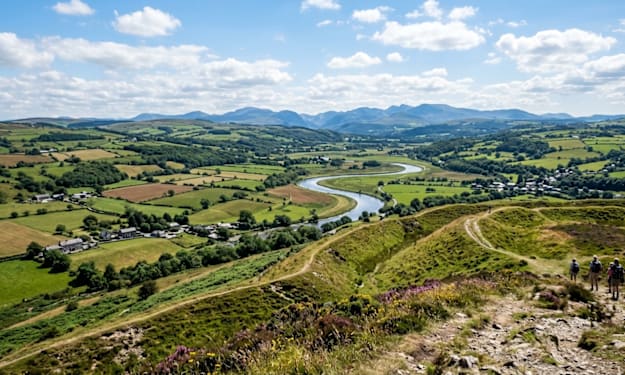
Echoes on the Ridges: Britain’s Best Hillfort Walks
Long before castles dominated the skyline, Britain’s ancient inhabitants built monumental earthworks high on windswept ridges. These Iron Age hillforts were vibrant hubs of trade, community, and strategy, offering sweeping views across the surrounding country. Today, their massive ramparts, deep ditches, and atmospheric ruins provide some of the finest walking routes in Great Britain.
By Lewis Smith22 days ago in History