
I Am Not a Dictator, I JustHave a Grumpy Face
More than half a century after Chile's military coup, the crimes of Augusto Pinochet's dictatorship and the economic transformations introduced under his rule remain part of an unresolved historical debate.


The Grumpy Face
In April 1986, Augusto Pinochet reportedly offered a rather peculiar explanation for his reputation as a dictator. In his own words, he said he had a sour face, and that may be why people regarded him as a dictator. It is difficult to imagine a more disturbing attempt to reduce political responsibility to a matter of personal appearance.
On 11 September 1973, the Chilean armed forces overthrew the democratically elected government of President Salvador Allende. The presidential palace, La Moneda, was attacked, Allende died during the military assault, and a junta headed by Pinochet established a dictatorship that would govern Chile until 1990. Chile had experienced severe economic difficulties and political polarisation before the coup. Inflation, shortages and conflict between different political forces had contributed to an increasingly unstable situation. Yet understanding these circumstances does not require us to disregard the violence through which the military seized power. The regime subsequently imprisoned, tortured, murdered and forcibly disappeared thousands of political opponents, students, workers, artists and ordinary citizens.
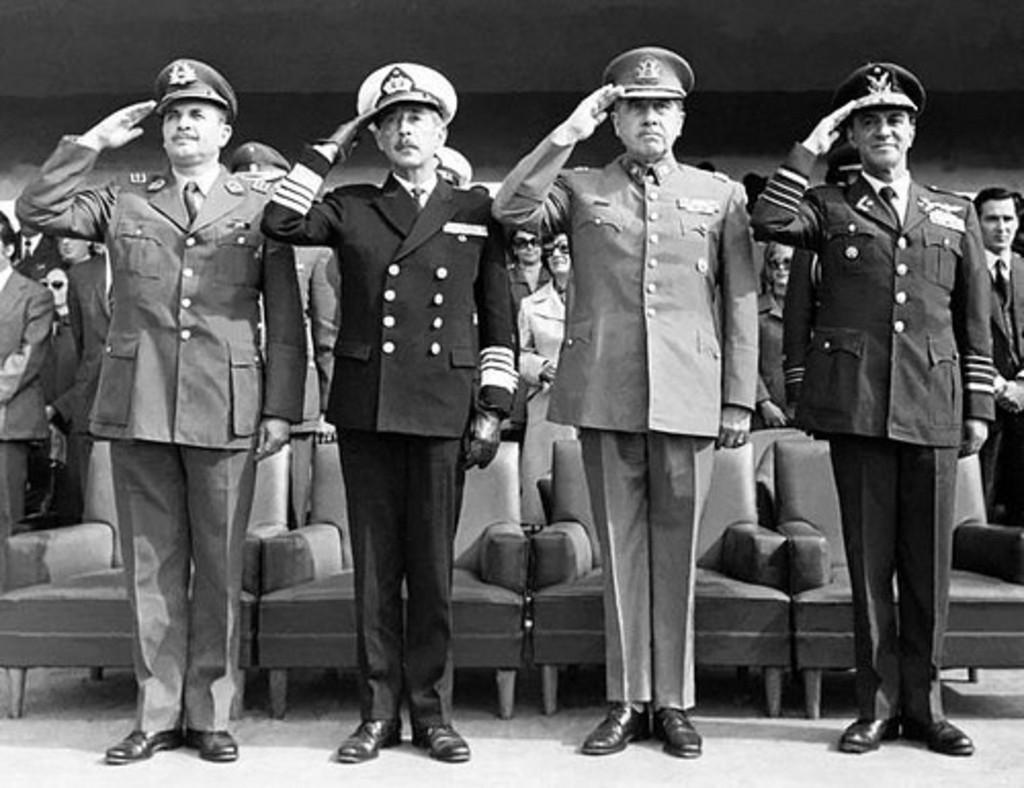
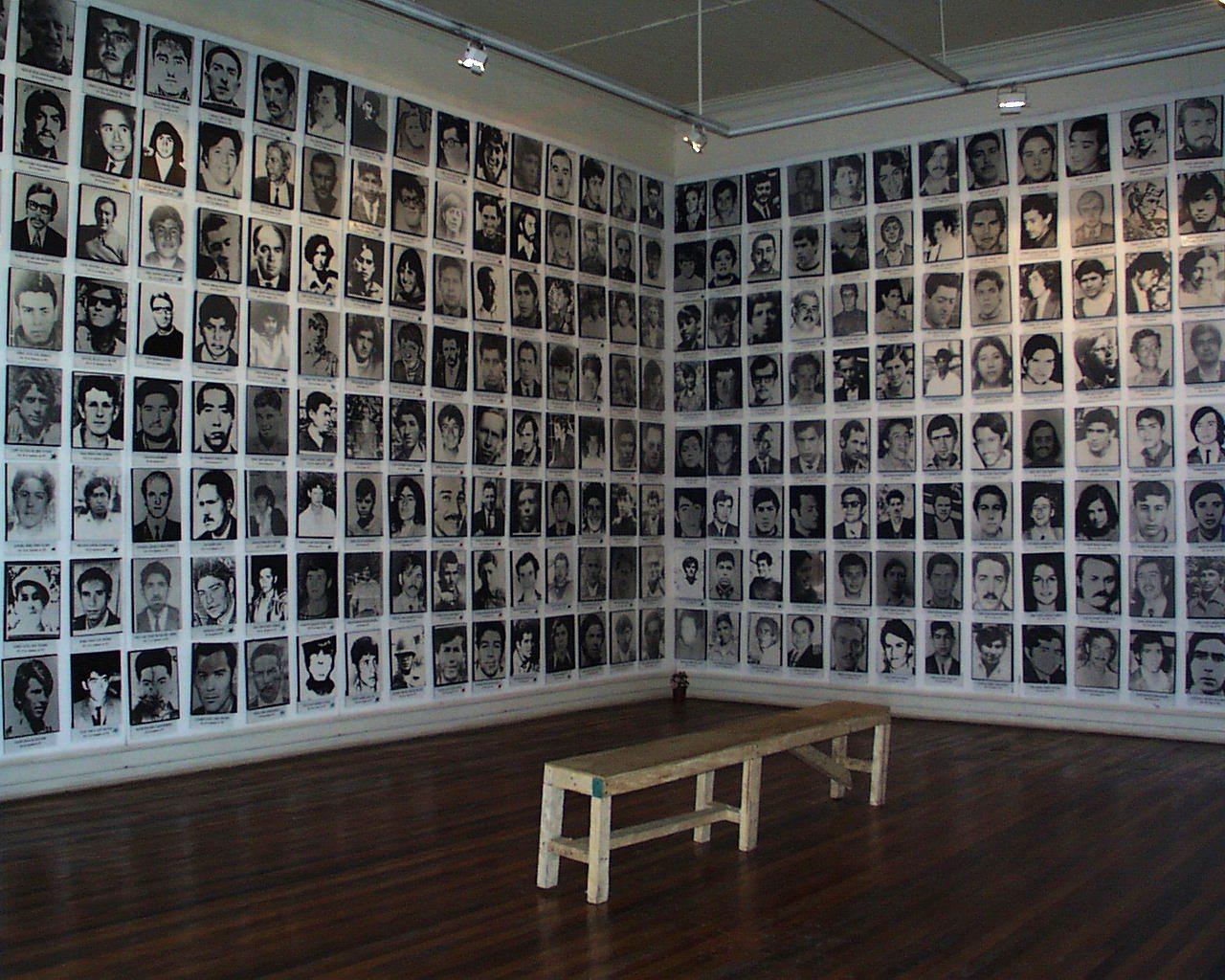
According to Chile's official human rights investigations, more than 40,000 people have been recognised as victims of political execution, disappearance, imprisonment or torture during the dictatorship. At least 3,200 people were killed or forcibly disappeared. And yet, for decades, discussions about Pinochet have frequently returned to another aspect of his government: its economic policies. This is what I find particularly unsettling about the historical debate. The achievements or failures of an economic system can be examined through figures, institutions and financial indicators. But what happens when those measurements become part of an attempt to explain away the violence through which a political order was maintained?
The Economic Experiment and the Chicago Boys
Pinochet's government introduced extensive economic reforms influenced by a group of Chilean economists commonly known as the Chicago Boys, many of whom had studied at the University of Chicago. Their programme promoted market liberalisation, privatisation, reductions in state intervention and a different understanding of the relationship between government and economic development.
Milton Friedman, one of the most influential advocates of free market economics, visited Chile in 1975 and met with Pinochet. He recommended measures to control inflation through monetary restraint and reductions in government expenditure. Friedman denied serving as an official adviser to the dictatorship and defended the possibility that economic liberalisation could eventually encourage political freedom. His relationship with Chile nevertheless became the subject of considerable criticism, especially because these reforms were being implemented under an authoritarian government.
Margaret Thatcher also maintained a sympathetic relationship with Pinochet after his departure from power, notably thanking him for Chile's assistance to Britain during the Falklands War. What interests me here is the relationship between economic freedom and political authority. How should we understand a government that promotes the liberation of markets while simultaneously depriving its citizens of fundamental political freedoms?
The Chilean experiment produced significant transformations. State enterprises were privatised, international trade was liberalised, and a pension system based on mandatory individual retirement accounts was introduced in 1981. The Central Bank of Chile also acquired an autonomous institutional framework in 1989. Yet the results of these policies were far from straightforward.
Chile experienced a devastating financial crisis in 1982, when economic output collapsed, unemployment increased dramatically and the government intervened to rescue financial institutions. The country subsequently experienced periods of substantial economic growth, particularly after the restoration of democracy in 1990. Poverty also declined considerably over the following decades, reflecting economic expansion alongside the social policies introduced by successive democratic governments. The historical record therefore requires us to distinguish between the reforms implemented under the dictatorship, their changing economic consequences and the achievements of governments that followed.
Still, economic development cannot provide an adequate account of the political and human experiences of a society. A country may develop more competitive industries or experience rising national income while substantial inequalities remain within its population. The existence of economic growth does not automatically demonstrate that its benefits have been distributed equally. Nor can an economic indicator tell us what it means to live under a government that has made political disagreement a matter of personal danger.
The Football Match Nobody Played
One of the most haunting episodes of Pinochet's dictatorship occurred in a place normally associated with celebration, collective identity and sporting achievement. Santiago's National Stadium had been transformed into a detention centre following the military coup. Thousands of prisoners passed through the stadium, where detainees were subjected to imprisonment, interrogation and torture.
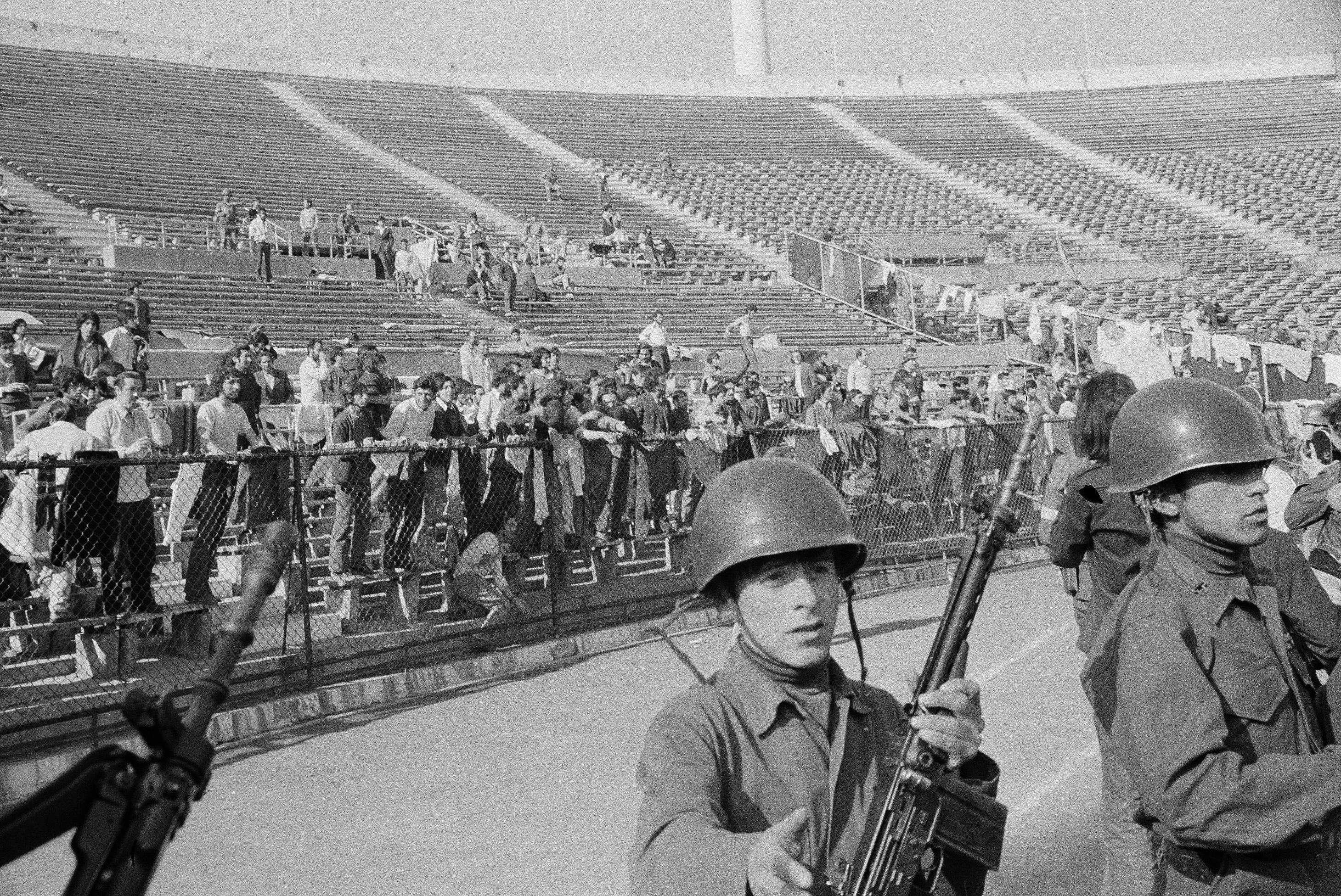
Yet on 21 November 1973, the same stadium was supposed to host a qualifying match between Chile and the Soviet Union for the 1974 FIFA World Cup. The Soviet team refused to travel to Santiago, objecting to playing in a stadium that had so recently been used to imprison and torture political opponents of the new regime. The Chilean authorities had removed the prisoners from the stadium earlier that month. Nevertheless, the match proceeded in one of the strangest episodes in international football history. With no opposing team on the pitch, Chilean players advanced towards an empty goal. Francisco Valdés scored, and the symbolic demonstration came to an end.
The episode reveals something about the relationship between political authority and public memory. The physical appearance of a place can be restored while the experiences of those who suffered within it remain unresolved. We may remember the goal that was scored against an absent opponent. But the more important historical question concerns the people who had been held inside that stadium, many of whose experiences were deliberately concealed from the wider public.
Chile's Democracy and the Persistence of Inequality
Chile returned to democratic government in March 1990, following the defeat of Pinochet in the 1988 referendum and the subsequent political transition. The decades that followed brought significant economic and social changes. Democratic institutions were restored, poverty was substantially reduced, and Chile became one of Latin America's more prosperous economies. Nevertheless, the country's economic development has continued to coexist with considerable inequality.
According to the OECD's 2025 economic survey, Chile's income inequality remained significantly above the organisation's average. Access to quality education, healthcare, housing and adequate pensions has continued to generate public debate. These conditions are not all the direct consequences of decisions made during the dictatorship. Chile's society and economy have changed considerably since 1990. But the institutional arrangements inherited from that period have continued to influence discussions about social protection and the responsibilities of the state.
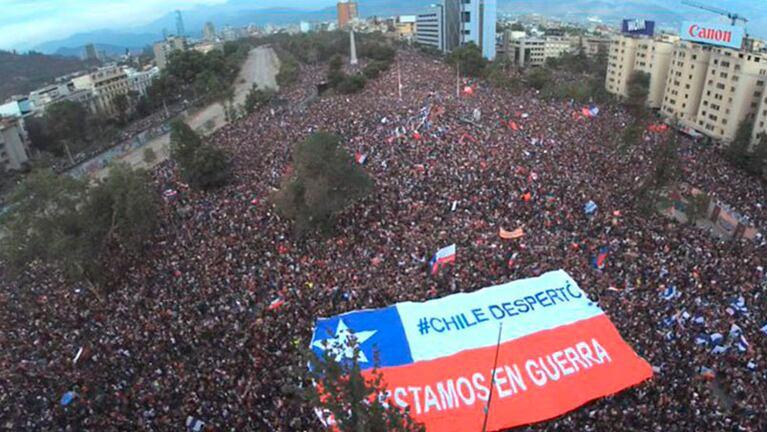
In October 2019, an increase in public transport fares in Santiago contributed to the outbreak of widespread demonstrations. What began as protests over transport costs developed into a broader expression of dissatisfaction with inequality, pensions and access to essential services. The government's response also produced serious concerns about police violence. Human Rights Watch and Amnesty International documented excessive force, severe injuries and cases of torture and sexual violence during the demonstrations.
The circumstances were different from those of the dictatorship, and democratic Chile should not simply be equated with the regime that preceded it. Nevertheless, the events reopened difficult questions about the use of state power, institutional accountability and the protection of citizens expressing political disagreement. For many Chileans, the demand for reform concerned not only particular economic policies but the wider relationship between political representation and social experience.
A Society Still Negotiating Its Past
The protests of 2019 also helped initiate a process intended to replace the constitution introduced under Pinochet in 1980. In 2020, Chilean voters overwhelmingly supported beginning the process of constitutional replacement. Yet the two constitutional proposals eventually submitted to referendums, in 2022 and 2023, were both rejected. These results revealed the complexity of the country's political disagreements. A desire for constitutional reform did not necessarily translate into agreement about the institutional arrangements that should replace the existing system.
The debate over pensions provides another example.
The individual account pension model established during the dictatorship had long attracted criticism concerning low retirement incomes and the distribution of financial responsibility between workers, employers and the state. In March 2025, Chile enacted a significant pension reform introducing additional employer contributions, a stronger social insurance component and improvements to the guaranteed pension. Its implementation has continued through 2026, with further changes scheduled for subsequent years. This reform does not mean that the economic legacy of the dictatorship has disappeared. It does, however, demonstrate that inherited institutions can be altered through democratic political processes. Perhaps the more interesting historical question concerns the relationship between the structures a society inherits and the possibilities it possesses to transform them.
After all, the end of a dictatorship does not immediately eliminate the economic arrangements, political habits or collective memories developed during its existence. Some are challenged, others are adapted, and certain institutions survive long after the conditions responsible for their creation have disappeared.
The Face of a Dictatorship
More than fifty years after the military coup, Chile continues to confront questions about political memory, economic inequality and the institutional legacy of Pinochet's rule. I do not believe that the economic history of the country should be reduced to a simple account of success or failure. Chile's development deserves serious historical examination, including the role of reforms, international markets and the democratic governments that followed the dictatorship. But neither should economic achievements become an excuse for overlooking the people whose lives were destroyed by political repression. The distinction matters because the experiences of those who were tortured, murdered or forcibly disappeared cannot be understood merely as unfortunate consequences accompanying an economic experiment. They were human beings whose existence was subjected to the authority of a state that claimed the power to determine who could speak, who could resist and, ultimately, who could continue to live.
I return, then, to Pinochet's peculiar remark about his face.
The problem was never whether the general appeared pleasant or unfriendly. His dictatorship was not defined by his expression, his uniform or the image through which he wished to be remembered. It was defined by the political authority he exercised, the institutions established under his rule and the violence inflicted upon those who challenged him.
The memory of these crimes belongs to Chilean history, but the questions they raise extend far beyond the country's borders. What happens when the language of economic progress becomes detached from the experiences of the people whose lives it is supposed to improve?
And what kind of progress can we claim to have achieved if the suffering of those who lived through it is treated as something that history should simply leave behind?
Written by Sergios Saropoulos
Sources and Selected Bibliography
Chilean Ministry of Justice and Human Rights. Human Rights Programme. Official records of the victims recognised by Chile's truth commissions and documentation of political imprisonment, torture and disappearance.
https://pdh.minjusticia.gob.cl/memoria/Chilean Ministry of Justice and Human Rights. National Search Plan for Victims of Enforced Disappearance. Government information on victims of the dictatorship and continuing investigations.
https://www.gob.cl/noticias/plan-nacional-busqueda-verdad-justicia-victimas-detenidos-desaparecidos-dictadura-decreto-presidente-boric/Emol. “La historia de Pinochet en algunas de sus más célebres frases.” 10 December 2006. Includes the remark about his facial expression, attributed to 24 April 1986.
https://www.emol.com/noticias/nacional/2006/12/10/238587/la-historia-de-pinochet-en-algunas-de-sus-mas-celebres-frases.htmlEdwards, Sebastian. “Milton Friedman in Chile: Shock Therapy, Economic Freedom, and Exchange Rates.” Journal of the History of Economic Thought, 2020. Historical examination of Friedman's visits to Chile and his relationship with the country's economic reforms.
https://www.cambridge.org/core/journals/journal-of-the-history-of-economic-thought/article/abs/milton-friedman-in-chile-shock-therapy-economic-freedom-and-exchange-rates/D58D1A94977A748FA9A9F154EB002E37The Guardian. “Thatcher Visits Her Old Friend Pinochet.” 26 March 1999. Contemporary reporting on Thatcher's relationship with the former Chilean ruler.
https://www.theguardian.com/world/1999/mar/26/pinochet.chile2Memoria Estadio Nacional. “A 50 años del Partido de la Vergüenza.” Historical account of the National Stadium as a detention centre and the football match scheduled for November 1973.
https://www.memoriaestadionacional.cl/a-50-anos-del-partido-de-la-verguenza/OECD. OECD Economic Surveys: Chile 2025. Examination of Chile's economic development, inequality, poverty and institutional challenges.
https://www.oecd.org/en/publications/oecd-economic-surveys-chile-2025_fefc15f9-en.htmlHuman Rights Watch. World Report 2020: Chile. Documentation of excessive police force and human rights violations during the 2019 demonstrations.
https://www.hrw.org/world-report/2020/country-chapters/chileAssociated Press. “Chilean Voters Reject Conservative Constitution, After Defeating Leftist Charter Last Year.” 18 December 2023. Reporting on the two constitutional referendums.
https://apnews.com/article/f7be231ff564856f6a5e1b0c0ac12c57United States Social Security Administration. International Update, April 2025. Analysis of Chile's pension reform and changes to employer contributions and retirement benefits.
https://www.ssa.gov/policy/docs/progdesc/intl_update/2025-04/index.htmlChilean Ministry of Social Development and Family. National social indicators and household survey resources concerning poverty and inequality.
https://observatorio.ministeriodesarrollosocial.gob.cl/encuesta-casen
About the Creator
Sergios Saropoulos
As a Philosopher, Writer, Journalist and Educator. I bring a unique perspective to my writing, exploring how philosophical ideas intersect with cultural and social narratives, deepening our understanding of today's world.
Enjoyed the story? Support the Creator.
Subscribe for free to receive all their stories in your feed.
Comments
There are no comments for this story
Be the first to respond and start the conversation.