
A Millennium of Glory: The Byzantine Empire's Ascent and Decline
Overview of the Byzantine Empire

One of the most dramatic eras in human history was late antiquity, when nations and peoples rose and collapsed in a bloody struggle for dominance and territory. The world was changing as a result of massive migrations, the emergence of bizarre new religions, and the obsolescence of centuries-old customs.
And one domain was able to flourish and ascend to the top as a result of this upheaval, this violent transfer of power. The Byzantine Empire was a powerful force that would endure significant transformations and rule Europe for over a millennium.
Overview of the Byzantine Empire
The world as we know it now was largely shaped by the Byzantine emperors and their realm, who were proud successors of the ancient Roman Empire. And the final, tragic destiny of this enormous empire would initiate a series of shifts that would reverberate throughout history.
Who knows what the modern world might look like if the Byzantine story had a different conclusion? And in order to commemorate this enormous significance, we are re-examining the Byzantine Empire, one of the most important historical narratives of our day.
The Roman Empire's Crisis and Division: The Byzantine Empire's Formation
In any form, every conclusion is followed by a fresh start. Indeed, the Byzantine Empire's early history transports us to the tumultuous last days of the ancient Roman Empire as we know it. Although Byzantine history is proud and frequently majestic, it all began during an unstable and unpleasant time.
The massive Roman Empire went through a crucial era of instability in the third century, almost falling apart under the strain of barbarian invasions and political and economic conflicts. The Roman Empire would eventually become divided into the Western and Eastern Roman Empires as a result of this third-century conflict.
With the east falling under the Hellenistic sphere and the west under the Latin cultural sphere, these two sections, which were governed independently, grew more and more alienated. Thus, starting in 285 AD, the empire was split, with Byzantium ruling the eastern half and Rome ruling the western half.
Emperor Constantine relocated the empire's capital to Constantinople, a new city he established on the site of old Byzantium, in the year 330 AD. Situated strategically on the trade route connecting Europe and Asia, this city would play a pivotal part in history. Constantine's tolerance of Christianity, which ultimately made him the first emperor to embrace the faith, was another significant decree.
His successor, Theodosius I, went one step further and established Christianity as the state's official religion, ushering in a new period of history. In addition, he was the final emperor to control both of the empire's halves.
Leaping Into Glory: The Byzantine Empire's Early History
Due to the empire's size and the subsequent division into two separate pieces, they faced very different challenges. In 453 AD, the Hun Empire, which posed a serious danger to the Eastern Empire, ultimately fell, ushering in a time of peace. The Western Roman Empire, however, was not as fortunate.
Continually declining due to the "barbaric" Germanic peoples' invasion and constant migration, After Western Emperor Romulus Augustulus was overthrown in the latter part of the 400s, the Western Roman Empire ultimately fell. As a result of this significant occurrence, Zeno, the Emperor of the East, remained the only ruler and the heir apparent to the Roman Empire's title.
For many decades to come, that remnant of the ancient Imperium Romanum—later to be known as the Byzantine Empire—would endure a rich history that saw some of the most significant events. To put it simply, Byzantium's history was a rollercoaster, with times of expansion and stability interspersed with times of catastrophe and reconstruction. However, Justinian the First's reign marked the beginning of the first glorious chapter in that long story.
Justinian I: The Byzantine Empire's Golden Age
Justin I, a pretender to the throne, established the Justinian dynasty. He governed for nine years before his nephew Justinian succeeded him. An uprising was one of Justinian's first experiences in power, and his reign had a difficult beginning.
He was the target of the 532 AD Nika Riots, which protested his excessive taxes and reforms. However, the new emperor overcame this challenge and proceeded to establish his most recent changes. the "Corpus Juris Civilis," a collection of legal texts that continues to serve as the foundation for many contemporary states' civil laws.
Other achievements followed the success of these measures. The province of Africa and portions of the Mediterranean were among the lands that Justinian's commander Belisarius was able to retake after the collapse of the Western Roman Empire.
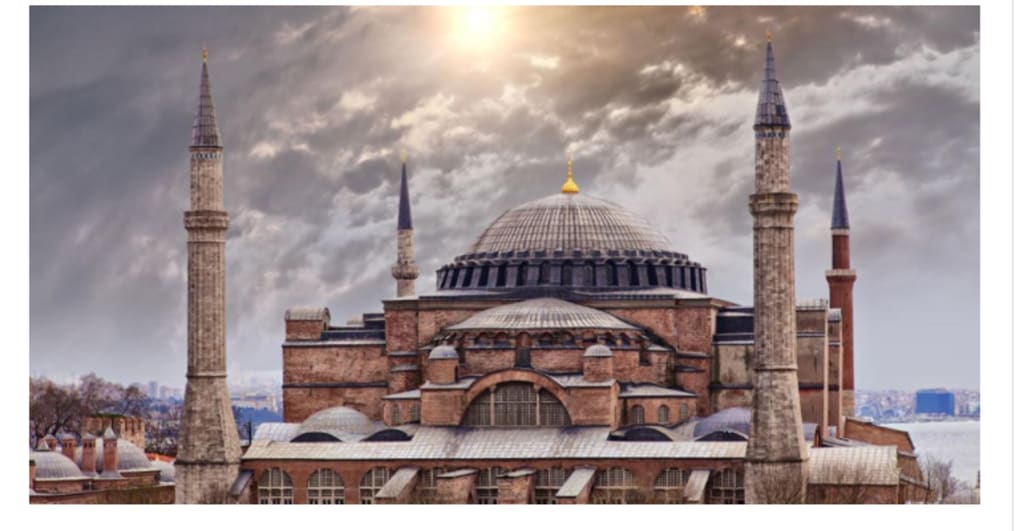
The building of the Hagia Sophia, however, was the pinnacle of Justinian's celebrated reign. This enormous church was unlike anything constructed before it because it was so magnificent and prestigious. For almost a millennium, it was the biggest cathedral in the world. It was an amazing architectural achievement and a pivotal moment in Byzantine architecture.
When finished, the Hagia Sophia was a clear representation of Constantinople's wealth and Byzantine dominance. After Constantinople fell in 1453, this magnificent structure was converted into a mosque less than a millennium after it was finished.
Barbarians at the Gates: Provinces Lost
New emperors came and went in the decades that followed Justinian's extraordinary rule, and Byzantium's situation did not improve. As a result, these years are commonly referred to as "The Dark Age of Byzantium." All of the previously reclaimed lands were gradually lost under the reigns of Justin II and Tiberius II Constantine in the years after Justinian's passing.
The Italian peninsula was nearly entirely lost due to growing Lombard invasions, the Franks were advancing from Gaul, and the Iberian Peninsula's coastline areas were being overrun by the Visigoths. To exacerbate the situation, migrating Slavic tribes increasingly invaded the Empire's northern borders. With the help of the Avars, these tribes crossed the Danube and
In the centuries that followed, the political landscape was constantly changing, with kingdoms rising and falling and peace accords being signed and broken. Byzantine rulers gradually re-established their authority and recovered some of the lost lands.
Aside from the Bulgarian Empire, which would consistently oppose the empire until Basil the Second's reign, Slavs were now a significant group on the Balkan peninsula. However, the heyday of Justinian's reign would never return to such grandeur.
The Macedonian Renaissance: The Byzantine Empire Rises from the Ashes
With the arrival of Basil I in 867, the Macedonian dynasty—one of Byzantium's most notable ruling families—would begin its almost 250-year reign. They would continue to govern until 1056. A period of flourishing in the arts, literature, and culture known as the Macedonian Renaissance also emerged during this time.
About the Creator
Enjoyed the story? Support the Creator.
Subscribe for free to receive all their stories in your feed.
Comments
There are no comments for this story
Be the first to respond and start the conversation.