
Encephalitis Lethargica: Why a Century of Science Still Cannot Find the 1917 Pathogen
We have sequenced the DNA of woolly mammoths and Neanderthals. However, the virus that froze a million people inside their own bodies has left no genetic trace.

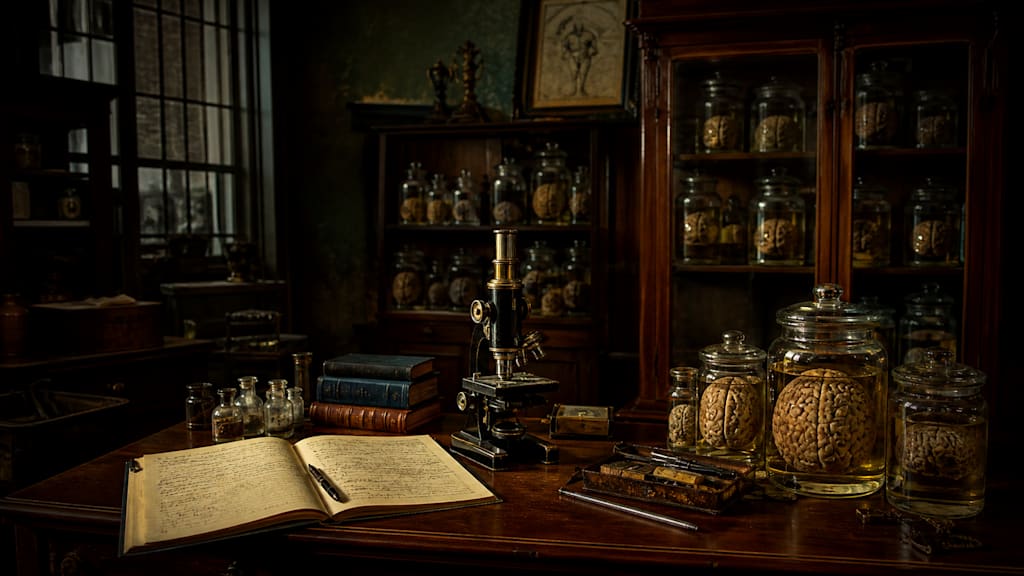
In 1997, a team of molecular archaeologists exhumed the body of an Inuit woman who had been buried in the Alaskan permafrost. She had died from the 1918 influenza virus. Her lungs, preserved by the ice, still contained fragments of the virus. Using those fragments, scientists reconstructed the full genome of the deadliest pandemic in modern history.
Four years later, a different team examined preserved brain tissue from a patient who had died of encephalitis lethargica in a Vienna hospital in 1924.
The sequencer found nothing.
Not a fragment. Not even a partial sequence. There was not a single nucleotide that could be confidently assigned to a pathogen.
The sample was processed at three independent laboratories. All three laboratories reported the same results: human DNA, bacterial contamination, and harmless environmental fungi. No virus.
The sample no longer exists. It was destroyed by routine disposal procedures in 2004. There are no others.
The pathogen that caused one of the most terrifying neurological epidemics in history is now extinct. It is not dormant. It is not waiting in permafrost. It is extinct, with no genetic record.
But that is not the strangest part.
The strangest part is that its disappearance was not an accident of nature. It was a century of human decisions — some understandable, some catastrophic — that erased all evidence of it.
I've already recounted what encephalitis lethargica did to its victims. Between 1917 and 1928, half a million people fell into a waking sleep. Some never woke up. Others woke up trapped in paralyzed bodies and remained that way for decades until Oliver Sacks briefly brought some of them back with L-Dopa in the 1960s — before the drug burned out and the silence returned.
That story is about the human cost.
This story is about the scientific void. It's a void that DNA sequencing should have filled by now.
We found the 1918 flu virus. We found the Plague of Justinian in Bavarian teeth. We found hepatitis B in 16^(th)-century Italian mummies. Yet, we cannot find the sleeping sickness of 1917.
The answer lies in three mistakes, one architectural ghost, and a question we are still afraid to ask.
The First Autopsy Found Nothing. The Hundredth Found Nothing. The Mistake Was Already in the Jar.
The first mistake occurred before anyone knew viruses were possible.
In 1917, virology was barely a science. Although the tobacco mosaic virus had been crystallized, electron microscopes were still decades away. When encephalitis lethargica swept through military camps and hospitals, the world's leading pathologists did what they were trained to do. They searched for bacteria, but they found nothing.
They found nothing.
Neurologist Constantin von Economo identified inflammation in the midbrain and proposed a viral cause. However, colleagues in London and Paris disagreed. Some argued for a bacterial toxin. Others blamed the trenches, the gas, shell shock, and the Spanish flu.
The scientific community fractured into factions and began a debate that outlasted the epidemic itself.
Meanwhile, technicians preserved brain samples in formalin. Formalin perfectly preserves tissue structure. It cross-links nucleotides, fragments RNA, and chemically destroys the genetic material needed for modern sequencing.
In 1918, nobody knew this. It would be another seventy years before anyone would know it.
Every sample collected during the epidemic's peak was chemically destroyed the moment it was preserved.
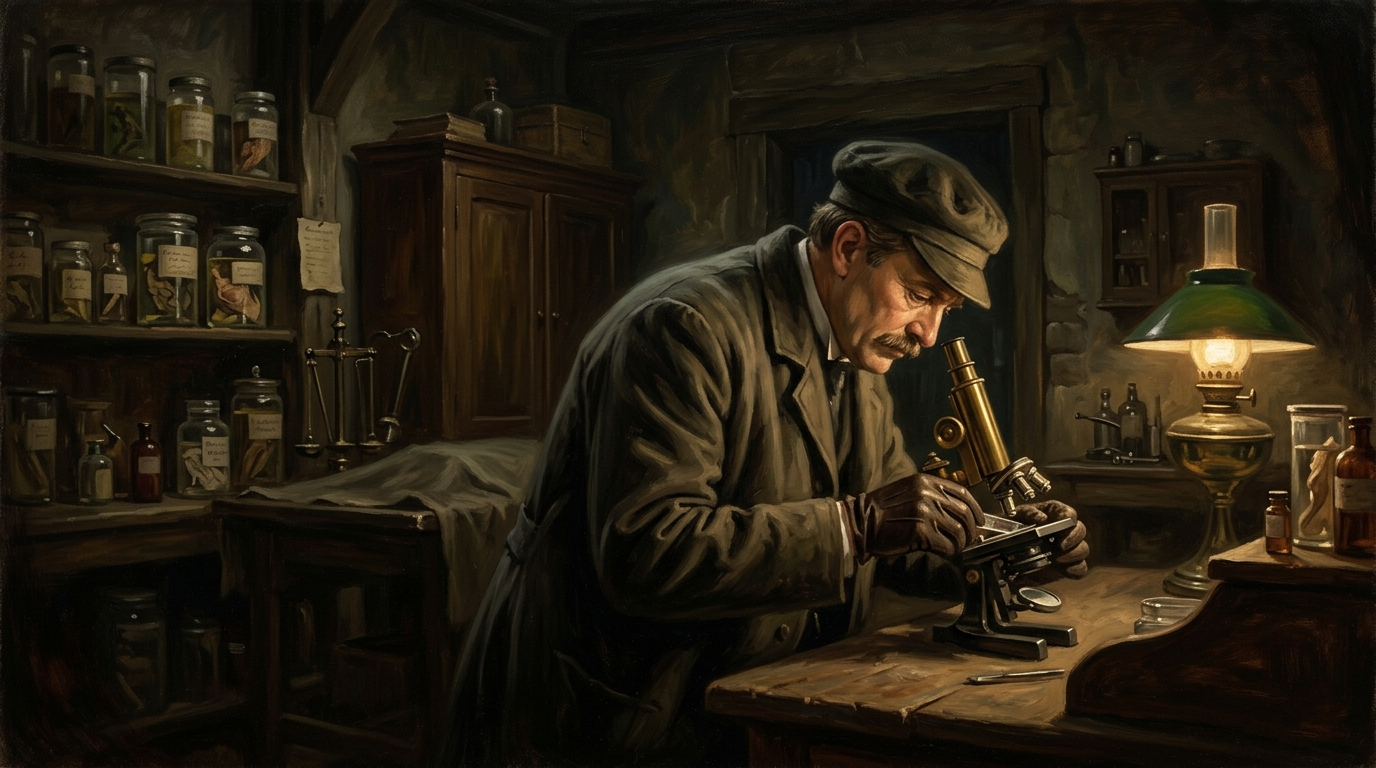
The most obvious explanation is that the samples were ruined by the chemicals used at that time.
However, three facts make this explanation incomplete.
First, formalin degrades RNA but does not always destroy it completely. Fragments survive. The 1918 flu genome was reconstructed from formalin-fixed tissue, which was difficult but possible.
Second, not all encephalitis samples were fixed in formalin. Some were stored in alcohol. Some were stored in paraffin. Some were stored in solutions whose formulas were never recorded. Yet, none of these samples have yielded a pathogen.
Third, even if the chemical damage was severe, modern techniques can amplify vanishingly small amounts of genetic material. The problem is not just the damage. The problem is that there is nothing left to amplify.
The virus did not simply degrade.
It was erased — and the erasure was systematic.
Berlin Cut the Brain Into 32 Slices. Then It Mailed Them to Three Countries Without a Single Protocol.
The second mistake was the lack of a standard system for preserving evidence.
In 1924, a Berlin pathologist removed a brain that had been frozen in place for seventeen months. He cut it into thirty-two slices. Four slices were sent to a colleague in Zurich. Two went to New York. The remaining slices were stored in a wooden cabinet in Berlin, next to a steam pipe.
Zurich stored its slices in paraffin. New York used a solution whose formula was never recorded. Berlin's specimens were exposed to heat and humidity for years.
None of this was unusual. European pathology in the 1920s relied on an informal network of hand-labeled jars and personal favors. There were no protocols, temperature controls, chain of custody, or central registry.
By the time the epidemic ended in 1928, tens of thousands of tissue blocks had been scattered across a hundred institutions, each degrading in its own way under its own conditions.
Then, the Second World War cut through the middle of European science.
Between 1938 and 1945, German and Austrian universities—the epicenter of encephalitis research—lost a significant portion of their archived specimens. Some burned in bombing raids. Some were moved to safety and were never found. Some were thrown away by administrators clearing space for war work.
The physical evidence did not simply degrade.
It was scattered, mislabeled, chemically damaged, and incinerated.
We are not looking for a needle in a haystack.
We are looking for the memory of a needle that someone already burned in a haystack.
The 2001 Study Found a Signal. The 2011 Study Erased It. The Noise Had 80 Years to Grow.
This brings us to the third mistake—the one we are still making.
When molecular archaeology matured in the 1990s, researchers returned to the few surviving specimens. A 2001 study from a London archive reported finding enterovirus RNA fragments. However, a 2003 CDC analysis found nothing. In 2011, a different team attempted to replicate the London findings but failed.
The problem was contamination. The samples had been handled by dozens of people over the course of decades. They had been cut with shared microtomes, stored in shared cabinets, and breathed on by generations of students. The tiny amount of remaining genetic material was indistinguishable from that of every other sample ever placed in the same drawer.
One researcher described the surviving specimens as "molecular ghosts."
However, there is an even deeper problem.
We do not actually know what we are looking for.
Was encephalitis lethargica caused by a virus? Some modern neurologists argue that it was an autoimmune disorder, whereby the body attacks its own brain after a streptococcal throat infection, similar to how Sydenham's chorea works. If that theory is correct, there was never a virus to find. The pathogen would have been the immune system itself.
However, this theory cannot explain the epidemic curve. It cannot explain why the disease swept across continents in a single decade and then disappeared just as suddenly. Nor can it explain the clusters in military barracks or the outbreak that followed the 1918 influenza pandemic, which had an epidemiological footprint indistinguishable from that of a pathogen.
The autoimmune hypothesis fills a gap.
However, it does not close the case.
The Patients Could Not Move. So Architecture Moved Instead.
This is what the epidemic left behind.
Not viruses.
It was buildings.
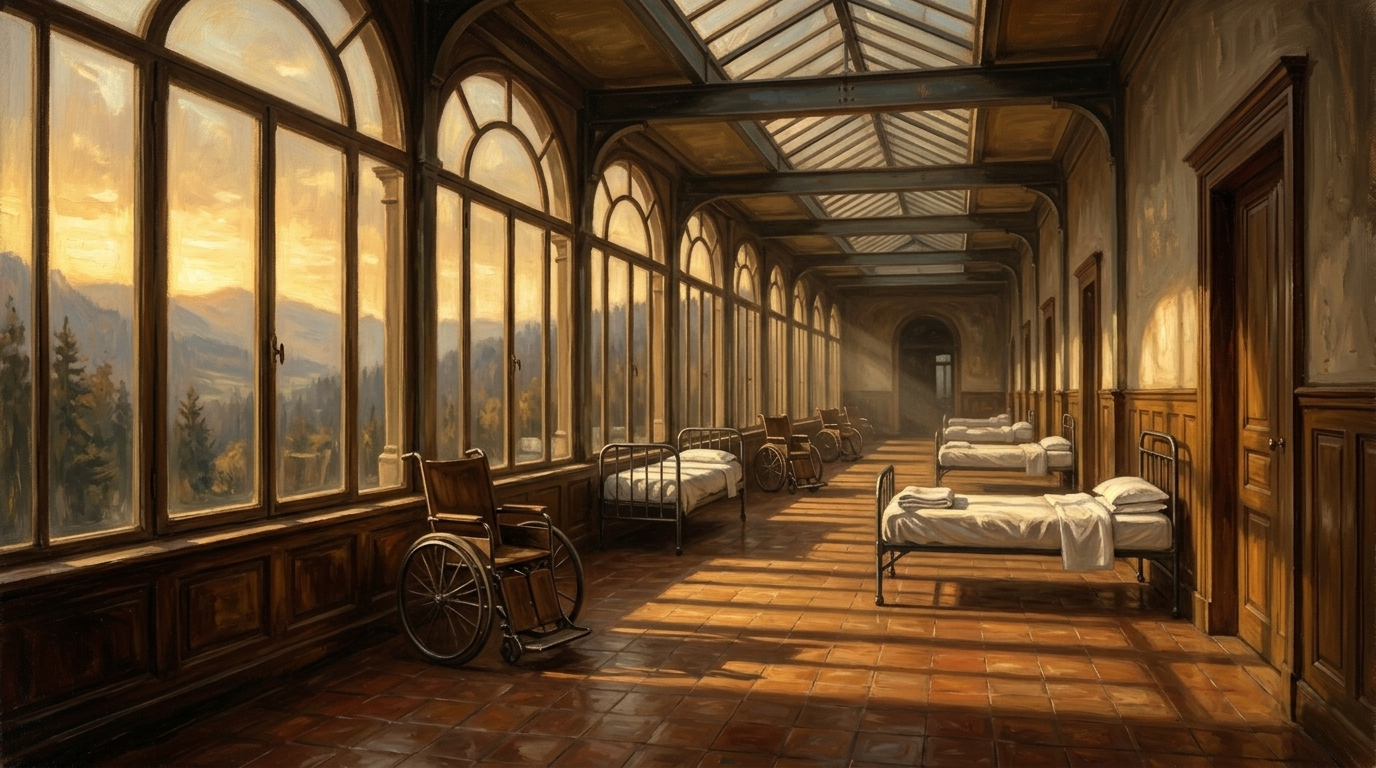
Before encephalitis lethargica, Europe's neurological wards were designed for short-term crisis care or long-term custodial care. Nobody had planned for thousands of patients who were neither insane nor dying—awake and aware, yet unable to move and requiring round-the-clock physical care for decades.
In response, the architecture of care changed.
In Vienna, Berlin, and London, new hospital wings were built specifically for chronic encephalitis cases. They had wide, glassy corridors facing south so that paralyzed patients could be wheeled into the sunlight. The ceilings were higher than standard, as one 1926 architectural brief explained, "to let the mind feel less imprisoned by the body." Observation windows were positioned at nurse height — not for security, but because patients who could not move their heads needed to be seen.
In 1928, a sanatorium in Lower Austria installed an experimental ventilation system that isolated the air in each room separately. This quarantine design predated modern biosafety protocols by seven decades.
These buildings still exist. Some have been repurposed. Others stand empty, their wide windows darkened.
The pathogen has vanished. Its shadow is cast in brick and glass—a material response to a disease that left no other evidence of its existence.
I described a similar architectural ghost in my examination of the Antonine Plague—epidemics reshape space long after they end.
The Pathologists of 1924 Sealed Their Jars. We Seal Ours in Biobanks. The Question Hasn't Changed.
We are currently building biobanks.
These massive refrigerated warehouses hold millions of tissue samples that are cataloged by barcode and monitored by satellite-linked sensors. The UK Biobank alone stores 15 million specimens. The European Virus Archive distributes viral material under the strictest protocols ever devised.
The assumption is that these banks will preserve questions we cannot yet ask. That the samples will survive the decades. That wars will not come. That the preservatives will not gradually erase the information they were meant to protect.
Pathologists in 1924 assumed the same thing. They sealed their jars, labeled them carefully, and believed they were creating a permanent scientific record.
They were wrong, not out of carelessness, but due to the limitations of their imagination. They could not predict what future science would require. They could not have known that formalin destroys RNA or that a world war would scatter their archives. They could not have anticipated that the very definition of "virus" would transform so completely that their preserved material would become meaningless at the molecular level.
We do not know what the scientists of 2126 will need from our samples. We don't know what techniques will exist or which preservation chemicals will turn out to have slowly erased the evidence we thought we had secured.
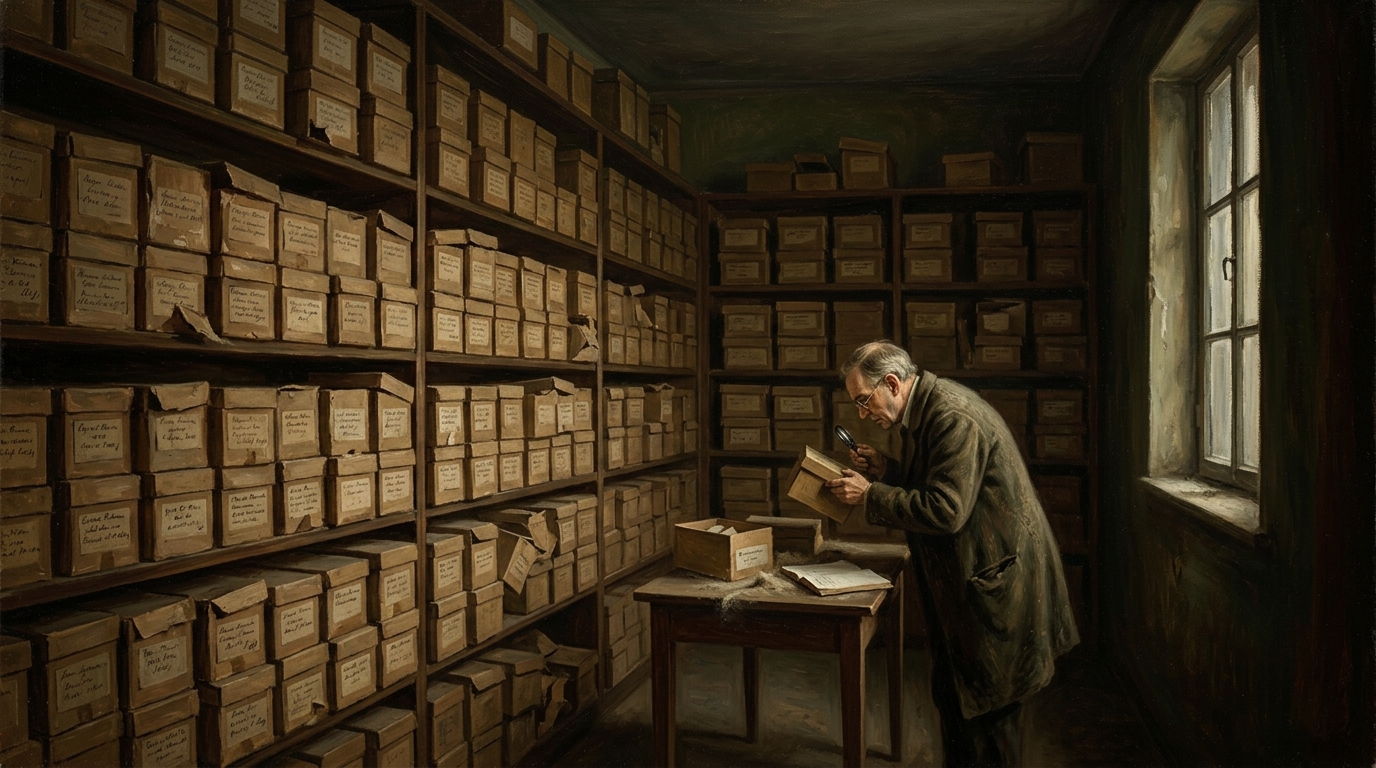
The pathologists of 1924 left us with jars of silence.
What will our biobanks leave for the scientists of 2126?
The 2001 study that discovered enterovirus fragments was eventually removed from active debate, not because it was disproven, but because the fragments could not be distinguished from contamination.
The 2003 CDC result stands as the definitive answer to a question that the 1917 science could not have asked. However, whether the answer is "no pathogen" or "no evidence" are not the same thing.
A century of molecular archaeology has not yet determined which it is.
If this investigation resonated with you, similar examinations of medicine's unresolved mysteries are waiting:
— Encephalitis Lethargica: The 1917 Sleeping Sickness That Trapped Millions Inside Their Own Bodies
— The Antonine Plague That Destroyed Rome — And We Have Been Calling It the Wrong Thing
Follow the channel for more: Chronicle and Void
About the Creator
Chronicle and Void
Every collapse has a cover story. Every war has a cause that didn't make it into the history books. History is not an accurate record of what happened. It's a record of what they allowed to survive.
Enjoyed the story? Support the Creator.
Subscribe for free to receive all their stories in your feed.
Comments
There are no comments for this story
Be the first to respond and start the conversation.