
Encephalitis Lethargica: The 1917 Sleeping Sickness That Trapped Millions Inside Their Own Bodies
From 1917 to 1928, encephalitis lethargica paralyzed half a million people. Their bodies stopped moving. Their minds did not. The experience has never been fully recounted.
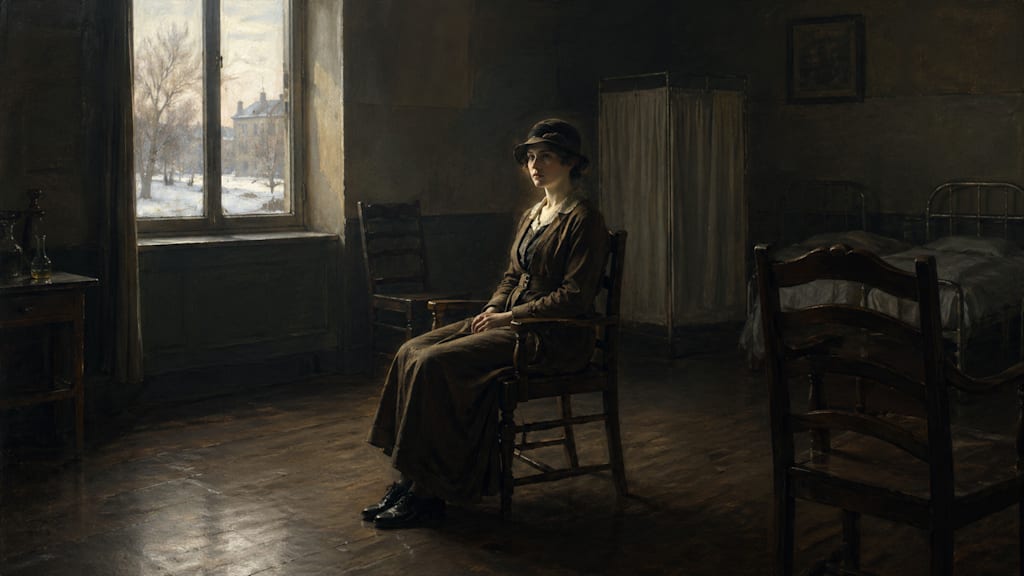
In 1919, a young woman sat down in a chair in Vienna.
She did not get up for eleven years.
Her family spoke to her. She heard every word. She understood every conversation around her, every decision made about her care, and every quiet discussion about whether she would ever recover. But she could not respond. She could not move. Her mind was telling her body to move, but it would not obey.
She was one of approximately five million people worldwide who contracted encephalitis lethargica between 1917 and 1928. She was one of the survivors.
The part of this story that most accounts leave out is what survival looked like.
The Encephalitis Lethargica Epidemic Began With a Headache. Then the Lights Went Out.
The first cases appeared in Vienna in the winter of 1916. Neurologist Constantin von Economo observed something unusual: patients presenting with a fever, sore throat, and headache — all fairly common symptoms — who then began to sleep excessively.
Not normally. Not restfully.
They slept for days. Then weeks. If you shook them awake, they could answer questions, recognize faces, and hold coherent conversations. The moment you stopped stimulating them, however, they returned immediately to sleep.
Some never woke up again.
In April 1917, Von Economo published his findings, naming the condition encephalitis lethargica—inflammation of the brain that makes you tired. The name was clinical and precise. However, it described nothing of what the disease actually felt like.
The 1917 encephalitis lethargica epidemic remains one of the most mysterious mass neurological events in recorded history. Within three years, it had spread across Europe, North America, Canada, and India. It disappeared as abruptly and inexplicably as it had arrived, affecting an estimated five million people and killing approximately 1.5 million of them.
The cause has never been identified.
What the Survivors Could Not Tell Anyone While It Was Happening
Standard medical histories of encephalitis lethargica emphasize the symptoms, progression, neurological mechanisms, and eventual connection to Parkinson's disease in survivors.
However, they cannot tell you everything.
Patients who entered the frozen state, which von Economo called the post-encephalitic condition, were not unconscious. They were not sleeping. They were fully aware. They were fully, completely, and continuously aware of everything happening around them, yet they were trapped in bodies that had simply stopped responding to instructions.
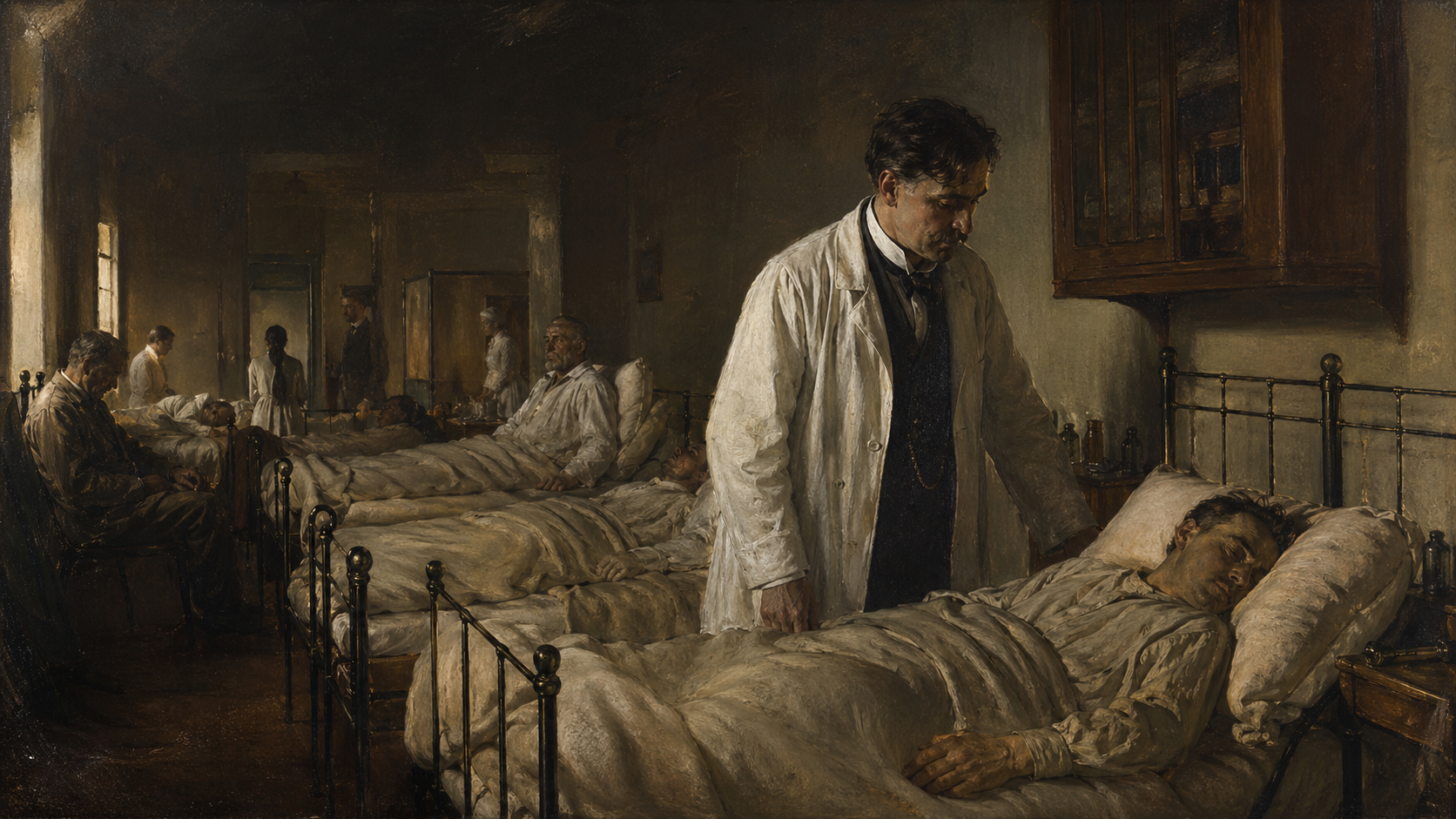
Decades later, in the 1960s, neurologist Oliver Sacks treated a group of these long-term survivors in a New York hospital and documented their accounts of the experience. Some had been frozen for forty years. They described the sensation of being buried alive in their own nervous systems—present, observant, thinking, and feeling but unable to make any of it visible to the people around them.
One patient told Sacks that she had spent years composing letters in her head that she could never send. Another described watching his reflection age year by year in a mirror across the room without being able to turn away.
They were conscious. The disease had simply removed the connection between intention and action.
The Part That Should Disturb You Most
The standard explanation of how encephalitis lethargica affects the brain emphasizes damage to the basal ganglia, which coordinate movement and motivation. The disease disrupted signaling between the conscious mind and the motor system.
However, this explanation cannot account for everything.
If the patients were conscious—and they were, as Sacks confirmed in 1969 when he administered L-DOPA and many of the patients suddenly awoke after decades—then what was happening inside their minds during all those years?
They were thinking. They experienced time passing. They were aware that the world continued around them without their participation.
The question that no neurologist has ever been able to fully answer is not what encephalitis lethargica did to the brain.
Rather, it is what it felt like to be inside a brain experiencing it.
One patient, awakened by L-DOPA after thirty-two years of frozen silence, was asked about her experience.
She said she hadn't known time was passing.
She said it felt as though she had simply blinked.
Encephalitis Lethargica Disappeared. That Is Also Unexplained.
Around 1928, new cases of encephalitis lethargica stopped appearing.
No treatment had been developed yet. The cause had not been identified. No vaccine had been administered. The epidemic simply ended, leaving behind its frozen survivors and unanswered questions. It then vanished from the medical literature.
Since then, sporadic cases have been reported — a handful per decade, scattered across different countries. The last survivor of the original epidemic died in the United Kingdom in 2002. She had been frozen since 1926.
The disease that trapped millions of people inside their own bodies appeared suddenly, killed or immobilized a significant proportion of those it affected, and then disappeared without explanation.
Its cause remains unknown.
Its mechanism of action remains unclear.
Somewhere in the medical literature are accounts of patients awakening after decades of silence, opening their eyes, looking around the room, and asking what year it was.
When told, they were quiet for a long time.
If you woke up today to find that thirty years had passed while you sat in a chair—and that you had been aware the entire time—what would be the first thing you would want to know?
If this case disturbed you, similar investigations are waiting:
— The Man on the Beach Had No Name, No Past, and One Impossible Clue
About the Creator
Chronicle and Void
Every collapse has a cover story. Every war has a cause that didn't make it into the history books. History is not an accurate record of what happened. It's a record of what they allowed to survive.
Enjoyed the story? Support the Creator.
Subscribe for free to receive all their stories in your feed.
Comments
There are no comments for this story
Be the first to respond and start the conversation.