
A Monumental Maya Calendar: Startling Discoveries at El Castillo at Chichén Itzá
Observing the Full Solar Year, Solstices, and Zeniths

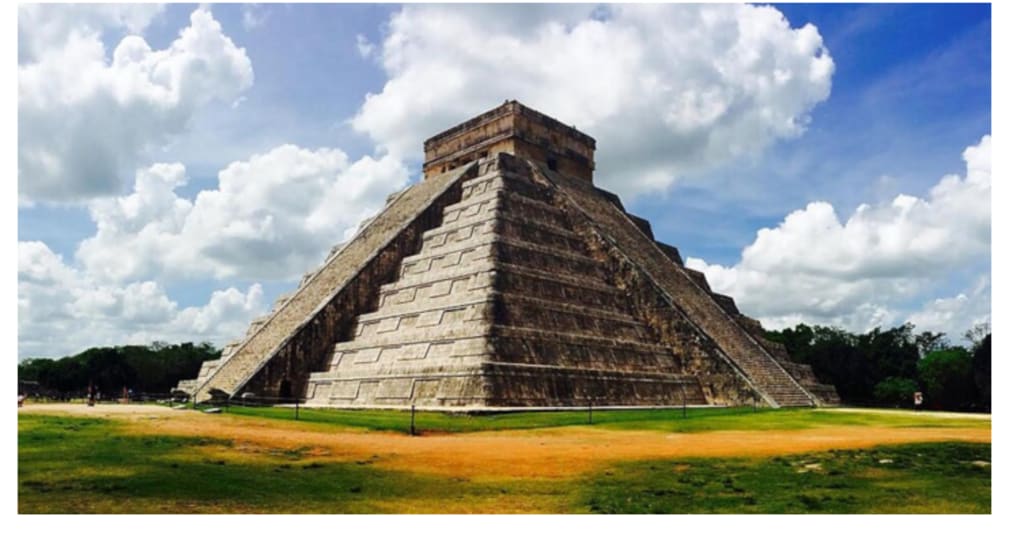
One of the most renowned architectural marvels of antiquity has been illuminated by a recent study. The renowned "descent of Kukulcán" light phenomenon at El Castillo, the great pyramid at Chichén Itzá, is not limited to the equinoxes as was previously thought, but rather follows a precise, year-round pattern of solar illumination that encodes the entire Maya calendar within its very stones, as four archaeoastronomers from prestigious Mexican research institutions have shown.
According to the research published in Arqueologia Mexicana, the pyramid was intended to serve as a working astronomical instrument that could commemorate each of the solar year's significant celestial events.
The Serpent of Light's Mechanisms
El Castillo, sometimes called the Temple of Kukulcán, is a 30-meter (98-foot) tall pyramid with nine tiered bodies atop a temple sanctuary. Its four sides, each measuring 55.5 meters (182 feet), include balustraded stairways on either side.
As the sun descends toward the western horizon, it casts shadows from the pyramid's corners across the northwest ramp, forming a sequence of triangular patches of light that together trace the undulating body of a serpent — the hierophany known as the "descent of Kukulcán."
Orlando Casares Contreras of the Centro INAH Yucatán, Arturo Montero García of the Universidad del Tepeyac, Jesús Galindo Trejo of the UNAM's Instituto de Investigaciones Estéticas, and David Wood Cano of the Seminario de Arqueoastronomía ENAH-UNAM are the authors of the study.
They claim that the process starts as early as February 12, when the first faint trace of light appears on the upper portion of the ramp. The triangles are still unfinished and barely last a few minutes. By March 15, seven triangles of light are projected onto the railing and remain visible until dusk. By March 4, five triangles are visible in the late afternoon.
The real astronomical equinox, which occurs five days after the pattern first forms and five days before the eighth triangle appears on March 26, falls exactly in the center of this seven-triangle window, according to the researchers.
The team's conclusion, which challenges some academics who have questioned whether Mesoamerican observers ever formally identified the equinox, is that the seven-triangle display may have been a useful tool for Maya priest-astronomers to identify the equinox with remarkable accuracy.
Observing the Full Solar Year, Solstices, and Zeniths
The equinox is not the end of the celestial show. All nine triangles, one for each of the pyramid's nine terraced bodies, are completed by April 9. Over the next few weeks, the triangles progressively get wider until May 24, the day of Chichén Itzá's first solar zenith passage, when the whole balustrade is illuminated. The second zenith crossing on July 19 marks the end of this entire illumination, which continues through the summer solstice on June 21.
The nine triangles start to redefine themselves after the second zenith, returning to their full form by September 2. However, as the autumnal equinox draws near, the process reverses. The ramp is under darkness for precisely 52 days prior to the winter solstice and another 52 days following it, until the cycle resumes on February 12. The final fleeting bursts of light are seen around October 29.
In this context, the importance of the number 52 is not accidental. One of the most revered cycles in Mesoamerican timekeeping was the 52-year Calendar Round, following which the Maya 365-day solar calendar (the Haab') and the 260-day ceremonial calendar (the Tzolk'in) realigned.
This basic unit seems to be encoded directly into the architecture of the pyramid by the shadow-free interval of 52 days on either side of the winter solstice. Thus, El Castillo's embedded archaeoastronomy functions concurrently on several calendrical levels, connecting the sun's daily motion to the most profound cycles of Maya holy time.
A Calendrical Architecture Masterpiece
The study's examination of significant numerical intervals reveals the mathematical beauty of El Castillo's design. There are 63 days between the solar zenith passes and the temporal equinoxes, and 28 days between the solstice and the temporal equinox.
These two intervals add up to 91 days, which is the number of steps on each of the pyramid's four stairways. When the number is multiplied by four and the temple platform is added as the last step, the total comes to 365, which is the number of days in a solar year.
The relationship 63 = 7 × 9 and 91 = 7 × 13 reveals a system of remarkable internal consistency between the numbers 7 (the triangles that mark the equinox), 9 (the terraced body of the pyramid), and 13 (a sacred Maya number).
The scholars come to the conclusion that El Castillo functioned as the axis mundi of the Maya universe, linking the underworld (represented by the number 9) and the celestial realm (represented by the number 13) via the earth's surface, where the snake of light descends to fertilise the land.
In addition to offering a way to locate the equinox, Maya priest-observers' tracking of this illumination pattern throughout the year would have served as a trustworthy guide to the agricultural and ceremonial calendar that organised Maya civilisation throughout
About the Creator
Enjoyed the story? Support the Creator.
Subscribe for free to receive all their stories in your feed.
Comments
There are no comments for this story
Be the first to respond and start the conversation.