Analysis
The Chemist’s War: When Prohibition Turned Poisonous
There are chapters of American history that feel almost impossible to explain to modern audiences, not because they are obscure, nor because records are missing, but because the decisions made seem so wildly disconnected from common sense that they sound less like history and more like the plot of a dark political thriller. The poisoned alcohol crisis of Prohibition in the United States is one of those stories.
By The Iron Lighthouse5 months ago in History
China's EVIL Plan To CONTROL The World
A mega project in which more than 150 countries participated. A project that promised new airports, motorways, and seaports. Countries were shown dreams of becoming the next Dubai or Singapore. But today, many of those same projects remain unfinished, while the dreams behind them have collapsed. Some countries are drowning in debt, while others are left with abandoned infrastructure and economic ruin.
By Imran Ali Shah5 months ago in History
Chains of the Crown
The year was 1857. Across the vast lands of the Indian subcontinent, fear and anger spread like wildfire. Villages whispered stories of injustice, heavy taxes, stolen harvests, and soldiers punished for speaking against the rulers from Britain. The British Empire had tightened its grip over the land, controlling kingdoms, trade, and even the lives of ordinary people.
By shahid khan5 months ago in History
Roman Concrete: The 2023 MIT Discovery That Rewrote 2,000 Years of Engineering
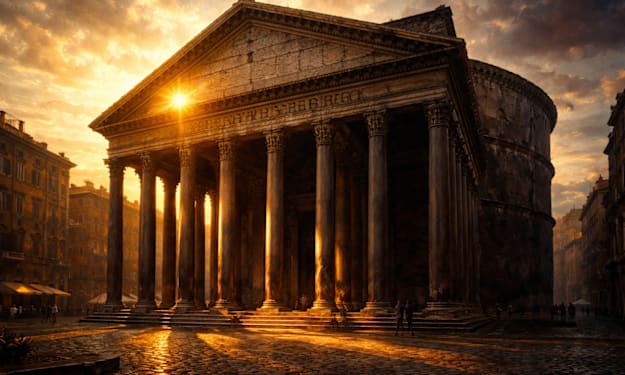
January 6, 2023: MIT, Cambridge, Massachusetts. Associate Professor of Civil Engineering Admir Masic is examining a fragment of Roman concrete under a scanning electron microscope. The sample is from a wall near Privernum in central Italy. It is approximately 1,900 years old.
By Chronicle and Void5 months ago in History
Viking Silver Treasure Discovered on a Farm in Norway
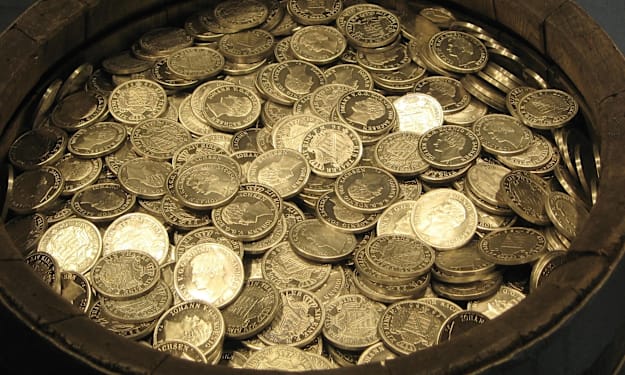
The discovery of Viking silver hidden beneath a Norwegian farm offers an extraordinary glimpse into the dramatic world of the Viking Age. What first appeared to be nothing more than twisted scraps of metal buried beneath old floorboards soon revealed itself as a remarkable treasure hidden for more than 1,100 years. Deep within the rugged mountain landscapes of Norway, archaeologists uncovered four heavy silver bracelets dating back to the 9th century, a time when Viking society dominated large parts of northern Europe through trade, exploration, warfare, and seafaring power. The discovery immediately attracted attention because Viking treasures are rarely found untouched in the exact place where they were originally hidden. In most cases, centuries of farming, erosion, and human activity disturb ancient objects and destroy their archaeological context. In this case, however, the silver remained exactly where its owners had buried it during the Viking Age, creating one of the most valuable archaeological discoveries in recent Norwegian history.
By History Seeker5 months ago in History
Artificial Island (5000 years old) in Scotland. Older than Stonehenge?
Beneath the quiet waters of a remote Scottish loch, archaeologists have uncovered evidence of a remarkable prehistoric engineering achievement hidden for thousands of years. What appears today to be nothing more than a small rocky island in Loch Bhorgastail on the Isle of Lewis has now been revealed as a sophisticated artificial structure created by Neolithic people more than 5,000 years ago. The discovery is astonishing not only because of its age, but because the island predates one of the world’s most famous prehistoric monuments — Stonehenge.
By History Seeker5 months ago in History
King Tutankhamun And His Legendary Tomb. What Are They Hiding?
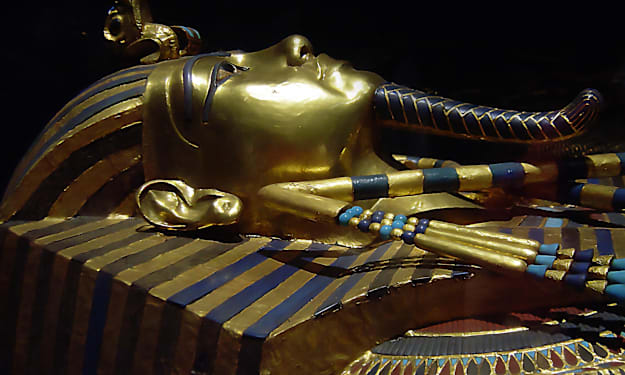
Few archaeological discoveries in human history have captured global imagination as profoundly as the discovery of the tomb of Tutankhamun, the young Egyptian pharaoh better known as King Tut. Hidden beneath the sands of Egypt for more than three thousand years, the tomb remained almost untouched by time, preserving an astonishing collection of treasures that offered the modern world an extraordinary glimpse into the splendor, mystery, and spirituality of ancient Egypt.
By History Seeker5 months ago in History
Archeologists Discovered the Earliest Dental Bridge in Aberdeen
Archaeologists in Scotland have uncovered one of the most fascinating discoveries in the history of medieval medicine and dentistry: the earliest known example of restorative dental treatment ever identified in Scotland. The remarkable find was made during the examination of skeletal remains from a medieval burial in Aberdeen, where researchers discovered a middle-aged man buried with a carefully crafted gold dental bridge attached to his lower front teeth.
By History Seeker5 months ago in History
72 Days of Survival Against Extreme Conditions
Exactly 52 years ago, at this point in the world’s longest mountain range, a plane crashed straight into a mountain. The shocking part was that right after the crash, the aircraft seemed to disappear completely. This was the 8,900-kilometer-long Andes Mountains in South America, where there is nothing but 15,000-foot-high peaks, unbearable cold, and complete silence.
By Imran Ali Shah5 months ago in History
Did You Know That The Maya Civilization Used Hallucinogenic Substances?
The Maya civilization, which flourished in Mesoamerica from roughly 2000 BCE to 1500 CE, developed one of the most sophisticated cultural and religious systems of the ancient world. Their society was deeply rooted in a worldview where nature, gods, ancestors, and humans were all interconnected. The natural environment was not separate from the spiritual realm but rather an extension of it. Mountains, caves, plants, animals, the sky, and even altered states of consciousness were considered pathways to divine communication.
By History Seeker5 months ago in History
The Benz Patent-Motorwagen: The Invention She Funded, Tested, and Improved — and Could Not Own
She pushed the machine out of the workshop before dawn so that the engine noise would not wake him. August 5, 1888. Mannheim, Germany. Her husband, Carl, was still asleep. Bertha Benz and her two teenage sons, Eugen (fifteen) and Richard (thirteen), rolled Patent-Motorwagen Number 3 down the street by hand. They passed the sleeping houses and the horses that shied away from the strange smell. They continued until they were far enough away to start the engine without being heard. She had left a note on the table. She had not asked the police for permission, which was legally required. She hadn't told Carl, either. She was going to drive 106 kilometers to visit her mother in Pforzheim.
By Chronicle and Void5 months ago in History