
The Benz Patent-Motorwagen: The Invention She Funded, Tested, and Improved — and Could Not Own
Bertha Benz financed the automobile with her dowry, tested it in secret, and changed the course of the petroleum industry. However, German law ensured her name appeared on nothing. Not one patent. Not one share certificate.

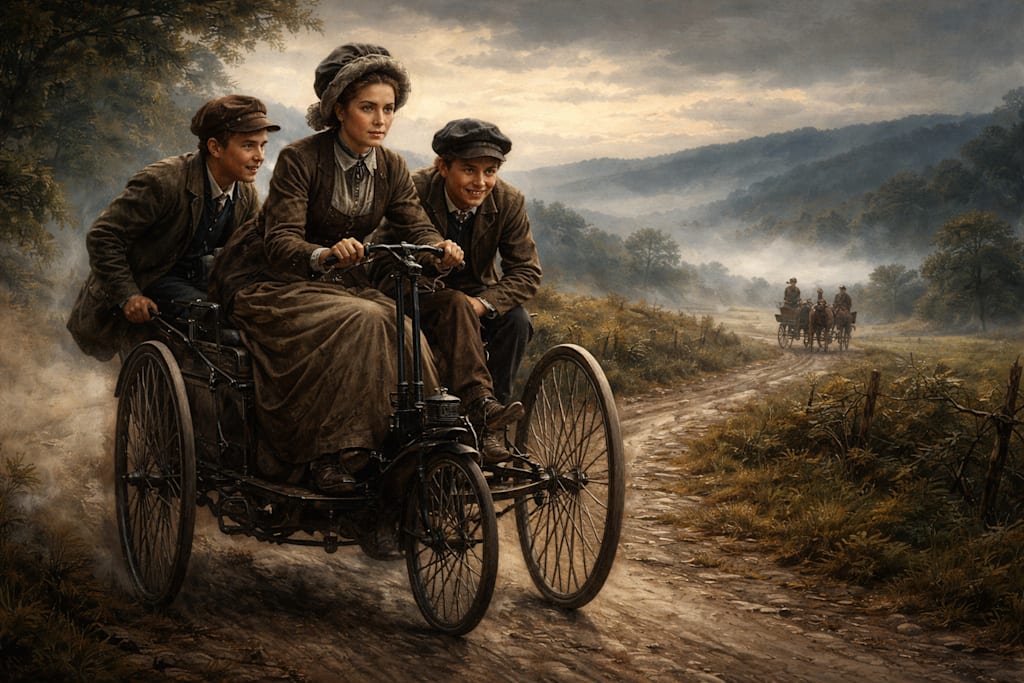
She pushed the machine out of the workshop before dawn so that the engine noise would not wake him.
August 5, 1888. Mannheim, Germany. Her husband, Carl, was still asleep. Bertha Benz and her two teenage sons, Eugen (fifteen) and Richard (thirteen), rolled Patent-Motorwagen Number 3 down the street by hand. They passed the sleeping houses and the horses that shied away from the strange smell. They continued until they were far enough away to start the engine without being heard. She had left a note on the table. She had not asked the police for permission, which was legally required. She hadn't told Carl, either. She was going to drive 106 kilometers to visit her mother in Pforzheim.
What the official version of the story has always called a "spontaneous adventure" was more calculated than that. Bertha Benz had waited sixteen years for this moment.
The Investor Who Was Not There
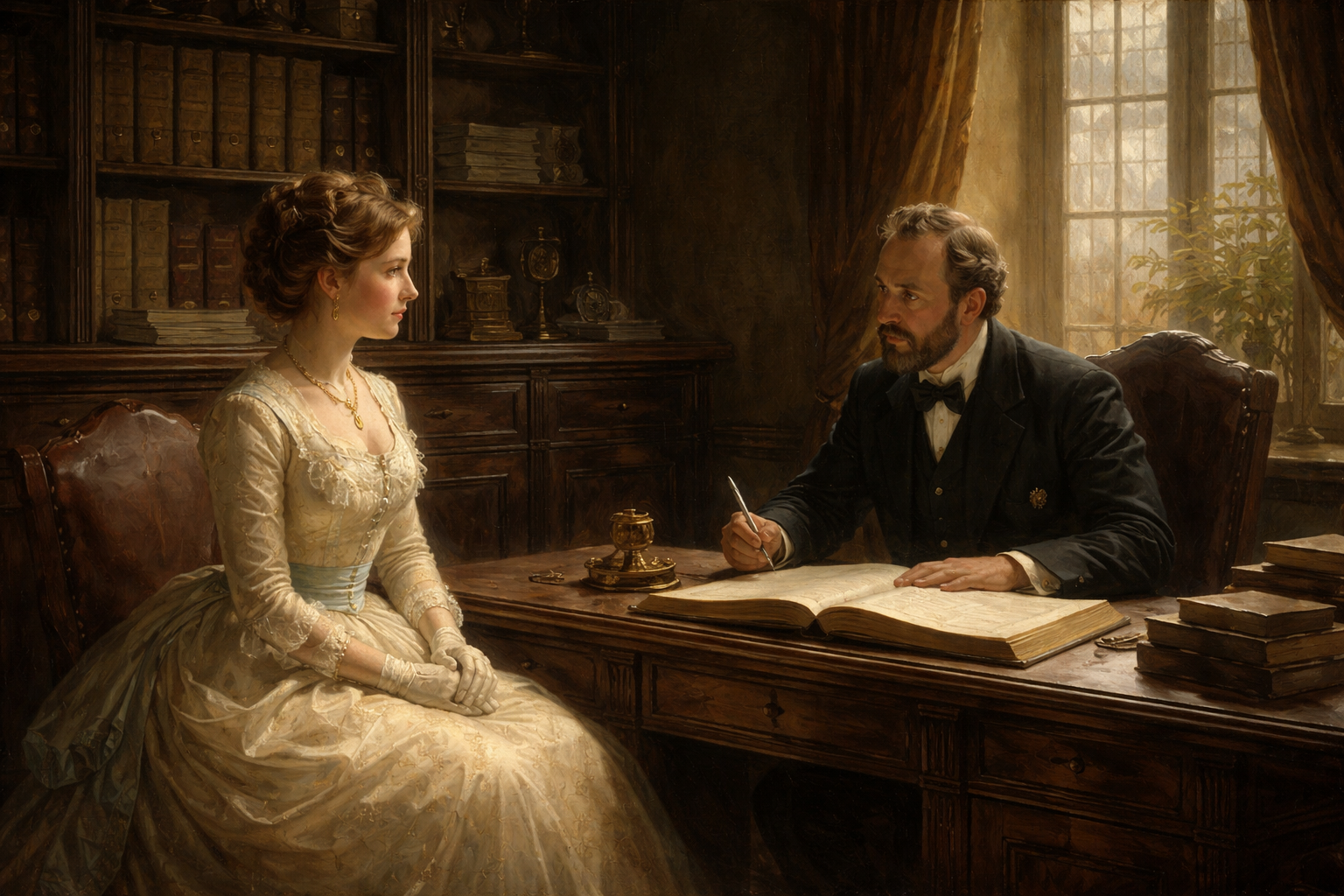
The automobile existed because of Bertha Ringer's money. This is not a metaphor. It is a ledger entry.
In 1871, Karl Benz and a partner named August Ritter founded a machine tool shop in Mannheim. However, the partnership collapsed within months. Ritter was unreliable, the tools were seized by bailiffs, and the company was on the brink of dissolution. Bertha Ringer, who was not yet married and still legally capable of taking independent financial action, used her dowry to buy Ritter's share and save the company.
She was twenty-two years old. She was not yet his wife. She was his investor.
On July 20, 1872, Bertha Ringer became Bertha Benz. The moment she signed the marriage certificate, she ceased to exist as a legal financial entity under German law. However, her money remained in the company. Her labor—she wound ignition coils by hand, helped design, and tested—remained in the company. However, her name could no longer appear on anything of value. Not contracts. Not shares. Not patents.
In January 1886, Karl Benz filed Reichspatent Nr. 37435, the birth certificate of the automobile. The patent had only one name on it. She was not allowed to be the other name.
The Creditor's Gamble
By the summer of 1888, Bertha Benz had spent sixteen years financing a failing business. Bailiffs had already emptied the workshop once — in 1875, when she was pregnant with their third child. They rebuilt it. Karl had produced three working prototypes of a machine that no one wanted to buy.
There is an under-recognized pattern in engineering history: the brilliant inventor who cannot see his own creation from the outside. Karl Benz knew his machine worked. He drove it around the block and returned to the starting point, declaring it satisfactory. According to contemporary accounts, he was chronically incapable of marketing anything.
Bertha understood something her husband did not: A vehicle that only traveled in circles within sight of its workshop, in front of engineers who already believed in it, would never become a commercial product. It needed to be seen failing and recovering over a long distance by strangers who had never seen anything like it.
She did not ask for permission to conduct this field test. She knew the answer she would receive.
What the Pharmacist Sold Her
The engine ran on ligroin, a petroleum distillate that was sold in apothecary shops as a stain remover. Waschbenzin. Floor cleaner.
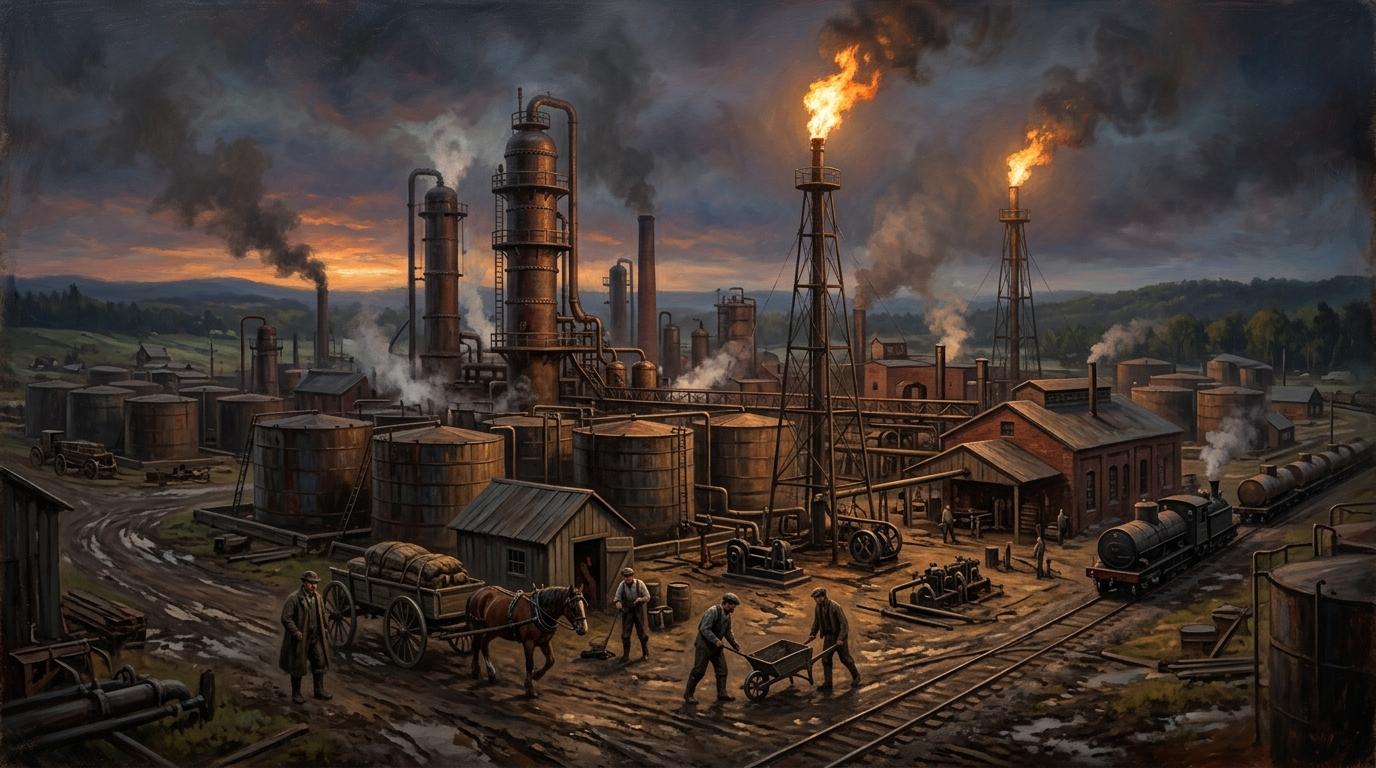
This was not a quirk of the story. It was the state of the petroleum industry in 1888. Since Edwin Drake drilled the first commercial oil well in Pennsylvania in 1859, refineries had optimized for one product: kerosene for lamps. Everything else that came out of the distillation tower was problematic. The lighter fractions—gasoline, naphtha, and ligroin—were too volatile for lamps and too explosive for storage. Refineries dumped thousands of barrels of gasoline directly into rivers.
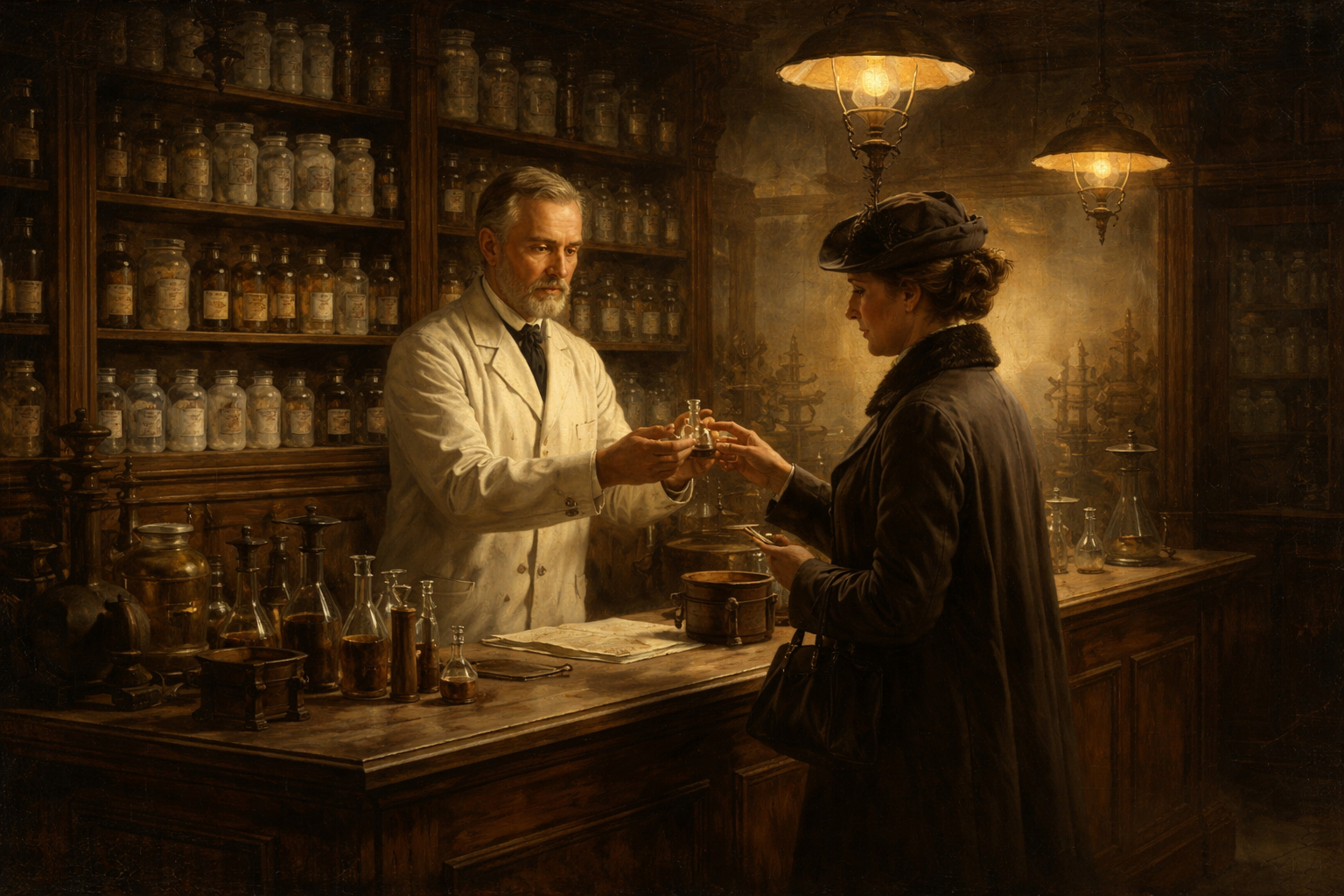
The liquid that Bertha Benz purchased from pharmacist Willi Ockel in Wiesloch that August morning was considered garbage by the petroleum industry. Ockel sold it to her in whatever containers he had available, a few liters at a time, assuming she needed it for cleaning.
She poured it into an engine.
She did this more than once that day. The Motorwagen's carburetor held 4.5 liters. At roughly 10 liters per 100 kilometers, she needed to refuel before reaching the halfway point. Without ceremony, the Stadt-Apotheke in Wiesloch became the world's first filling station.
Nobody planned this. Not Bertha. Not Ockel. And certainly not the petroleum industry, which, at that time, had no idea that a market for its waste product was being created by a woman in a three-wheeled vehicle on a dusty German road.
The Engineering Report She Filed in Her Head
The journey took nearly thirteen hours. During that time, Bertha Benz repaired the vehicle at least four times using materials she found along the way.
She cleared a blocked fuel pipe with a hat pin. A failing ignition wire was insulated with her garter. A broken drive chain was repaired by a blacksmith in Bruchsal who opened the first automobile repair shop in history. Worn-through brake pads on downhill sections were repaired by a shoemaker in Bauschlott who nailed leather strips to the brake blocks. The first brake lining!
She telegraphed Karl from Pforzheim. Arrived safely. Trip successful.
What she did not telegraph, and what she brought back with her, was the engineering report. The vehicle needed a third gear for hills. The fuel tank needed to be larger. The carburetor needed to be modified for consistent vaporization. The braking system needed leather instead of wood.
Karl Benz implemented all of these improvements. The automobile you are thinking of—with a third gear, leather brake pads, and a fuel tank sized for long distances—exists because of an unauthorized field test conducted by a woman whose name could not appear on the resulting patents.
The Demand That Didn't Exist Before
Standard petroleum histories consistently understate this fact: In 1888, there was no gasoline industry because there was no reason for one to exist.
Demand for kerosene had driven the oil boom. Gasoline was kerosene's unwanted sibling—produced in every refinery but wanted by no one and dumped wherever it was cheapest. In December 1885, the German Federal Council issued a decree trying to incentivize someone to find a use for the overflow. Nobody did.
After Bertha's trip, newspapers across Germany reported that a horseless carriage had traveled from Mannheim to Pforzheim and back. Orders for the Patent-Motorwagen began arriving. Within two years, Benz became one of Germany's largest engine manufacturers. Within fifteen years, automobile production created meaningful demand for the fraction that refineries had been discarding since 1859.
By 1910, gasoline consumption in the United States had surpassed that of kerosene. By 1920, there were nine million gasoline-powered vehicles on American roads. Refineries that had spent three decades discarding their lightest fractions now built cracking towers specifically to produce more of them.
This demand was first created on August 5, 1888, when a woman bought floor cleaner at a pharmacy. She held no patent, share certificate, or royalty arrangement. German law had seen to that sixteen years earlier.
What the Patent Record Shows
Reichspatent Nr. 37435 is preserved at the Deutsches Patent- und Markenamt in Munich. It describes a "Fahrzeug mit Gasmotorenbetrieb," or a vehicle with a gas engine. It is signed by one person.
The improvements made after August 1888, such as the third gear, enhanced braking system, and enlarged fuel capacity, are documented in subsequent patents. These improvements are attributed to the inventor.
The field test that generated these improvements is described in later memoirs as an "adventure." As a marketing stunt. As a "spontaneous journey." It is also described as the charming anecdote about the hat pin and the garter.
In 1944, on her ninety-fifth birthday, the Technical University of Karlsruhe—Karl Benz's alma mater—awarded Bertha Benz the title of honorary senator. The timing was precise; she received the honor two days before her death.
She financed the automobile. She tested it. She created the commercial event that saved the company. In a single 106-kilometer journey, she accidentally invented the demand that transformed a toxic waste product into the most strategically valuable commodity of the following century.
A scenic tourist route in Baden-Württemberg is named after her.
The Parallel That Nobody Draws
In 1903, Marie Curie became the first woman to win a Nobel Prize, which she shared with her husband, Pierre. Initially, only Pierre and Becquerel were nominated. However, Pierre refused to accept the prize unless Bertha's name was included. It was.
There was no one to refuse the prize on Bertha Benz's behalf. No one insisted on including a second name. The automobile industry that eventually emerged became Mercedes-Benz. The name Benz is on every car. It comes from Karl. However, it was paid for with Bertha's money.
The Question the Patent Record Cannot Answer
Consider what German law made invisible in 1872: not a wife, not a helper, and not a muse, but rather a co-founder who had invested her capital before the marriage, which erased her legal standing. She diagnosed the machine's engineering failures in real time on a road where no mechanic could help. She created the event that launched the commercial automobile industry and redirected the global petroleum industry.
The official version calls August 5, 1888, the birthday of the automobile age. On that day, the investor, who had financed the company for sixteen years, finally got to see what her money had built—not from a boardroom but from the driver's seat. She drove sixteen kilometers per hour through towns that had never seen a self-propelled machine. She bought floor cleaner from a pharmacist who had no idea what he was selling.
She drove her investment 106 kilometers and handed the engineering report to the man whose name was on the patent.
Then, she drove it back.
If this investigation resonated with you, consider reading:
— Bert Hall: The Man Who Invented Aerial Espionage — and Did It for the Money
— The Perfect Heist That Broke the King: The Mystery of the Templar Treasure
Follow the channel for more: Chronicle and Void
For announcements: Telegram· Twitter/X
About the Creator
Chronicle and Void
Every collapse has a cover story. Every war has a cause that didn't make it into the history books. History is not an accurate record of what happened. It's a record of what they allowed to survive.
Enjoyed the story? Support the Creator.
Subscribe for free to receive all their stories in your feed.
Comments
There are no comments for this story
Be the first to respond and start the conversation.