
Bert Hall: The Man Who Invented Aerial Espionage — and Did It for the Money
In 1912, a pilot from Kentucky flew to the Balkans with a monoplane and a mechanic. He had a simple proposition: aerial reconnaissance for one hundred dollars a day in gold. His actions changed warfare forever, but he wasn't paid on time.
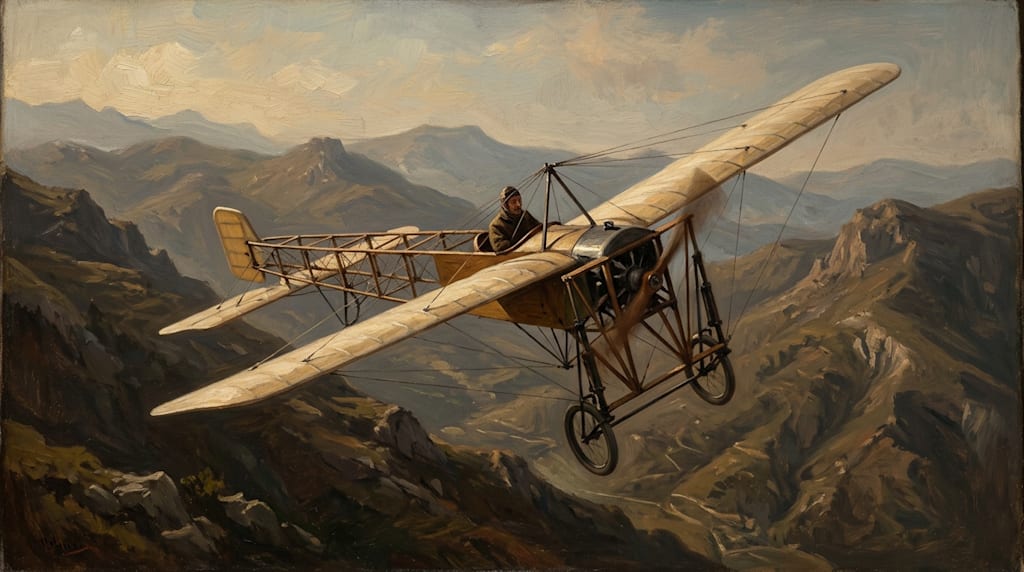
In the spring of 1912, Bert Hall packed up all his belongings, took out a loan, and traveled to Europe.
He wasn't running from anything. He was running toward money. Hall, a Kentucky-born pilot with sharp eyes, a good memory, and an instinct for arriving precisely where conflict was about to begin, had correctly calculated that the Balkan Wars represented an opportunity no professional aviator could afford to ignore.
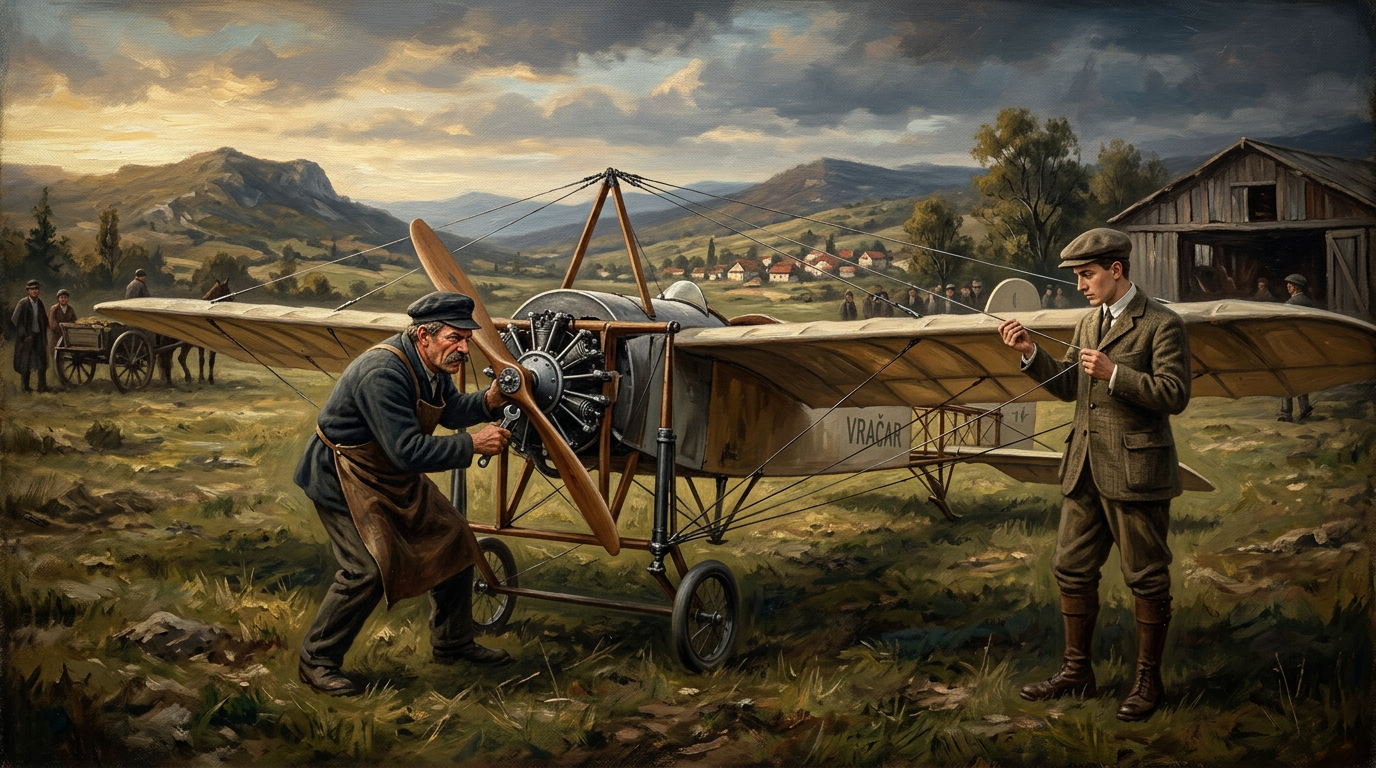
He bought a Blériot monoplane in France, hired a French mechanic named André Piers, and flew to the Ottoman Empire with an offer they could not refuse.
One hundred dollars a day. In gold. For aerial reconnaissance.
Understanding why this mattered — and why it changed everything — requires knowing what the world looked like from 500 feet in 1912.
The First Aerial Spy Mission in History Started as a Business Transaction
The Ottoman military had never seen an aircraft used for warfare before. Neither had anyone else.
Hall's proposal was simple: he would fly over enemy positions, observe troop movements, and report back. The Ottomans would pay. This arrangement had no precedent in military history because the technology itself was unprecedented — the Wright brothers had flown at Kitty Hawk just nine years earlier.
Hall flew the Blériot XI, which had a fifty-horsepower engine, a top speed of sixty-six miles per hour, and a practical ceiling of roughly three thousand feet. By any modern standard, it was a barely controlled glider with an unreliable engine.
However, it was also the most advanced intelligence-gathering platform ever.
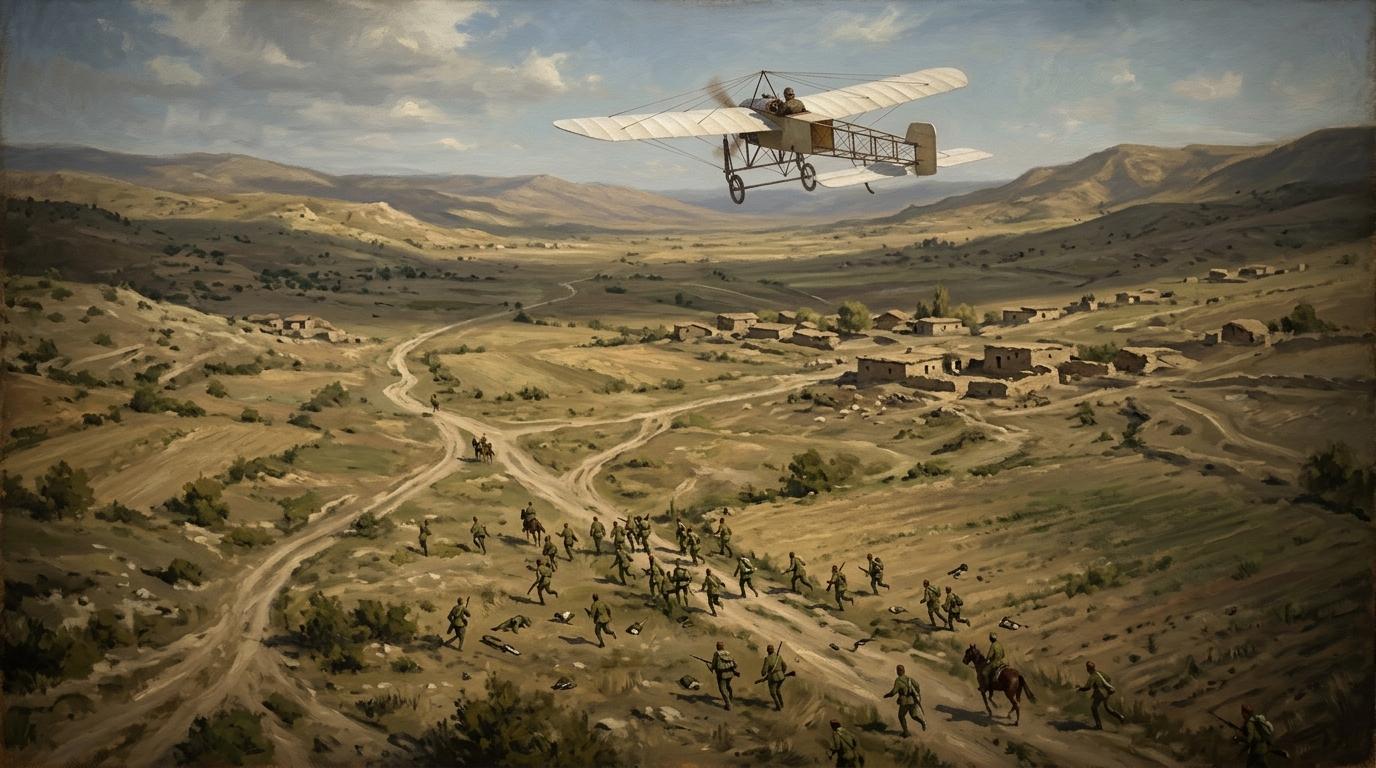
From the air, Hall could see what no ground observer could: the full disposition of enemy forces, supply lines, artillery positions, and troop concentrations. Unaccustomed to being observed from above, Bulgarian, Serbian, and Greek soldiers frequently scattered when they heard the engine overhead, abandoning their weapons and hiding under bridges.
Bert Hall invented aerial reconnaissance as a military tool. He did it because someone was willing to pay for it.
He Switched Sides When the Payments Stopped — and That Was Also a First
Standard histories of military aviation tend to emphasize the technical development of aircraft, the formation of air forces, and the gradual recognition of aviation's strategic value.
Here is what they tend to skip:
The first aerial spy mission in history was carried out by a mercenary who switched employers after his invoices went unpaid.
The Ottomans were slow to pay. First, they were slow; then, they were slower; then, they were not at all. Hall, whose aircraft required constant maintenance and whose mechanic required a salary, could not operate on promises. When it became clear that the gold would not be coming, Hall loaded his equipment, medals, fuel, and André Piers onto the Blériot and flew across the lines to the Bulgarians, who offered him exactly the same terms.
They offered him the same terms.
The Bulgarians then asked for something new: They wanted an agent delivered behind enemy lines. Hall correctly argued that landing an aircraft on an unknown field in hostile territory was something that had never been done before and that getting airborne again afterward was not guaranteed.
They doubled his fee.
He did it anyway.
Hall had just performed the first covert insertion by aircraft in the history of warfare. He did it because someone was willing to pay for it.
The Part the History Books Don't Tell You: He Was Nearly Shot for It
The Bulgarians proved to be as reluctant to pay as the Ottomans had been.
Hall, operating under the same logic that had served him well thus far, decided to fly back to Turkey to collect what he was owed. However, the Bulgarians, operating on a different logic entirely, arrested him before he could leave. The charge was espionage. Under military law, the sentence was death.
Hall spent several days in a barn awaiting execution.
What saved him was André Piers.
The French mechanic had watched Hall's situation deteriorate with the detached practicality of someone who understood how Balkan military bureaucracies functioned. He gathered every coin he had saved during the campaign, identified the correct recipient, and delivered the money.
Hall walked out of the barn hours before the firing squad was scheduled to arrive.
He owed Piers everything. He had no money and no aircraft — the Bulgarians had kept both. The debt would go unpaid for years.
How a Kentucky Mercenary Built the Template for Modern Air Forces
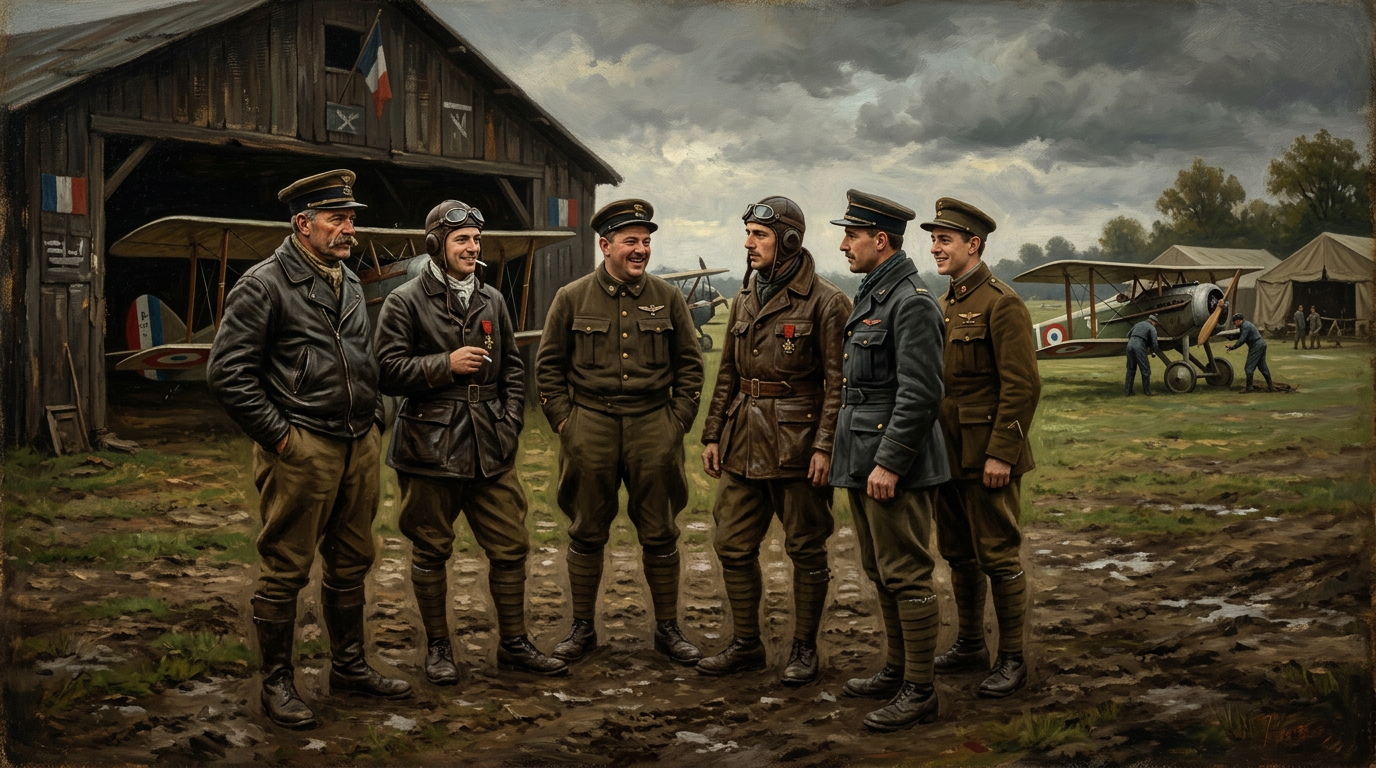
When World War I began in 1914, Hall enlisted in the French Foreign Legion. He eventually joined the Lafayette Escadrille, a famous squadron of American volunteer pilots who flew for France before the United States entered the war.
He was no longer a freelancer. He was a soldier. The implications were significant.
The covert insertion missions he had pioneered in the Balkans were now standard operations. Once a week, sometimes more often, Hall would take off after midnight with an agent aboard. He would cross the German lines in the dark, land on an unmarked field in occupied territory, drop his passenger, take off again, and return before dawn. He flew a fragile biplane through antiaircraft fire and German fighter patrols.
Bert Hall's career as the first aerial spy exemplifies something that official military aviation histories rarely acknowledge: technology did not create doctrine. One underpaid mercenary created the doctrine, and the technology caught up later.
Every covert insertion by aircraft—every special forces operation involving an airborne approach to a target—traces its operational logic back to an incident in the Balkans in 1912. A Bulgarian officer with overdue debts asked an American pilot if he could land behind enemy lines, and Hall said he would think about it for double the rate.
What Survived the War
Only two of the original members of the Lafayette Escadrille survived.
Hall was one of them.
He repaid André Piers gradually over the years with his military salary. Whether the original loan that funded the purchase of the Blériot in Paris was ever repaid is not recorded.
The wars Hall flew in—the Balkan Wars and the First World War—killed approximately twenty-two million people. These wars produced new technologies, doctrines, and categories of warfare that had not existed before.
Most of these doctrines were developed by committees, staff colleges, and military theorists working from established principles.
However, the doctrine of aerial espionage was developed by one man in a barn in Bulgaria who was waiting to be shot and thinking about what he was owed.
One version of military history treats innovation as the product of institutions. Governments invest in research. Armies develop doctrine. Technologies are deployed according to plan.
However, Bert Hall suggests a different version. Some of the most consequential military innovations in history were invented by individuals who needed to solve a specific problem before they were killed.
In this case, the problem was an unpaid invoice.
What does it say about how history is made that the man who invented aerial espionage is remembered, if at all, as a colorful footnote, while the institutions that later systematized his methods built monuments to themselves?
If this investigation interested you, you might also find these compelling:
— Ten Armies Marched Into Russia. Here Is What Happened to Each of Them
— The Antonine Plague That Destroyed Rome — And We Have Been Calling It the Wrong Thing
About the Creator
Chronicle and Void
Every collapse has a cover story. Every war has a cause that didn't make it into the history books. History is not an accurate record of what happened. It's a record of what they allowed to survive.
Enjoyed the story? Support the Creator.
Subscribe for free to receive all their stories in your feed.
Comments
There are no comments for this story
Be the first to respond and start the conversation.