
Ten Armies Marched Into Russia. Here Is What Happened to Each of Them.
From the Teutonic Knights to Nazi Germany, the pattern never changed. The armies came in confidently. They did not leave the same way.

A particular kind of hubris precedes every invasion of Russia.
It is the certainty that this time will be different. This army is supposedly better equipped, led, and prepared than previous ones. The distances are manageable, the winters are exaggerated, and the resistance is overestimated.
History has tested this theory ten times. History has been consistent.
1242: The Teutonic Knights Meet the Ice
The Teutonic Order was one of the most formidable military forces in 13th-century Europe. Its crusading knights wore heavy armor and were battle-hardened and professionally organized.
In the spring of 1242, they rode onto the frozen surface of Lake Peipus to face Alexander Nevsky's forces.
The ice broke under the weight of their armor.
Those who did not drown were captured or killed. The Teutonic advance into Novgorod ended at the bottom of the lake. The border held.
1610: Poland Takes Moscow — and Then Loses Everything
During Russia's Time of Troubles, Poland saw an opportunity. There was a disputed succession, a country in chaos, and a throne that appeared to be available.
In 1610, Polish forces entered Moscow and placed their own candidate on the Russian throne. They occupied the Kremlin itself for two years.
Then, the Russian people organized. A volunteer militia funded by merchants and led by a butcher named Minin and a prince named Pozharsky expelled the Poles in 1612.
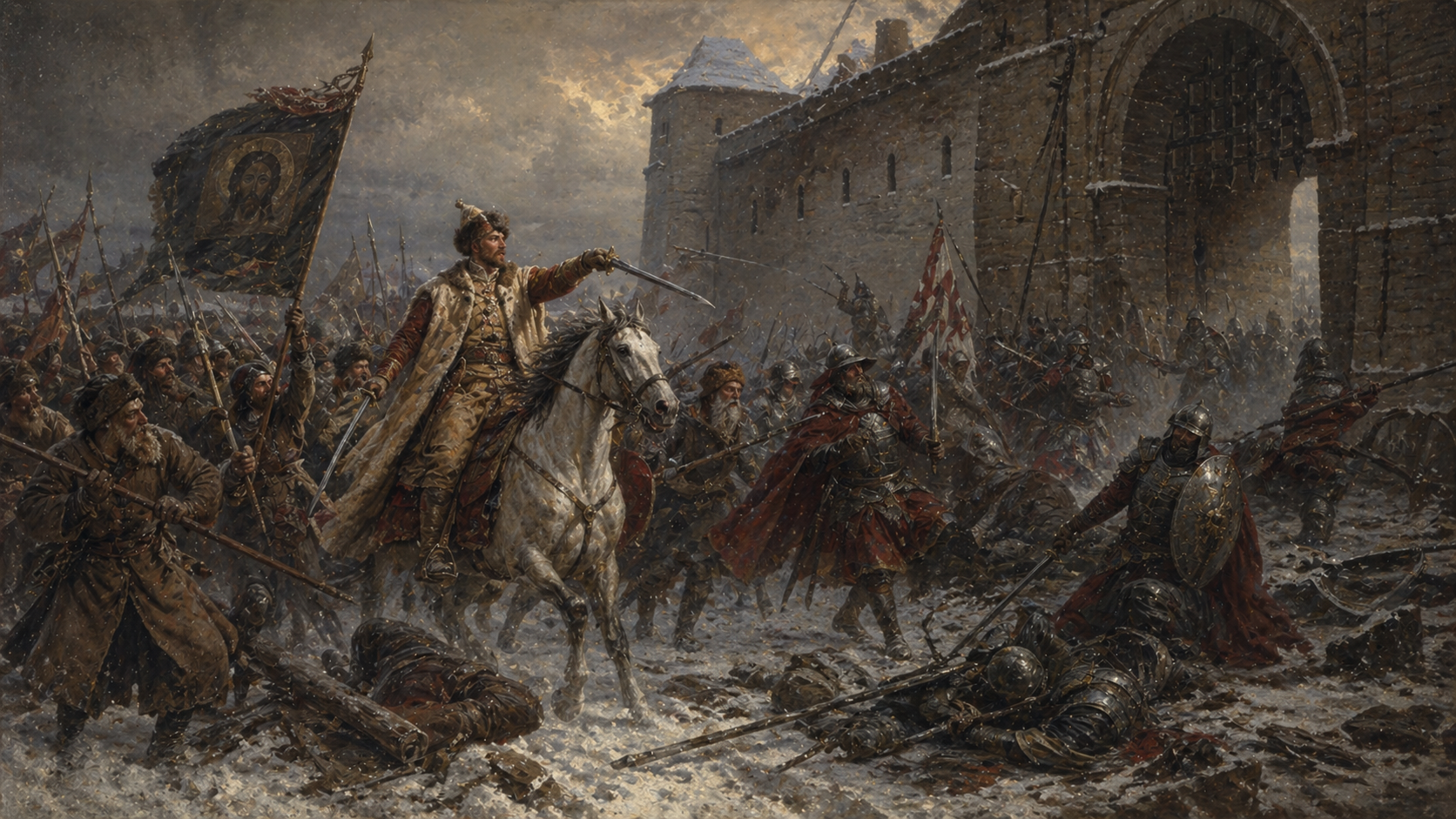
Poland had occupied the Russian capital. It left with nothing. This experience became one of the founding myths of Russian national identity. This event is still celebrated every November 4th.
1709: Sweden's Empire Ends at Poltava
Charles XII of Sweden was considered a military genius. He had never lost a battle. In 1708, he led his army into Russia, convinced that speed and tactical brilliance would compensate for any disadvantage.
This "everything else" included a Russian winter that killed thousands of his men before a single battle was fought, supply lines that collapsed across hundreds of kilometers of hostile territory, and a Russian army that retreated and scorched the earth behind them while waiting for the Swedes to advance.
In June 1709, at Poltava, Peter the Great destroyed what remained of the Swedish force.
Charles XII escaped to Ottoman territory. He never recovered his position. The Swedish Empire effectively ended that day in the Ukrainian steppe.
1812: Napoleon Takes Moscow. Moscow Takes Everything Else.
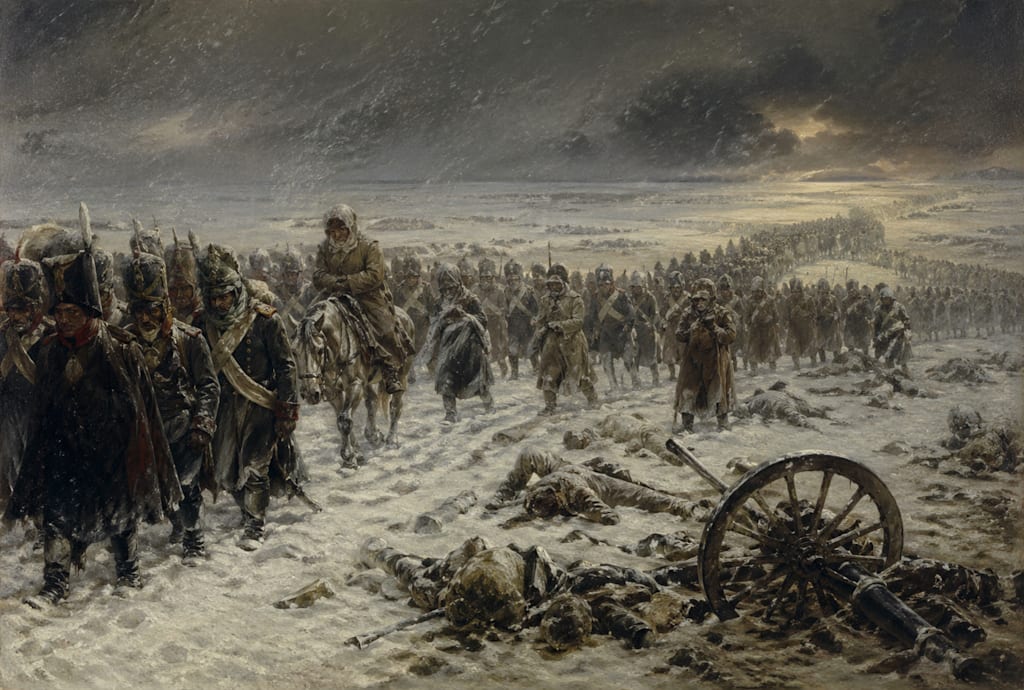
In June 1812, 600,000 men crossed into Russia. It was the largest invasion force Europe had ever assembled.
Napoleon won nearly every battle. He took Smolensk. He engaged in the brutal Battle of Borodino. He entered Moscow in September.
The city was empty and burning. Alexander I refused to negotiate. The French army was left in a ruined city with no supplies or shelter for the winter and no peace agreement in sight.
They began their retreat in October. Of the 600,000 soldiers who entered Russia, fewer than 100,000 returned to fight in any condition. The rest died of cold, starvation, Cossack raids, and disease along the way.
17th–19th Century: The Ottoman Empire Tries Six Times
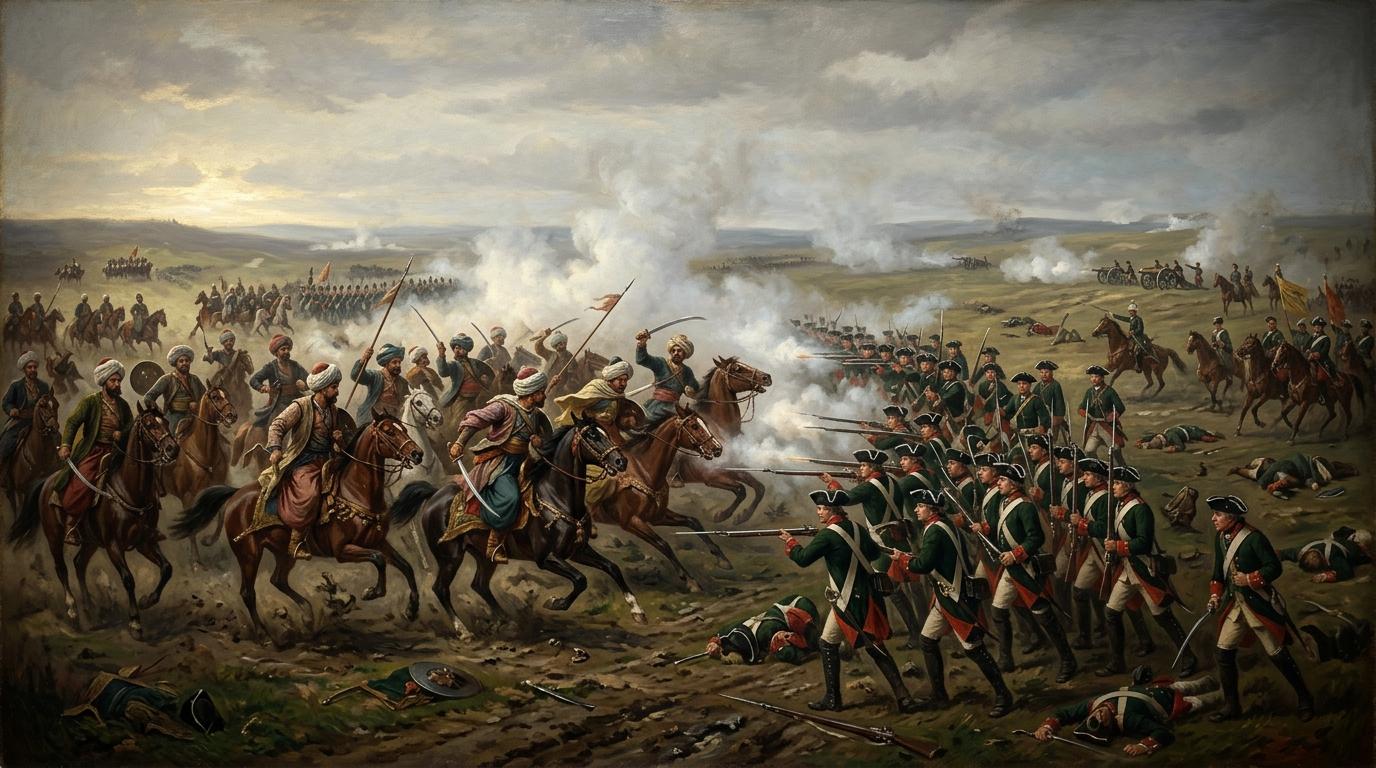
The Ottoman Empire fought Russia in a series of major wars spanning two centuries: 1676, 1710, 1735, 1768, 1806, and 1828.
The pattern was consistent: The Ottomans would advance, engage, and eventually negotiate. Each treaty cost them territory. Crimea went to Russia in 1783. Then the northern Black Sea coast followed. Then it was the Caucasus.
No single war destroyed the Ottoman Empire. However, the cumulative expense of fighting Russia over two centuries was a significant factor in the gradual disintegration of the empire that Europeans dubbed the "Sick Man of Europe."
Six wars. Six treaties. Territory flowed in one direction.
1853: The Crimean War — Russia's One Defeat on This List
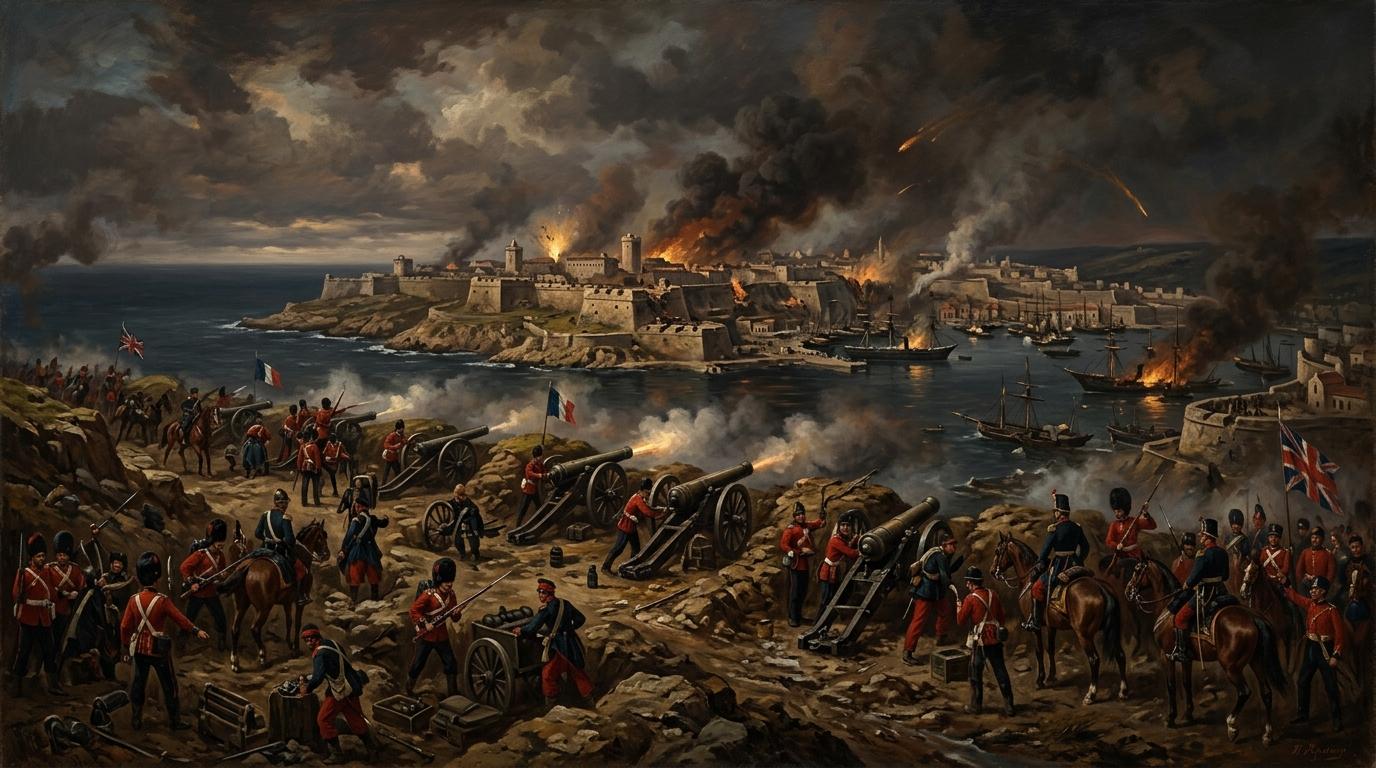
Britain, France, and the Ottoman Empire landed in Crimea and laid siege to Sevastopol. Eleven months later, the city fell.
Russia lost. The peace terms were humiliating.
This entry exists because honesty requires it. Russia is not invincible. Rather, the pattern is that the territory, distances, and climate make invasion catastrophically expensive, even when successful.
In Crimea, for example, the Allied forces suffered massive casualties from disease alone — more men died of cholera and dysentery than from Russian firepower. They won, and it nearly broke them.
1904: Japan Wins the War, Loses the Aftermath
Japan's victory in the Russo-Japanese War (1904–1905) was genuine and significant. The Russian fleet was destroyed at Tsushima. Port Arthur fell. Russia was forced to the negotiating table.
However, Japan had exhausted itself completely. The war cost more than Japan could sustain. The peace terms negotiated in Portsmouth gave Japan far less than it had expected. Public riots broke out in Tokyo over the settlement.
Russia lost the war. However, it did not lose its position in Asia permanently. Within a decade, Russia had recovered.
1914: Germany Advances — Into a War Without End
In the First World War, Germany pushed deep into Russian territory, winning battle after battle on the Eastern Front. By 1917, the Russian army was collapsing, and the tsar had abdicated.
In 1918, Germany forced Russia to sign the Treaty of Brest-Litovsk, which stripped Russia of enormous territories.
However, Germany lost the war eight months later on the Western Front.
The territory it had seized from Russia reverted. The gains evaporated with the armistice. Russia, under a new government, survived. The German Empire did not.
1918: Fourteen Countries Try at Once
Following the Russian Revolution, Britain, France, the United States, Japan, and eleven other countries intervened in the Russian Civil War, backing the White Army against the Bolsheviks.
Fourteen countries. Their combined forces numbered in the hundreds of thousands.
By 1922, every foreign force had withdrawn. The Bolsheviks had won the civil war. The intervention failed to prevent the establishment of the Soviet Union, which existed for another seventy years.
1941: The Last and Largest
On June 22, 1941, Operation Barbarossa began with three million German soldiers crossing into Soviet territory along a nearly 3,000-kilometer-wide front. It remains the largest military operation in history.
The Germans advanced with stunning speed. They encircled hundreds of thousands of Soviet soldiers. By autumn, they were within sight of Moscow.
Then, the pattern asserted itself.
The distances were enormous. Their supply lines stretched beyond capacity. Winter arrived. The Soviet Union had mobilized its industry east of the Urals, beyond German reach, and continued to produce.
By February 1943, the German 6th Army had surrendered at Stalingrad. By May 1945, Soviet forces were in Berlin.
Of the approximately three million soldiers who crossed into Russia in June 1941, only the survivors returned to a Germany that no longer existed.
What the Pattern Actually Shows
It's tempting to conclude that Russia is simply unconquerable. However, the evidence does not quite support that conclusion.
Russia has been occupied before. Its capital has been captured twice. It lost the Crimean War. It also lost the Russo-Japanese War. It has signed humiliating peace treaties.
However, the pattern actually shows something more specific: the cost of invading Russia—in terms of men, supplies, time, and political will—consistently exceeds what the invader has budgeted for. Russia is too large, its distances too great, its winters too harsh, and its population too willing to endure hardship rather than surrender.
Every commander on this list knew this going in. Yet every one of them believed their situation was different.
The territory has a way of correcting that belief.
If this case disturbed you, similar investigations are waiting:
— How the 18th-century British Army Really Worked — and Why It Shouldn't Have
For announcements: Telegram · Twitter/X
About the Creator
Chronicle and Void
Every collapse has a cover story. Every war has a cause that didn't make it into the history books. History is not an accurate record of what happened. It's a record of what they allowed to survive.
Enjoyed the story? Support the Creator.
Subscribe for free to receive all their stories in your feed.
Comments
There are no comments for this story
Be the first to respond and start the conversation.