
China's EVIL Plan To CONTROL The World
China's Plan CONTROL The World

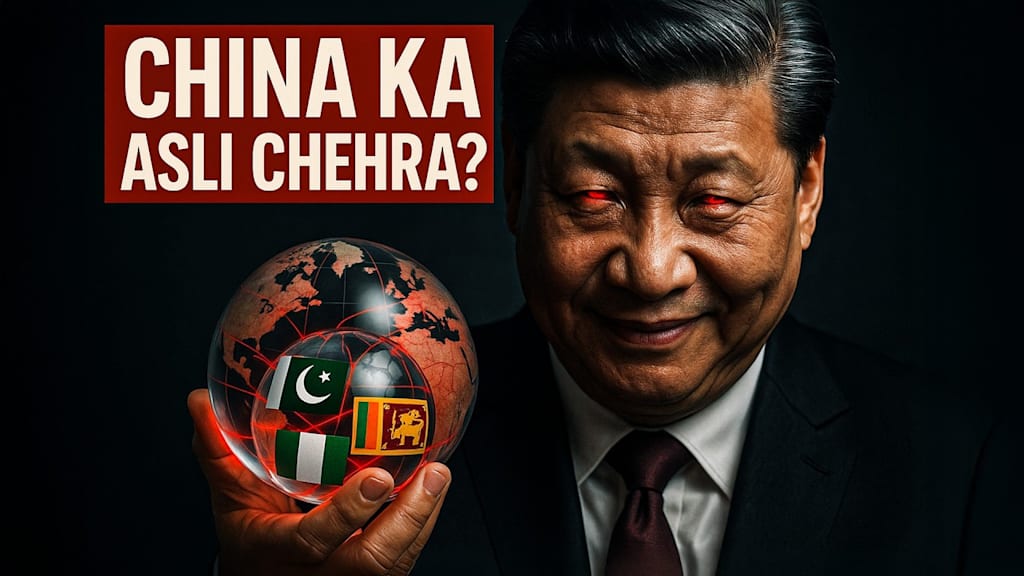
A mega project in which more than 150 countries participated. A project that promised new airports, motorways, and seaports. Countries were shown dreams of becoming the next Dubai or Singapore. But today, many of those same projects remain unfinished, while the dreams behind them have collapsed. Some countries are drowning in debt, while others are left with abandoned infrastructure and economic ruin.
This was China’s largest global mega project, known as the Belt and Road Initiative. At one time, it was called the “Project of the Century.” Today, many critics describe it as a geopolitical disaster, and the countries that suffered the most were often the poorer nations that had been promised prosperity.
In 2013, Chinese President Xi Jinping announced the Belt and Road Initiative, commonly known as BRI. The goal was to create a modern Silk Road through railways, highways, and ports connecting Asia, Africa, and Europe.
China claimed the mission was to bring development to poorer nations while also positioning itself as a global leader. More than 140 countries showed interest, and many developing nations quickly began taking loans from China. Eventually, China invested around $1.2 trillion into BRI projects.
However, this money was mostly provided as loans to countries that Western banks or institutions like the International Monetary Fund considered too risky to finance.
Soon, critics argued that BRI was not just an infrastructure program but also a geopolitical and economic strategy. China had built enormous industrial capacity, producing huge numbers of engineers and construction companies that needed work. BRI allowed China to export this capacity abroad while increasing its global influence.
One of the biggest accusations against BRI is “debt-trap diplomacy.” Critics claim China gave large loans to poorer countries knowing they would struggle to repay them, eventually forcing them to hand over land or strategic infrastructure.
The most famous example is Sri Lanka. Chinese-backed projects promised Sri Lanka that building a new port on the Indian Ocean could transform the country into a major trade hub like Dubai.
Sri Lanka already had the Port of Colombo, but China encouraged construction of a new deep-sea port called Hambantota Port. Sri Lanka borrowed about $1.3 billion from China for the project.
Chinese firms received the construction contracts, and although the loans had relatively low interest rates, the agreements reportedly allowed China significant control if repayments failed.
The port was completed, but it never attracted enough shipping traffic to become profitable. Reports suggested that only a few dozen ships stopped there annually. Eventually, Sri Lanka struggled to repay the debt, and in 2017, the port was leased to a Chinese company for 99 years.
Critics saw this as a loss of sovereignty for Sri Lanka.
Another country affected was Zambia. Hoping to modernize its economy, Zambia accepted large Chinese loans for infrastructure projects. By 2020, about 43% of Zambia’s external debt was reportedly owed to China. When the COVID-19 pandemic damaged trade and copper demand fell, Zambia defaulted on its debt payments.
BRI also produced several so-called “white elephant projects” — expensive infrastructure with little practical use.
For example, Montenegro borrowed around $1 billion from China in 2014 to build the Bar–Boljare Highway. However, construction costs in the mountainous terrain became so high that only a short section of highway was completed before the money ran out. The unfinished road placed enormous pressure on Montenegro’s economy.
Sri Lanka also built the Mattala Rajapaksa International Airport near Hambantota Port using Chinese loans. The airport cost around $200 million, but very few flights or passengers ever used it. It eventually became known as one of the world’s emptiest airports.
In Ecuador, China financed the Coca Codo Sinclair Dam, a massive hydroelectric dam costing about $2.6 billion. Later reports claimed the project suffered from poor construction quality and corruption. Thousands of cracks were reportedly discovered in the structure, raising fears about its long-term safety.
Then came Pakistan and the China–Pakistan Economic Corridor, a $60 billion project intended to bring electricity, jobs, and economic growth. However, many projects faced delays or failed to meet expectations.
Residents of Gwadar protested over shortages of water, electricity, and local employment opportunities. Critics also pointed out that much of the revenue from Gwadar Port goes to Chinese operators rather than Pakistan itself.
BRI suffered another major setback when Italy — the only G7 nation to formally join the initiative — later decided to withdraw. Italy had expected Chinese investment and expanded trade opportunities, but many promised projects never materialized.
Other countries including Malaysia, Myanmar, Bangladesh, and Nepal also canceled or renegotiated some BRI projects.
In response, the United States and Europe launched alternative initiatives such as the Partnership for Global Infrastructure and Investment and the Global Gateway. These programs promise more transparent financing and lower-interest loans as alternatives to Chinese projects.
At the same time, BRI strengthened relations between China and Russia. After the war in Ukraine isolated Russia from much of the West, Moscow moved closer to Beijing economically and strategically.
After more than a decade and trillions of dollars in spending, many analysts now view BRI as one of the most controversial foreign policy projects in modern history. Critics argue it was never purely about development but also about expanding China’s influence, exporting industrial capacity, securing access to raw materials, and promoting the Chinese currency globally.
China is now attempting to rebrand the initiative as “BRI 2.0,” focusing more on digital infrastructure, green energy, and sustainable development projects. However, many countries are now far more cautious and demand projects that provide genuine economic benefits instead of long-term debt burdens.
Despite the criticism, China has still gained strategic advantages through BRI. Chinese companies now hold direct or indirect stakes in more than 100 ports worldwide, which benefits China’s export-driven economy. If the entire BRI network is completed, it could become the largest land-and-sea trade network connecting Asia to Europe, potentially covering around 65% of the world’s population.
About the Creator
Imran Ali Shah
🌍 Vical Midea | Imran
🎥 Turning ideas into viral content
✨ Watch • Share • Enjoy
Enjoyed the story? Support the Creator.
Subscribe for free to receive all their stories in your feed.
Comments
There are no comments for this story
Be the first to respond and start the conversation.