
Artificial Island (5000 years old) in Scotland. Older than Stonehenge?
A Hidden Island

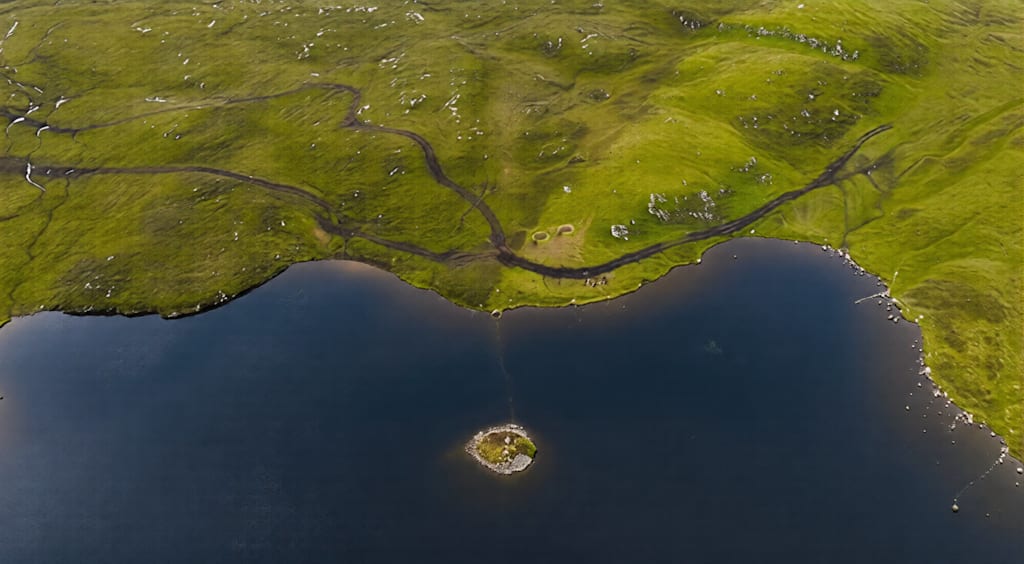
Beneath the quiet waters of a remote Scottish loch, archaeologists have uncovered evidence of a remarkable prehistoric engineering achievement hidden for thousands of years. What appears today to be nothing more than a small rocky island in Loch Bhorgastail on the Isle of Lewis has now been revealed as a sophisticated artificial structure created by Neolithic people more than 5,000 years ago. The discovery is astonishing not only because of its age, but because the island predates one of the world’s most famous prehistoric monuments — Stonehenge.

The ancient structure, known as a crannog, provides extraordinary new insight into the lives, abilities, and social organization of prehistoric communities living in Scotland during the Neolithic era. Archaeologists now believe that people were building carefully designed artificial islands in lakes centuries earlier than previously thought. The discovery challenges long-standing assumptions about prehistoric engineering and demonstrates that Neolithic societies possessed far more advanced construction skills and social coordination than historians once imagined.
The submerged remains beneath Loch Bhorgastail also highlight the importance of modern archaeological technology. By combining underwater photography, drone mapping, and sophisticated 3D modeling techniques, researchers were able to study areas that traditional archaeology often struggles to investigate — the difficult boundary between land and shallow water.
The result is one of the most fascinating prehistoric discoveries in recent Scottish archaeology, offering a glimpse into a hidden world where ancient communities transformed lakes into centers of activity, gathering, ritual, and survival.
The Ancient World of Neolithic Scotland
More than 5,000 years ago, the landscape of Scotland looked dramatically different from today. During the Neolithic period, which began around 4000 BCE, human societies across Britain were undergoing enormous changes. People gradually shifted from nomadic hunting lifestyles to more settled farming communities. Agriculture spread across the landscape, forests were cleared, and permanent settlements began to emerge.
This period also witnessed the rise of monumental architecture and increasingly sophisticated engineering projects. Across Britain and Europe, Neolithic communities constructed burial chambers, stone circles, ceremonial enclosures, and timber structures that required careful planning and large-scale cooperation.
The people living on the Isle of Lewis were part of this wider transformation. Although isolated in the Outer Hebrides, these communities were far from primitive. They understood woodworking, stone construction, navigation, and environmental management. The newly studied crannog at Loch Bhorgastail now provides powerful evidence that these ancient communities also mastered complex construction techniques in watery environments.
The discovery suggests that Neolithic people were capable of reshaping landscapes in ways previously underestimated by archaeologists.

What Is a Crannog?
Crannogs are small artificial islands built within lakes, rivers, or wetlands. For many years, archaeologists believed most crannogs dated primarily to the Iron Age, roughly between 800 BCE and 400 CE. However, growing evidence from Scotland and Ireland now suggests that some crannogs were constructed far earlier during the Neolithic period.
These islands were typically created by piling timber, brushwood, earth, and stones into shallow water until a stable platform emerged above the surface. Some were connected to shorelines by causeways or wooden walkways, while others were intentionally isolated.
The exact purpose of crannogs remains debated. Some may have served as homes, while others functioned as ceremonial gathering places, defensive refuges, elite residences, or centers for communal feasting and ritual activity.
The Loch Bhorgastail crannog is particularly important because it demonstrates that this tradition of island-building began thousands of years earlier than previously believed.
Discovery Beneath the Waters of Loch Bhorgastail
The crannog lies hidden within Loch Bhorgastail on the Isle of Lewis in Scotland’s Outer Hebrides. At first glance, the site appears to be a simple rocky island surrounded by calm water. However, detailed archaeological investigation revealed a much more complex history beneath the surface.
Researchers from the University of Southampton and the University of Reading conducted extensive excavations and underwater surveys around the island. Their work uncovered evidence showing that the original structure began as a massive circular timber platform approximately 23 meters, or 75 feet, in diameter.
Builders constructed the island using layers of timber logs and brushwood placed carefully into the shallow loch waters. This created a stable base capable of supporting human activity.
Radiocarbon dating revealed that the earliest construction phase dates back approximately 5,000 years, placing it firmly within the Neolithic period and making it older than Stonehenge.
Over the centuries, later communities continued modifying the site. During the Middle Bronze Age, around 2,000 years after its initial construction, additional brushwood and stone were added to reinforce and expand the island. Further building activity occurred during the Iron Age approximately another thousand years later.
The crannog therefore represents a site used and revisited by multiple generations across thousands of years of Scottish prehistory.
The Stone Causeway
One of the most remarkable discoveries was a submerged stone causeway leading from the artificial island toward the shoreline.
Today, changing water levels have hidden much of this pathway beneath the loch. However, archaeological mapping revealed clear evidence that ancient people once used the route to access the island more easily.
The existence of the causeway demonstrates that the crannog was not an isolated structure built randomly in the water. Instead, it formed part of a carefully designed landscape shaped intentionally by prehistoric builders.
The construction of such pathways would have required labor, planning, and communal cooperation. Transporting timber, stones, and brushwood into the water would not have been simple tasks, especially using Neolithic technology.
The site therefore reveals impressive engineering knowledge and organized social effort among these ancient communities.

Pottery and Evidence of Human Activity
Archaeologists also recovered hundreds of fragments of Neolithic pottery from the waters surrounding the crannog.
The pottery included pieces from bowls, jars, and other vessels used for storing, preparing, and consuming food. Some fragments still contained traces of food residue preserved for thousands of years.
These discoveries suggest that the island was a center of repeated human activity rather than a temporary shelter or accidental construction.
Researchers believe the crannog may have hosted communal gatherings, feasting events, rituals, or social ceremonies. Cooking and food preparation likely played important roles at the site.
The large quantity of pottery discovered around the island may indicate that vessels were intentionally deposited into the water as part of ceremonial traditions. Similar ritual deposition practices are known from other prehistoric sites across Britain and Europe.
The findings provide valuable clues about social life in Neolithic Scotland and suggest that lakes and artificial islands may have held symbolic or spiritual importance for ancient communities.
Engineering in the Neolithic World
The construction of the Loch Bhorgastail crannog demonstrates extraordinary engineering skill for such an early period.
Building an artificial island required detailed understanding of materials, water conditions, and structural stability. Neolithic builders had to create foundations capable of surviving underwater for centuries.
The layered use of timber and brushwood shows sophisticated construction methods designed to distribute weight and stabilize the structure. Later additions of stone reinforced the island further.
This was not a random pile of debris placed into the water. It was a carefully engineered platform built intentionally for long-term use.
The project would also have required coordinated labor from groups of people working together. Cutting timber, transporting materials, and assembling the island would have demanded planning, communication, and leadership.
The crannog therefore provides evidence that Neolithic societies possessed complex social organization and technical abilities far beyond older stereotypes of prehistoric life.

New Archaeological Technology
Studying ancient sites located in shallow water presents enormous challenges for archaeologists.
Traditional land survey methods often fail in wet environments, while underwater equipment designed for deeper water struggles in extremely shallow conditions. Researchers describe this difficult boundary zone between land and water as a “white ribbon” where important archaeological information can easily remain hidden.
To overcome these problems, the research team developed innovative survey techniques combining underwater photogrammetry with drone mapping technology.
Photogrammetry works by taking large numbers of overlapping photographs and combining them into highly detailed 3D digital models.
Divers used waterproof cameras mounted on specialized frames to photograph submerged areas with remarkable precision. At the same time, drones surveyed the visible portions of the island above water.
Researchers then combined all the data into one continuous digital reconstruction covering both land and underwater remains.
The results produced highly accurate maps, elevation models, and detailed images of the crannog and surrounding landscape.
This technology allowed archaeologists to visualize the site in ways previously impossible.
Challenges of Underwater Archaeology
Shallow-water archaeology is notoriously difficult.
Fine sediment stirred up by movement can cloud visibility instantly. Aquatic vegetation blocks camera views, while sunlight reflecting off the water surface distorts images. Changing weather conditions and water levels create additional complications.
For decades, these obstacles limited the study of submerged prehistoric sites in Scotland and elsewhere.
The new methods used at Loch Bhorgastail represent a major breakthrough because they provide a portable, relatively low-cost solution capable of producing highly detailed archaeological records.
Researchers believe these techniques could revolutionize the study of ancient coastal settlements, ritual sites, wetlands, and submerged landscapes around the world.
Older Than Stonehenge
Perhaps the most striking aspect of the discovery is its age.
The earliest phase of the Loch Bhorgastail crannog dates back roughly 5,000 years, making it older than Stonehenge, whose earliest construction began around 3000 BCE.
This timeline places the Scottish artificial island among the earliest known large-scale prehistoric construction projects in Britain.
The discovery challenges older assumptions that monumental engineering only emerged later alongside famous stone monuments.
Instead, it reveals that Neolithic people in Scotland were already experimenting with highly ambitious architectural and environmental projects long before some of Britain’s most iconic prehistoric sites were built.

The Importance of Water in Prehistoric Belief
Many archaeologists believe water held special symbolic and spiritual significance for prehistoric societies.
Across Europe, lakes, rivers, and wetlands often became locations for rituals, offerings, and ceremonial gatherings. Valuable objects were frequently deposited into water intentionally.
Artificial islands like crannogs may therefore have served purposes beyond simple habitation.
The isolation created by surrounding water could have transformed these sites into sacred spaces separated from everyday life. Gatherings held on such islands may have carried religious, political, or ceremonial meaning.
The pottery deposits at Loch Bhorgastail strengthen the possibility that the island functioned as an important communal or ritual center.
Although many questions remain unanswered, the discovery provides fascinating evidence about how prehistoric people interacted with landscapes and natural environments.
-Future Discoveries Beneath Scottish Waters
Scotland contains hundreds of known crannogs, many of which remain poorly studied or entirely unexplored.
Researchers now believe numerous additional Neolithic examples may still lie hidden beneath lakes and wetlands across the country.
The successful methods developed at Loch Bhorgastail offer archaeologists powerful new tools for investigating these difficult environments.
Future underwater surveys may reveal more artificial islands, submerged settlements, ceremonial platforms, and prehistoric structures previously invisible to researchers.
Each new discovery has the potential to reshape understanding of ancient Britain and the capabilities of Neolithic societies.
The discovery of the 5,000-year-old artificial island beneath Loch Bhorgastail represents one of the most fascinating archaeological revelations in recent Scottish history.
Far older than Stonehenge, the crannog demonstrates that Neolithic communities possessed impressive engineering abilities, social organization, and environmental knowledge thousands of years ago.
Constructed from timber, brushwood, and stone, the island became a lasting monument to prehistoric human creativity and cooperation. The pottery, causeways, and repeated construction phases reveal generations of human activity hidden beneath the loch waters for millennia.
At the same time, the project showcases the power of modern archaeological technology. Through advanced underwater imaging and 3D modeling, researchers have finally begun uncovering a hidden prehistoric world that once existed at the boundary between land and water.

As archaeologists continue exploring Scotland’s lochs and wetlands, more ancient secrets may still remain waiting beneath the surface — silent reminders of civilizations that shaped the landscape thousands of years before recorded history began.
About the Creator
History Seeker
I like the metal music I like the good food and the history...
Enjoyed the story? Support the Creator.
Subscribe for free to receive all their stories in your feed.
Comments
There are no comments for this story
Be the first to respond and start the conversation.