
Roman Concrete: The 2023 MIT Discovery That Rewrote 2,000 Years of Engineering
For two millennia, builders looked at the white specks in Roman concrete and thought they were a mistake. MIT proved that these specks were actually a self-healing mechanism. Every attempt to replicate Roman concrete had failed because engineers kept removing the one ingredient that made it work.

January 6, 2023: MIT, Cambridge, Massachusetts.
Associate Professor of Civil Engineering Admir Masic is examining a fragment of Roman concrete under a scanning electron microscope. The sample is from a wall near Privernum in central Italy. It is approximately 1,900 years old.
Masic is examining the white specks.
Every engineer who has studied Roman concrete has seen them: millimeter-scale chunks of calcium carbonate scattered throughout the gray matrix like gravel in bread. The consensus explanation, repeated in every textbook, was simple: the Romans mixed carelessly. The specks were undissolved lime. They were a minor imperfection in an otherwise superior material.
Masic has been bothered by this explanation for years.
In the paper published that day, he writes, "If the Romans put so much effort into making an outstanding construction material, why would they put so little effort into ensuring the production of a well-mixed final product?"
He is about to prove that they didn't.
The Building That Should Not Exist
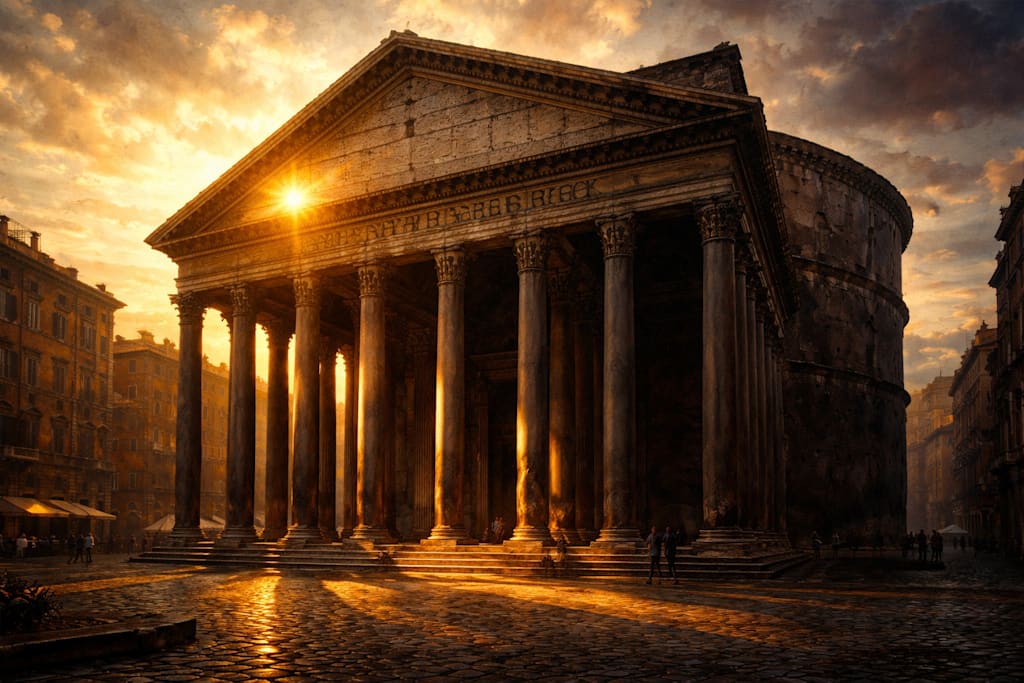
The Pantheon in Rome was completed around 126 CE. Its 43.3-meter-diameter dome, poured entirely in concrete without a single steel rod, remains the largest unreinforced concrete dome ever built. It has survived nearly nineteen centuries of floods, earthquakes, barbarian occupation, and the complete collapse of the civilization that built it.
Modern reinforced concrete structures are designed to last fifty to one hundred years.
For two centuries, engineers have tried to explain this discrepancy. The leading theory is that volcanic ash from the Bay of Naples, called pozzolana, reacted with seawater to produce rare crystals that grew stronger over time. Correct. But it's incomplete.
The white specks were the other half of the answer.
What Masic Found Under the Microscope
The lime clasts had a chemical signature that forms only at extreme temperatures. They were not evidence of poor mixing. Rather, they were evidence of a specific, deliberate technique called hot mixing.
The Romans were not using the standard approach of adding slaked lime, which involves combining quicklime with water to cool it before introducing it to the mix. Instead, they added quicklime directly — raw, dry, and highly reactive calcium oxide — combined with volcanic ash before any water touched it. When water was finally introduced, the reaction was exothermic. The mixture generated its own intense heat, reaching temperatures of up to 200 degrees Celsius. Inside that heat, microscopic pockets of highly reactive lime were trapped in the hardening matrix before they could fully dissolve.
Those pockets are the white specks.
Here is what the white specks actually do.
When a crack forms in Roman concrete, water seeps in. The water then contacts the nearest lime clast and dissolves it. The resulting calcium-rich solution flows into the crack, where it recrystallizes, forming new mineral deposits that seal the breach and restore the structure. The concrete does not weaken at the point of damage. It grows stronger there.
The Romans had built a self-healing material. For two thousand years, every engineer who attempted to reproduce Roman concrete examined the white specks and concluded that they were contaminants. They mixed more carefully to eliminate them.
They had been removing the mechanism.
The Architect Who Described It Wrong
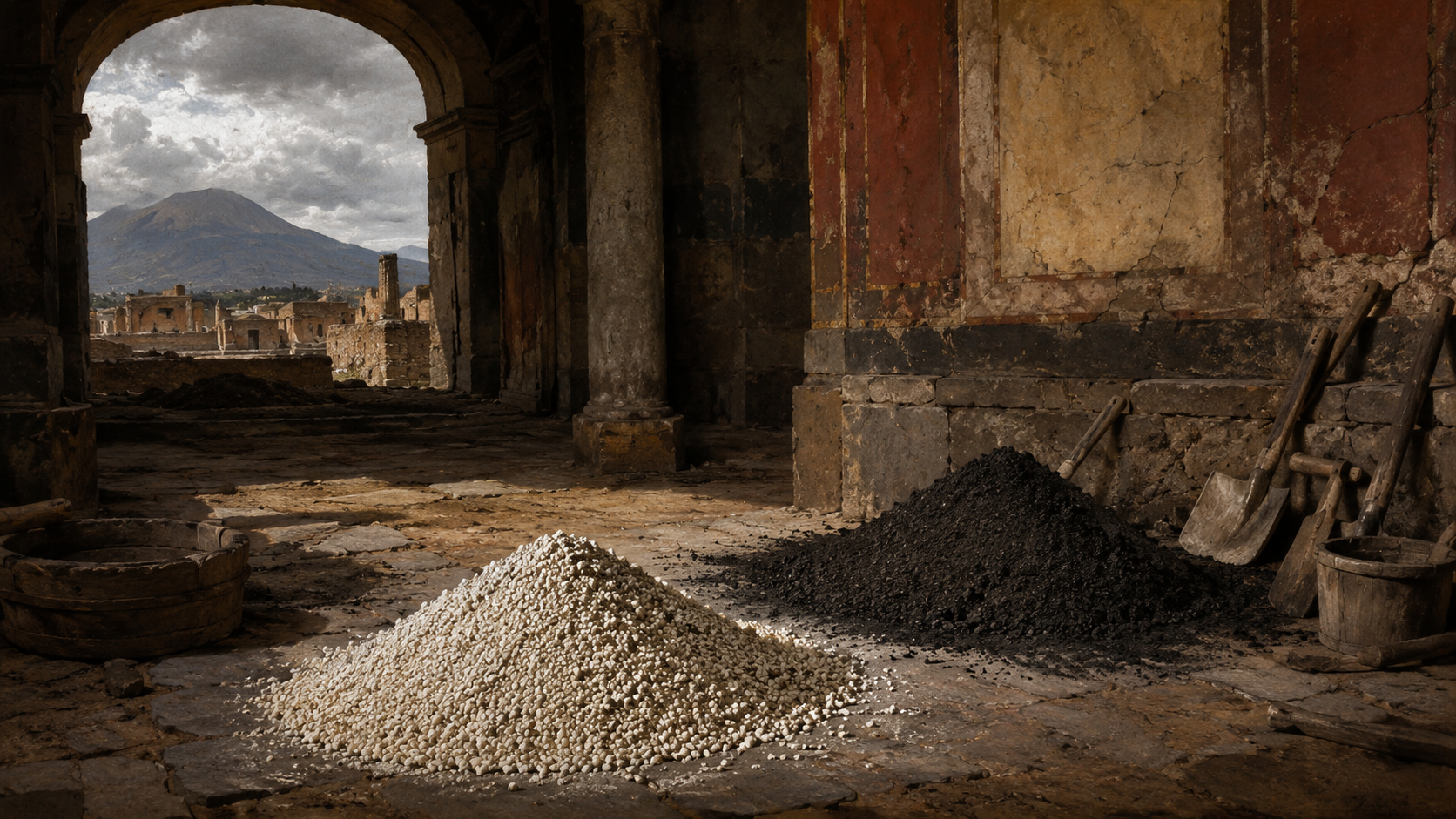
In December 2025, archaeologists working in Pompeii uncovered an active Roman construction site that had been frozen mid-renovation by the eruption of Vesuvius in 79 CE. This was something that had not been seen in nearly two thousand years. Tools were set down. Materials were sorted into piles. Nothing was disturbed.
Isotope analysis of the raw material piles confirmed the MIT findings precisely: The quicklime was pre-mixed with volcanic ash and ready for water. There were no slaking pits. There was no pre-dissolved lime.
This created a problem.
The only surviving Roman architectural manual, De Architectura, written by the military engineer Vitruvius in the first century BCE, describes a different process. According to Vitruvius, builders first combined quicklime with water to create slaked lime and then mixed the slaked lime with ash. This is not hot mixing. This process cannot produce lime clasts. It does not create a self-healing material.
Either the most authoritative source on Roman construction described his subject incorrectly, or the builders had developed a better method.
The evidence from Pompeii settled it. Both were true.
Vitruvius described the method used during the late Republic, which was an earlier, less refined approach. Imperial-era builders developed the hot mixing technique and improved upon his recipe without updating his text. The word Vitruvius used, extincta, which has long been translated as "slaked," may have meant something closer to "quenched by the mix itself." For two thousand years, engineers had read the same word and understood it the same way.
They had been following the wrong instructions.
The Experiment That Proved It Could Be Done Again
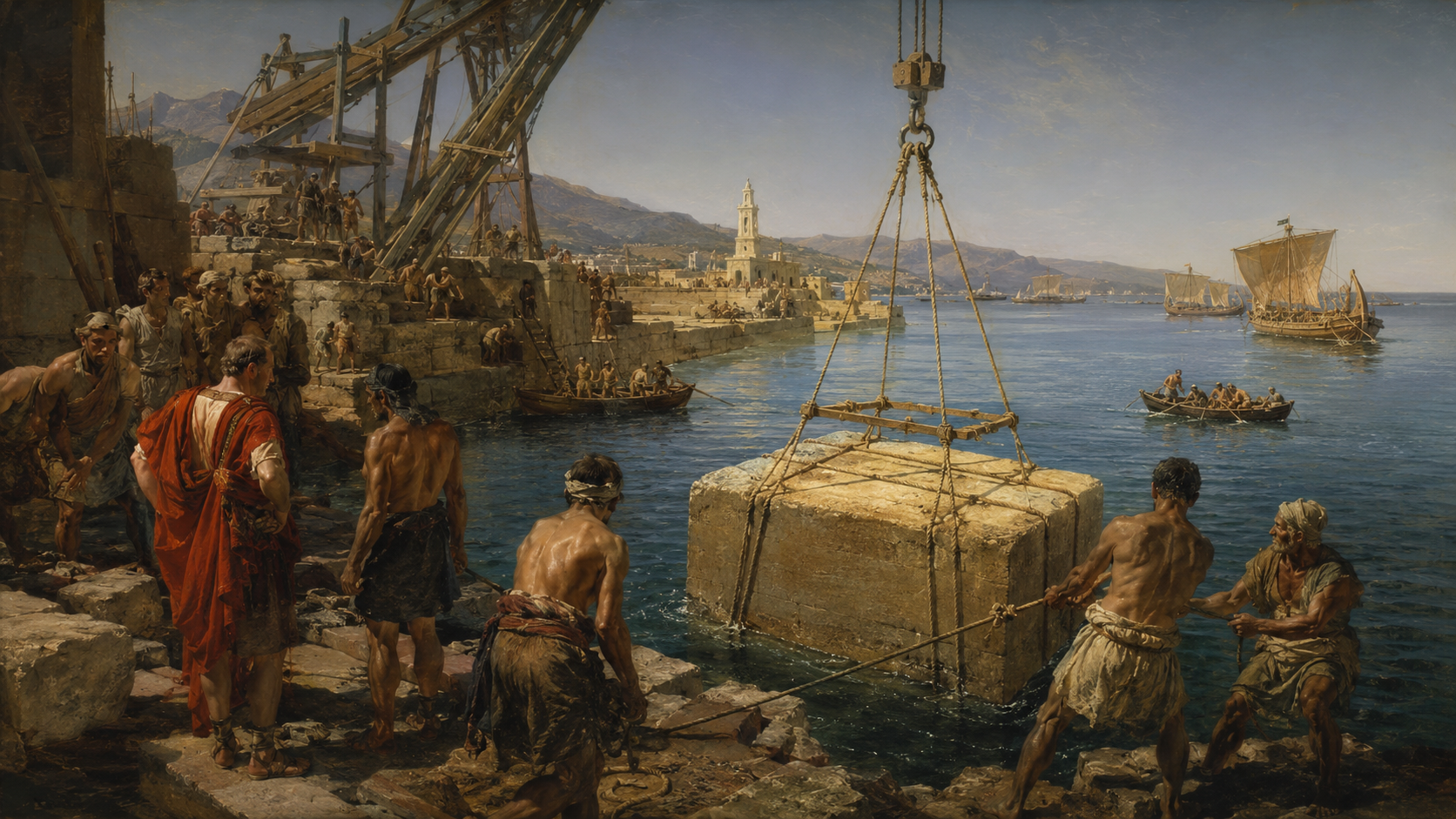
In 2004, a team of researchers from the ROMACONS project (the Roman Maritime Concrete Study), a collaboration between the University of Colorado and the University of Victoria, built an experimental concrete block in Brindisi Harbor, Italy, using pozzolana from the Bay of Naples and ancient Roman methods. The block was then submerged. When tested, the resulting concrete produced results very similar to those of ancient Roman structures.
This demonstrated that the materials still exist. The volcanic ash is still available. Quicklime is a standard industrial material. The technique has been published, peer-reviewed, and made freely accessible. This knowledge is not locked behind any patent or proprietary formula.
Yet, Brindisi 2004 remains one of the few documented large-scale tests of Roman concrete methods since the fall of the Western Roman Empire. The construction industry did not adopt the results.
The Question Nobody in the Industry Wants to Answer
In 2024, researchers at the University of Colorado published a full life-cycle analysis of Roman-style concrete. The results were counterintuitive. Roman concrete does not dramatically reduce carbon emissions during production compared to modern methods. Contrary to initial expectations, using Roman formulations with modern technology does not substantially reduce greenhouse gas emissions or energy demand.
Savings only accumulate if the structure lasts significantly longer than modern concrete, as Roman structures demonstrably do.
This is where the numbers become uncomfortable.
The global construction and infrastructure market is worth approximately $13 trillion annually. A substantial portion of that revenue does not come from new construction. Rather, it is replacement: bridges rebuilt every fifty years, highway surfaces every twenty years, and parking structures every forty years. A material designed to last two thousand years does not eliminate the need for construction. It eliminates the replacement cycle.
There is no evidence of a formal agreement within the industry to suppress Roman concrete methods. There is no equivalent to the Phoebus cartel—no documented meeting where engineers agreed to build structures with limited lifespans. The economics alone produce the outcome without the need for a conspiracy. A market that generates most of its revenue from replacement work has no financial incentive to invest in permanence. This incentive structure produces the result without anyone intending it.
This is worth considering. The knowledge exists. The materials are available. The technique works. The only missing piece is the building.
What the Pantheon Already Knows
The dome of the Pantheon was the largest in the world for thirteen centuries, from its completion in 126 CE until the dome of Florence Cathedral surpassed it in the 1400s. Brunelleschi studied the Pantheon to build that dome. Its design changed the way the Renaissance thought about engineering.
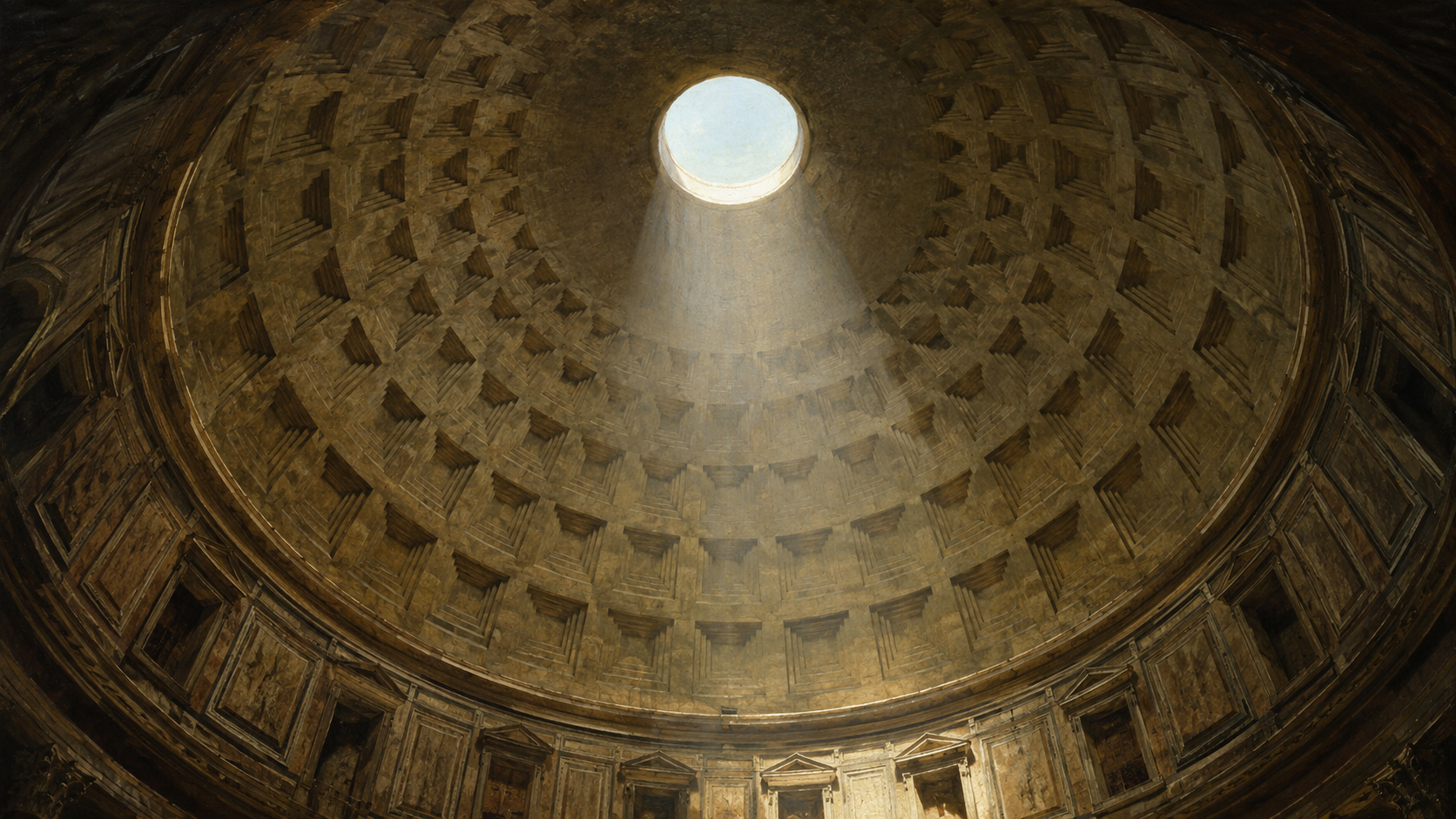
It is still standing today. It holds the record for the largest unreinforced concrete dome ever built. Every day, visitors walk beneath it, tilt their heads back, and look up at the oculus—the open circle at the top, 43 meters above the floor—through which rain has fallen onto the same marble for nineteen centuries.
The concrete above their heads is healing itself right now.
Every microcrack that opened this morning will be sealed by next week. The lime particles are dissolving, flowing, and recrystallizing. The building is doing what it was built to do.
The question MIT cannot answer—and no engineering paper has attempted to answer—is not how the Romans built it.
It's why we stopped.
If this investigation resonated with you, consider reading:
— Rome Had Markets, Banks, and Trade Routes — and Still Never Built Capitalism
— The Antonine Plague That Destroyed Rome — And We Have Been Calling It the Wrong Thing
Follow the channel for more: Chronicle and Void
About the Creator
Chronicle and Void
Every collapse has a cover story. Every war has a cause that didn't make it into the history books. History is not an accurate record of what happened. It's a record of what they allowed to survive.
Enjoyed the story? Support the Creator.
Subscribe for free to receive all their stories in your feed.
Comments
There are no comments for this story
Be the first to respond and start the conversation.