
Rome Had Markets, Banks, and Trade Routes, Yet It Never Built Capitalism.
The empire that spanned three continents couldn't produce the one system that would have saved it. The reasons were hiding in plain sight.

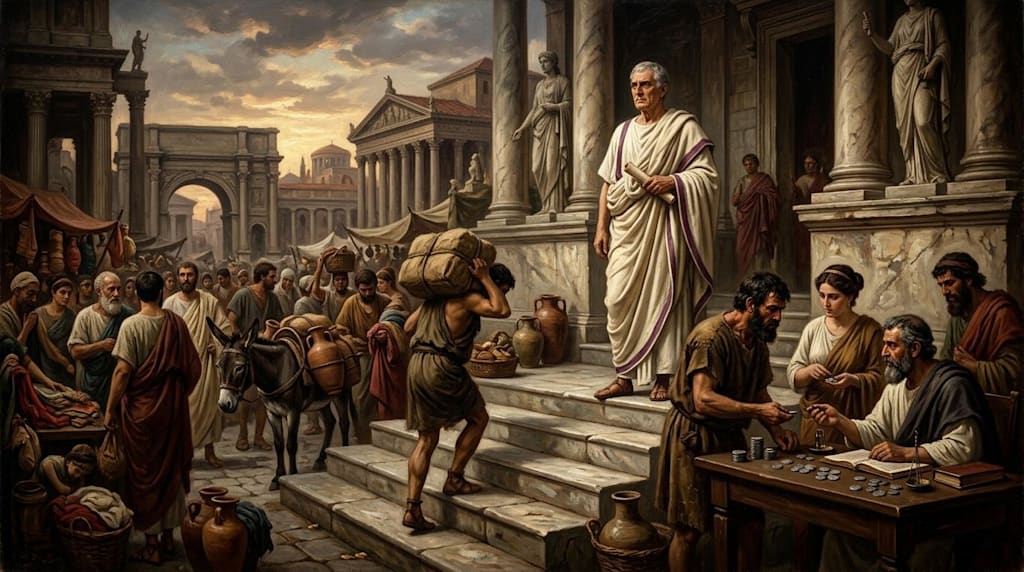
In 301 CE, Emperor Diocletian issued an edict setting the maximum price for more than a thousand goods and services, including bread, wool, labor, freight, sex work, and legal advice. Those who violated the edict faced death.
However, it was not enforced. Prices continued to fluctuate. Merchants hid their goods. The edict became a document of desperation rather than control.
At its peak, Rome had a sophisticated banking system, long-distance trade networks spanning from Britain to India, a legal system capable of enforcing complex contracts, and a currency used from Scotland to Mesopotamia. Rome had every ingredient that economists associate with economic modernity.
Yet it never crossed into capitalism. The question is why, and the answer is more uncomfortable than most people expect.
The Markets Were Real. The Incentives Weren't.
The standard explanation blames institutions: weak property rights, the absence of joint-stock companies, and an unstable currency. These are all real factors. But they miss something more fundamental.
Roman elites had money. They knew how to invest. Their investment choices reveal the entire problem.
The ideal portfolio for a Roman senator consisted of land and slaves. Commerce wasn't just less profitable; it was socially disqualifying. The Latin word negotium (business) was literally the negation of otium (leisure, dignity, and the good life). A senator caught engaging directly in large-scale trade risked his standing. Not his money. His identity.
Wealth earned through commerce was acceptable. However, wealth that appeared to be earned through commerce was not. Predictably, rich Romans invested through freedmen and middlemen, maintaining a layer of plausible distance between themselves and the activity that funded their lifestyles.
This was not hypocrisy. It was a rational response to a culture that made entrepreneurship invisible by design.
This was reinforced by the legal structure. Although Roman property rights were sophisticated, they remained conditional. The state could confiscate property. Emperors regularly confiscated the property of senators who fell out of favor, merchants deemed too visible, and anyone whose wealth attracted the wrong kind of attention. Long-term investment requires predictability. Roman law offered precedent but not protection.
The Slave Economy Had a Hidden Tax
Slavery was not simply a moral catastrophe. It was also a structural economic trap.
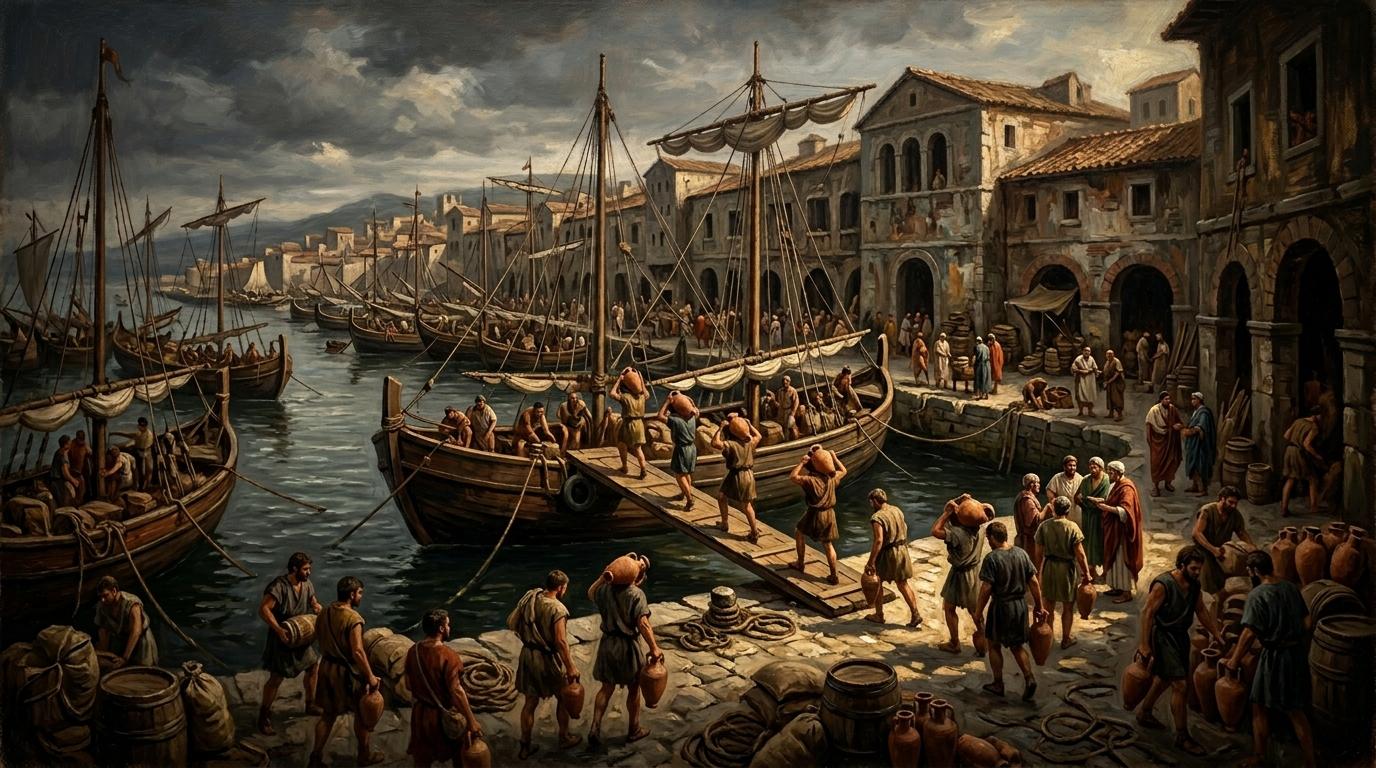
Roman society relied on forced labor on such a large scale that technological investment was pointless. Why engineer a better olive press when you could buy three more workers? Why automate the grain mill when it ran on human beings who could be purchased for a predictable price?
Water mills existed. The Romans knew how to build them. However, they were not widely adopted for centuries — not because Roman engineers lacked competence, but because slave labor undercut every business case for their deployment.
This problem compounded over time. As long-distance military conquest slowed, the supply of cheap slaves dwindled. Prices rose. Labor became more expensive. However, by then, the habit of investing in land and bodies rather than processes and tools was deeply ingrained in elite culture, making reorientation nearly impossible.
An economy that had not needed innovation for three hundred years did not suddenly develop the discipline when necessity arrived.
There was a second effect, subtler and equally damaging. In a society where physical labor was the domain of slaves, work itself became stigmatized. Free craftsmen existed, but they occupied a social tier that no ambitious Roman wanted to inhabit. The result was a culture in which those with capital had no interest in production and those closest to production had no access to capital.
The Money Was Rotting
Under Augustus, the silver denarius was nearly pure. By the time Gallienus came to power in the 260s, however, it contained only about two percent silver. The rest was copper with a thin silver coating.
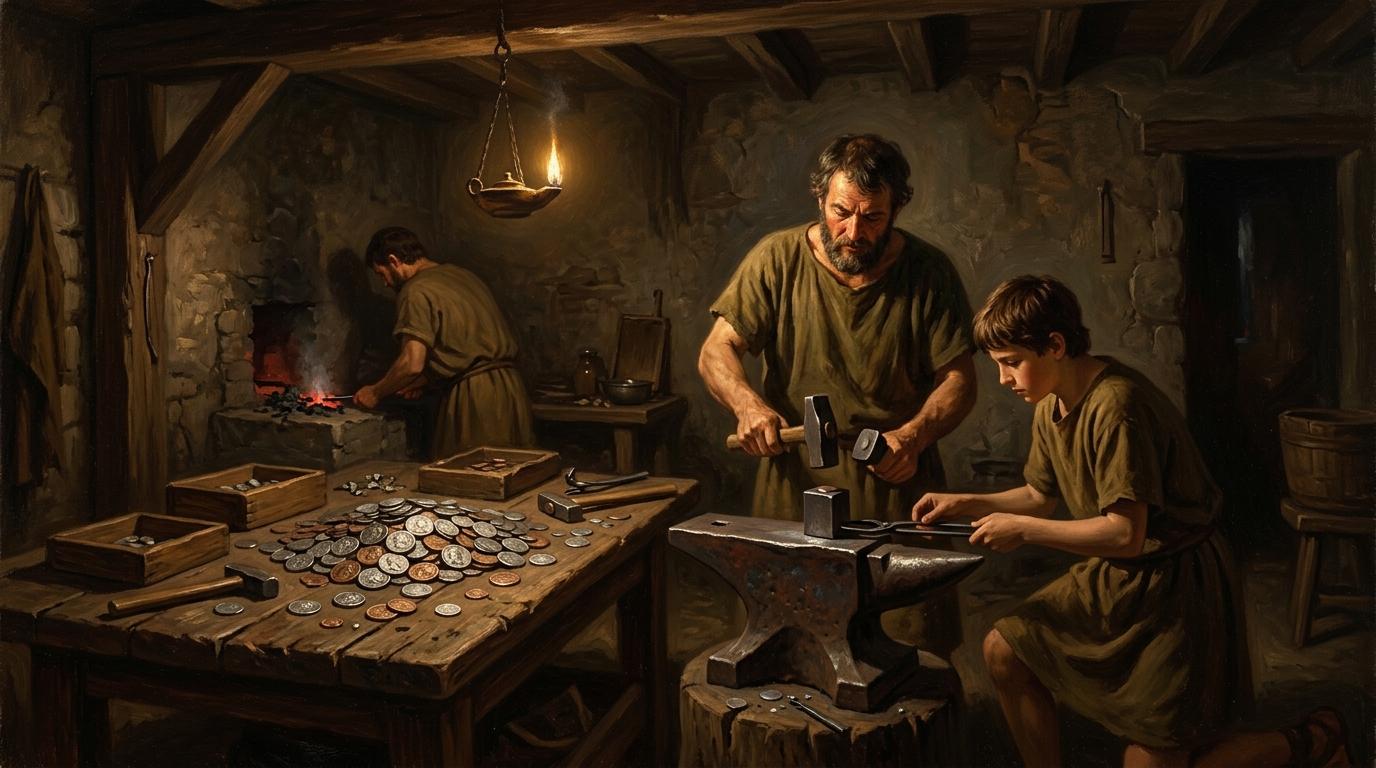
This was no accident or act of incompetence. It was fiscal policy — a slow-motion printing press operating through debasement rather than paper currency. The state needed money to fund its armies. Armies kept the state alive. The state obtained money by reducing the amount of precious metal in every coin it minted.
This had a corrosive effect on long-term investment. If the currency you were paid in lost value faster than your project generated returns, rational investors would shorten their time horizons. They stopped building for the next generation and started extracting from the current one.
Capital moved toward land — the one asset that could not be debased. Rents rose. Agricultural production stagnated. The tax burden on productive activity increased precisely as productive activity declined.
Economists have a word for this spiral. The Romans simply called it living in difficult times.
The Infrastructure Led Nowhere
Perhaps the sharpest paradox in Roman economic history is that the empire built the most sophisticated physical infrastructure the ancient world had ever seen — roads, aqueducts, harbors, and warehouses — yet failed to industrialize.
The roads moved armies, tax revenues, and grain. The state designed them for military and administrative purposes. They were not built to reduce the cost of moving goods between producers and consumers, though they did so incidentally.
Roman infrastructure was impressive. However, Roman industry remained artisanal. The two were never connected in the way that eighteenth-century British canal networks were connected to textile manufacturing.
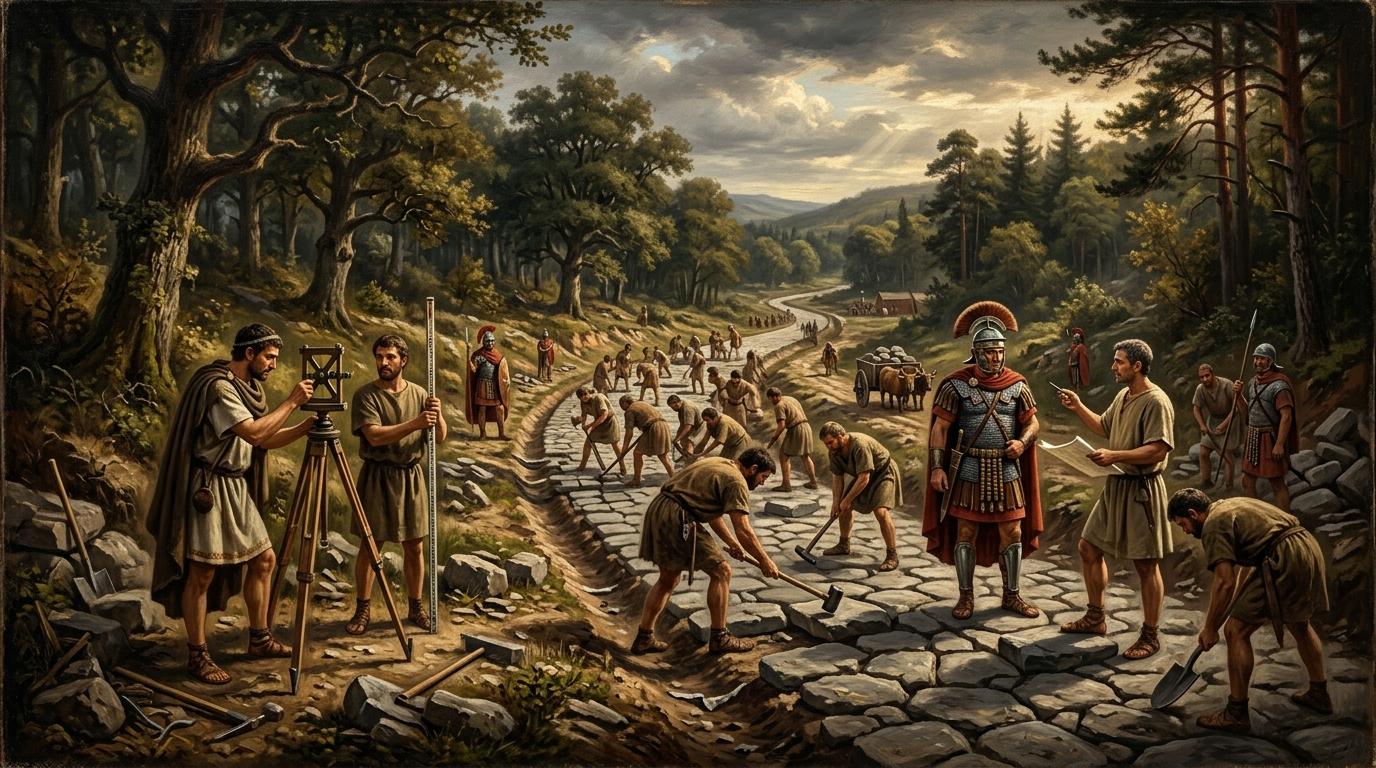
A road that moves a legion from Rome to the Rhine is not the same as a road that moves cotton to a mill. The difference is not engineering. It is intent.
The Last Piece
Max Weber argued that, in order to thrive, capitalism required a cultural framework that treated profit as legitimate, work as a calling, and accumulation as a positive good in itself.
Roman culture did not offer this. The wealthy pursued wealth to fund political careers, buy status, and display generosity through public buildings and games. Profit was a means to an end. Status was the end. In Rome, status was achieved through conspicuous consumption, not disciplined reinvestment.
This is important because it explains why, when they came, legal and institutional reforms failed to catalyze economic transformation. You cannot build a capitalist society with people who believe that trade is undignified, manual labor is for slaves, and the proper use of money is to show that one has risen above the need to earn more of it.
Rome had the hardware. It never developed the software.
The empire eventually collapsed under the weight of military overextension, monetary instability, and declining agricultural productivity. Historians debate the relative importance of each cause.
Underneath every proximate cause, however, was the same deeper logic: a civilization that spent five centuries perfecting the display of wealth while treating its creation as faintly embarrassing. The consequences simply took time to manifest.
Some failures are loud. Armies were defeated, cities were burned, and emperors were assassinated.
This one was quiet. For a very long time, it looked like success.
About the Creator
Chronicle and Void
Every collapse has a cover story. Every war has a cause that didn't make it into the history books. History is not an accurate record of what happened. It's a record of what they allowed to survive.
Enjoyed the story? Support the Creator.
Subscribe for free to receive all their stories in your feed.
Comments
There are no comments for this story
Be the first to respond and start the conversation.