
Archeologists Discovered the Earliest Dental Bridge in Aberdeen
Scottish History

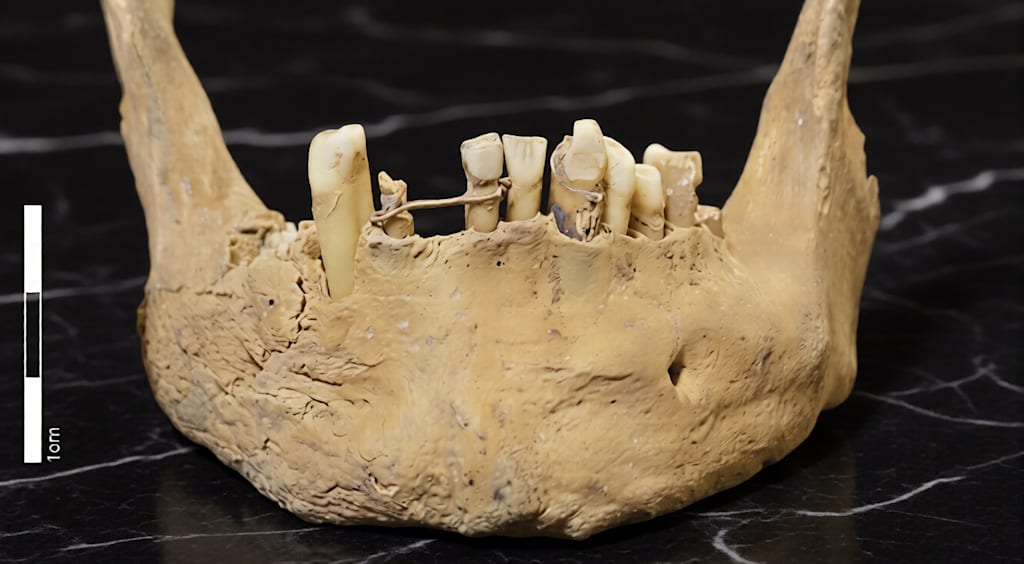
Archaeologists in Scotland have uncovered one of the most fascinating discoveries in the history of medieval medicine and dentistry: the earliest known example of restorative dental treatment ever identified in Scotland. The remarkable find was made during the examination of skeletal remains from a medieval burial in Aberdeen, where researchers discovered a middle-aged man buried with a carefully crafted gold dental bridge attached to his lower front teeth.

The discovery offers a rare glimpse into the surprisingly advanced medical knowledge and cosmetic concerns of people living centuries before modern dentistry emerged as a professional field. Although many people imagine medieval medicine as primitive and unsophisticated, archaeological evidence increasingly shows that medieval societies possessed far more complex medical practices than previously believed.
The gold dental appliance found in Aberdeen demonstrates not only technical skill but also the importance of appearance, health, and social status in Late Medieval Scotland. It reveals that people were already attempting to repair damaged teeth and improve their appearance long before the invention of modern dental clinics, anesthesia, or professional oral surgery.
The study, published in the *British Dental Journal*, has attracted international attention because it sheds new light on the history of dentistry in Europe and highlights how ancient and medieval societies developed creative solutions to medical problems using the materials and skills available to them.
Discovery at the East Kirk of St. Nicholas
The dental bridge was discovered during the examination of human remains excavated from the East Kirk of St. Nicholas in Aberdeen, one of the most historically important churches in Scotland. The church was among the wealthiest and most influential religious institutions in the region during the 14th to 16th centuries and served as a burial place for prominent members of society.
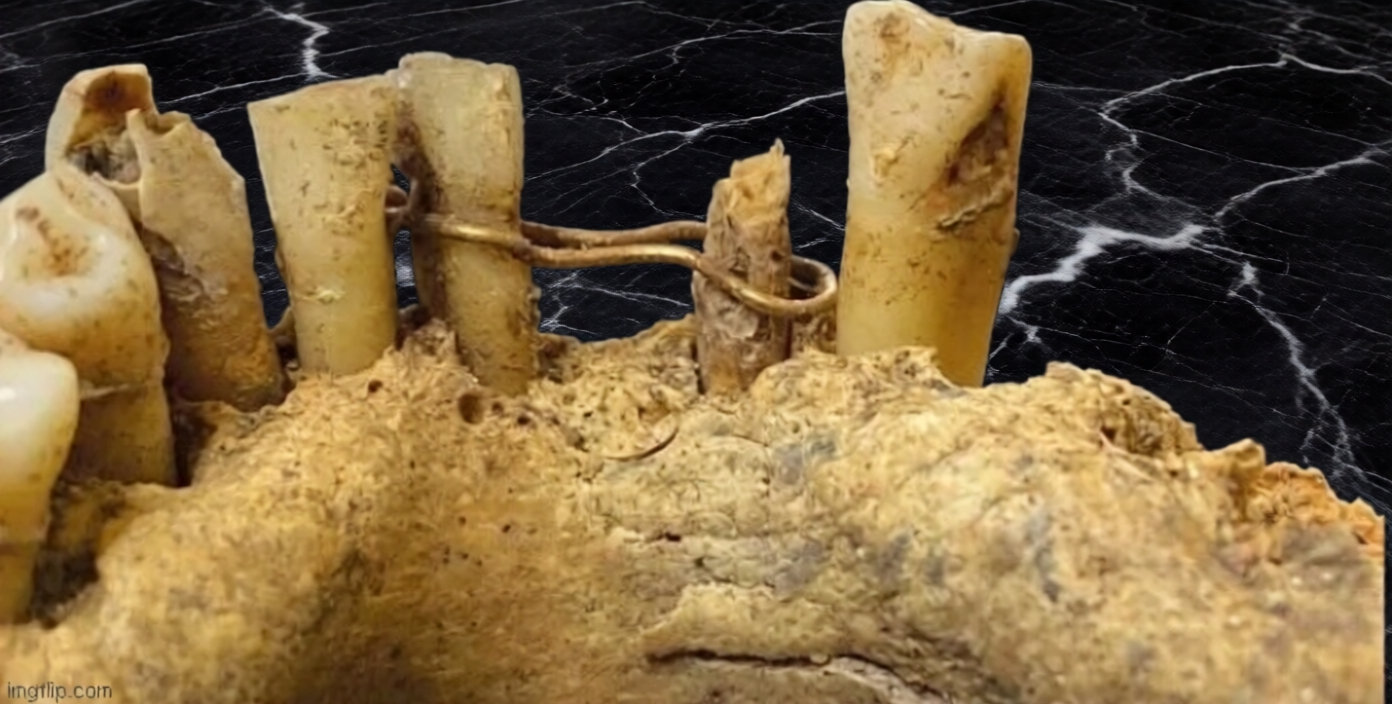
Archaeological excavations carried out in 2006 uncovered an enormous collection of skeletal remains. Researchers recovered approximately 900 individuals along with nearly 3.5 metric tons of human bone from the site. These burials provided valuable information about health, disease, diet, and social life in medieval Scotland. Among the many skeletons examined, one mandible immediately stood out because of a thin gold wire still attached to the lower front teeth. The wire connected the right lateral incisor to the left central incisor and crossed the space where a tooth had once been located.
At first glance, the small gold wire may have seemed insignificant, but closer analysis revealed something extraordinary: this was likely a functional dental appliance used during the individual’s lifetime. The find represents the earliest confirmed case of restorative dentistry ever identified in Scotland.
The Medieval Patient
Researchers determined that the individual was a middle-aged adult male who lived sometime between 1460 and 1670 CE. Radiocarbon dating and analysis of skeletal features helped establish the approximate time period and age at death.
The man’s teeth showed significant wear, which was common during the medieval period due to coarse diets containing stone particles from grinding grain. Dental disease, tooth loss, and oral infections were widespread in medieval Europe because of poor hygiene and limited medical knowledge.
Despite these difficult conditions, this individual appears to have received specialized dental treatment unusual for the time. The gold wire remained firmly attached to the teeth for a considerable period before death. Wear marks and changes to the surrounding teeth indicate that the device had been worn during life rather than added after burial. This suggests the appliance served a practical or cosmetic purpose while the individual was alive.
Researchers believe the device likely had one of two functions. It may have stabilized a loose tooth by binding neighboring teeth together, or it may have acted as a primitive dental bridge supporting a replacement tooth. Either possibility demonstrates an unexpectedly advanced understanding of oral treatment during the medieval period.
A Closer Look at the Gold Dental Bridge
Modern scientific techniques allowed researchers to study the dental appliance in extraordinary detail. The team used scanning electron microscopy and X-ray spectroscopy to analyze the metal composition and construction methods. The results showed that the wire consisted of a high-quality 20-carat gold alloy. Gold was an expensive and highly valued material in medieval Europe, associated with wealth, craftsmanship, and elite status. Its flexibility and resistance to corrosion also made it useful for delicate medical or decorative work.
Creating such a fine gold ligature required significant technical skill. The wire had to be carefully shaped, wrapped around the teeth, and secured tightly enough to remain functional without causing immediate damage. Although primitive compared to modern dentistry, the procedure demonstrates impressive craftsmanship and practical understanding of oral mechanics.
Researchers believe the person who created the dental appliance was likely semi-skilled rather than formally trained in medicine. During the Middle Ages, dentistry did not yet exist as an independent profession. Physicians and surgeons rarely specialized in oral care, and dental treatment often fell to barbers, craftsmen, healers, or individuals experienced in working with metal. A local goldsmith may have performed the work.
Historical records show that at least 22 goldsmiths operated in Aberdeen during this period, making it entirely possible that one of them possessed the technical ability to create the delicate wire structure.
Dentistry Before Modern Dentistry
The Aberdeen discovery highlights an important historical reality: people have attempted to repair damaged teeth for thousands of years. Modern dentistry may seem like a relatively recent invention, but archaeological evidence reveals a surprisingly long history of dental experimentation and treatment. Ancient civilizations developed a variety of methods for dealing with tooth loss, pain, and oral disease. Some of the earliest known dental procedures date back thousands of years.
Archaeologists have discovered evidence of drilled teeth dating to around 14,000 years ago. In Slovenia, researchers uncovered a 6,500-year-old tooth filled with beeswax, representing one of the oldest known dental fillings ever found.
Ancient Egyptians also experimented with dental repair. Some burials from around 2500 BCE contain gold or silver wires attached to teeth. In certain cases, researchers believe these were added after death to restore the appearance of the body before burial. However, examples of functional dental work from medieval Europe remain extremely rare, especially in Scotland. The Aberdeen dental bridge therefore occupies an important place in the history of medicine and archaeology.
Health and Social Status in Medieval Scotland
The location of the burial suggests the man held relatively high social status within medieval society. Burial inside the East Kirk of St. Nicholas would have been reserved for individuals with wealth, influence, or important social connections. Gold itself was expensive, and custom dental work would have required access to skilled craftsmen and valuable materials. This suggests the treatment may not have been purely medical.
Researchers believe appearance likely played an important social role in the decision to repair the damaged tooth. In Late Medieval and Early Modern Europe, physical appearance was closely connected to ideas about morality, status, and personal character.
Visible health often reflected social reputation. A complete smile may have carried symbolic importance, especially among wealthier individuals involved in trade, religion, or public life. Maintaining appearance could affect social interactions, marriage prospects, business relationships, and perceptions of authority. The dental bridge therefore represents more than medical treatment; it also reflects changing attitudes toward identity, self-presentation, and social image during the medieval period.
Pain, Disease, and Oral Health in the Middle Ages
Dental problems were extremely common during the medieval era. Most people had little understanding of bacteria or infection, and oral hygiene practices were limited. Teeth were worn down quickly by rough bread and stone particles from milling grain. Sugar consumption increased over time, especially among wealthy populations, contributing to tooth decay and gum disease.
Many individuals suffered from abscesses, infections, missing teeth, and chronic pain. Without antibiotics or modern anesthesia, dental procedures were often painful and dangerous. Tooth extraction was one of the few available treatments, and it was frequently performed by barbers or traveling healers using crude tools.
Against this background, the Aberdeen dental bridge appears even more remarkable. Rather than simply removing the problem tooth, someone attempted to preserve appearance and possibly improve function using a carefully crafted gold appliance. This suggests a level of medical creativity and concern for quality of life not often associated with the medieval period.
Scientific Investigation and Modern Technology
The discovery also demonstrates the importance of modern scientific techniques in archaeology. Without advanced imaging and laboratory analysis, the gold wire might easily have been dismissed as accidental damage or decorative burial material. Instead, researchers used modern forensic methods to reconstruct how the device functioned and how long it had been worn.
Microscopic examination revealed wear patterns on the teeth consistent with long-term use during life. Chemical analysis identified the precise composition of the gold alloy, while radiocarbon dating helped place the individual within a historical timeframe. These technologies allow archaeologists to uncover details about ancient lives that would once have remained invisible.
The Aberdeen case is a perfect example of how science and archaeology work together to reconstruct forgotten chapters of human history.
The Long History of Restorative Dentistry
Although this Scottish example is unique, it belongs to a much larger global history of dental innovation. Across different civilizations, humans consistently searched for ways to relieve pain, restore damaged teeth, and improve appearance. Ancient Etruscans in Italy created sophisticated dental prosthetics using gold bands and animal teeth. Roman writers described oral hygiene practices and early dental treatments. In Asia and the Middle East, medical texts discussed tooth extraction, gum disease, and medicinal remedies.
The Aberdeen bridge shows that medieval Scotland was also part of this long tradition of experimentation and adaptation. Even without modern scientific knowledge, people understood the importance of oral health and attempted to solve dental problems using the resources available to them. The discovery of the earliest known dental bridge in Scotland provides a fascinating glimpse into the medical knowledge, craftsmanship, and social values of medieval society.
Buried inside the East Kirk of St. Nicholas in Aberdeen, the middle-aged man with the gold dental ligature reveals that people in Late Medieval Scotland sought ways to repair damaged teeth centuries before modern dentistry emerged. The delicate gold wire demonstrates technical skill, access to wealth, and concern for both function and appearance. It also challenges outdated assumptions that medieval medicine was entirely primitive or unsophisticated.

Through archaeology, researchers continue uncovering evidence that ancient and medieval people were often far more innovative and resourceful than previously imagined. This remarkable find reminds us that the desire to relieve pain, restore confidence, and preserve appearance is not uniquely modern—it is deeply human and stretches back across centuries of history.
About the Creator
History Seeker
I like the metal music I like the good food and the history...
Enjoyed the story? Support the Creator.
Subscribe for free to receive all their stories in your feed.
Comments
There are no comments for this story
Be the first to respond and start the conversation.