
The intricate plastering technique was mastered by ancient builders. 8,000 Years Prior to the Romans
The Plaster Floors of the Motza Megaproject

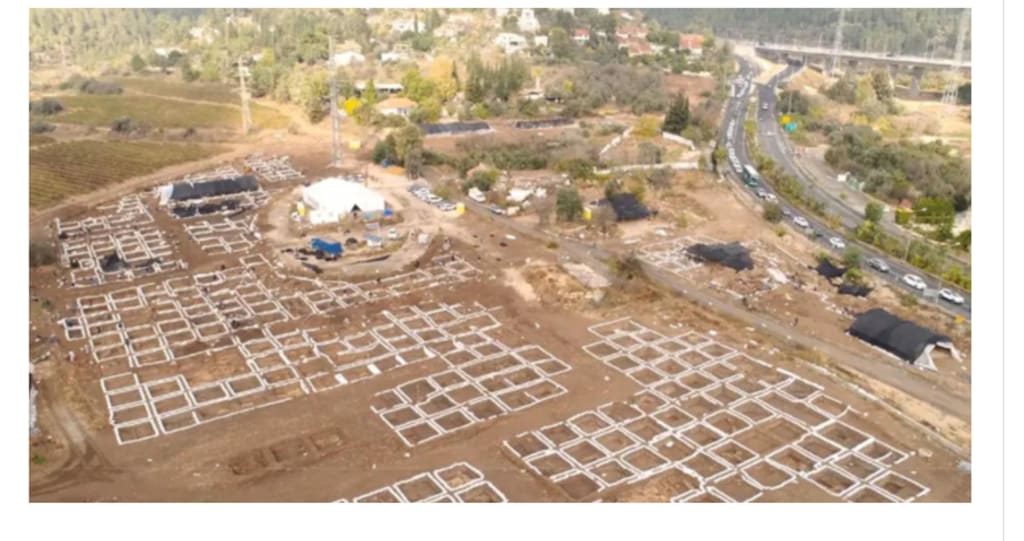
Nearly 8,000 years before the Romans, Neolithic builders at the Motza site near Jerusalem mastered a very complicated plaster production technology, according to a recent research. The discovery of pyrogenic dolomite in 10,000-year-old plaster floors challenges preconceived notions about prehistoric building methods and shows that these materials were utilised by Pre-Pottery Neolithic cultures long before recorded history was established.
Prior to this discovery, dolomitic lime plaster was known to have been used as early as the Roman era. The Motza represents a major step backward in the history of construction due to that roughly 8,000-year hiatus, which calls into question the notion that advanced material knowledge originated in ancient antiquity.
Not only were the ancient crafters of Motza constructing floors, but they were also doing a type of applied chemistry that has proven difficult for contemporary researchers to duplicate in lab settings.
The Plaster Floors of the Motza Megaproject
The Motza site, which is situated in the Judean Hills about five kilometres west of Jerusalem, was excavated between 2015 and 2021 in preparation for the construction of a roadway as part of the Motza Megaproject.
Dating from approximately 7100 to 6700 BC, the enormous Pre-Pottery Neolithic B settlement spanned more than three hectares and produced more than 100 plastered floors spread over several building complexes. Although lime plaster, which can be found at locations like Ain Ghazal and Jericho, was a well-known Neolithic accomplishment, the Motza floors included something quite different.
Researchers found that the builders were utilising more than just regular limestone. Dolomite, a calcium magnesium carbonate material that needs far more sophisticated technical control to turn into useable plaster, was being processed by them. In contrast to later floors, which were thinner and more porous, the older floors from the Middle Pre-Pottery Neolithic period were remarkably well preserved, with some even holding onto distinctive red hues.
Understanding the Dolomite-Lime Cycle
Dolomitic plaster production is a notoriously challenging technique. Quicklime, which is produced by burning limestone in a process known as calcination, is slaked with water and combined to make plaster. On the other hand, dolomite contains both calcium and magnesium carbonate.
The resulting mixture of magnesium compounds is typically weak, unstable, and inappropriate for high-quality construction if it is not burnt at precisely regulated temperatures, particularly below 900 degrees Celsius. This is the exact reason why the "dolomite problem" has plagued scientists for decades: the mineral is common in ancient geological formations yet infrequently develops in contemporary settings.
Archaeologists discovered shallow fire pits that functioned as stone-firing kilns at Motza. These pits ranged in diameter from 1.5 to 2.6 meters and had fire-reddened sides. Importantly, different kinds of stone were found in different holes. Calcite (limestone) stones were found in one pit, while dolomite was the only material found in a nearby pit. They had both been exposed to fire, but in different ways.
This division, according to researchers, is a conscious recognition that limestone and dolomite need distinct thermal treatments. Roman and mediaeval plasterers were unable to regularly duplicate the ancient builders' successful completion of what the study refers to as a complete dolomite-lime cycle, in which the dolomite completely reformed after firing.
A Lost Technology with Contemporary Consequences
The Neolithic builders of Motza benefited greatly from the usage of dolomite. Because the site is right on top of a bedrock that is rich in dolomite, there was no need to move limestone from elsewhere because the material was readily available locally.
Additionally, dolomite calcines at a lower temperature than limestone, which may result in less fuel being used. The main reason dolomitic plaster is so popular for flooring and structural installations is that it creates a much tougher and more water-resistant surface than regular lime plaster.
This advanced method is similar to recommendations made thousands of years later by the Roman architect Vitruvius, who noted in the first century BC that limestone was better for final plasters and dolomite was better for structural mortars.
This reasoning seems to have been applied by the Motza builders: the surface finish layer is nearly pure calcite, while the foundation structural layer is rich in dolomite. The authors of the study believe that the Pre-Pottery Neolithic inhabitants of Motza "adapted the standard lime- or gypsum-based recipes to intelligently use local materials."
The finding may also have an impact on contemporary sustainable building. Because local dolomite calcines at a lower temperature than transported limestone, it uses less fuel and energy to make plaster.
These antiquated efficiencies are far from insignificant in a time when carbon emissions are a major problem. The discovery may provide fresh insights into the long-standing geological dolomite issue, the authors add, if dolomite can actually rebuild under Neolithic plaster circumstances.
Amazing Ability Lost to Time
The scholars are openly appreciative of these Neolithic craftsmen's technical proficiency. Every step of the production of high-quality dolomitic plaster requires accuracy: the mixing and curing process must be handled properly, slaking must be done correctly, and fire temperatures must be carefully regulated.
"For a PPNB community to have accomplished this would be an amazing achievement, the authors add, given the discussions in contemporary literature regarding the challenges of creating high-quality dolomitic plaster.
The intricacy of the procedure probably explains why dolomitic lime is so infrequently found in the archaeological record and why the method was finally forgotten. The entire dolomite-lime cycle seen at Motza was not repeated, and it did not reappear until the Roman era.
Dolomitic plaster completely lost popularity in the 19th and 20th centuries after being deemed inferior by scientific research. It hasn't attracted attention again until the last several decades, following an examination of old structures that used it and survived for generations.
Motza now demonstrates that the Near Eastern Neolithic is where this technology actually originated, and that the builders of this ancient community accomplished something that, in the authors' words, "was thought physically impossible."
About the Creator
Enjoyed the story? Support the Creator.
Subscribe for free to receive all their stories in your feed.
Comments
There are no comments for this story
Be the first to respond and start the conversation.