
Turns Out Your Grocery List Might Be Missing a Few Longevity Foods — Here's What Researchers Keep Finding
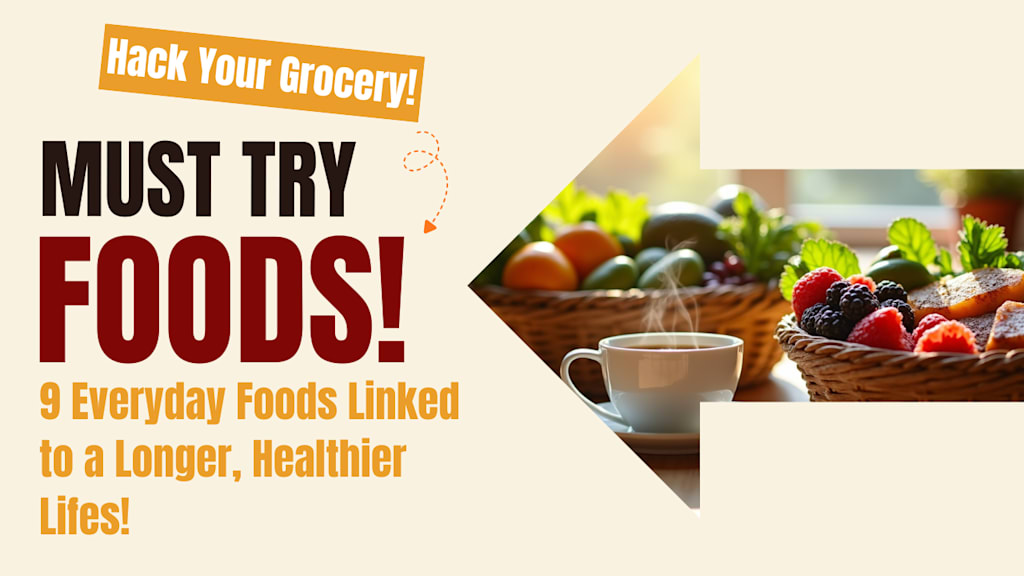
9 Foods Longevity Researchers Keep Coming Back To

Key takeaways
You don’t need exotic “longevity” foods; everyday staples like berries, beans, greens, and coffee are surprisingly well-supported by research.
Patterns matter more than perfection: consistently eating more whole, minimally processed foods is where the biggest impact comes from.
Small swaps—like fatty fish instead of red meat, or dark chocolate instead of sugary snacks—can add up over time.
Enjoyment is part of the equation; the best longevity foods are the ones you’ll actually eat regularly.
You already know that what you eat matters for your health.
What’s a little more surprising is that a handful of very normal, very non-fancy foods keep popping up over and over again in longevity research—the kind of studies that follow people for years to see who stays healthier, longer.
Not powders, potions, or imported miracle berries. Just things you probably walk past in your regular supermarket… and maybe don’t think twice about.
Let’s walk through nine foods researchers keep coming back to, and how you can quietly put them to work on your own plate.
1. Berries: Tiny but ridiculously powerful
Berries are like the overachievers of the fruit world.
They’re packed with antioxidants—compounds that help your body handle oxidative stress, which is basically slow, invisible “wear and tear” on your cells that builds up over time and is linked to inflammation, heart disease, and some cancers.
Researchers studying older adults have even found that people who regularly eat berries tend to have slower cognitive decline, which is a science-y way of saying “their brains age more gracefully.”
The practical part: frozen berries are just as nutrient-dense as fresh ones, so you don’t need perfect berry season to get the benefits.
Toss a handful into yogurt, oatmeal, or a quick smoothie and you’ve quietly upgraded your breakfast.
2. Green tea: Calm cup, serious benefits
Green tea’s reputation isn’t just wellness marketing.
Its main claim to fame is its polyphenols—plant compounds with strong antioxidant effects—and researchers have linked regular green tea drinking to lower rates of cardiovascular disease.
Studies suggest even one to two cups daily can be enough to see meaningful cardiovascular benefits.
So if you already enjoy a warm mug in the afternoon, consider that habit one more quiet vote for your long-term health.
3. Beans: The underrated longevity staple
Beans have an image problem—they’re treated like the supporting actor on the plate instead of the star.
Nutritionally, though, they’re doing serious heavy lifting: high fiber, rich in potassium, low in saturated fat and sodium, and a great way to swap out some animal protein.
They also show up again and again in long-lived populations around the world, and regular bean intake has been tied to better blood sugar control and lower cholesterol.
Even something as simple as adding lentils to your soup, chickpeas to your salad, or black beans to your burrito bowl is you quietly eating like the people doctors love to study.
4. Leafy greens: Heart and eyes on the same plate
Leafy greens—think spinach, kale, romaine, bok choy—keep showing up in heart health research for a reason.
People who regularly eat them tend to have a lower risk of heart disease, which is still one of the major reasons people get sick as they age.
They’re also rich in lutein and zeaxanthin, two antioxidants linked to a lower risk of age-related macular degeneration, a condition that slowly blurs central vision over time.
Add in their association with lower cancer risk in population studies, and suddenly that side salad looks a lot less optional.
5. Salmon (and other fatty fish): A smarter protein swap
You absolutely don’t have to give up meat to eat for longevity—you just have to be strategic.
Fatty fish like salmon, sardines, and mackerel are rich in omega‑3 fatty acids, and research has consistently linked regular intake to a lower risk of dying from heart disease and, in some studies, a reduced risk of Alzheimer’s disease.
It’s one of the clearer “trade this for that” moves: swapping red meat for fatty fish even a couple of times a week, is a measurable win for your long-term health.
So if you’re already doing a weekly salmon night, that’s not just dinner—that’s prevention.
6. Walnuts: The brainy little snack
Among nuts, walnuts are the ones researchers keep pulling aside for extra testing.
They offer a unique combo of omega‑3 fatty acids, polyphenols, and monounsaturated fats, which is basically a greatest-hits album for heart and brain health.
Long-term studies tracking walnut intake over years have connected regular handfuls to better cardiovascular health and lower inflammation, including improvements that can matter for joint pain as people get older.
A small handful a few times a week—sprinkled on oats, tossed onto salad, or just eaten straight from the jar—is a simple habit with a surprisingly strong evidence base behind it.
7. Dark chocolate: Yes, really… with conditions
Here’s the catch: not all chocolate is invited to this party.
The benefits show up mainly in dark chocolate with a high cacao content (around 75% or higher), because that’s where the flavonoids live—plant compounds linked to lower blood pressure and better cholesterol markers.
That means your intentionally-bought dark chocolate bar in the pantry can absolutely be part of a longevity-friendly lifestyle.
However, your kid’s Halloween haul and milk chocolate-coated everything do not magically count, no matter how hard we wish.
8. Coffee: Your morning ritual, backed by data
Your daily coffee might be doing more than keeping you semi-functional in meetings.
Research has connected regular coffee consumption to lower levels of chronic inflammation—the kind tied to heart disease, Alzheimer’s, and other long-term conditions.
This doesn’t mean you should mainline six cups a day; most of the benefits show up with moderate intake, roughly around one to two cups.
So you can enjoy that morning cup without quite as much guilt—and maybe see it as one small, pleasant part of your overall health routine.
9. Avocados: The “good fat” that keeps showing up
Avocados are rich in monounsaturated fats, the same “good fat” family that makes olive oil such a staple in heart-healthy diets.
They’ve been linked to lower cholesterol and reduced heart disease risk, and they tend to keep you full longer, which can naturally cut down on mindless snacking between meals.
Some early research has even explored specific compounds in avocados for their ability to target certain aggressive cancer cells—this is still evolving science, but it’s an intriguing area.
In everyday life, half an avocado on toast or in a salad is a pretty delicious way to add more of these fats to your routine.
So… what do we do with this?
None of these foods is a magic fix, and no single ingredient is going to rewrite your health story by itself.
What the research really supports is a pattern: eating more whole, minimally processed foods on a consistent basis—not just during “healthy weeks”—is one of the most reliable levers you have for long-term health.
You don’t need to overhaul everything to start.
You could:
Add berries or walnuts to the breakfast you already eat.
Swap one red-meat dinner for salmon or another fatty fish this week.
Make green tea your afternoon drink for a few days instead of sugary options.
Toss a big handful of leafy greens into whatever you’re cooking—pasta, stir‑fry, eggs.
Keep a bar of high‑cacao dark chocolate as your “I want something sweet” backup.
Choose beans as your protein in one or two lunches—chickpea salad, bean chili, lentil soup.
Slice an avocado into a bowl or onto toast for a more satisfying meal.
Pick two or three changes that feel realistic for your actual life, not some imaginary ideal version of you, and build from there.
And as always, if you have specific health conditions, medications, or dietary restrictions, it’s worth checking in with a doctor or registered dietitian before making major changes to your diet.
If you had to choose just one of these foods to add or upgrade in your routine this week, which one feels easiest to start with?
This isn't medical advice — if you have specific health conditions or dietary restrictions, it's worth checking in with a doctor or registered dietitian before making major changes.
About the Creator
Eina Liban
Finding beauty in everyday life and learning how to live it to the fullest. Writing on health, tech, and human wellness.
Enjoyed the story? Support the Creator.
Subscribe for free to receive all their stories in your feed.
Comments
There are no comments for this story
Be the first to respond and start the conversation.