
She Took Cancer Drugs for 11 Years. Then She Learned She Never Had Cancer.
Becky Jones trusted the diagnosis that cost her twenties, her career, and her sense of safety. By the time the truth came out, eleven years were gone.
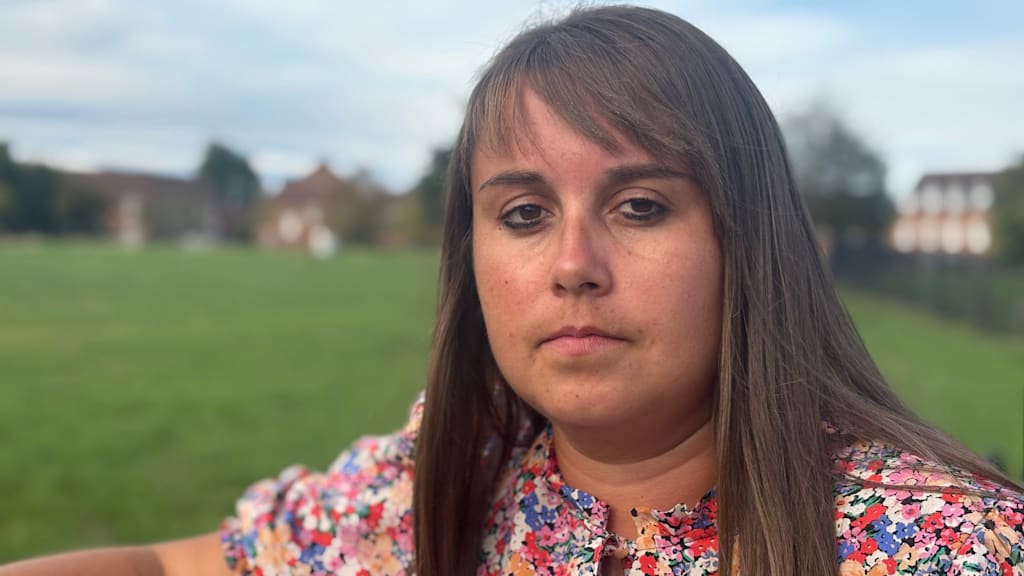
How a brain cancer diagnosis invented out of thin air consumed one woman’s adult life
Becky Jones sat in front of a computer screen. On the video call were her lawyer and two independent experts. They told her: You never had brain cancer.
Silence. Then Fiona Tinsley, the lawyer, saw that everyone’s eyes on the screen were wet with tears.
It was 2025. Thirteen years had passed since Becky Jones was diagnosed with terminal brain cancer. Eleven years had passed since she began taking the cancer drug temozolomide.
“I never had a brain tumour. I was misdiagnosed, and for most of my adult life I received these treatments completely unnecessarily.”
She said: “Basically, he ruined my life.”
1. The diagnosis was made before the biopsy results came back
In 2012, Jones was 21. She worked as a CCTV operator at Coventry City Football Club’s stadium. There she met Pete, who worked at the stadium. She loved going to the gym, running, and dreamed of a career in policing. Her life was just beginning.
Then the migraines came. Increasingly severe.
She went to the doctor and underwent a brain biopsy performed by a private neurosurgeon.
According to Fiona Tinsley, a partner at the law firm Brabners, which represents her, Prof Ian Brown, a consultant at University Hospital Coventry, had already diagnosed her with a grade 4 glioblastoma, one of the most aggressive forms of brain cancer, before the biopsy results came back.
Prof Brown was a senior neuro-oncology consultant at the hospital. He told Jones she had only months to live. He told her she would need to take the chemotherapy drug temozolomide for life.
But UK guidelines state that the standard course of TMZ is only six months, six cycles.
The “lifelong medication” Jones was told she needed went far beyond that.
She later repeatedly questioned why scans showed no signs of a tumour. According to her recollection, Prof Brown replied that tumours are not “visible to the naked eye.”
That answer put her doubts to rest. She chose to trust her doctor.
2. 11 years, 156 cycles
“Constant nausea, stomach pain, mouth ulcers, feeling tired every day. It was really awful.”
The drug seeped into every corner of her life. Fearing infection, she avoided social events and family gatherings. Her driving licence was initially revoked and later restricted. She could no longer go to the gym or go out to eat with Pete. The ordinary pieces of a normal life disappeared, one by one.
She and Pete had been told she would not be able to get pregnant. “But then I had two children,” she said. “He says they are both miracles.”
Over 11 years, Jones went through roughly 156 cycles of chemotherapy. The drug caused physical torment, depression, anxiety, and possibly early menopause.
She had always felt she was “walking on thin ice.” What kept her going was simple: “I was told again and again that if I didn’t have chemotherapy, I would die.”
3. A phone call, and a truth that came too late
In 2024, Jones suddenly received a phone call from a doctor. She was told chemotherapy would stop.
“He didn’t give any reason. He told me Ian Brown had retired. That was the first I had heard of it.”
No one told her what to do next; no one gave her the name of a new doctor. “I didn’t know what to do, who to turn to, who to talk to. During that time, I got no support at all from the hospital.”
The truth only emerged in 2025. By then, the hospital had begun reviewing cancer cases linked to Prof Brown. Jones’s lawyers commissioned an independent analysis by a neurosurgeon and a radiologist. The conclusion: she had never had brain cancer.
She had actually suffered from a brain inflammation called tumefactive demyelination, a condition usually treated by neurologists and manageable with high-dose steroids. The condition is characterised by large, tumour-like lesions in the brain and is easily confused with malignant tumours. But most cases have a good prognosis and respond well to steroids.
The 11 years of chemotherapy Jones endured, every wave of nausea, every ache, every day and night taken from her by the drugs, could have been avoided entirely.
4. She was not the only one
Jones is not the only victim.
According to the BBC, more than 40 patients are taking legal action against University Hospitals Coventry and Warwickshire NHS Trust (UHCW) over excessive or unnecessary cancer treatment.
Many patients who were treated by Dr Brown told the BBC they had been required to take TMZ for years and had suffered serious health problems as a result. One patient believes the drug made her infertile; another developed leukaemia after receiving 100 unnecessary cycles.
Leukaemia is not a coincidence. Temozolomide is an alkylating agent. Long-term continuous use carries a potential risk of leukaemia. Alkylating agents, including TMZ, should not be used continuously long-term for non-palliative purposes, and reports of TMZ-related myelodysplastic syndrome and acute myeloid leukaemia are increasing.
Patient Lucy Godfrey says she took TMZ for seven years and is now unable to work because of persistent, extreme fatigue. She believes the treatment triggered early menopause. “That kind of exhaustion is indescribable. It completely broke me,” she said. “The emotional trauma of the whole process… this person was supposed to be caring for you, to have your best interests at heart. He was a consultant.”
Another male patient was confirmed to have received more than 14 years of unnecessary chemotherapy, even though NHS guidelines likewise state that TMZ should not be used for more than six months. Hospital management later acknowledged this fact.
In 2024, a man in Bristol was also confirmed never to have had cancer after receiving 14 years of chemotherapy. The BBC reported that these cases may be a small fraction of the total.
5. How it continued for so long
The BBC interviewed an anonymous staff member who worked closely alongside Prof Brown. She said Brown had a kind of “arrogance,” believing he was “doing something no one else could do, that he was a true expert in his field.”
“If you saw something you didn’t agree with, you couldn’t speak up,” she said. “I know there was a real culture of silence there. In that department, saying nothing had become deeply ingrained.”
The Royal College of Physicians (RCP) was commissioned to conduct an independent review of 20 cases. Its preliminary findings were that the hospital routinely kept patients on TMZ for long periods, with “little evidence” that patients benefited. The report said the failures of hospital staff amounted to a “betrayal” of patient trust, and questioned why the oncology pharmacy team did not raise concerns about patients receiving oral chemotherapy continuously for 10 to 15 years.
The review also found that in some cases, medical staff “lacked sufficient clinical inquisitiveness” and did not collaborate adequately with colleagues in the multidisciplinary team, allowing possible diagnostic errors to persist.
After learning of the investigation’s findings, Jones said: “It’s chilling. It’s not just a question of what he did, but why the hospital allowed him to do it for so long. It was almost as if he was running the whole thing himself, and no one was supervising him at all.”
6. A belated admission
In June 2025, UHCW NHS Trust made its first formal admission of responsibility in the long-running chemotherapy scandal. In a legal claim brought by former patient Michael Grady and represented by Brabners, the trust admitted that sufficient informed consent had not been obtained for prolonged chemotherapy, and accepted a causal link between the overprescription of TMZ and the harm suffered by patients.
“This admission is vindication for every patient who found the courage to speak out,” said Fiona Tinsley, a partner at Brabners. “It confirms what we have been saying for nearly two years: patients were subjected to long-term harmful treatment without proper informed consent, and the trust’s actions caused serious, entirely avoidable harm.”
Lawyers believe that, given the evidence from more than 40 patients and the strong similarities between the cases, the trust is expected to make similar admissions in the remaining cases. But they also noted that some patients “died while waiting for justice.”
A UHCW spokesperson told the BBC that it does not comment on individual cases but has taken steps to ensure that the prescribing and use of TMZ is subject to “stricter oversight.” Trust chief executive Prof Andy Hardy said they take “very seriously any allegation that staff care standards may have fallen short of expectations” and confirmed an internal review was underway.
For Jones and dozens of other patients, however, these promises came too late.
7. Those lost years
Jones is now 34 and a mother of two. Her hair has become thin and grey because of long-term chemotherapy.
The possibilities she once had, a career in policing, running in the gym, dinners out with her partner, a life free from medication, have all been erased by 11 years of chemotherapy.
But she survived. Her two children survived.
In 2025, when she learned the truth over video call, everyone’s eyes had tears in them. In that moment, she finally knew the truth: she was a healthy person who had been wrongly treated for 11 years.
And those lost years can never be returned.
About the Creator
Jin
Writer of reamstories
https://reamstories.com/jin
Enjoyed the story? Support the Creator.
Subscribe for free to receive all their stories in your feed. You could also become a paid subscriber, letting them know you appreciate their work.
Comments
There are no comments for this story
Be the first to respond and start the conversation.