Lessons
King Tutankhamun And His Legendary Tomb. What Are They Hiding?
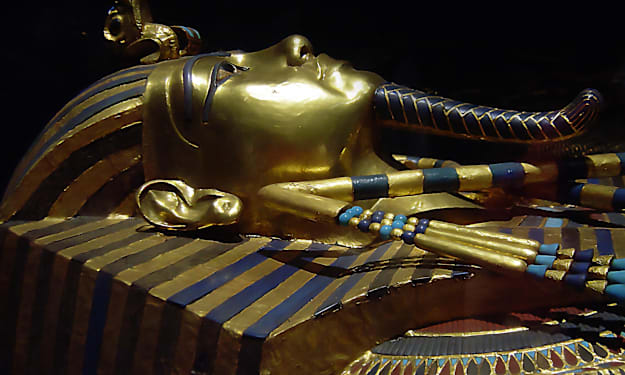
Few archaeological discoveries in human history have captured global imagination as profoundly as the discovery of the tomb of Tutankhamun, the young Egyptian pharaoh better known as King Tut. Hidden beneath the sands of Egypt for more than three thousand years, the tomb remained almost untouched by time, preserving an astonishing collection of treasures that offered the modern world an extraordinary glimpse into the splendor, mystery, and spirituality of ancient Egypt.
By History Seeker4 months ago in History
Archeologists Discovered the Earliest Dental Bridge in Aberdeen
Archaeologists in Scotland have uncovered one of the most fascinating discoveries in the history of medieval medicine and dentistry: the earliest known example of restorative dental treatment ever identified in Scotland. The remarkable find was made during the examination of skeletal remains from a medieval burial in Aberdeen, where researchers discovered a middle-aged man buried with a carefully crafted gold dental bridge attached to his lower front teeth.
By History Seeker4 months ago in History
Did You Know That The Maya Civilization Used Hallucinogenic Substances?
The Maya civilization, which flourished in Mesoamerica from roughly 2000 BCE to 1500 CE, developed one of the most sophisticated cultural and religious systems of the ancient world. Their society was deeply rooted in a worldview where nature, gods, ancestors, and humans were all interconnected. The natural environment was not separate from the spiritual realm but rather an extension of it. Mountains, caves, plants, animals, the sky, and even altered states of consciousness were considered pathways to divine communication.
By History Seeker4 months ago in History
Mammoths and Early Human Civilization: Giants of the Ice Age and the Rise of Humanity
Mammoths, among the most iconic creatures of the Ice Age, continue to fascinate scientists and the public alike, offering a vivid window into the deep past of both Earth and humanity. These enormous, elephant-like mammals with towering curved tusks, dense shaggy coats, and powerful bodies once dominated vast regions of the Northern Hemisphere. They moved slowly but powerfully across frozen tundras, steppe grasslands, and glacial landscapes that stretched across continents. To early humans, however, mammoths were not just distant wildlife—they were deeply intertwined with survival, shaping the rhythms of daily life, technological progress, and even early spiritual thought.
By History Seeker4 months ago in History
Tracing The Path Podcast
One of many reasons why people are fascinated by history is the connections that events from different geographic locations, ancient and present cultures, and even different times have to major historical events. Did you know that Coca-Cola had a hand in toppling Apartheid in South Africa? Do you know why Crayola Crayons had an impact on artist Grant Wood’s iconic painting, American Gothic?
By Frank Racioppi4 months ago in History
Moral Law and False Witness
When Truth Is Not Optional Moral systems do not begin with outcomes. They begin with constraints. Certain acts are treated as wrong not because they fail, but because performing them already constitutes the failure. Bearing false witness has always occupied that category. It is not condemned because it sometimes produces injustice. It is condemned because it corrupts the very process by which justice is discerned. Once falsehood is introduced deliberately, the pathway to truth is no longer reliable, even if it occasionally arrives at a correct destination.
By Peter Thwing - Host of the FST Podcast5 months ago in History
Pakistan Army in Global Perspective
Pakistan Army in Global Perspective The Pakistan Army is widely regarded as one of the most capable armed forces in the developing world. While it may not rival the scale and technological dominance of superpowers, it has built a reputation for efficiency, resilience, and operational effectiveness. To understand its true standing, it is essential to compare it with other major militaries such as those of the United States, China, Russia, and India.
By Wings of Time 5 months ago in History
Encephalitis Lethargica: Why a Century of Science Still Cannot Find the 1917 Pathogen
In 1997, a team of molecular archaeologists exhumed the body of an Inuit woman who had been buried in the Alaskan permafrost. She had died from the 1918 influenza virus. Her lungs, preserved by the ice, still contained fragments of the virus. Using those fragments, scientists reconstructed the full genome of the deadliest pandemic in modern history.
By Chronicle and Void5 months ago in History
Under a huge metropolis, a massive secret water resource was found.
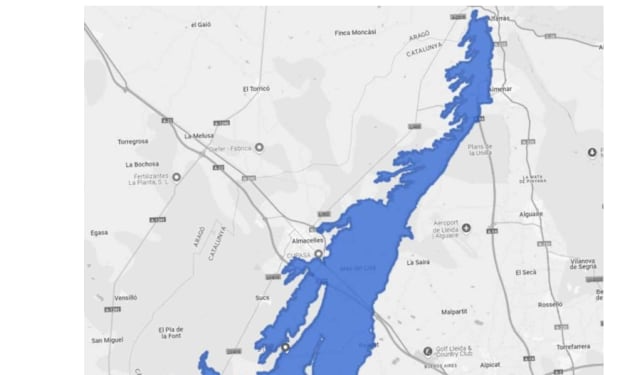
A huge subterranean water reserve covering 31 square miles beneath farmland in northeastern Spain has been discovered by scientists. The discovery challenges preconceived notions about how to use and safeguard the area's subsurface water.
By Francis Dami5 months ago in History
Why America Struggles to Win Its Long Wars
Power, in its grandest form, often carries the illusion of certainty. Yet history has shown that even the mightiest nations can find themselves entangled in conflicts where victory slowly dissolves into ambiguity. The United States, with all its strength and global reach, has walked this uncertain path time and again—where dominance on the battlefield fails to secure peace beyond it.
By Ebrahim Parsa5 months ago in History
The Gates of Bursa
The snow falling over the peaks of Mount Olympus—the great Uludağ—did not wash away the scent of smoke. For Orhan, son of Osman, that scent had defined the last nine years. He sat atop his stallion, his gaze fixed on the shimmering walls of Bursa. It was a jewel of the Byzantine East, a city of silk and stone that had defied his father until the old man’s final breath.
By shahid khan5 months ago in History