
The Architect of Ruin
The Rise and Fall of the Third Reich
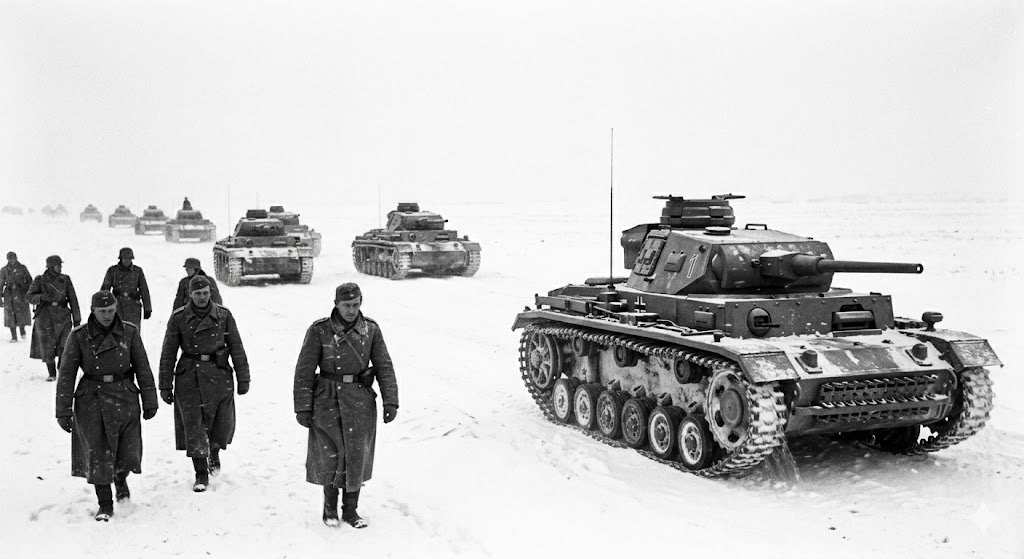
History is rarely a clean arc of progress; occasionally, it is a sudden, violent swerve into the abyss. The story of Adolf Hitler is not merely a biography of a dictator, but a chilling study in how a sophisticated nation can be seduced by rhetoric, paralyzed by economic desperation, and ultimately led into the fires of self-destruction. To understand the rise and fall of the Third Reich, one must look at the intersection of a broken society and a man who understood how to weaponize its deepest insecurities.
The Fertile Soil of Resentment
The story begins in the aftermath of World War I. Germany, once an imperial titan, found itself shackled by the Treaty of Versailles—a document that imposed crushing reparations and systemic humiliation. When the Great Depression struck in 1929, the fragile Weimar Republic collapsed under the weight of hyperinflation and mass unemployment.
Hitler, a failed artist and traumatized veteran, emerged from the fringes of Bavarian politics. He possessed an uncanny, albeit grotesque, understanding of the German psyche. He did not offer complex economic solutions; he offered a narrative. He spoke of betrayal, of a "stab in the back" by internal enemies, and of a glorious, purified future that could only be reclaimed through absolute strength. In the beer halls of Munich, his voice became the soundtrack to a nation’s collective rage.
The Legal Coup
One of the most dangerous myths about Hitler is that he seized power in a violent coup. In truth, he was invited into the halls of power. After the failure of the 1923 Beer Hall Putsch, Hitler realized he could not defeat the state; he had to capture it. Through a combination of populist campaigning, the calculated use of the SA (the Nazi paramilitary wing), and a sophisticated propaganda machine led by Joseph Goebbels, the Nazi Party became the largest faction in the Reichstag.
In January 1933, conservative elites, believing they could "tame" him, convinced President Paul von Hindenburg to appoint Hitler as Chancellor. It was a fatal miscalculation. Within months, Hitler utilized the Reichstag Fire as a pretext to pass the Enabling Act, effectively granting himself dictatorial powers. The democracy he had sworn to serve was dismantled from within, replaced by a machinery of terror that silenced dissent with ruthless efficiency.
The Apex of Hubris
By the late 1930s, the Third Reich stood at its zenith. Germany had been rearmed in defiance of international law, and the borders of Europe were being forcibly redrawn. Hitler’s ideology of Lebensraum (living space) demanded that Germany expand eastward, a goal that necessitated a total war of annihilation.
The invasion of Poland in 1939 marked the point of no return. For a brief period, the Blitzkrieg strategy seemed invincible, and much of Europe fell under the Nazi shadow. However, Hitler’s hubris became his greatest liability. The decision to invade the Soviet Union in 1941, while Britain remained undefeated in the West, stretched the German military to the breaking point. Hitler, increasingly detached from reality and prone to erratic decision-making, began to override his most capable generals, trading strategic logic for ideological fanaticism.
The Descent into the Bunker
The turning point came at the gates of Stalingrad. As the tide of war shifted, the cracks in the regime widened. The economy buckled under the weight of total war, and the Allied bombing campaigns reduced German cities to rubble. Hitler, once the charismatic orator, retreated into the claustrophobic confines of his bunker beneath the ruins of Berlin.
The final days were a macabre reflection of the regime's start: chaotic, delusional, and nihilistic. As Soviet artillery hammered the city above, Hitler lived in a world of phantom divisions and impossible counter-attacks. He remained steadfast in his refusal to accept reality, demanding a fight to the death while ordering the destruction of Germany’s own infrastructure, believing the German people had failed him, not the other way around.
On April 30, 1945, as the Red Army closed in, the man who had promised a thousand-year Reich took his own life.
The Echoes of Catastrophe
The legacy of Hitler’s reign is defined by the Holocaust—the systematic, state-sponsored murder of six million Jews and millions of others. It remains the ultimate indictment of his regime, a crime that defies comprehension and demands eternal vigilance.
The rise and fall of Adolf Hitler serves as a brutal reminder of the fragility of democratic institutions. It shows that societies do not collapse overnight; they erode through the slow normalization of hate, the erosion of truth, and the abandonment of empathy. The Third Reich was not an aberration of history, but a terrifying manifestation of what can happen when a nation chooses a savior over its own freedom. Today, as we navigate an increasingly polarized world, the shadow of the bunker remains a dark, essential reminder that the price of liberty is, and has always been, eternal vigilance.
About the Creator
Enjoyed the story? Support the Creator.
Subscribe for free to receive all their stories in your feed.
Comments
There are no comments for this story
Be the first to respond and start the conversation.